HSCT for MS: What a Decade of Global Research Reveals About Long-Term Outcomes

If you or someone you love has been living with Multiple Sclerosis (MS), you have probably asked one fundamental question: is there a treatment that can genuinely stop this disease — not just for a year or two, but for the rest of the life ? The answer emerging from the world’s most rigorous long-term research is increasingly clear: Hematopoietic Stem Cell Transplantation (HSCT) can do exactly that.
This blog post brings together the strongest 10-year outcome data published globally on HSCT for MS — from landmark studies in JAMA Neurology, the Multiple Sclerosis Journal, and Nature Reviews Neurology — and explains what these findings mean for patients considering this life-changing procedure at HSCT Hospital India.
What Is HSCT and How Does It Work in MS?
At its core, HSCT is not a symptom-control therapy. It is an immune system reset.
Multiple Sclerosis is driven by a malfunctioning immune response. Instead of protecting the body, immune cells mistakenly attack the myelin sheath that insulates nerve fibres in the brain and spinal cord. HSCT addresses this problem directly.
The treatment unfolds in two key stages:
- Ablation: A chemotherapy conditioning regimen suppresses and effectively eliminates the faulty, self-attacking immune system.
- Reconstitution: The patient’s own previously harvested stem cells are reinfused, rebuilding a new, healthy immune system that no longer attacks the nervous system.
Unlike Disease-Modifying Therapies (DMTs) that mainly suppress immune activity. They can reduce relapse frequency, but rarely eliminate disease activity entirely.
HSCT aims for something more ambitious: a durable immunological reset. This is why long-term data shows results that no conventional drug has been able to match.
Why 10-Year HSCT Outcomes Data matters for Multiple Sclerosis and Other Autoimmune Conditions ?
This is why neurologists place enormous weight on long-term outcome studies. Data spanning 5, 10, or even 15 years provides the clearest insight into whether a treatment truly alters the disease course. And increasingly, that long-term evidence for HSCT is becoming difficult to ignore
— Professor J Paolo Muraro, JAMA Neurology
Key 10-Year Studies: What the Research Shows
1. The Landmark JAMA Neurology Study (Muraro et al., 2017) — 281 Patients, 13 Countries
One of the most cited studies in HSCT history, led by Professor Paolo Muraro and published in JAMA Neurology, followed 281 patients across 25 centres in 13 countries who received HSCT between 1995 and 2006. With a median follow-up of nearly 7 years — and data points extending to 10+ years — its findings reshaped how neurologists think about MS treatment:
- 73% of RRMS patients were free of disability progression at 5 years post-HSCT.
- 46% overall progression-free survival across all MS types at 5 years, including progressive forms.
- Disability actually improved — average EDSS scores decreased by 0.76 points in the year after HSCT, in stark contrast to an increase of 1.4 points in the year before treatment.
- Younger patients with relapsing MS and lower baseline disability (lower EDSS) achieved the best long-term results.
The study’s core conclusion: HSCT’s effect on MS is not temporary immune suppression — it is a genuine immune reset that produces durable, long-lasting remission.
2. Norway Long-Term Follow-Up Study (2024) — 70-Month Outcomes
Published in the Multiple Sclerosis Journal in 2024, this national study from Norway followed 29 patients with aggressive RRMS — all of whom had failed two or more DMTs — for an average of 70 months (nearly 6 years) after HSCT. Its findings are striking:
- 69% achieved NEDA-3 status (No Evidence of Disease Activity — no relapses, no MRI progression, no disability worsening).
- 83% were completely relapse-free throughout the entire follow-up period.
- 79% showed no new MRI activity — meaning no new lesions detected for years after a single treatment.
- 90% were free of disability progression.
- Work participation transformed: before HSCT, only 1 patient (3%) worked full time. By year 5, 52% had returned to full-time employment.
This last finding deserves emphasis. HSCT for MS is not simply a medical treatment — it is a socioeconomic transformation. Patients who were unable to work because of their disease returned to productive, independent lives.
3. The Neurology Journal 11-15 Year Follow-Up — The Longest Followup Study Ever
Perhaps the most remarkable evidence comes from one of the longest follow-up studies ever conducted on HSCT for MS.Patients were tracked for up to 15 years after treatment.
- Disease progression-free survival at 15 years was 44% for patients with active CNS lesions at baseline — a remarkable result for a single one-time treatment.
- Improvements in EDSS scores of 0.5 to 5.5 points were observed in 16 patients, and in 9 of these, scores never worsened beyond their pre-transplant baseline.
- Sustained suppression of MRI disease activity was observed across the decade-long follow-up period.
For a disease historically defined by gradual deterioration, this represents a profound shift.: no DMT currently available achieves this level of sustained disease control over such a prolonged time horizon with a single course of treatment.
4. Swedish 5-Year Data — 87% Relapse-Free Survival
Evidence from Sweden further reinforces the global pattern. Prospective study of 41 patients with aggressive MS documented the following outcomes at 5 years post-HSCT:
- 87% relapse-free survival rate at 5 years.
- 85% MRI event-free survival — no new lesions in 85 out of 100 patients after 5 years.
- 77% free of EDSS progression — three quarters of patients showed no worsening of disability.
— something no conventional DMT has achieved
HSCT Vs DMT: A 10-Year Comparison that Speaks for itself.
The landmark JAMA randomised clinical trial by Dr. Richard K. Burt and colleagues directly compared HSCT against continuing DMT in 110 RRMS patients. The results at 5 years were unambiguous:
- HSCT group: Only 9.71% showed disease progression at 5 years.
- DMT group: 61.7% experienced disease progression within the same timeframe (median time to progression just 24 months).
- EDSS improved by an average of 1.02 points in the HSCT group. In the DMT group, EDSS worsened by 0.67 points.
- The hazard ratio for progression in the HSCT group versus DMT was 0.07 — meaning patients on HSCT were 93% less likely to experience disease progression.
This trial, combined with the observational long-term data, has prompted ECTRIMS (European Committee for Treatment and Research in MS) and the EBMT to publish updated 2025 guidelines recommending HSCT as a treatment option for patients with aggressive MS.
Who Benefits Most from HSCT? What the Data Reveals
The long-term research consistently identifies a profile of patients who achieve the best outcomes from HSCT:
- Relapsing-Remitting MS (RRMS): The strongest evidence base. RRMS patients consistently show the best long-term response, with 69-87% maintaining NEDA status at 5-7 years.
- Younger patients: Age at treatment is one of the strongest predictors of long-term success. Earlier intervention yields better immune reconstitution.
- Active inflammatory disease: Patients with gadolinium-enhancing lesions on MRI (indicating active inflammation) show dramatically better outcomes, with progression-free survival at 15 years of 44% vs 10% in those without active lesions.
- Lower baseline EDSS: Patients with less accumulated disability achieve greater neurological improvement. This is the core argument for not delaying HSCT.
- Fewer prior DMTs: Patients treated with HSCT before exhausting multiple lines of therapy achieve better outcomes than those treated as a last resort.
HSCT Hospital India accepts patients across RRMS, SPMS, PPMS, and progressive forms of MS, as well as those with other autoimmune conditions including CIDP, Myasthenia Gravis, and SLE. All patients undergo a detailed multidisciplinary evaluation to determine suitability.
Understanding NEDA No Evidence of Disease Activity: The Gold Standard for Measuring HSCT Success
NEDA-3 — No Evidence of Disease Activity — is the highest benchmark in MS treatment. It means a patient has zero relapses, zero new MRI lesions, and zero disability progression. It is remarkably difficult to achieve with conventional DMTs, with studies showing only 7.9% of DMT-treated patients maintaining NEDA at 7 years.
HSCT consistently achieves NEDA-3 in 65-83% of patients in the first five years — an approximately ten-fold improvement over the best conventional therapies. This is not incremental progress. It represents a fundamentally different category of treatment outcome.
Long-Term Safety: What a Decade of Data Shows
Safety has evolved dramatically as HSCT protocols have matured. Transplant-related mortality, which stood at around 1% in early studies, has fallen significantly at experienced high-volume centres using modern non-myeloablative protocols. HSCT Hospital India’s protocol is non-myeloablative, lymphoablative, and does not require any further chemotherapy after the patient leaves hospital.
Known long-term considerations include a small risk of secondary autoimmune conditions (most commonly thyroid-related, reported in approximately 17% of patients in the Norwegian cohort), and for younger women, the importance of fertility preservation prior to treatment — a topic HSCT Hospital India discusses in detail during the pre-treatment consultation process.
The consensus from a decade of data: Specialist accredited centres using a modern non-myeloablative protocol, the long-term benefits of HSCT for active MS substantially outweigh the manageable risks.
The Big Picture: What 10 Years of Evidence Tells Us
Ten years of global data from Norway, Sweden, the USA, Italy, and beyond tell a consistent story: HSCT delivers long-term disease control in MS that no other treatment can match. Across major studies, 69-87% of patients remain relapse-free at 5-7 years. NEDA — the gold standard of disease control — is maintained in the majority of patients for a decade. Disability improves rather than worsens. And patients return to work, to life, to independence.
MS is not a sentence to progressive disability. If you are living with active MS and wondering whether HSCT is right for you, the evidence accumulated over 10 years of rigorous global research points to a clear and compelling answer.
- Muraro PA et al. Long-term outcomes after autologous HSCT for MS. JAMA Neurology. 2017;74(4):459–469.
- Kvistad CE et al. Autologous HSCT for MS: Long-term follow-up data from Norway. Multiple Sclerosis Journal. 2024. doi:10.1177/13524585241231665.
- Burt RK et al. Effect of nonmyeloablative HSCT vs continued DMT on disease progression in RRMS. JAMA. 2019;321(2):165–174.
- Mancardi GL et al. Long-term results of HSCT for MS. Neurology. 2011. doi:10.1212/WNL.0b013e318211c537.
- Zephir H et al. ECTRIMS/EBMT recommendations for AHSCT for MS and NMOSD. Nature Reviews Neurology. 2025;21(3):140–158.
Why Choose HSCT Hospital India for Your Long-Term MS Treatment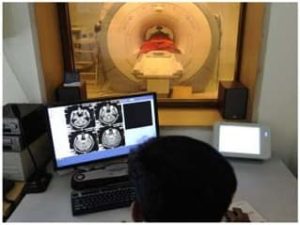
The research is clear: outcomes are best at high-volume, accredited centres with experienced transplant teams. Clinical outcomes are strongly linked to experience and facility standards. HSCT Hospital India has been delivering HSCT for MS since 2016 at #1 JCI-USA accredited World Class Hospital In India .
- Treatment based on the Dr. Richard Burt non-myeloablative protocol— Burt — the same protocol that produced the landmark JAMA trial results.
 JCI-USA Accredited, NABH & NABL certified — the highest standards of patient safety and clinical governance.
- 1,500+ patients treated from over 30 countries across Europe, North America, and Australia. Watch video testimonials Click here
 All-inclusive 30-day in-hospital package at $30,000 USD — the most transparent and affordable pricing of any accredited HSCT centre globally. Check out HSCT package details Click here
- HEPA-filtered private rooms with triple-level air filtration — no outside hospital stays, eliminating infection risk during the critical engraftment phase.
Popular Posts