HSCT for Secondary Progressive MS: Marjorie from Australia
by admin
Patient account published with the patient's consent. Clinical details checked and approved by the board of haematologists at HSCT Hospital India, whose transplant physicians hold DM Clinical Haematology qualifications and fellowship training in stem cell transplantation. The programme runs at a JCI-USA, NABH and NABL accredited hospital that has treated more than 1500 patients. Page last updated: 16 October 2026.
Marjorie from Sydney, Australia came to HSCT Hospital India in New Delhi for HSCT to treat secondary progressive multiple sclerosis. Before treatment her EDSS score was 6.5, she had started to limp and she tired easily. One year after HSCT, she wrote that she could walk with only her stick, which she had not been able to do before.
EDSS, the Expanded Disability Status Scale, is the score neurologists use to measure disability in MS, from 0 to 10. A score of 6.5 means a person needs support on both sides, such as two sticks or a frame, to walk about 20 metres. Secondary progressive MS is the stage that follows relapsing MS, when disability builds up steadily with or without relapses. Marjorie’s MS had reached that stage about seven years before her treatment.
Marjorie from Australia: HSCT for MS at a Glance
Patient
Marjorie lives in Sydney, Australia, and grew up in Newcastle upon Tyne in the United Kingdom.
Condition
She was diagnosed with MS in the early 1990s, and it became secondary progressive MS in 2010.
Before HSCT
Her EDSS score was 6.5, she had a limp, she tired easily, and she had retired early from work in the city.
Treatment
She had HSCT at HSCT Hospital India in New Delhi in July and August 2017, with her eldest son as her carer.
After HSCT
One year after treatment, she wrote that she walked with only her stick, which she could not do before HSCT.
Price of the programme today
HSCT Hospital India charges 30,000 US dollars, all inclusive, for up to 30 days in hospital.
How secondary progressive MS affected Marjorie before HSCT
Marjorie was diagnosed with MS in 1992 or 1993. In 2010 her MS turned secondary progressive, and she began to limp. She also tired often, so she gave up her job in the city and retired early.
"I turned SPMS about 8 years ago in 2010 and found that I was starting to limp, not ferociously but subtly. I would get tired often and decided to give up working in the fast paced city and retire early. Wasn’t easy but I found it necessary as my symptoms became more noticeable as time went by."
Marjorie, MS patient from Australia, one year after HSCT
A limp and tiredness of this kind follow damage to the nerve pathways in the spinal cord that carry signals to the legs. In secondary progressive MS this damage builds up over time. That is why patients at this stage look for a treatment that acts on the immune cells behind it.
A patient in Australia can ask for the HSCT Hospital India brochure by email. It explains each stage of treatment, the 30 day stay and what the single price includes.
Why Marjorie chose HSCT in India over Mexico and Russia
Marjorie looked at HSCT centres in Mexico and Russia first. Both had waiting lists of up to a year, and she felt her MS was getting worse too quickly to wait. HSCT Hospital India confirmed her place without that delay.
"My research looked at Mexico and Russia but I was put off applying to these hospitals as there was up to a year waiting list. I couldn’t wait that long as I seemed to be deteriorating fast."
Marjorie, MS patient from Australia, one year after HSCT
HSCT Hospital India still has no long waiting list. Patients from Australia compare the full cost of each country in HSCT cost by country, and the options for paying are set out in how to pay for HSCT abroad.
People with secondary progressive MS can send their diagnosis, latest MRI report and medicine history through the enquiry form. The review by the HSCT specialist doctors costs nothing, and an HSCT Case Manager writes back by email.
What HSCT at HSCT Hospital India involved for Marjorie
Marjorie travelled to New Delhi in July 2017 with her eldest son as her carer. On arrival she had a full set of tests, and treatment began once the medical team was satisfied with her strength. Her stem cells were given back on 1 August 2017.
"Immediately on arriving in India, many tests were done on my whole body and, once the medical team were wholly satisfied with my strength and physicals, on 1 August 2017, I went through the actual HSCT procedure. The medical team visited me daily and insisted that they were there to help me and I wasn’t to unduly worry about this treatment."
Marjorie, MS patient from Australia, one year after HSCT
HSCT at HSCT Hospital India follows four stages in a fixed order: mobilisation, collection of the stem cells, conditioning and reinfusion. In mobilisation, a growth factor and a short course of chemotherapy move stem cells from the bone marrow into the blood. A machine then collects them, and they are frozen. Conditioning uses cyclophosphamide and anti-thymocyte globulin, or ATG, to clear the immune cells behind the MS, and the stem cells are then given back through a drip.
After reinfusion, the blood counts are at their lowest for some days, a stretch doctors call the aplastic phase. Marjorie stayed in hospital through these days, on a special diet to keep up her strength. Her son wore a hospital uniform to lower the risk of infection, and her health was checked several times a day. Each stage is explained in the MS treatment guide.
"My son was given a uniform to wear to avoid any infections and I was monitored several times a day to check on my health."
Marjorie, MS patient from Australia, one year after HSCT
Marjorie one year after HSCT, in her own words
One year after treatment, Marjorie wrote about what had changed. She describes the change in her EDSS score as slight. She also writes that she could now walk with only her stick, which she could not do before HSCT, and that she exercises every day.
"I have no regrets, my EDSS was 6.5 before transplant and although it has only improved slightly, I am able to walk without any aid other than my stick, which I was not able to do before HSCT. I make sure I do exercise each and every day and I am overall happy with my recovery thus far."
Marjorie, MS patient from Australia, one year after HSCT
Marjorie’s HSCT in her own words: before and after
Before: EDSS
Her EDSS score was 6.5.
After: EDSS
She wrote that her score had improved slightly.
Before: walking
She had a limp and could not walk with her stick alone.
After: walking
She wrote that she walked without any aid other than her stick.
After: daily life
She wrote that she exercised every day and was happy with her recovery.
Travelling from Australia to New Delhi raises questions about flights, the Indian medical visa and bringing a family member as a carer. An HSCT Case Manager can phone you to go through them, free of charge.
For a patient in Australia, the first step is the enquiry form with recent MRI reports and a list of past MS medicines. The HSCT specialist doctors at HSCT Hospital India read these and send a free opinion on whether HSCT is likely to help. If it is, an HSCT Case Manager plans the visa and travel. Treatment starts only after a full medical evaluation in New Delhi.
HSCT Hospital India has treated more than 1,500 people with MS, from over 30 countries, using the non-myeloablative protocol. The hospital holds JCI-USA accreditation from the Joint Commission International, as well as NABH and NABL, India’s national boards for hospitals and laboratories. The price of 30,000 US dollars is all inclusive for up to 30 days. It covers treatment, the private room with Triple HEPA air filtration and the attendant’s stay, with food and laundry for both, and airport pick-up and drop-back.
Before booking anything, a patient in Australia can find out whether HSCT is likely to help. The review by the HSCT specialist doctors at HSCT Hospital India costs nothing and carries no obligation.
Why Choose HSCT Hospital India for Life Changing Multiple Sclerosis Treatment
HSCT Hospital India is one of the finest private hospitals in India and Accredited by JCI-USA. Most Affordable, 30,000 US $ HSCT package includes complete treatment cost for 30 days in hospital stay in a deluxe private room, Doctors Fee, Tests and Consultations, Medicines, Consumables, Physiotherapy and also Food and Laundry for both the patient and the attendant, Airport Transfers etc. Large number of patients from Europe, America and Australia already treated successfully. Click here to know more
Complete 30 day HSCT done in hospital. Private deluxe rooms are very well served for patient and attendant comfort and equipped with HEPA Filter with Triple Level Air Filtration. No outside hospital stay avoids risk of infection during the aplastic phase, 24 x 7 nursing care and best medical attention. Advanced HSCT protocol used does not require any further chemo or treatment after leaving the hospital. Click here to get complete details
International and Globally Renowned Accreditations. HSCT Hospital India is accredited by the Joint Commission International, USA, the National Accreditation Board for Hospitals and Healthcare Providers (NABH), and the National Accreditation Board for Laboratories (NABL) for processes and high quality patient care. Click here to know more
More than 1,500 patients from Europe, America and Australia have already been treated successfully at HSCT Hospital India. Our multi-disciplinary team reviews every multiple sclerosis referral, including the EDSS recorded by the treating neurologist, the MRI sequence over time and the relapse history, before any decision is taken. Click here to watch patient testimonial videos

 Get HSCT India Brochure Emailed to you
 Request a Call Back

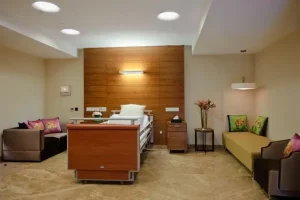 Complete 30 day HSCT done in hospital. Private deluxe rooms are very well served for patient and attendant comfort and equipped with HEPA Filter with Triple Level Air Filtration. No outside hospital stay avoids risk of infection during the aplastic phase, 24 x 7 nursing care and best medical attention. Advanced HSCT protocol used does not require any further chemo or treatment after leaving the hospital.
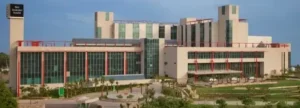 International and Globally Renowned Accreditations. HSCT Hospital India is accredited by the Joint Commission International, USA, the National Accreditation Board for Hospitals and Healthcare Providers (NABH), and the National Accreditation Board for Laboratories (NABL) for processes and high quality patient care.