HSCT for Autoimmune Diseases: Which Conditions It Treats and What the Evidence Shows
Medically reviewed and approved by the board of haematologists at HSCT Hospital India, whose transplant physicians hold DM Clinical Haematology qualifications and fellowship training in stem cell transplantation.
Last reviewed: 29 July 2026. Every figure below is drawn from a peer-reviewed study, linked where it is cited.
On this page
- What is HSCT, and why does one treatment work across so many diseases?
- Which autoimmune diseases does HSCT treat?
- How does a stem cell transplant work? The four stages
- What does the evidence show for HSCT in each autoimmune disease?
- Which autoimmune conditions is HSCT not used to treat?
- What are the risks of HSCT, and how do they differ by disease?
- Am I a candidate for HSCT, and how is eligibility decided?
- How much does HSCT cost for an autoimmune disease?
- What is the next step towards HSCT?
- Frequently asked questions about HSCT for autoimmune diseases
What is HSCT, and why does one treatment work across so many diseases?
HSCT is a one time procedure that clears out the immune system attacking your own tissue and grows a new one from your own blood stem cells. Your stem cells are collected and frozen first. Strong immunosuppressive drugs then remove the mature immune cells that carry the memory of the attack. Your own cells are given back, and over the following weeks a new immune repertoire grows in that no longer recognises your tissue as a target.
That is why the same procedure appears in the neurology literature, the rheumatology literature and the gastroenterology literature. The target is not the organ. The target is the immune system behind it. HSCT for multiple sclerosis and HSCT for Crohn’s disease are not two different treatments. They are one treatment applied to two consequences of the same underlying failure.
One idea decides who benefits. Inflammation that is still switching on and off can be stopped, and damage that has already been done cannot be reversed. A transplant acts on the first. So a patient with active relapses and little accumulated disability does well, and a patient whose disease burned out years ago and left scarring behind does not. Coming early is the single strongest thing a patient can do for their own result.
The protocol used at HSCT Hospital India is the non-myeloablative protocol pioneered by Professor Richard K. Burt at Northwestern University, meaning the conditioning spares the bone marrow rather than destroying it. The cells given back are the patient’s own, which is what autologous means, so there is no donor to find, no tissue matching to pass and no risk of graft versus host disease. There is no follow up chemotherapy. Patients spend the aplastic phase, the window when the new immune system has not yet grown in and infection risk is at its highest, in a deluxe private room with triple HEPA filtration.
Which autoimmune diseases does HSCT treat?
HSCT is used to treat multiple sclerosis, scleroderma, systemic lupus erythematosus, Crohn’s disease, CIDP, myasthenia gravis, NMOSD, stiff person syndrome, myositis and several forms of vasculitis, with multiple sclerosis and scleroderma graded standard of care by the European Society for Blood and Marrow Transplantation. Close to 5,000 of these transplants are recorded on its registry.
EBMT publishes a formal indications table that grades every disease, and its 2025 edition is the ninth. It sorts conditions into four categories: standard of care, clinical option, developmental, and generally not recommended.
| Condition | EBMT category | What that means for a patient |
|---|---|---|
| Multiple sclerosis, highly active relapsing remitting, failing drug therapy | Standard of care | Generally indicated in suitable patients. Supported by randomised trial evidence. |
| Scleroderma | Standard of care | Generally indicated in suitable patients. Three randomised trials. |
| Progressive MS with active inflammation | Clinical option | Reasonable after careful assessment of risk and benefit. |
| Progressive MS without active inflammation | Generally not recommended | The inflammation a transplant acts on is no longer present. |
| Systemic lupus erythematosus | Clinical option | Single centre trials and registry data, no randomised trial. |
| Crohn’s disease | Clinical option | One randomised trial missed its endpoint; registry data more favourable. |
| CIDP, myasthenia gravis, stiff person syndrome | Clinical option | Strong single centre cohorts, no randomised trial. |
| NMOSD (neuromyelitis optica) | Clinical option | Two published datasets disagree; regimen appears to matter. |
| Idiopathic inflammatory myopathy (myositis) | Clinical option | Used sporadically, mixed results, thinnest evidence base. |
| Vasculitis including Behcet’s, Takayasu, ANCA positive | Clinical option | Small retrospective series only. |
| Rheumatoid arthritis, joint predominant | Clinical option, but superseded | EBMT notes JAK inhibitors achieve similar results with less toxicity. |
| Type 1 diabetes | Developmental | Should only be done inside an approved trial protocol. |
Table 1. How EBMT grades stem cell transplantation by autoimmune condition, 2025 practice recommendations.
Standard of care means transplantation is generally indicated in suitable patients. Clinical option means it is reasonable after careful assessment of risk and benefit, which is the grading most of these conditions carry and exactly how HSCT Hospital India treats them: one record at a time, on the strength of that patient’s own imaging, bloods and treatment history. A great many patients graded clinical option have come off their medication and stayed off it. Get Free Expert Opinion Now and an HSCT case manager will tell you where your own diagnosis sits.
Source: Greco R, Ruggeri A, McLornan DP, Snowden JA, Alexander T, et al. Indications for haematopoietic cell transplantation and CAR-T for haematological diseases, solid tumours and immune disorders: 2025 EBMT practice recommendations. Bone Marrow Transplantation 2025;60:1499 to 1525. PubMed 40926035
How does a stem cell transplant work? The four stages
A stem cell transplant for autoimmune disease runs in four stages, mobilisation, harvest, conditioning and reinfusion, and the whole sequence takes about 30 days in hospital. The procedure is the same whatever the underlying disease. Only the conditioning drugs and the length of workup change.
- Mobilisation. Growth factor, usually with a dose of cyclophosphamide, drives your haematopoietic stem cells out of the bone marrow and into the bloodstream. This takes several days and the CD34 count is checked daily.
- Harvest (Leukapheresis). Blood is drawn through a line, the stem cells are separated out by a cell separator, and the rest of the blood is returned. The collected cells are cryopreserved. This is not surgery and it is not painful.
- Conditioning. Immunoablative chemotherapy with anti-thymocyte globulin removes the mature autoreactive immune cells. This is the stage that carries the risk, and it is why the patient is in a HEPA filtered room.
- Reinfusion. Your own cryopreserved cells are thawed and given back through a drip. Over the following one to three weeks they repopulate the immune system, and the new repertoire that grows in no longer targets your own tissue.
The 30 days break down roughly as follows. Days 1 to 10 cover admission, the full pre-transplant workup and mobilisation. Around day 11 to 13 the cells are harvested. Conditioning runs for the next five to seven days. Reinfusion follows, and then comes the aplastic phase, usually seven to ten days, during which the white cell count sits near zero and the patient stays in the HEPA filtered room. Engraftment is confirmed when the neutrophil count recovers, and discharge follows a few days after that. Patients fly home with no maintenance chemotherapy to take. The full sequence is set out on our how HSCT works page.
 Get HSCT India Brochure Emailed to you
What does the evidence show for HSCT in each autoimmune disease?
The evidence for HSCT in autoimmune disease is strongest in multiple sclerosis and scleroderma, where randomised controlled trials show transplantation outperforming continued drug therapy on disability, relapse and survival, and it is backed in CIDP, myasthenia gravis and lupus by cohorts in which most patients came off immune medication altogether and stayed off it for years. The table gives the strongest published result for each condition, with the study design stated.
| Condition | Best evidence | Headline result |
|---|---|---|
| Multiple sclerosis | MIST randomised trial, JAMA 2019, n=110 | 110 randomised, 55 to each arm. Progression in 3 of 52 transplanted against 34 of 51 on drugs. Disability improved by 1.0 EDSS point after transplant, worsened by 0.7 on drugs. |
| Multiple sclerosis | UK national cohort, JNNP 2026, n=364 | 88.6 per cent relapse free at 5 years. 20.4 per cent had improved disability. Mortality 1.4 per cent. |
| Scleroderma | SCOT randomised trial, NEJM 2018, n=75 | Event free survival 74 per cent against 47 per cent at 6 years. Overall survival 86 per cent against 51 per cent. |
| Scleroderma | ASTIS randomised trial, JAMA 2014, n=156 | More deaths in year one after transplant, significant long term event free survival benefit from year two. |
| Crohn’s disease | EBMT registry survey, 2018, n=82 | 68 per cent in remission or significantly improved at median 41 months. 27 per cent needed no drug therapy at all. |
| Crohn’s disease | ASTIClite randomised trial, 2024, n=23 | Authors judged that regimen unsuitable for clinical use; the trial was stopped early for toxicity. |
| Systemic lupus erythematosus | Single centre trials plus EBMT registry, >300 patients | Drug free survival around 50 to 65 per cent at 5 years. No randomised trial has been done. |
| CIDP | Single centre cohort, J Neurol 2020, n=60 | About 80 per cent free of all immune treatment out to 5 years. Independent walking 33 per cent before, 83 per cent at 5 years. |
| Myasthenia gravis | Ottawa cohort, 2025, n=21 | 16 of 18 evaluable reached stable remission off all treatment, held over median 6.7 years. |
| NMOSD | Two cohorts that disagree, n=13 and n=16 | 80 per cent relapse free beyond 5 years in one; 10 per cent relapse free at 5 years in the other. |
| Stiff person syndrome | Prospective cohort, Neurology 2021, n=23 | 74 per cent responded, 47 per cent still in remission at mean 3.5 years, 26 per cent never responded. |
| Myositis | Case series only | EBMT describes use as sporadic with mixed results. No adult cohort of meaningful size exists. |
Table 2. Strongest published outcome by condition, with study design stated.
Multiple sclerosis has the strongest case. The MIST randomised trial randomised 110 patients, 55 to each arm, and reported disease progression in 3 of 52 transplanted patients against 34 of 51 who stayed on continued drug therapy, and average disability improved by one full EDSS point in the transplant arm while it worsened in the drug arm. The most recent matched comparison, published in Brain in 2026, across 143 transplanted patients against 283 on cladribine and 134 against 562 on alemtuzumab, found transplantation roughly doubled the chance of disability improving. Read the full picture on the multiple sclerosis guide, and see how disability itself is scored on our EDSS scale page.
Scleroderma is the other standard indication, and it has three randomised trials behind it: ASSIST, ASTIS and SCOT. SCOT reported event free survival of 74 per cent against 47 per cent at six years, and overall survival of 86 per cent against 51 per cent. The pattern in scleroderma is distinctive: the transplant carries more risk than drug therapy in the first year, and outperforms it from the second year onward, which is why the cardiac and pulmonary workup before admission is so thorough. Details on the scleroderma guide.
In Crohn’s disease, a European registry survey of 82 patients found 68 per cent in remission or significantly improved at a median of 41 months, with more than half of those who restarted drugs responding to medicines that had previously failed them, and 27 per cent needing no drug therapy at all. A reanalysis of the ASTIC randomised trial using conventional Crohn’s endpoints found complete endoscopic healing in 19 of 38 patients, although the trial missed its own primary endpoint, and a later trial, ASTIClite, tested a reduced intensity regimen its authors then judged unsuitable for clinical use. The full history is set out on the Crohn’s disease guide.
The neurological conditions outside multiple sclerosis rest on single centre cohorts, and those cohorts are strong. In CIDP, 60 patients dependent on IVIG or plasma exchange were followed for up to five years, roughly 80 per cent remained free of all immune treatment, and independent walking rose from 33 per cent before transplant to 83 per cent at five years. In myasthenia gravis, 16 of 18 evaluable patients in the Ottawa series reached stable remission off all treatment and held it over a median 6.7 years. Stiff person syndrome responds in about three quarters of patients, and the responders can be identified in advance by a specific clinical and antibody pattern. In NMOSD the two published datasets disagree, and both are given on that page rather than only the favourable one.
Lupus rests on single centre trials and registry analyses covering somewhat more than 300 patients worldwide, with drug free survival around 50 to 65 per cent at five years, and the lupus guide gives both the single centre and the lower registry figures. Myositis is treated as a clinical option, with EBMT recording its use as sporadic and its results mixed, so it is the smallest published base of the conditions treated. What every one of these numbers describes is patients who stopped taking immune medication and got their lives back. Get Free Expert Opinion Now to find out what the published evidence means for your own diagnosis.
Which autoimmune conditions is HSCT not used to treat?
HSCT is not used to treat joint predominant rheumatoid arthritis, type 1 diabetes outside an approved trial protocol, or any condition with no published transplant evidence behind it, including postural orthostatic tachycardia syndrome and autoimmune autonomic ganglionopathy.
Rheumatoid arthritis was seriously investigated in the late 1990s. Of 73 patients transplanted across 15 European and Australian centres, 67 per cent reached a meaningful response, but most restarted their drugs within six months. EBMT’s 2025 position is that JAK inhibitors now achieve comparable responses with less toxicity. Transplantation remains an option in the systemic forms, such as Felty syndrome or adult onset Still’s disease with organ threatening involvement.
Type 1 diabetes is classified by EBMT as developmental, meaning it belongs inside an approved trial protocol. The Brazilian studies that made it famous did show most newly diagnosed patients becoming insulin free, and long term follow up of the same group found they resumed insulin at a median of around 43 months. That is a durable delay rather than a permanent one.
For postural orthostatic tachycardia syndrome, autoimmune autonomic ganglionopathy and autoimmune encephalitis as a distinct indication, there is no published trial, cohort or case series of transplantation as a treatment, and none of them appears in the EBMT indications table. In POTS the published literature runs the other way, describing orthostatic intolerance as a complication that can follow a transplant rather than something a transplant fixes. HSCT Hospital India does not offer transplantation for these conditions.
Sjogren’s syndrome sits between those two groups. It is not graded in the EBMT indications table and the published transplant experience in primary Sjogren’s is small, but severe systemic disease that has reached the nerves, lungs, kidneys or blood vessels is assessed case by case on the medical records. Our HSCT guide for Sjogren’s syndrome sets out what the evidence supports and how candidacy is decided.
What HSCT Hospital India does treat, with published evidence behind each one, is multiple sclerosis, scleroderma, lupus, Crohn’s disease, CIDP, myasthenia gravis, NMOSD, stiff person syndrome, myositis and several forms of vasculitis. Our guide to HSCT hospitals and centres worldwide sets out who does what internationally, and the country pages for Canada and Mexico cover the two destinations patients most often weigh against India. Get Free Expert Opinion Now and you will get an answer on your own condition.
What are the risks of HSCT, and how do they differ by disease?
The regimen used at HSCT Hospital India sits at the low end of published transplant risk: across recent multiple sclerosis cohorts, transplant related mortality ranged from zero to about two per cent, the Swedish national cohort of 174 patients recorded none at all, and the largest UK national series reported 1.4 per cent. Risk does vary by disease and by how ill the patient already is, so the real figures are given below with their denominators rather than as a single number.
| Cohort | Patients | Mortality | Note |
|---|---|---|---|
| UK national MS series, 2002 to 2023 | 364 | 1.4 per cent | All five deaths in patients already at median EDSS 6.5 |
| German two centre MS series, 2007 to 2025 | 109 | 0.9 per cent | Includes 50 per cent progressive MS |
| EBMT registry MS, conditioning comparison | 1,114 | 1.0 to 2.0 per cent | Difference between regimens not statistically significant |
| Swedish national MS cohort | 174 | 0 per cent | Relapsing remitting only |
| Scleroderma, modern series | 80 to 156 per trial | 2.4 to 6 per cent | Down from 10 per cent in the earliest trial |
| Myasthenia gravis, Ottawa | 21 | 9.5 per cent at 100 days | Medically complex patients; the authors flag this themselves |
| Lupus, EBMT registry | 28 | 15 per cent non-relapse mortality | Single centre series reported 2 per cent |
Table 3. Transplant related mortality by condition and cohort, with denominators.
Two things follow from those figures. In the UK national series every one of the five deaths occurred in patients who were already severely disabled before transplant, at a median EDSS of 6.5, so risk is not evenly spread; it concentrates in the patients who waited longest, and it falls sharply for those who come while they are still walking. The diseases with higher mortality are the ones where the organs are already involved, which is why the cardiac workup before a scleroderma transplant is far more extensive than before a multiple sclerosis one.
Beyond mortality, the common complications are febrile neutropenia during the aplastic phase, which affects most patients and is managed as routine; viral reactivation, most often Epstein Barr virus or cytomegalovirus, which is usually transient; and secondary autoimmune disease, most commonly thyroid, which a long term European survey of 579 patients put at a cumulative 10.3 per cent at ten years. Fertility is affected by the conditioning drugs and is discussed before admission, not after. Every one of these is anticipated, monitored daily and treated inside the HEPA filtered unit, which is why the modern figures look nothing like the earliest trials.
Source for the ten year late effects data: Kirgizov K, Greco R, et al. Bone Marrow Transplantation 2026, published online 27 July 2026. PubMed 42509429
 Request a Call Back
Am I a candidate for HSCT, and how is eligibility decided?
You are a candidate for HSCT if your autoimmune disease is still actively inflamed, has not been controlled by the drugs that are supposed to control it, and has not yet caused irreversible organ damage, and if your heart, lungs and kidneys are strong enough to carry you through conditioning. The assessment is not asking how severe your disease is. It is asking how much of your current state is still driven by ongoing immune attack, because that is the part a transplant can take away.
In practical terms an evaluation looks at four things. Whether there is objective evidence of continuing inflammatory activity, which in multiple sclerosis means relapses or new MRI lesions, in lupus means serology and biopsy activity, and in Crohn’s means endoscopic ulceration. How long the disease has been running, because shorter duration predicts a better response in almost every condition studied. What organ reserve remains, particularly heart, lung and kidney. And whether the drugs that are supposed to control the disease have genuinely been tried and genuinely failed.
These thresholds are published, and they are not identical from one disease to the next. They are most fully specified in multiple sclerosis, where the page on how eligibility is decided at HSCT Hospital India sets out the age ranges, the disability ranges and the disease duration limits alongside the published European, German and United Kingdom criteria. The remaining conditions are assessed against their own criteria.
Age is a guide rather than a rule. The working range is under about 60, and EBMT’s rheumatic guidance sets 18 to 65, but disability level and organ reserve matter more than the year on your birth certificate. Outcomes are consistently better in patients who come earlier rather than later, which is why a patient whose disease is active now is in a stronger position than they may realise.
A formal transplant evaluation reads your imaging, your bloods and your organ function together and gives you a direct answer on whether transplantation would change your trajectory. It is free, it carries no obligation, and it is the same assessment any accredited centre would run. Get Free Expert Opinion Now and an HSCT case manager will come back to you with what your records actually show.
How much does HSCT cost for an autoimmune disease?
The all inclusive price at HSCT Hospital India is USD 30,000, and that is the same figure whatever the underlying condition, because the procedure is the same procedure. There is no separate autoimmune surcharge and no follow up chemotherapy to pay for afterwards. The equivalent treatment in the United States is generally quoted between USD 150,000 and USD 200,000.
| Included | Detail |
|---|---|
| Length of stay | 30 days in hospital for the patient and one attendant |
| Room | Deluxe private room with triple HEPA filtration throughout the aplastic phase |
| Pre-transplant workup | Full assessment including cardiac, pulmonary and renal function |
| Mobilisation | Growth factor and mobilising chemotherapy, with daily monitoring |
| Harvest | Leukapheresis, CD34 count, processing and cryopreservation |
| Conditioning | All conditioning drugs and anti-thymocyte globulin |
| Reinfusion and engraftment | Reinfusion, all supportive care, transfusions and anti-infectives through the aplastic phase |
| Physician and hospital fees | All consultant, haematology, neurology and nursing fees |
| Coordination | A named HSCT case manager from first contact through discharge |
| Accreditation | JCI-USA accredited, plus NABH and NABL |
| Not included | International flights, visa fees, treatment for unrelated conditions found at workup |
Table 4. What the USD 30,000 all inclusive package covers.
The price covers the full 30 day admission for the patient and one attendant, from the first workup through to discharge, and there are no staged payments that appear later. What sits outside it is international flights, visa fees, and any treatment for a condition unrelated to the transplant that is found during workup. A full country by country breakdown, including how India compares with Mexico, Russia and the United States, is on our HSCT cost by country page.
The waiting list is short, which matters more than it sounds: in several of these conditions the strongest predictor of a good outcome is how early the transplant happens. A patient who is assessed this month can often be admitted within weeks. Get Free Expert Opinion Now and an HSCT case manager will confirm the price and the earliest date available to you.
What is the next step towards HSCT?
The next step is a free, no obligation opinion on your own medical records from an HSCT case manager at HSCT Hospital India, who will tell you whether transplantation would change your trajectory, what your 30 day admission would involve, and when you could start.
That opinion is built on a formal transplant evaluation, which reads your diagnosis, your evidence of ongoing inflammatory activity, your organ reserve and your treatment history together. Most patients hear back within a few working days. More than 1,500 international patients have already come through HSCT Hospital India, a JCI-USA accredited centre, for the same USD 30,000 all inclusive package, and many of them are living without immune medication for the first time in years. Get Free Expert Opinion Now.
Frequently asked questions about HSCT for autoimmune diseases
Can HSCT treat autoimmune diseases other than multiple sclerosis?
Yes. Close to 5,000 transplants for autoimmune disease have been reported to the European transplant registry, and multiple sclerosis accounts for around half of them. The rest cover scleroderma, Crohn’s disease, lupus, CIDP, myasthenia gravis, NMOSD, stiff person syndrome, myositis, vasculitis and autoimmune cytopenias. EBMT classifies multiple sclerosis and scleroderma as standard of care and the others as a clinical option, meaning transplantation is reasonable after careful assessment of risks and benefits.
Which autoimmune diseases does HSCT work best for?
The strongest results are in highly active relapsing remitting multiple sclerosis and in early diffuse scleroderma, both supported by randomised controlled trials. CIDP and myasthenia gravis have produced high rates of lasting drug free remission in single centre cohorts, in the region of 80 per cent, and lupus reaches drug free survival of around 50 to 65 per cent at five years. Neither CIDP nor myasthenia gravis has yet been tested in a randomised trial.
Does HSCT cure autoimmune disease?
HSCT produces sustained remission with no ongoing medication in a substantial proportion of carefully selected patients, and in several conditions that remission has held for five years and beyond after a single course of treatment. No treatment for these conditions is described in the medical literature as a cure, and any centre promising one should be treated with caution. A proportion of patients relapse and resume treatment, and drugs that had stopped working before the transplant frequently start working again afterwards.
How is HSCT different from CAR T cell therapy?
HSCT rebuilds the whole immune system from your own stem cells and has been used in autoimmune disease for over 25 years. CAR T cell therapy engineers your T cells to remove a specific cell population, usually B cells, and is far newer. As of mid 2026, CAR T in multiple sclerosis has been reported in peer reviewed journals in fewer than ten patients, and EBMT classifies it as developmental across every autoimmune indication. It is a promising research direction rather than an available treatment.
What is the success rate of HSCT for autoimmune disease?
In the UK national multiple sclerosis series of 364 patients, 88.6 per cent were free of relapse at five years and roughly one in five had improved disability. In CIDP, around 80 per cent remained off all immune treatment out to five years. Rates vary by disease and by how early the patient comes: in Crohn’s disease the figures are lower and the randomised evidence is mixed. Each condition guide gives its own numbers with the study they came from.
What is the transplant related mortality?
Across recent multiple sclerosis cohorts published in 2025 and 2026 it ranged from zero to about two per cent, with the largest UK national series reporting 1.4 per cent and the Swedish national cohort reporting none. Every death in the UK series occurred in patients who were already severely disabled before transplant. Scleroderma is higher, in the region of two to six per cent in modern series, because the heart and lungs are often already involved, and myasthenia gravis reached 9.5 per cent at 100 days in the one substantial published series, in medically complex patients.
Is HSCT available for POTS or dysautonomia?
No. There is no published trial, cohort or case series of transplantation as a treatment for postural orthostatic tachycardia syndrome or autoimmune autonomic ganglionopathy, and neither condition appears in the EBMT indications table. For POTS the published literature describes orthostatic intolerance as something that can follow a transplant rather than something it treats. The conditions HSCT Hospital India does treat, each with published evidence behind it, are multiple sclerosis, scleroderma, lupus, Crohn’s disease, CIDP, myasthenia gravis, NMOSD, stiff person syndrome, myositis and several forms of vasculitis. Sjogren’s syndrome and small fibre neuropathy are treated here as well, and each has its own guide setting out what the published experience for that condition is and who is considered for treatment.
How much does HSCT cost for an autoimmune disease in India?
USD 30,000, all inclusive, for a 30 day stay covering both the patient and one attendant. That includes the deluxe private room with triple HEPA filtration, all hospital and physician fees, the conditioning drugs, the harvest and the reinfusion, and all monitoring through engraftment. The same treatment is generally quoted at USD 150,000 to USD 200,000 in the United States.
How long does the whole process take?
Thirty days in hospital, covering workup, mobilisation, harvest, conditioning, reinfusion and engraftment. Most patients then remain in the country for a short recovery period before flying home. There is no follow up chemotherapy afterwards, which is the point of the protocol used at HSCT Hospital India.
Am I too old or too disabled for HSCT?
Age is a guide rather than a rule, and disability level and organ reserve matter more than the year on your birth certificate. The working range is under about 60 and EBMT’s rheumatic guidance sets 18 to 65. Outcomes across every condition are better in patients with shorter disease duration and less accumulated damage, so it is decided case by case on your records, and an HSCT case manager will tell you where you stand.
Why Choose HSCT Hospital India for Life Changing Autoimmune Disease Treatment

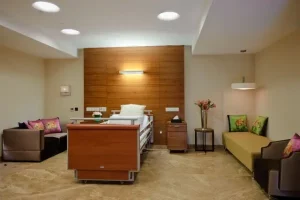 Deluxe private HEPA filtered rooms. Triple HEPA filtration for the patient and one attendant through the full 30 days, which is what makes the aplastic phase safe. Inside the HEPA filtered private rooms
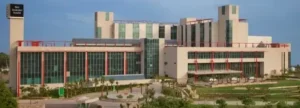 A dedicated HSCT unit, not a general ward. Led by the board of haematologists, DM Clinical Haematology from AIIMS with stem cell transplantation fellowship training in Vancouver. Meet the HSCT doctors

Real Patients, Real Stories
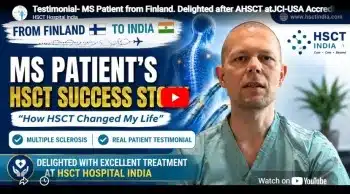
A Finland Patient’s Inspiring Recovery from Multiple Sclerosis after HSCT Treatment at JCI-USA Accredited World Class Hospital in India
Truly inspiring HSCT treatment journey: a man from Finland diagnosed with Primary Progressive

American Cop Flies to India for HSCT: 95% Symptom free, 5 Months after HSCT Treatment at JCI-USA Accredited World Class Hospital in India
Five months after his transplant, about 95 per cent of his symptoms were gone. He was off prednisone, exercising every day, and back at work as a police officer. Dylan: HSCT for Autoimmune Small Fibre Neuropathy Results at a Glance Patient Dylan, South Jersey, United States, aged 28 when he recorded this account Condition Autoimmune
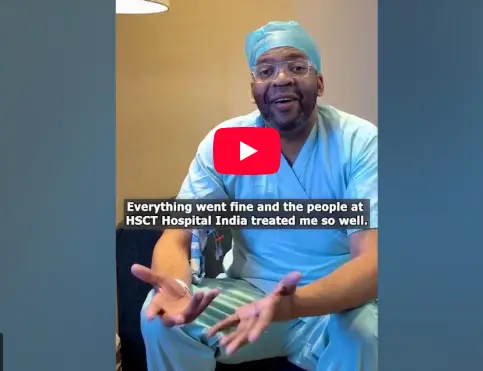
Sergel, 38M from Holland: Multiple Sclerosis Patient shares after HSCT Treatment at JCI-USA Accredited World Class Hospital in India
Watch this Video testimonial: Sergel, 38 years young man from Netherlands suffering from Multiple Sclerosis
Every patient shown here was treated with the same protocol used for the conditions covered here. Their diagnoses differ; the transplant does not. Get Free Expert Opinion Now