HSCT for MS in Ireland: Cost, HSE Funding and Results
A stem cell transplant for multiple sclerosis, known everywhere as HSCT, is not performed as a routine service anywhere in the Republic of Ireland. Irish patients who want it are referred onward, and around ten people a year travel for it. Roughly half of them are funded by the HSE to a specialist centre in London. The rest pay for themselves, and until now that has usually meant Mexico or Russia. HSCT Hospital India offers the same class of treatment, at a JCI USA accredited hospital outside Delhi, for a fully inclusive 30,000 US dollars covering thirty days for the patient and one attendant.
Paul Campbell Dawson from Ireland had been in a wheelchair for five years with progressive MS when he was accepted for treatment in India. Nine months after coming home he saw his Irish neurologist for his before and after MRI scans. His neurologist confirmed no active lesions on his brain or spinal column. In his own words, his MS has essentially stopped at present. James, a 48 year old MS patient from Ireland, travelled with a friend as his attendant in 2025 and recovered well within days of the transplant.
Irish patients who have already tried the drugs usually need five answers: what is available in Ireland, what the HSE will and will not pay for, what the published evidence shows, what the treatment in India costs against the alternatives, and how follow up is arranged once they are home.
1. What does a stem cell transplant do in MS?
HSCT uses a patient’s own blood stem cells to rebuild an immune system that has turned against the central nervous system. In MS the target of that attack is myelin, the fatty coating that lets a nerve signal travel cleanly, and each relapse strips a little more of it away. Disease modifying therapies suppress that attack for as long as the drug is taken. HSCT sets out to end it, in a single course, and then stop.
The stem cells are collected from the patient’s own bloodstream, stored, and returned after chemotherapy has cleared out the misdirected immune cells. What grows back is a newly trained immune system that no longer recognises myelin as a target. Because the cells are the patient’s own, there is no donor, no match to find and no waiting list for a compatible donor. That is why the treatment can be scheduled in weeks rather than years.
The HSCT guide for multiple sclerosis explains the mechanism in full, and the same protocol is used at HSCT Hospital India for CIDP, NMOSD, stiff person syndrome and the other conditions listed in the overview of autoimmune conditions treated with HSCT.
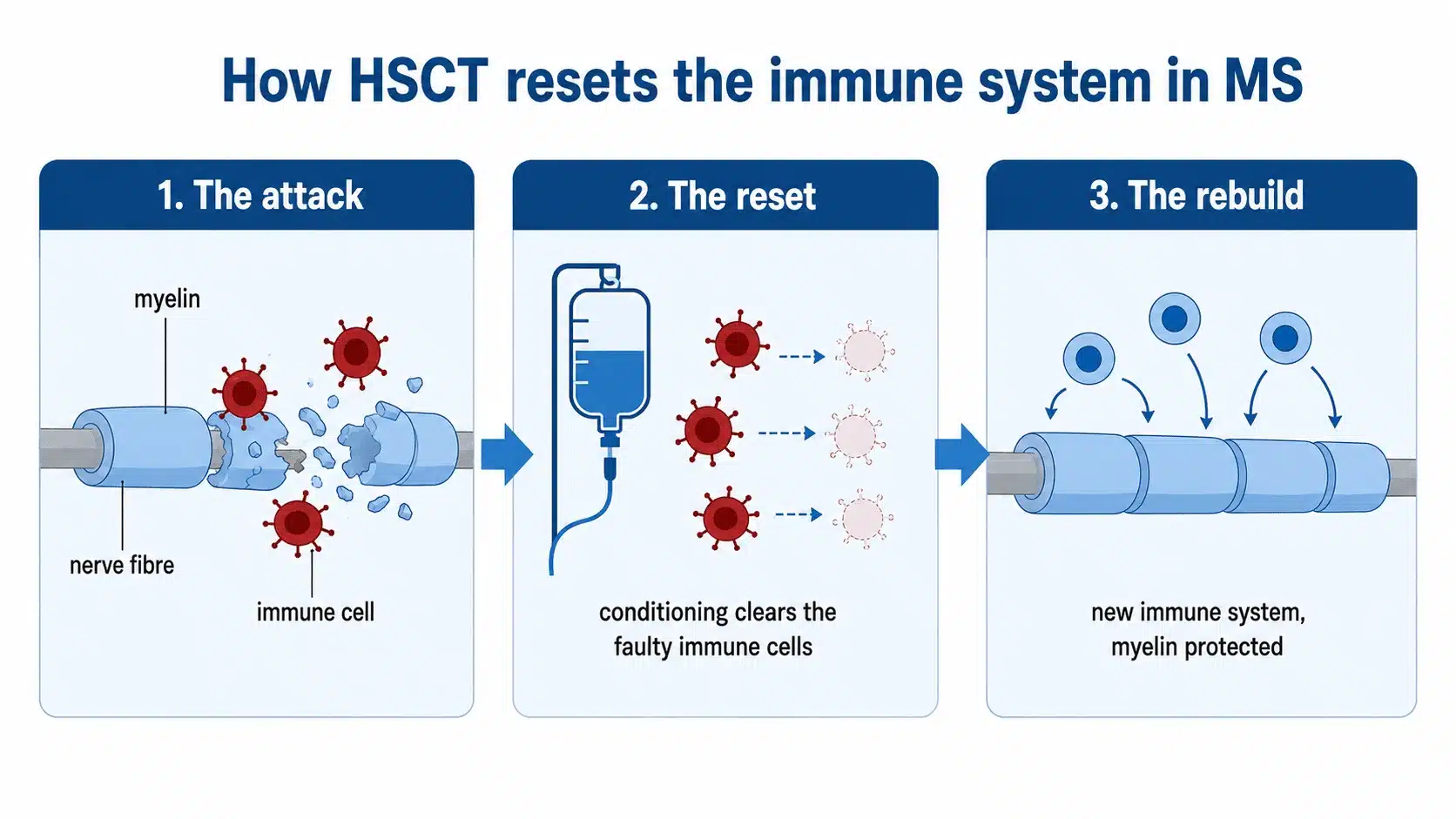
Figure 1. How a stem cell transplant resets the immune system in multiple sclerosis.
2. How many people in Ireland live with MS?
MS Ireland puts the figure at more than 9,000 people living with multiple sclerosis in the Republic. Ireland sits at the higher end of the European range, and there is a genuine internal gradient: a peer reviewed national incidence study led by O’Connell and colleagues, published in Multiple Sclerosis and Related Disorders, found 6.0 new cases per 100,000 people per year nationally, 9.6 in the northern region against 5.1 in the southern region, and a female to male ratio of 2.7 to 1.
Prevalence estimates for Ireland vary depending on how they are counted, so the figures above are given with their sources rather than rounded into a single headline number. HSCT is designed for one subgroup within that total: patients with active inflammatory disease who have already been through one or more high efficacy drugs. In Ireland this is also the group with the fewest remaining options at home.
3. Is HSCT for MS available in Ireland?
No. There is no routine HSCT service for multiple sclerosis anywhere in the Republic of Ireland, and there is no published Irish national protocol or eligibility document. MS Ireland states on its own HSCT information page that the specialised centres Irish patients are referred to are located in London, and that efforts are under way to establish an HSCT service within Ireland so that candidates no longer need to travel.
St James’s Hospital in Dublin runs a large accredited stem cell transplant unit, but its stated indications are blood cancers and rare solid tumours. MS is not among them. Speaking to the Medical Independent in June 2024, Professor Danny Costello, consultant neurologist at Cork University Hospital, described plans for an Irish centre at St James’s or Beaumont and said of the treatment itself that it is very effective for the right patient and is probably underutilised in Ireland.
Because Ireland has not published its own criteria, Irish cases are reviewed by a multidisciplinary team that assesses eligibility against NHS criteria. In practice that means an Irish patient is judged by a British rulebook, and if they fall outside it there is no Irish appeal route and no Irish alternative.
4. Does the HSE pay for HSCT abroad?
For treatment in Britain, yes. The HSE Treatment Abroad Scheme covers planned treatment in the European Union, the European Economic Area, the United Kingdom and Switzerland, and MS Ireland confirms that Irish HSCT patients are currently funded to London through it. The HSE pays the treating hospital directly. Prior approval is required before travel, and the referral must come from a hospital consultant who is currently treating the patient. A GP cannot refer, and there is no self referral.
For India the answer is no. India is outside the EU, the EEA, the UK and Switzerland, so it falls outside the Treatment Abroad Scheme entirely. Citizens Information states the position directly: treatment in countries outside these regions, such as India, is not covered. The Cross Border Directive is narrower still, covering only the 27 EU states plus Iceland, Liechtenstein and Norway, and it no longer covers the United Kingdom either. Treatment at HSCT Hospital India is self funded. No scheme reimburses it, and any centre suggesting otherwise should be treated with caution.
The usual sequence for an Irish patient is therefore: ask the treating consultant about a Treatment Abroad Scheme referral to London, and if that is refused, or if the wait is longer than the disease allows, then look at what self funding actually costs.

Figure 2. Both routes use the same procedure. The difference is access.
| Route | Covers | What it means in practice |
|---|---|---|
| HSE Treatment Abroad Scheme | EU, EEA, United Kingdom, Switzerland | Funds HSCT in London for patients who meet the criteria. Consultant referral and prior approval required. HSE pays the hospital directly. Travel and accommodation are not covered. |
| Cross Border Directive | 27 EU states, Iceland, Liechtenstein, Norway | Patient pays upfront and claims back afterwards. No longer covers the United Kingdom. No HSCT for MS service in any covered country is offered to Irish patients as a routine pathway. |
| Treatment in India | Not covered by either scheme | Self funded. The 30,000 US dollar package at HSCT Hospital India is all inclusive for thirty days for the patient and one attendant, so the total is known before travel. |
| Standard Irish travel insurance | Emergencies while travelling | Irish policy wordings from VHI and Irish Life Health both exclude costs where the person is travelling for the purpose of obtaining treatment. Specialist medical travel cover is a separate market. |
5. Where do Irish MS patients go for HSCT today, and what does each option cost?
Professor Costello’s estimate, reported in June 2024, is that about ten people with MS a year travel from Ireland for HSCT, that roughly half receive it in London through the Treatment Abroad Scheme, and that the remainder self fund in Mexico or Russia. That second group is the one this page is written for, because they are already paying, and the price differences between destinations are large.
The published programme price at the best known Mexican centre is 59,500 US dollars, with international airfare excluded and hospitalisation capped separately. HSCT Hospital India treats the same conditions with the same class of protocol for 30,000 US dollars, all inclusive, for thirty days covering both the patient and an attendant. At the European Central Bank reference rate of 1.1380 dollars to the euro on 29 July 2026, that is approximately 26,400 euro. Currency moves, so the dollar figure is the one that holds.
A fuller comparison across destinations is set out on the HSCT cost by country page, and the country pages for HSCT for MS in Canada, HSCT for MS in Mexico, HSCT for MS in the USA and stem cell transplantation for MS in the Netherlands show how the same problem looks from other countries with the same shortage.
 Get the HSCT India Brochure by email
6. What does the published evidence show?
The evidence is strong for one specific group: patients with relapsing MS who still have active inflammation and who have failed a high efficacy drug. In the MIST randomised trial, published in JAMA in 2019, disease progression occurred in 3 of 52 patients treated with lower intensity HSCT against 34 of 51 who continued on disease modifying therapy. In the Canadian aggressive MS trial in The Lancet in 2016, no relapses and no new active MRI lesions were seen on sequential scanning over years of follow up.
The 2026 data reinforce it. A UK study of 364 patients across 14 centres, published in the Journal of Neurology, Neurosurgery and Psychiatry, reported 88.6 per cent of patients relapse free at five years and disability that had improved in 20.4 per cent of them, in a population whose median disability score was already 6.0 and 38 per cent of whom had progressive disease. A matched comparison published in Brain in 2026 found HSCT suppressed relapses better than cladribine and better than alemtuzumab, and produced disability improvement roughly twice as often, with no treatment associated deaths.
Two limits belong alongside those numbers. No randomised controlled trial of HSCT in MS has yet reported: RAM MS, StarMS and BEAT MS are all still running. And in the same Brain analysis, HSCT did not show a statistically significant advantage over those drugs on disability worsening, only on relapses and on recovery. The joint ECTRIMS and EBMT consensus recommendations reflect exactly that: HSCT is recommended for highly active relapsing MS that has failed treatment, and remains a clinical option rather than a standard of care in progressive disease with active inflammation.

Figure 3. The MIST randomised trial, published in JAMA in 2019, compared HSCT against continued disease modifying therapy.
7. How does the protocol in India differ from the one used in Britain?
Both use the same principle and differ in the intensity of the chemotherapy. HSCT Hospital India uses a lower intensity conditioning regimen, meaning it suppresses the immune system without destroying the bone marrow outright. Higher intensity regimens clear the immune system more completely and carry a higher risk of serious complications. The Canadian trial that produced the most complete lesion suppression used a high intensity regimen and recorded one death among 24 patients, which is the main reason lower intensity conditioning is now preferred for most patients.
There is no follow up chemotherapy at HSCT Hospital India, and no maintenance drug after discharge. Patients complete the thirty day programme and go home with no MS medication.

Figure 4. Conditioning intensity is the main difference between HSCT protocols, and it is what drives the difference in risk.
8. What happens across the thirty days in hospital?
The treatment runs in four stages across the thirty day stay. In mobilisation, a growth factor draws the stem cells from where they sit in the marrow into the circulating blood, where they can be reached. In harvest, those cells are collected through a machine that separates them from the blood and returns everything else, then frozen and stored. In conditioning, chemotherapy clears the misdirected immune cells. In reinfusion, the patient’s own stored cells are returned through a drip and begin rebuilding the immune system over the following two weeks.
The patient is in a deluxe private room with triple HEPA air filtration for the whole stay, with space and a bed for the attendant. The most vulnerable window is the period between conditioning and the new immune system taking hold, which is why the room and its air handling are part of the clinical protocol.
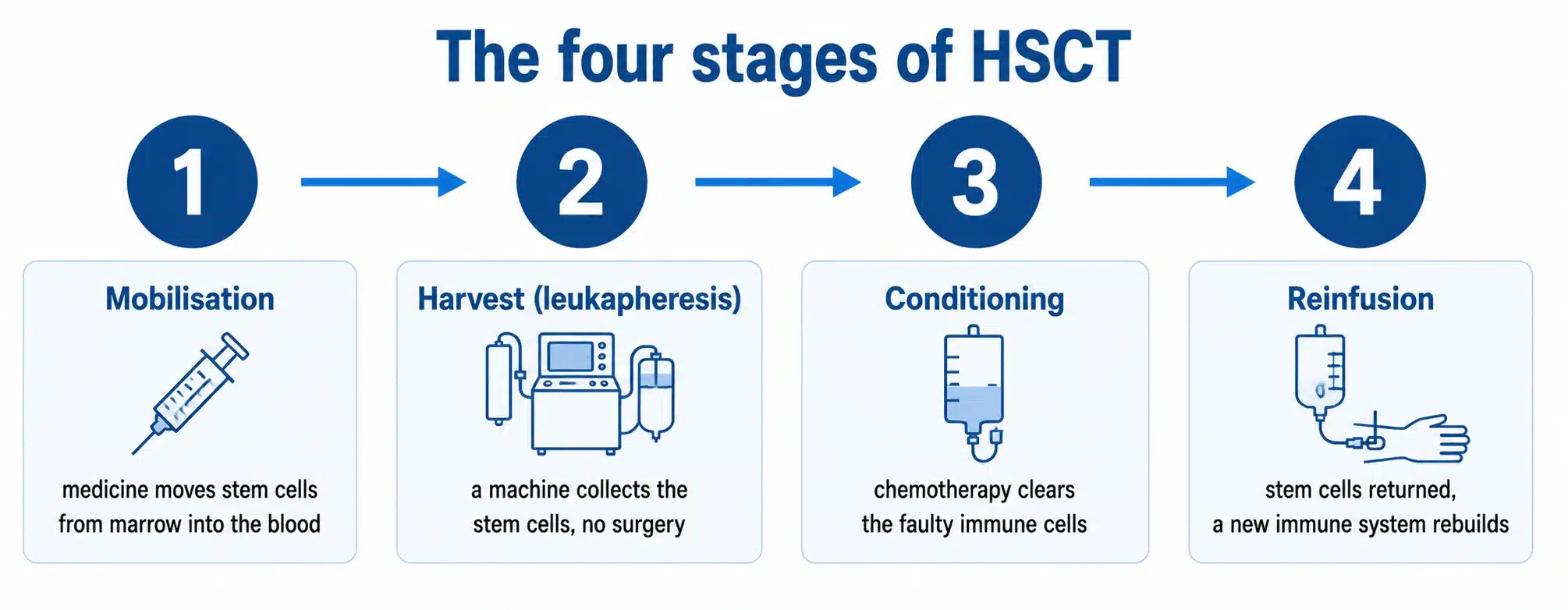
Figure 5. The four stages of a stem cell transplant for MS across the thirty day stay.
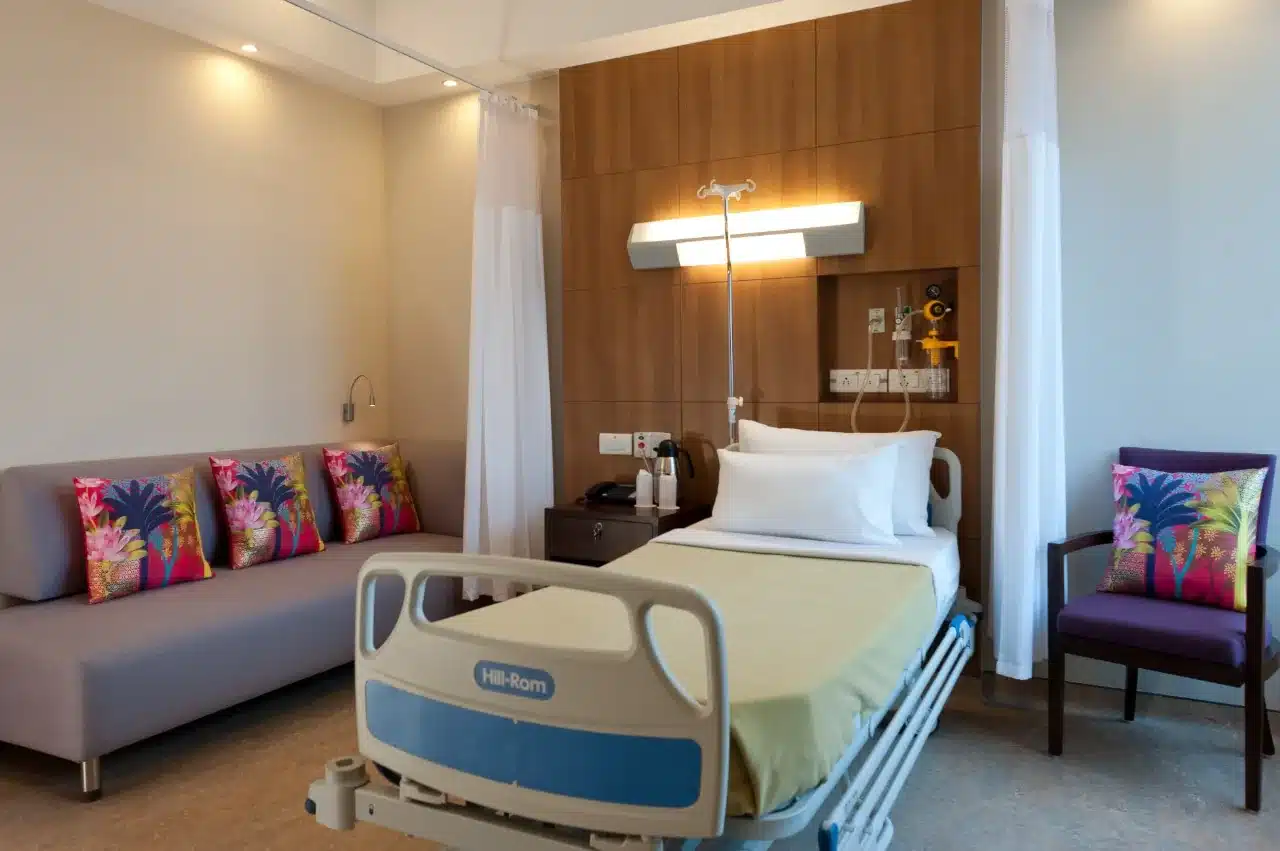
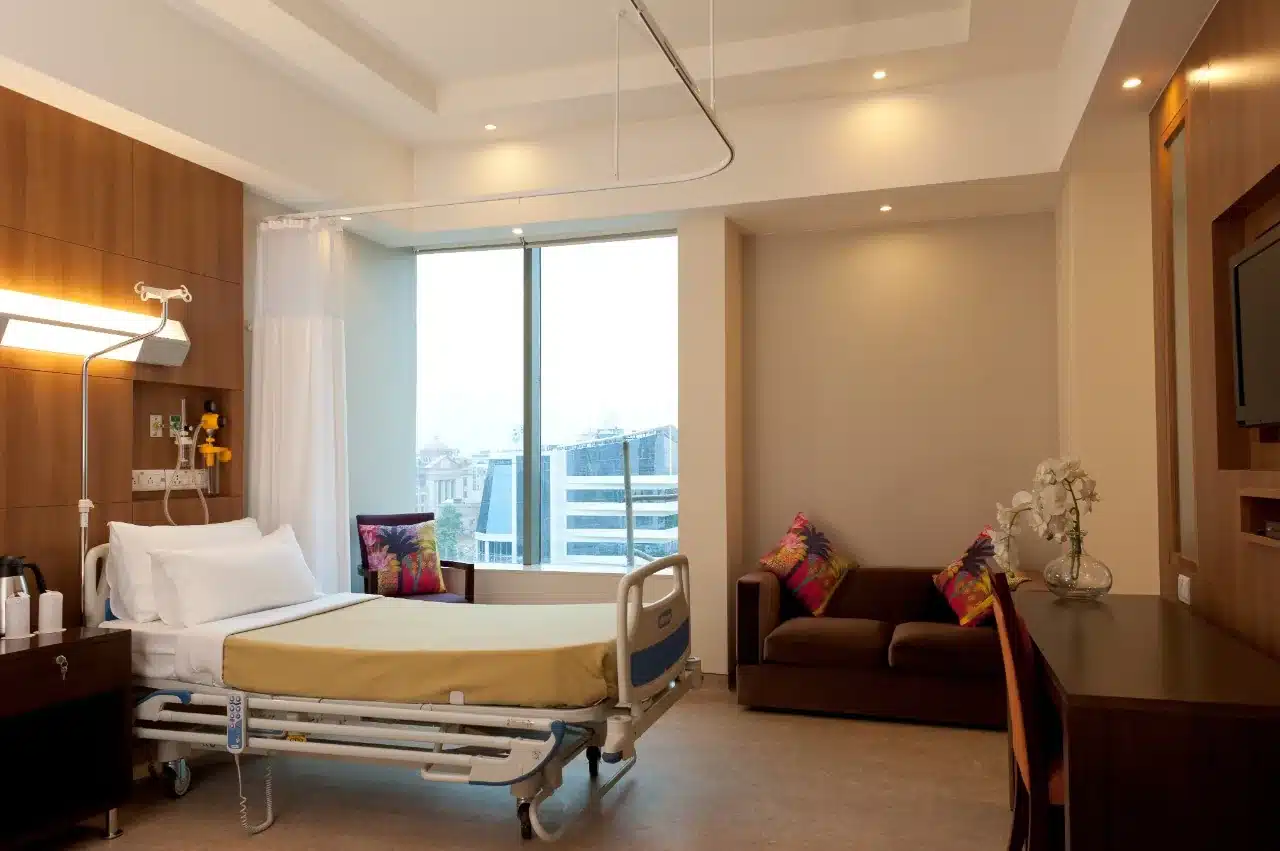
Figure 6. The deluxe private rooms with triple HEPA air filtration, where the full thirty day treatment and recovery take place, with space for the attendant.
9. What can go wrong, and what brings the odds down?
The main risks are infection during the window when the immune system is at its lowest, temporary hair loss, fatigue that can last months, and reduced fertility. MS Ireland’s own guidance states that mortality rates today are less than one per cent in approved centres. The 2026 UK study of 364 patients recorded five deaths, a transplant related mortality of 1.4 per cent, in a cohort spanning 2002 to 2023 whose median disability score was 6.0 and all five of whose deaths occurred in patients who were already severely disabled before treatment.
Risk is reduced in three concrete ways: by screening out patients whose organ reserve cannot tolerate the treatment, by using lower intensity conditioning, and by managing the vulnerable window in a filtered private room with a haematology team that does this continuously. Paul from Ireland described being accepted only after rigorous testing to establish his strength and suitability, and said that this was reassuring, because it proved the hospital was not simply after money. Fertility is a decision that has to be made before treatment starts, not after, and it is covered in the article on fertility preservation before HSCT.
10. What results can an Irish patient expect after HSCT for MS?
The realistic expectation is that the disease stops progressing and that some function returns. Across the published cohorts, the great majority of patients with relapsing disease remain relapse free for years, around a fifth, close to 20%, show measurable improvement in disability, and improvement is more common in those treated earlier and with relapsing rather than progressive disease. Existing damage to myelin that has already been lost does not reverse, so the earlier in the disease course a patient is treated, the more there is to protect.
The German study published in 2026 found the sharpest predictor of outcome was not the hospital but the patient: 94.4 per cent of patients who met the ECTRIMS and EBMT consensus criteria had no evidence of disease activity, against 73.7 per cent of those treated outside those criteria. For an Irish patient deciding when to act, it supports treatment while the disease is still inflammatory rather than waiting. The article on why delaying HSCT for MS is not an option sets out that argument, and the ten year outcomes data covers the long term picture.
 Request a Call Back
11. Who is a candidate for HSCT in Ireland?
The criteria MS Ireland lists for the Irish referral pathway are age 18 to 55, and up to 65 in some cases, MS duration under 15 years and preferably under 10, evidence of active inflammation, previous treatment with a high efficacy drug, and adequate family or social support. Eligibility at HSCT Hospital India is assessed on the same clinical logic: active inflammation to act on, organ function able to tolerate conditioning, and a disability level at which recovery is realistic.
The disability score used throughout is the EDSS, and the EDSS scale explained page sets out what each step means. Patients with active relapsing disease and lower disability are the strongest candidates. Patients with progressive disease that still shows inflammatory activity on MRI are considered case by case. Patients with long standing progressive disease and no inflammatory activity are the group for whom the evidence does not support treatment, and they are told so at assessment.
12. Can HSCT Hospital India treat a patient Ireland or Britain turned down?
Often, yes, because a refusal in the Irish pathway is usually a refusal against NHS criteria and against NHS capacity, not a statement that the treatment cannot work for that person. Age just over a threshold, disease duration slightly too long, or simply a waiting list that is longer than the next relapse, are all reasons a patient is refused at home while remaining clinically suitable.
What does not change is the clinical assessment itself. Every enquiry is reviewed against the same criteria, and patients whose disease or organ reserve makes treatment unsafe or futile are told that directly. Paul from Ireland had progressive MS and had been in a wheelchair for five years when he was accepted, and he was accepted only after testing established that he could tolerate the treatment. The HSCT medical team makes that call, and an HSCT case manager handles everything after it.
13. How much does HSCT for MS cost for an Irish patient?
An Irish patient self funding pays 30,000 US dollars at HSCT Hospital India, approximately 26,400 euro at the European Central Bank reference rate on 29 July 2026, and it is all inclusive. That figure covers thirty days of hospital stay for the patient and one attendant, the deluxe private room with triple HEPA air filtration, all doctor and specialist fees, the mobilisation and harvest of the stem cells, their storage, the conditioning chemotherapy, the reinfusion, all medication during the stay, all laboratory and imaging work, post transplant physiotherapy and rehabilitation, meals for both patient and attendant, airport transfers, and the visa and coordination paperwork. There is no follow up chemotherapy and no maintenance drug afterwards.
What it does not cover is international flights, and the cost of any additional stay beyond thirty days if a patient chooses to extend. Everything clinical is inside the figure, which matters because quoted prices elsewhere frequently exclude hospitalisation, imaging or physiotherapy and then add them.
The full inclusion list is set out on the HSCT treatment package page. Patients raising the money themselves may find the guide to raising funds online for HSCT treatment useful.
| Destination | Cost to the patient | Notes |
|---|---|---|
| London, through the HSE Treatment Abroad Scheme | Funded by the HSE if approved | The first route to test. Requires a consultant referral and prior approval, and the patient must meet the criteria. About half of the roughly ten Irish patients a year are funded this way. |
| India, HSCT Hospital India | 30,000 US dollars, approximately 26,400 euro | All inclusive for thirty days, patient and one attendant, deluxe private room with triple HEPA filtration, no follow up chemotherapy. Short waiting period. |
| Mexico | 59,500 US dollars published programme price | International airfare excluded and hospitalisation capped separately, so the final figure is higher than the headline. |
| United States | 150,000 to 200,000 US dollars | The usual private cost of the same treatment, and the reason cost is the deciding factor for most self funding patients. |
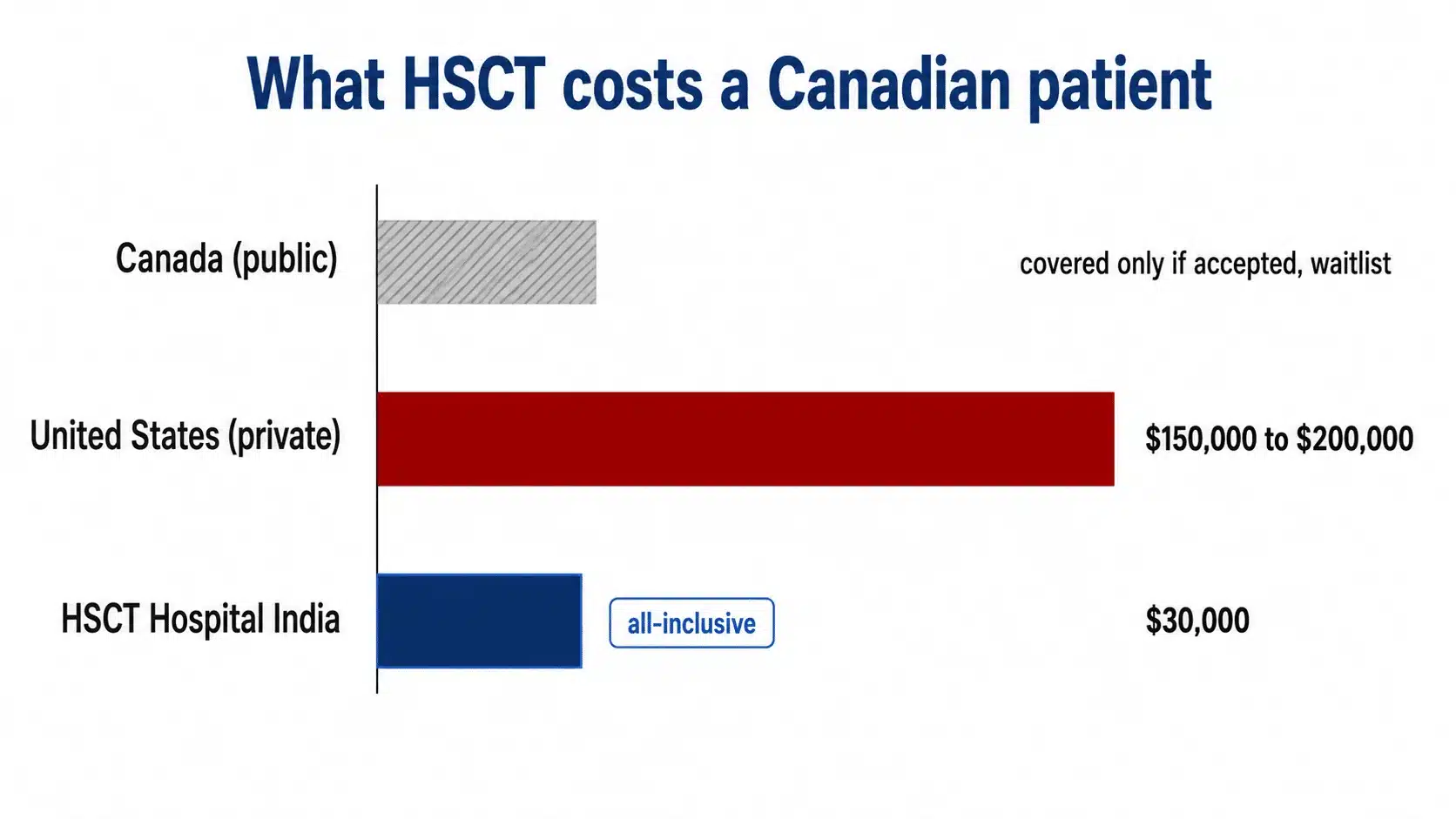
Figure 7. What the same treatment costs by destination, which is why cost decides it for most self funding patients.
14. How is follow up handled after the patient returns to Ireland?
MS Ireland’s guidance is explicit that a local haematologist must agree to continue care and monitoring after a transplant, and that patients should speak to their neurologist before making plans. That agreement is arranged in Ireland, by the patient with their own consultant, and it should be secured before travelling rather than after.
What HSCT Hospital India provides on its side is the full discharge documentation an Irish neurologist and haematologist need, the transplant record, the conditioning detail, the blood counts and the imaging, plus continuing access to the treating specialist. Paul from Ireland described the follow up care from the HSCT specialist and his staff after returning home as reassuring and comforting, and singled it out as the aspect of the care model that impressed him most. He also made the point that recovery needs an intensive physiotherapy regime at home and a positive outlook, because the recovery period can be a rollercoaster.
15. Getting from Ireland to Delhi and home again
There is no direct flight from Dublin to Delhi. The routes Irish patients use are one stop, through Abu Dhabi, Doha or Frankfurt, with a total journey time of roughly eighteen hours including the connection. For a patient with limited mobility that connection needs planning, and airline assistance should be booked on both legs.

Figure 8. The five steps from Ireland to treatment, allowing about five weeks in country.
India issues an electronic medical visa for treatment, and a separate electronic medical attendant visa, with up to two attendant visas granted against one patient visa. Both are applied for online at the Government of India e-visa portal, and both require a letter from the treating hospital in India, which HSCT Hospital India issues once a patient is accepted. Current durations and entry conditions should be checked on that portal at the time of applying.
Airport transfers on arrival are inside the package. So is accommodation, because the attendant stays in the room with the patient for the full thirty days rather than paying separately for a hotel. Standard Irish travel insurance will not cover the treatment itself: the policy wordings from VHI and from Irish Life Health both exclude costs where the person is travelling for the purpose of obtaining treatment, so cover for planned treatment abroad has to be arranged specifically if it is wanted.
16. Should an Irish patient expect a cure?
HSCT is the only treatment for MS shown to produce sustained freedom from disease activity with no ongoing medication after a single course. In the published cohorts most patients with relapsing disease remain relapse free for years, and about one in five improve on the disability scale rather than merely holding steady.
The word cure is not used for multiple sclerosis in the medical literature, and an Irish patient should be wary of any centre abroad that uses it in a quotation. A proportion of patients do see activity return, and myelin already lost before treatment does not come back. Nerve function that was inflamed rather than destroyed frequently does recover, which is why improvement is seen at all. The earlier a patient is treated, the more of that function can still recover.
17. Real patients, real stories
Paul Campbell Dawson, Ireland. Progressive MS, five years in a wheelchair, rapid progression over the preceding two years. Accepted for treatment in India after testing established his suitability. Nine months after returning home, his Irish neurologist confirmed no active lesions on his brain or spinal column and he described his MS as having essentially stopped at present, with annual MRI scans planned to track it. Asked whether he would do it again, he answered yes, without a doubt. His full account is in Paul from Ireland’s own words.
James, 48, Ireland. Travelled to India in 2025 with a friend as his attendant, stayed thirty days in a triple HEPA deluxe private room, and recovered well within days of the transplant. He was pleased with the clinical care, the protocol and the post transplant physiotherapy. His video testimonial from Ireland is on the site.
Patients from neighbouring countries with the same shortage have been treated on the same protocol. The UK patient testimonials cover several, including patients treated after conventional therapy failed, and there is a progressive MS patient from Finland and a full library of patient testimonials from across Europe and North America. These are individual outcomes and not a guarantee of any particular result.
18. The questions Irish patients ask most
Is HSCT for MS available in Ireland?
No. There is no routine HSCT service for multiple sclerosis in the Republic of Ireland. MS Ireland states that the specialised centres Irish patients are referred to are in London, and that efforts are under way to establish an Irish service. In the meantime Irish patients are assessed against NHS criteria by a multidisciplinary team in Ireland.
Will the HSE pay for HSCT in India?
No. The HSE Treatment Abroad Scheme covers planned treatment in the EU, the EEA, the United Kingdom and Switzerland only, and the Cross Border Directive covers the EU and EEA only. India falls outside both, so treatment at HSCT Hospital India is self funded. The Treatment Abroad Scheme does fund HSCT in London for patients who meet the criteria and obtain prior approval, and Irish patients can apply for that route before considering self funding.
How much does HSCT for MS cost at HSCT Hospital India?
30,000 US dollars, approximately 26,400 euro at the European Central Bank reference rate on 29 July 2026. The figure is all inclusive for thirty days for the patient and one attendant, covering the deluxe private room with triple HEPA filtration, all fees, the full transplant, all medication and imaging, physiotherapy, meals and airport transfers. International flights are not included.
How does that compare with the other places Irish patients go?
The published programme price at the best known Mexican centre is 59,500 US dollars with airfare excluded and hospitalisation capped separately. The same treatment privately in the United States is 150,000 to 200,000 US dollars. About ten Irish patients a year travel for HSCT and roughly half are funded to London, with the remainder self funding, most commonly in Mexico or Russia.
Can HSCT help progressive MS?
It can when there is still inflammatory activity present. The ECTRIMS and EBMT consensus treats progressive MS with active inflammation as a clinical option rather than a standard indication, and progressive disease without inflammatory activity is not recommended for transplant. The 2026 UK cohort of 364 patients was 38 per cent progressive and reported disability improvement in 20.4 per cent at five years.
How safe is HSCT for MS?
MS Ireland states that mortality rates today are less than one per cent in approved centres. The 2026 UK study of 364 patients reported transplant related mortality of 1.4 per cent, with all five deaths in patients who were already severely disabled before treatment. The main risks are infection during the period when the immune system is rebuilding, temporary hair loss, prolonged fatigue and reduced fertility.
How long is the wait?
Because the patient’s own stem cells are used, there is no donor to find and no matching to wait for. The waiting period at HSCT Hospital India is short, and treatment is usually scheduled within weeks of acceptance rather than months. That is frequently the deciding factor for patients whose disease is actively progressing.
Who arranges follow up when the patient gets home to Ireland?
The patient does, with their own consultant, and it should be arranged before travelling. MS Ireland’s guidance is that a local haematologist must agree to continue care and monitoring after a transplant. HSCT Hospital India supplies the full discharge documentation an Irish neurologist and haematologist need, and continuing access to the treating specialist.
Does HSCT cure MS?
Cure is not a word the medical literature uses about multiple sclerosis. HSCT is the only treatment shown to produce sustained freedom from disease activity after a single course with no ongoing medication. Damage already done to myelin does not reverse, although nerve function that was inflamed rather than destroyed frequently recovers.
Can an Irish patient bring someone with them?
Yes, and one attendant is included in the 30,000 US dollar package for the full thirty days, staying in the room with the patient. India issues an electronic medical attendant visa, and up to two attendant visas are granted against one patient visa.
What is needed to start?
Recent MRI scans of the brain and spinal cord, the current EDSS score, a summary of MS history and which disease modifying therapies have been used, and recent blood work. The medical team reviews it and gives a clear answer on suitability. There is no charge for that opinion.
19. What is the next step?
Suitability for HSCT is decided for each Irish patient by a formal transplant assessment, which reviews the MRI activity, the disability score, the treatment history and organ reserve together, and it reaches a yes or a no rather than a maybe.
The sequence that makes sense for an Irish patient is to ask the treating consultant about a Treatment Abroad Scheme referral to London first, to arrange in principle agreement from an Irish haematologist for follow up, and in parallel to get a free expert opinion on suitability from the team in India so that the patient can compare two real options.
20. About HSCT Hospital India and the medical team
HSCT Hospital India holds JCI-USA accreditation and carries NABH and NABL accreditation alongside it, and sits in the Delhi National Capital Region, with a haematology and bone marrow transplant unit that has completed more than 1,500 successful transplants. Treatment is delivered in deluxe private rooms with triple HEPA air filtration, on a lower intensity protocol with no follow up chemotherapy, for a fully inclusive 30,000 US dollars covering thirty days for the patient and an attendant. The waiting period is short, and an HSCT case manager handles the visa letter, the transfers, the scheduling and the discharge documentation.
More detail on the hospital, the accreditation and the facilities is on the HSCT Hospital India page, the clinicians are listed on the medical team page, and the reasoning behind the protocol is set out under why choose HSCT Hospital India. Patients comparing centres internationally may also want the list of HSCT hospitals and medical centres across the world, and the full set of condition guides is at HSCT treatment guides.
Why choose HSCT Hospital India
 JCI-USA accredited, and NABH and NABL accredited as well, with its own bone marrow transplant unit and intensive care on the same floor. For a transplant that accreditation matters for one reason above all: it is an audited standard for infection control.See the JCI-USA accredited transplant unit
 The whole thirty days are spent in a deluxe private room filtered by triple level HEPA, with the attendant staying in that room too. In the week when immune defence is at its lowest, filtered air is part of the clinical protocol.See what the all inclusive package covers


Real Patients,Real Stories
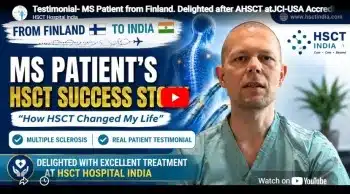
A Finland Patient’s Inspiring Recovery from Multiple Sclerosis after HSCT Treatment at JCI-USA Accredited World Class Hospital in India
Jukka from Finland, who has primary progressive MS, completed the full 30 day HSCT programme at HSCT Hospital India.

American Cop Flies to India for HSCT: 95% Symptom free, 5 Months after HSCT Treatment at JCI-USA Accredited World Class Hospital in India
Dylan, a US police officer with small fibre neuropathy, had about 95 per cent of his symptoms gone five months after HSCT.
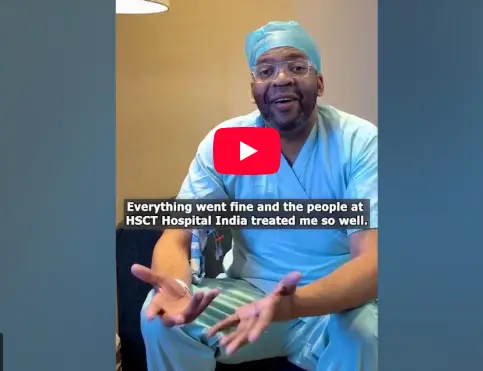
Sergel, 38M from Holland: Multiple Sclerosis Patient shares after HSCT Treatment at JCI-USA Accredited World Class Hospital in India
Watch this Video testimonial: Sergel, 38 years young man from Netherlands suffering from Multiple Sclerosis