HSCT or Kesimpta for MS: How the Two Treatments Compare
Medically reviewed by the board of haematologists at HSCT Hospital India, whose transplant physicians hold DM Clinical Haematology qualifications and fellowship training in stem cell transplantation. The programme runs at a JCI-USA, NABH and NABL accredited hospital that has treated more than 1500 patients.
Last reviewed: 8 October 2026.
Kesimpta is the brand name of ofatumumab, a medicine for relapsing multiple sclerosis. It is injected under the skin with a pen once a month, at home, for as long as a neurologist prescribes it. HSCT, short for autologous haematopoietic stem cell transplantation, is a different kind of treatment that is given once.
HSCT uses chemotherapy to clear the immune cells that damage the nerves in MS. Your own stem cells, collected before the chemotherapy, are then returned so the immune system can rebuild. Both are used for relapsing MS, which is why patients compare them.
Since 2016, people with MS from more than 30 countries have come to HSCT Hospital India, over 1,500 of them in all. Treatment follows Dr Richard Burt’s non-myeloablative protocol in a hospital holding JCI-USA, NABH and NABL accreditation. The price is US $30,000, paid once, for up to 30 days in hospital, and treatment dates are open within weeks.
How do Kesimpta and HSCT act on my immune system?
Kesimpta and HSCT both act on the white blood cells that drive MS. In MS, these immune cells attack myelin, the protective coating around the nerves of the brain and spinal cord. Damaged myelin slows the signals that control sight, movement and feeling.
Kesimpta targets one group of these cells, called B cells. It attaches to a marker on their surface named CD20, and the body then removes the marked cells. Because new B cells keep forming, the injection is repeated every month to keep their numbers low.
HSCT acts on both groups of cells. At HSCT Hospital India, chemotherapy with cyclophosphamide and ATG, short for anti-thymocyte globulin, clears both the T cells and the B cells behind your MS. Your stem cells are then returned, and they produce a new set of immune cells. After this, most patients take no MS medicine.

How do HSCT and Kesimpta compare, side by side?
The two treatments are compared on six points: how each is given, how long it lasts, what it acts on, the research, the side effects and the cost. The answers come from research and prescribing information published up to October 2026.
| Question | HSCT at HSCT Hospital India | Kesimpta (ofatumumab) |
|---|---|---|
| How is it given? | You have it once, during a stay of up to 30 days in hospital in New Delhi. | You give yourself one injection a month at home, after three starting doses. |
| How long does treatment last? | It is given once, and most patients need no MS medicine after it. | It continues every month for as long as your neurologist prescribes it. |
| What does it act on? | It clears the T cells and B cells involved in MS, and your own stem cells then make new ones. | It lowers B cells, which carry a marker called CD20. |
| What has research shown? | In the MIST trial, 3 of 52 patients saw their disability worsen after HSCT, against 34 of 51 on MS drugs. | In the ASCLEPIOS trials, relapses were 0.10 to 0.11 a year, against 0.22 to 0.25 on a daily MS tablet. |
| Most common side effects | Most come from the chemotherapy, last a short time and are treated in hospital as they appear. | Colds and other upper respiratory infections, headache and injection reactions are the most common. |
| What does it cost? | You pay one all-inclusive price of US $30,000 for the whole programme. | It is paid every month by you, your insurer or your health service. |
The two trials in the table measured each treatment against something different. MIST compared HSCT with the MS drugs patients were already taking. ASCLEPIOS compared Kesimpta with teriflunomide, a daily MS tablet. Because of this, each result shows what one treatment achieved, but the two numbers cannot be compared directly.
What is Kesimpta, and who is it given to?
Kesimpta was approved in the United States in 2020 for relapsing forms of MS. Relapsing MS is the form in which symptoms come in attacks, called relapses, with periods of partial or full recovery in between. It is classed as a high efficacy medicine, and patients inject it themselves at home.
Treatment starts with three injections of 20 mg, one a week for three weeks. From week four, one 20 mg injection is given each month. Before the first dose, your neurologist tests for hepatitis B and measures your antibody levels, because the medicine lowers part of your immune defence.
Vaccines are planned around it. Live vaccines are given at least four weeks before the first dose, and other vaccines at least two weeks before where possible. Women are advised to use contraception during treatment and for six months after the last dose.
How well does Kesimpta work for MS?
Kesimpta was approved on two randomised trials called ASCLEPIOS I and II, published in 2020. In a randomised trial, patients are placed in one treatment group or the other by chance. Together the two trials included 1,882 people with relapsing MS, followed for a median of 1.6 years.
Patients on Kesimpta had 0.11 and 0.10 relapses a year in the two trials. Patients on teriflunomide had 0.22 and 0.25. Across both trials, disability got worse and stayed worse for three months in 10.9 per cent of patients on Kesimpta, against 15.0 per cent on teriflunomide.
The same trials also looked at whether disability improved. Improvement lasting six months was seen in 11.0 per cent on Kesimpta and 8.1 per cent on teriflunomide. The trial report could not rule out chance for that difference, so it is not counted as a proven benefit.
What happens during HSCT at HSCT Hospital India, compared with Kesimpta?
Kesimpta is taken at home, with one injection a month and blood tests arranged by your neurologist. HSCT at HSCT Hospital India happens once, during a single in-patient stay of up to 30 days. Your attendant shares your private room for the whole stay.
The stay opens with a full medical evaluation. Treatment then follows four stages in a fixed order, called mobilisation, collection, conditioning and reinfusion. Mobilisation comes first: a growth factor injection, given with a short course of chemotherapy, moves stem cells out of the marrow and into the bloodstream.
Collection takes several hours on a machine, a little like giving blood. The stem cells are then frozen until they are needed. Conditioning follows, with cyclophosphamide and ATG given through a drip over several days.
Some patients run a fever or get chills or a rash while ATG goes in. These reactions are expected, and the nurses treat them at the bedside. Your frozen stem cells are then thawed and returned through a drip. Within days, they start to make new blood cells.
In the days that follow, your white cell count is very low, a stretch doctors call the aplastic phase. HSCT Hospital India keeps every patient in hospital through it. Your private room has Triple HEPA air filtration and nurses present day and night, so a fever is treated as soon as it starts.
Each step, from the first enquiry to the flight home, is described on the page about how HSCT works at HSCT Hospital India.

Send your diagnosis, your latest MRI report and the MS medicines you have tried, including Kesimpta, through the enquiry form. A specialist reads every file at no charge, and you get the answer by email from your HSCT Case Manager.
Has HSCT been compared with Kesimpta in research?
No completed study has compared HSCT with Kesimpta directly. A randomised trial in the United Kingdom, called StarMS, is doing so now. It is enrolling 198 patients with highly active relapsing MS and compares HSCT with four high efficacy medicines, one of which is ofatumumab.
Until StarMS reports, the closest evidence compares HSCT with ocrelizumab, sold as Ocrevus. Ocrelizumab removes B cells through the same CD20 marker as Kesimpta. A registry study in JAMA Neurology in 2023 matched patients treated with HSCT against similar patients on ocrelizumab.
Over three years, that study found relapses and disability changes to be about the same in both groups. A London study of 621 patients, published in 2025, found fewer relapses after HSCT than on ocrelizumab over three years. In that study, new MRI activity and the risk of disability getting worse were similar in the two groups.
For HSCT itself, the main randomised trial is MIST, reported in the Journal of the American Medical Association in 2019. Its 110 patients with relapsing MS were assigned by chance either to HSCT or to a stronger MS drug than the one that had failed them. Over the follow up, 3 of 52 HSCT patients saw their disability worsen, compared with 34 of 51 patients on drugs.
The chemotherapy in MIST was cyclophosphamide with ATG, which is also what HSCT Hospital India uses. On the EDSS, the 0 to 10 disability scale used in MS, the HSCT group improved on average from 3.38 to 2.36 in the first year. The drug group moved the other way, from 3.31 to 3.98.
What side effects come with Kesimpta, and what comes with HSCT?
Each treatment has its own side effects, and they come at different points. With HSCT, they come during the weeks you spend in hospital, where the HSCT Hospital India team looks after you. With Kesimpta, they can come in any month you stay on it.
In the US prescribing information for Kesimpta, upper respiratory infections such as colds were the most common side effect, in 39 per cent of patients. The rate on teriflunomide was 38 per cent. Reactions felt across the whole body after an injection came in 21 per cent of patients, against 15 per cent with dummy injections.
Serious infections were reported in 2.5 per cent of patients on Kesimpta and 1.8 per cent on teriflunomide. Because B cells make antibodies, your antibody levels are checked during treatment. If they fall low and infections keep coming back, your neurologist considers stopping the medicine.
After HSCT, the side effects trace back to the chemotherapy and to the short time without a working immune system. Most patients lose their hair, and it usually returns from about three months on. Feeling sick is eased with anti-nausea medicine, and the tiredness lifts as your counts recover.
Infection is the main risk while your immunity is low, and a fever is common at this stage. This is why the whole stay at HSCT Hospital India is in-patient, with nurses present day and night. Medicines to prevent infection continue after you go home.
Cyclophosphamide can affect fertility, so fertility preservation is discussed with you before treatment begins. The full list of risks, and how each is managed, is in our guide to the side effects of HSCT for MS.

Ask for the brochure and it arrives by email. It explains the treatment, the month in hospital and what the US $30,000 price covers, line by line.
I am on Kesimpta. Can I still have HSCT?
Yes, patients who are taking Kesimpta, or who have taken it, are reviewed for HSCT. Patients who reach HSCT Hospital India have often taken one or more MS medicines first. The deciding question is whether your MS is still active while you take them.
Relapses on Kesimpta, or new lesions on your MRI, are the usual signs of active disease. Lesions are areas of damage to myelin that show on the scan. The HSCT specialist doctors also look at the date of your last injection and your recent blood results, and they advise on timing with your neurologist at home.
How does HSCT Hospital India review a patient who has taken Kesimpta?
No decision is taken at HSCT Hospital India until its multi-disciplinary team of HSCT specialists has read your case. They compare your MRI scans in date order, check your relapse history and look at the EDSS your own neurologist has recorded. On Kesimpta, that sequence shows whether MS activity carried on after the monthly injections started.
You pay nothing for this review and are under no obligation afterwards. The doctors’ opinion reaches you through an HSCT Case Manager, who also answers your questions about the stay. Since there is no long waiting list, an accepted patient can choose a treatment date soon after.
Send your diagnosis, your latest MRI report and the date you started Kesimpta through the enquiry form. The haematologists compare it with your scans, free of charge, and send their opinion back to you by email.
Is my MS the kind HSCT at HSCT Hospital India is most likely to help?
HSCT works best on MS that is still inflammatory. This means relapses, or new or enlarging lesions on an MRI, within the past year. Kesimpta is also prescribed for relapsing MS that is active in this way.
The usual limits at HSCT Hospital India are an age of around 60 and an EDSS no higher than 6.5. A score of 6.5 means a person walks with two sticks or a similar aid. All three main forms of MS are considered: relapsing remitting, secondary progressive and primary progressive.
A patient outside those limits is still assessed individually, and the doctors set out what the scans show in that case. Every criterion is listed on the page about HSCT eligibility at HSCT Hospital India.
What is included in the 30 day stay at HSCT Hospital India?
Once a patient decides on HSCT, the choice of hospital comes next. Over 1,500 MS patients have been treated at HSCT Hospital India. JCI-USA, the international standard for hospital quality and patient safety, accredits the hospital, and so do NABH and NABL.
The protocol is the non-myeloablative one developed by Dr Richard Burt and tested in MIST. In a non-myeloablative protocol the chemotherapy suppresses the bone marrow but stops short of destroying it. Your blood counts therefore come back faster, and you need no more chemotherapy or MS treatment once you are discharged.
Care is built around the risk of infection. You stay in a deluxe private room with Triple HEPA air filtration for the whole treatment, and your attendant stays with you. Neuro-physiotherapy, meaning exercise sessions planned for your strength and balance, runs through the stay.
No part of the 30 days is spent in an outside hotel or apartment. During the aplastic phase, when your immunity is lowest, you are on the ward with nursing care 24 hours a day.
You know the full price before you book a flight. Pre-testing, MRI, the full HSCT treatment and up to 30 days in hospital all sit inside the US $30,000 price. It also covers doctors’ fees, tests and consultations, medicines, consumables and physiotherapy. Meals and laundry for you and your attendant are part of it, as is the airport transfer at both ends.
An HSCT Case Manager supports your Indian medical visa application. The same Case Manager stays your contact from the first email to the flight home.

Most patients ask about flights to New Delhi, the Indian medical visa and bringing a relative. An HSCT Case Manager will answer each of them by phone at no cost.
What do patients from Canada and the United States say about HSCT at HSCT Hospital India?
Patients from Canada, the United States and more than 30 other countries have described their treatment at HSCT Hospital India in their own words. The results they describe are their own.
Janet, multiple sclerosis, Canada
Janet, a teacher and machinist from Canada, was diagnosed with relapsing remitting MS in her early forties. Within four years her hands and her left side were numb, and she could no longer work. Five months after HSCT at HSCT Hospital India, she wrote that her new MRI showed no new lesions.
"I would like to get better so that way I can teach again."
Janet, MS patient from Canada, before treatment
Read her full account: Janet from Canada.
David, multiple sclerosis, United States
David came to HSCT Hospital India from the United States using a walker, with numb legs and trouble finding words. Eleven months after HSCT, he wrote that the feeling had come back in his feet and legs and that he no longer used a walker.
"Recovery is slow but for me its truly a blessing. I am excited about the little things."
David, MS patient from the United States, eleven months after HSCT
Read his full account: David from the USA. More accounts are on the patient stories page.
Who follows my recovery once I am home from India?
You leave India with no further chemotherapy to take, and most patients take no MS medicine either. You leave with two documents. The Discharge Summary records your treatment for your own doctor or neurologist, and the Aftercare Manual sets out your medicines and blood test dates.
Once you are home, your blood results are sent on to HSCT Hospital India. The specialists who treated you therefore follow your recovery, and your neurologist can contact them with any question.
Blood counts are checked twice a month for the first two months, then once a month until they are normal. Most patients return to usual activities after 2 to 4 months. Full recovery usually takes between 3 and 12 months, set out stage by stage on the page about recovery time after HSCT for MS.
How do the costs of HSCT and Kesimpta compare?
You pay for HSCT at HSCT Hospital India one time only: US $30,000, all inclusive, for the treatment and the 30 day stay. Your flights to New Delhi and your check ups at home are the other costs to plan for. The page about how to pay for HSCT abroad covers insurance, tax relief and fundraising.
Kesimpta is paid for every month, for as long as you take it, along with its blood tests. Your insurer or MS clinic can tell you what it costs under your own plan. The prices other countries charge for HSCT sit on the page about HSCT cost by country.
The HSCT specialist doctors at HSCT Hospital India can tell you whether HSCT suits your MS, including while you are on Kesimpta. There is no fee and no commitment, and the reply comes from a named HSCT Case Manager.
Answers to Frequently Asked Questions (FAQs) about HSCT and Kesimpta for MS
Is HSCT more effective than Kesimpta for MS?
There is no head to head answer yet, because no completed study has compared HSCT with Kesimpta. In the MIST trial, disability worsened in 3 of 52 patients after HSCT, against 34 of 51 who remained on MS drugs. In a 2023 registry study, HSCT and ocrelizumab, which acts on the same CD20 marker as Kesimpta, gave similar results over three years. The StarMS trial in the United Kingdom now compares HSCT with ofatumumab and three other medicines.
Is Kesimpta a form of chemotherapy?
No, Kesimpta is a monoclonal antibody, a protein made to attach to one marker, called CD20, on B cells. The body then removes those B cells, and monthly injections keep their numbers low. In HSCT, chemotherapy is given a single time, in the conditioning stage, and your own stem cells are then returned. HSCT Hospital India gives cyclophosphamide with ATG, as the MIST trial did.
How is Kesimpta taken, and how is HSCT given?
Kesimpta comes in a pre-filled pen that you use at home. Three starting doses are given a week apart, then one injection a month from week four, for as long as it is prescribed. HSCT at HSCT Hospital India is one in-patient admission in New Delhi, lasting no more than 30 days, through mobilisation, collection, conditioning and reinfusion. Afterwards, ongoing MS medicine is usually not needed.
Can I have HSCT after Kesimpta?
Yes, patients who are taking Kesimpta, or who have taken it, are reviewed for HSCT at HSCT Hospital India. The HSCT specialists look at your MRI scans over time, your relapse history, the date of your last injection and your recent blood results. They advise on timing, and the decision is made together with your neurologist at home.
Which is safer, HSCT or Kesimpta?
Each treatment carries its risks at a different stage. HSCT side effects gather in the first weeks, while immunity is low. HSCT Hospital India keeps every patient in a Triple HEPA filtered private room in hospital for that whole period. With Kesimpta, infections and injection reactions can occur for as long as it is taken. In its trials, serious infections were reported in 2.5 per cent of patients, against 1.8 per cent on teriflunomide.
Why does Kesimpta need tests before it starts?
Kesimpta lowers B cells, which help fight infection and make antibodies. Before the first dose, your neurologist tests for hepatitis B and measures your antibody levels. Antibody levels are then watched during treatment, and vaccines are given before the first dose where possible.
Does HSCT work for MS that stayed active on Kesimpta?
HSCT is aimed at MS that is still inflammatory, shown by relapses or new MRI lesions in the past year. MS that stays active on Kesimpta fits that description. The usual limits at HSCT Hospital India are an age of around 60 and an EDSS no higher than 6.5, and patients beyond them are still assessed individually.
How do the costs of HSCT and Kesimpta compare?
HSCT at HSCT Hospital India costs US $30,000, paid once. That price covers pre-testing, MRI, the full treatment, up to 30 days in hospital, food and laundry for you and your attendant, and airport transfers. Kesimpta is paid for every month you take it. Its total cost depends on your country, your insurance and how many years you stay on it.
Can I get pregnant after Kesimpta or HSCT?
Women taking Kesimpta are advised to use contraception during treatment and for six months after the last dose. The HSCT chemotherapy, cyclophosphamide, can reduce fertility. For this reason fertility preservation is discussed with you before treatment begins at HSCT Hospital India.
Can someone from my family come to India with me?
Yes, one family member or friend comes as your attendant and stays in your deluxe private room at HSCT Hospital India for the whole treatment. Food and laundry for them are included in the US $30,000 price. Your HSCT Case Manager helps with the Indian medical visa for both of you.
This page was medically reviewed on 8 October 2026 against the published research listed below.
References
- Hauser SL, et al. Ofatumumab versus teriflunomide in multiple sclerosis. New England Journal of Medicine. 2020;383:546-557. doi:10.1056/NEJMoa1917246.
- Kalincik T, et al. Comparative effectiveness of autologous hematopoietic stem cell transplant vs fingolimod, natalizumab, and ocrelizumab in highly active relapsing-remitting multiple sclerosis. JAMA Neurology. 2023. doi:10.1001/jamaneurol.2023.1184.
- Effectiveness of autologous hematopoietic stem cell transplantation versus alemtuzumab and ocrelizumab in relapsing multiple sclerosis: a single center cohort study. Annals of Neurology. 2025;98:294-307. doi:10.1002/ana.27247.
- Burt RK, Balabanov R, Burman J, et al. Effect of nonmyeloablative hematopoietic stem cell transplantation vs continued disease-modifying therapy on disease progression in patients with relapsing-remitting multiple sclerosis: a randomized clinical trial. JAMA. 2019;321(2):165-174. doi:10.1001/jama.2018.18743.
- StarMS protocol. Efficacy and safety of autologous haematopoietic stem cell transplantation versus alemtuzumab, ocrelizumab, ofatumumab or cladribine in relapsing remitting multiple sclerosis. BMJ Open. 2024. doi:10.1136/bmjopen-2023-083582.
- KESIMPTA (ofatumumab) injection, US prescribing information. Novartis. Accessed 8 October 2026.
Read next
- HSCT or Ocrevus for MS: how the two treatments compare
- HSCT or Mavenclad for MS: how the two treatments compare
- HSCT or Lemtrada for MS: how the two treatments compare
- What are the side effects of HSCT for MS?
- Can MS come back after HSCT?
- Who is eligible for HSCT at HSCT Hospital India?
- HSCT for MS for patients from Canada
- HSCT for MS for patients from the USA
- HSCT for multiple sclerosis
Why Choose HSCT Hospital India for Life Changing Multiple Sclerosis Treatment

 Complete 30 day HSCT done in hospital. Private deluxe rooms are very well served for patient and attendant comfort and equipped with HEPA Filter with Triple Level Air Filtration. No outside hospital stay avoids risk of infection during the aplastic phase, 24 x 7 nursing care and best medical attention. Advanced HSCT protocol used does not require any further chemo or treatment after leaving the hospital. Click here to get complete details
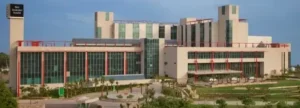 International and Globally Renowned Accreditations. HSCT Hospital India is accredited by the Joint Commission International, USA, the National Accreditation Board for Hospitals and Healthcare Providers (NABH), and the National Accreditation Board for Laboratories (NABL) for processes and high quality patient care. Click here to know more

Real Patients, Real Stories
A Finland Patient’s Inspiring Recovery from Multiple Sclerosis after HSCT Treatment at JCI-USA Accredited World Class Hospital in India
Jukka from Finland, who has primary progressive MS, completed the full 30 day HSCT programme at HSCT Hospital India.

American Cop Flies to India for HSCT: 95% Symptom free, 5 Months after HSCT Treatment at JCI-USA Accredited World Class Hospital in India
Dylan, a US police officer with small fibre neuropathy, had about 95 per cent of his symptoms gone five months after HSCT.
Sergel, 38M from Holland: Multiple Sclerosis Patient shares after HSCT Treatment at JCI-USA Accredited World Class Hospital in India
Watch this Video testimonial: Sergel, 38 years young man from Netherlands suffering from Multiple Sclerosis