Complete Guide For HSCT for MS in UK: Latest Research
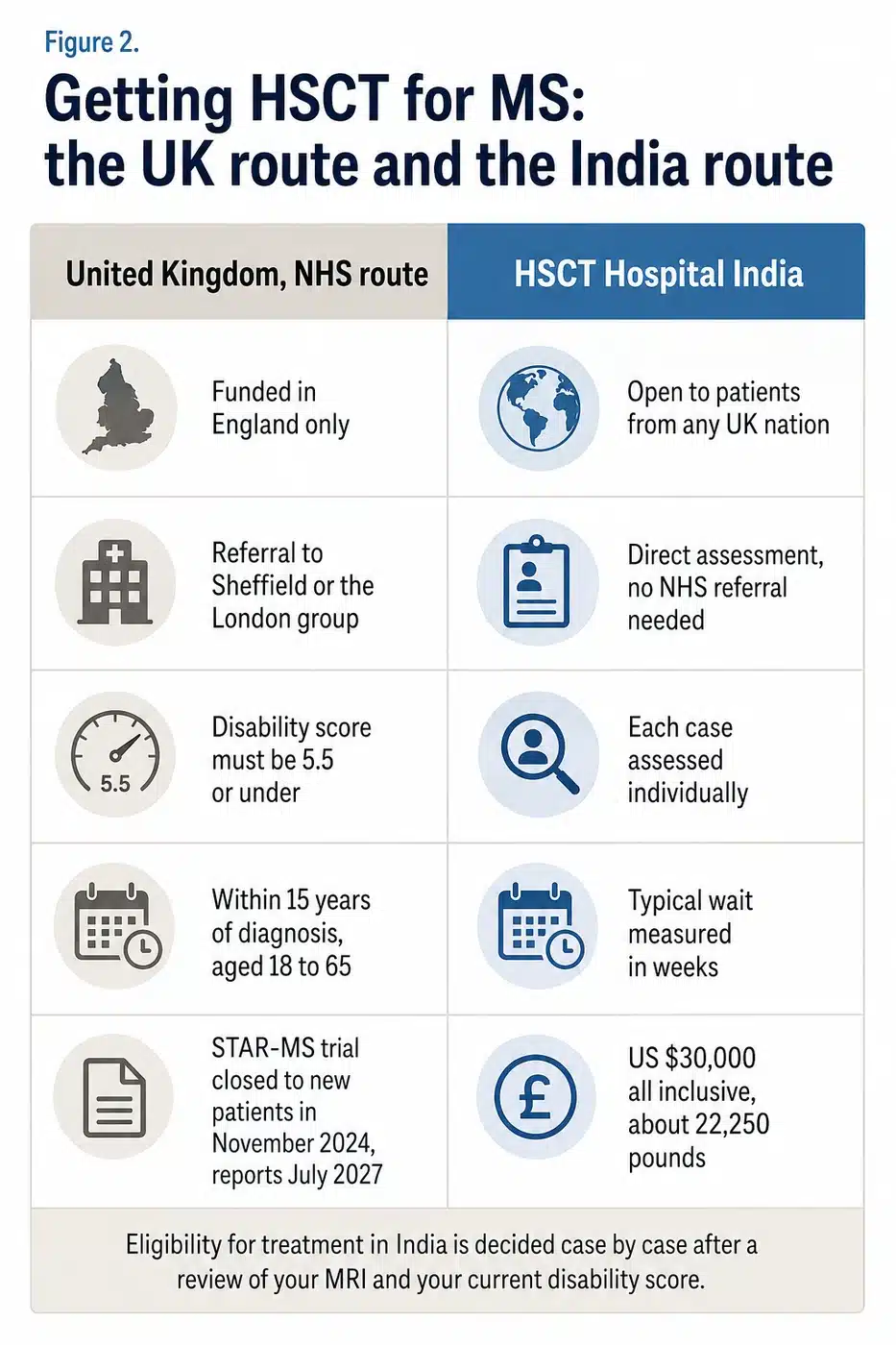
HSCT for MS in the UK is paid for by the NHS in England only, and only for a narrow group of patients. A patient in Glasgow, Cardiff or Belfast cannot be referred for HSCT on the NHS. A patient in Sheffield can. HSCT Hospital India assesses a British patient on their own scans rather than their postcode, and treats them at a JCI-USA accredited hospital outside Delhi for 30,000 US dollars all inclusive, about 22,250 pounds at the 2 August 2026 rate, covering thirty days for the patient and one attendant.
Over 150,000 people in the UK live with multiple sclerosis and nearly 7,100 more are diagnosed every year, which the MS Society puts at about 135 new diagnoses a week. The same source prices the condition at 11,400 pounds a year for a person with mild disability, 22,700 pounds with medium disability and 36,500 pounds once disability is advanced. The all inclusive price in India is about 22,250 pounds, less than the 36,500 pounds a year the MS Society attributes to advanced disability.
The trial route closed too. STAR-MS stopped recruiting in 2024 and does not report until July 2027, so a British patient whose disease is active this year has no trial place to wait for.
1. How does a stem cell transplant switch off MS?
In multiple sclerosis the immune system attacks myelin, the fatty sheath that lets an electrical signal run cleanly along a nerve fibre. Every relapse strips a little more of it. Disease modifying drugs keep that inflammation in check while the drug is taken, and it usually returns when the drug stops. HSCT sets out to remove the immune system that is doing the damage and grow a new one that does not.
The patient’s own blood stem cells are collected first and frozen. Chemotherapy then clears out the misdirected immune cells. The stored cells are returned and rebuild a fresh immune system over roughly two weeks. HSCT is given as a single course of treatment. It is the only treatment for MS given once with the aim of stopping the disease process. The US National Institute of Neurological Disorders and Stroke describes the same disease mechanism that the procedure targets.
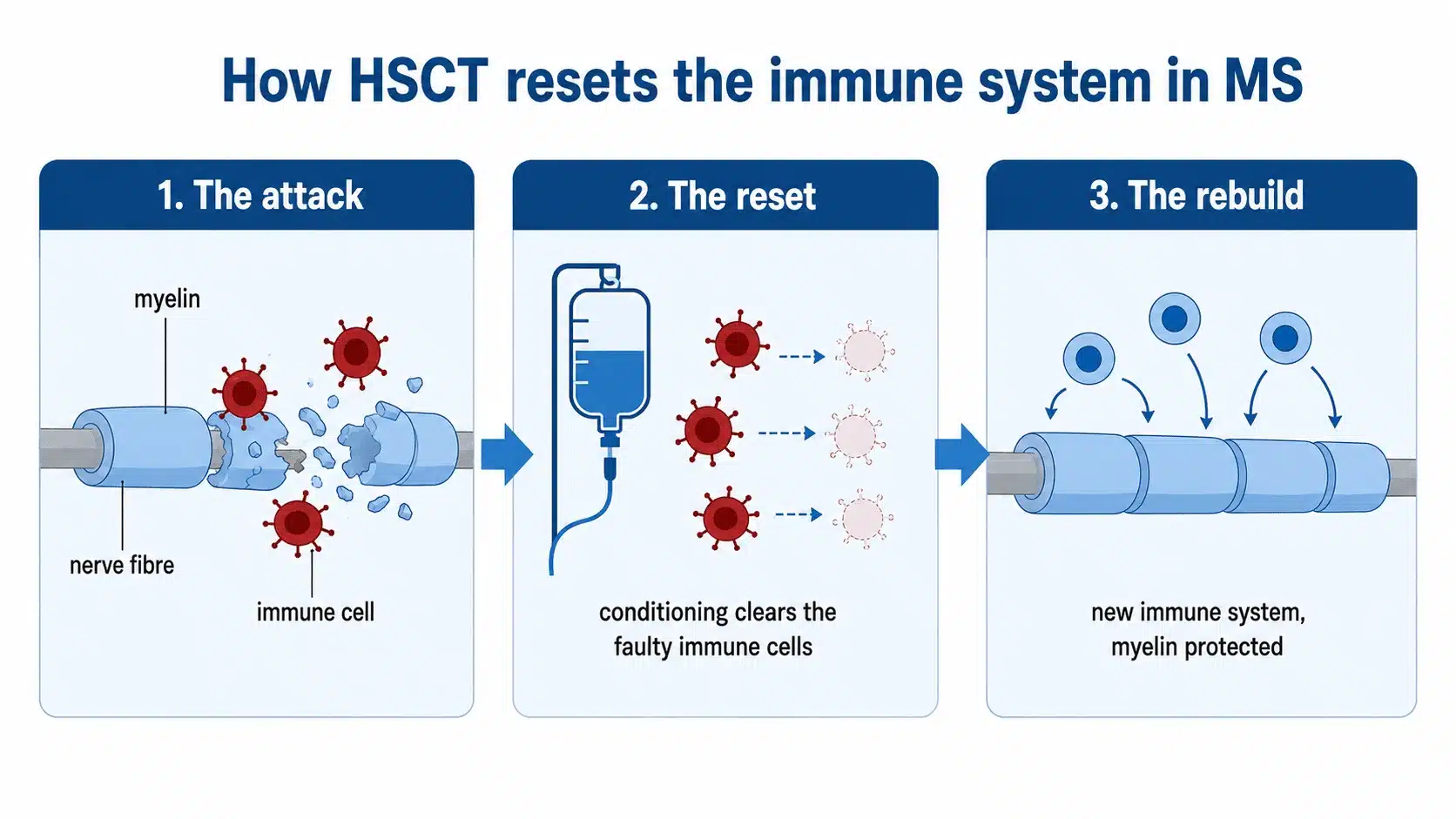
Figure 1. The three stages of HSCT in MS: the immune attack on myelin, the clearing of the misdirected immune cells, and the rebuilding of a new immune system.
The same mechanism is used in other autoimmune conditions, and the reasoning is set out in the multiple sclerosis treatment guide and in the guides for CIDP and NMOSD.
2. How many people in Britain have MS, and what does it cost them?
Roughly one person in 400 in Britain has MS. Women are affected more often than men, and most diagnoses land between the ages of twenty and forty.
The MS Society figures put the annual cost of the condition to a person with mild disability at 11,400 pounds, rising to 22,700 pounds at medium disability and 36,500 pounds once disability is advanced, and it notes that other studies place those numbers higher still once informal care and lost earnings are counted. These are annual costs and they increase with disability.
A fully inclusive transplant at HSCT Hospital India is about 22,250 pounds, paid once. At the advanced disability band the condition costs 36,500 pounds a year in Britain, and that spending does not stop the disease.
3. The postcode problem: NHS funding stops at the English border
NHS funding for HSCT in multiple sclerosis covers England. AIMS Charity states that “Currently HSCT is only available in England on the NHS” and that “In Scotland, Wales and NI, patients have yet to be accepted due to funding issues”.
Where a British patient lives decides the answer they get. Two patients with the same scans, relapse history and disability score can therefore get opposite answers. A neurologist in Sheffield can refer an English patient for HSCT on the NHS. Scotland, Wales and Northern Ireland have no funded service, so a patient there applies through an individual funding request or pays for the treatment. HSCT Hospital India assesses a patient from any of the four nations on their scans rather than their postcode, and treats them for 30,000 US dollars all inclusive, about 22,250 pounds.
| Nation | HSCT funded on the NHS | What that means for a patient right now |
|---|---|---|
| England | Yes, for a narrow group | Referral by a neurologist to a specialist centre, judged against the London MS-AHSCT Collaborative Group criteria |
| Scotland | Not yet | AIMS Charity records that patients have yet to be accepted, on funding grounds |
| Wales | Not yet | Same position, so the realistic options are an individual funding request or self funding |
| Northern Ireland | Not yet | Same position, and the nearest funded service is across the water in England |
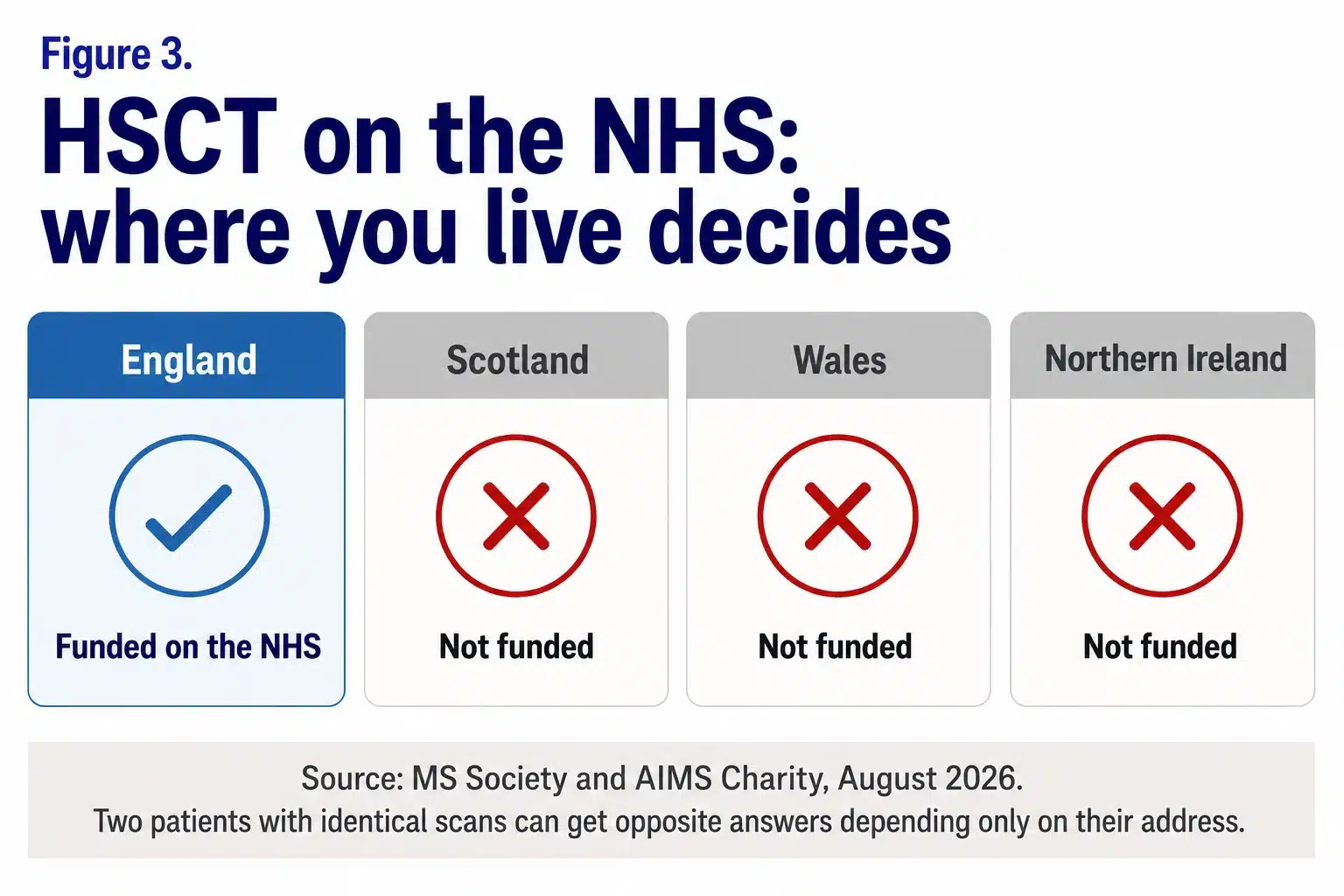
Source: AIMS Charity UK criteria page, read on 3 August 2026. An individual funding request can be made outside England, but it is decided case by case and approval is not guaranteed.
4. Which patients the NHS criteria let through
The criteria published by AIMS Charity, drawn from the London MS-AHSCT Collaborative Group, set the limits at age 18 to 65, an EDSS score of 0 to 6.5, and disease duration of 15 years or less from diagnosis. There must also be recent inflammatory activity, defined as one gadolinium enhancing lesion larger than 3mm, off steroids for a month, or two new T2 lesions on MRI within the last twelve months. For relapsing MS the patient must also have failed at least one licensed high efficacy disease modifying drug after at least six months on it.
The MS Society states the threshold more tightly still, saying “You need a score of 5.5 or under to get HSCT on the NHS”. Both figures are published by British organisations and they do not agree. The threshold applied varies between centres and panels. If the EDSS score is unfamiliar, the EDSS scale explained page sets out what each number means.
Sheffield Teaching Hospitals, one of the British centres performing HSCT, states which patients it does not treat. Its own patient page says that for primary or secondary progressive MS “it is very unlikely that AHSCT will be helpful for you”, and it treats active relapsing remitting disease.
5. The STAR-MS trial closed in 2024 and reports in 2027
For several years a British patient asking about HSCT was directed to apply for a place on STAR-MS, the UK trial comparing the transplant against the strongest MS drugs. The Sheffield Clinical Trials Research Unit page for the trial now carries a single line across the top: “THIS TRIAL IS NOW CLOSED TO RECRUITMENT”.
The trial aimed for 198 patients across 19 UK sites and randomised 94. The trial team announced closure in October 2024, the MS Trust records recruitment as completed in November 2024, and the MS Trust states that “the results are expected in July 2027”. Participants are followed for 24 months each.
A patient reading about HSCT in August 2026 cannot join. Even if STAR-MS reports well in July 2027, commissioning decisions follow the report rather than arrive with it, and the devolved nations then have to fund what is agreed. Every relapse in the interval risks damage that no later treatment reverses, which is the argument set out in why delaying HSCT for MS is not an option.
6. What the published results show for British patients
British data on HSCT now exists in quantity. A 2026 study in the Journal of Neurology, Neurosurgery and Psychiatry reported real world outcomes from 364 UK patients treated at 14 British centres between 2002 and 2023. Median EDSS at baseline was 6, and of the patients with full neurological follow up, 62% had relapsing remitting MS and 38% had progressive MS.
Alongside the treatment options available in the United Kingdom, the success rates reported in the medical literature for HSCT in multiple sclerosis are summarised in a separate article.
At two years and five years after the transplant, relapse free survival was 94.6% and 88.6%. Freedom from new MRI activity was 93.1% and 80.1%. Progression free survival was 83.5% and 62.4%. Complete freedom from any disease activity, the strictest measure, was 72.3% at two years and 46.2% at five. Disability improved in 24.2% of patients at two years and 20.4% at five. Treatment related mortality across the whole cohort was 1.4%, five patients in 364.
The randomised evidence comes from the MIST trial, published in JAMA in 2019. It randomised 110 people with relapsing remitting MS to the transplant or to a stronger drug. Disease progression happened in 3 patients in the transplant arm and 34 in the drug arm. Average disability improved in the transplant group over the first year, from 3.38 to 2.36 on the EDSS scale, while it worsened in the drug group from 3.31 to 3.98. There were no deaths in the trial.
A Canadian phase 2 trial published in The Lancet in 2016 reported no relapses at all in its treated group over years of follow up, using a much heavier chemotherapy regimen and recording one death. European specialist bodies have since folded the evidence into formal guidance, published as recommendations from ECTRIMS and the EBMT in 2025.

Figure 4. Results recorded in the MIST randomised trial over the follow up period, JAMA 2019.
7. Lower intensity conditioning, and why the dose decides the risk
Transplant programmes use different strengths of chemotherapy. The strength used is the main driver of the risk.
The heavier regimens wipe out the bone marrow as well as the immune system. They produce deep, long lasting remission, and they carry a higher death rate. The Canadian trial that reported no relapses used a heavy regimen and lost one patient in 24. The lighter regimen developed by Professor Richard Burt suppresses the immune system hard without destroying the marrow, and it is the regimen tested in MIST, where nobody died and no patient suffered a life threatening non-blood complication.
HSCT Hospital India uses the lower intensity Burt protocol. The lower dose carries less risk, so the hospital treats patients that heavier programmes would consider too risky.

Figure 5. How chemotherapy intensity changes the risk profile of a stem cell transplant for MS.
8. What are the risks of a transplant, and how are they managed?
There is one high risk window in the treatment, and it is short. For roughly ten days between the chemotherapy and the point where the new immune system starts working, the patient has almost no defence against infection. Everything the hospital does in that period is aimed at that single problem.
At HSCT Hospital India the patient is admitted to a room of their own, breathing air scrubbed through three stages of HEPA filtering, on a floor where haematology, the transplant unit and intensive care sit together. Filtered air during the low count window is the clinical control that keeps infection rates down. The attendant stays in the room, which removes the traffic that comes with a shared ward.
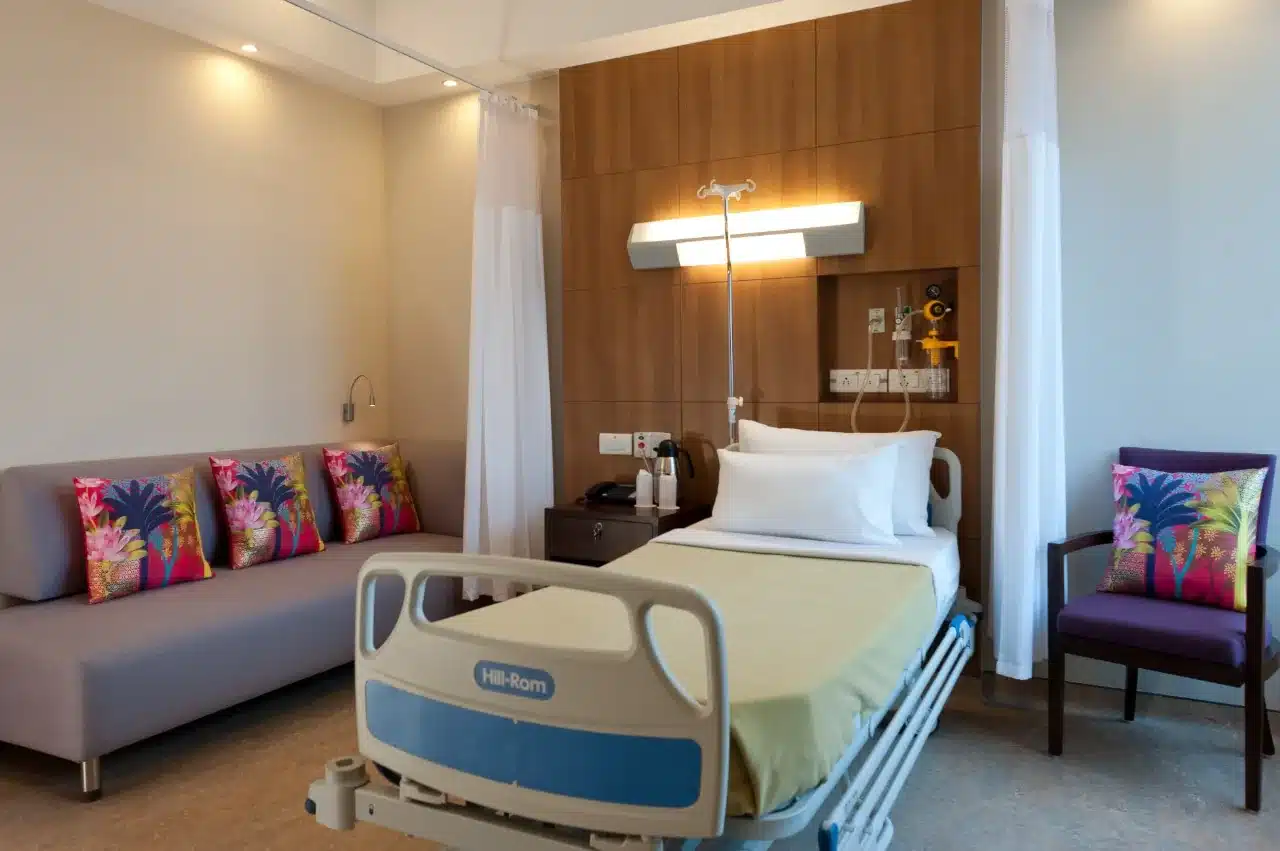
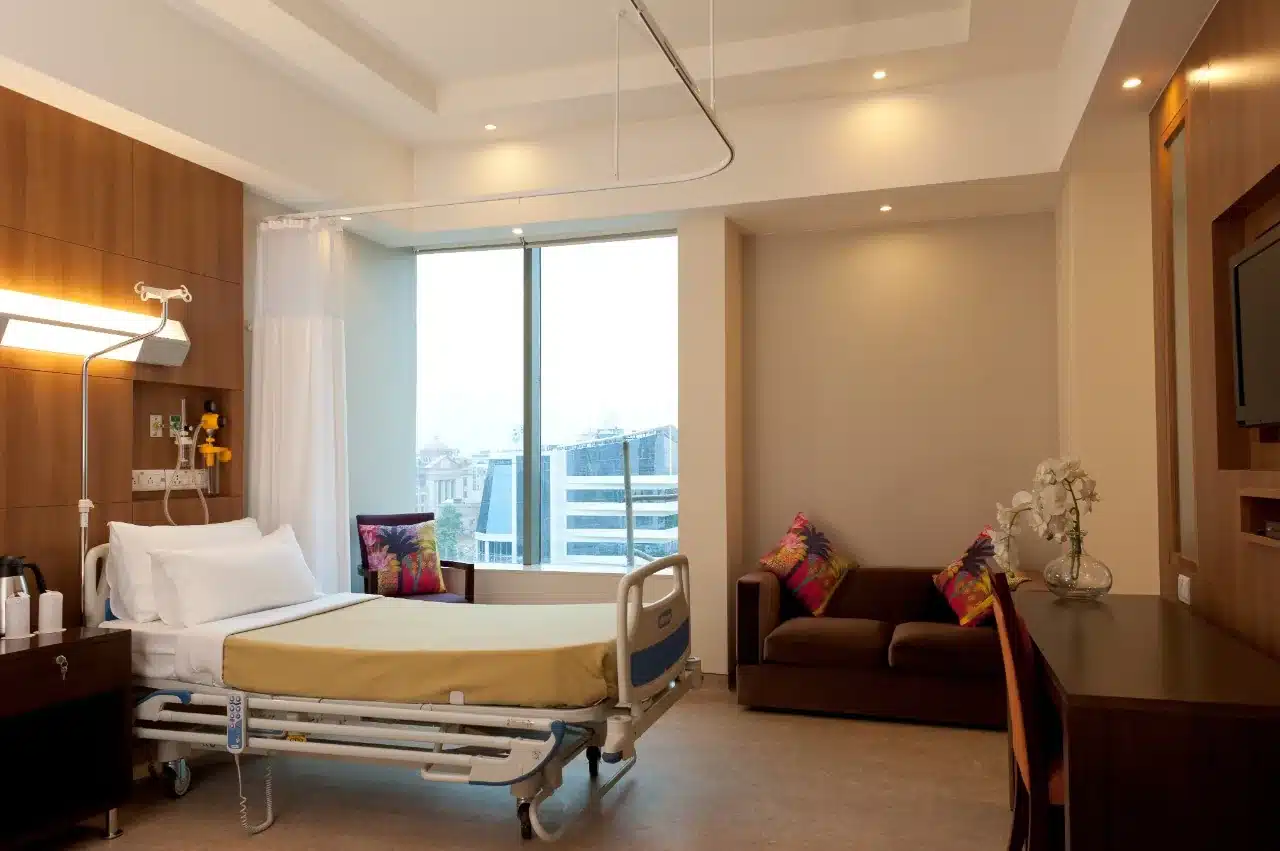
Figure 6. The private room used for the thirty day admission, with three stage HEPA filtered air and space for one attendant.
The other effects follow a predictable pattern. Hair thins or falls and grows back. Fatigue is heavy for weeks and lifts over months. Nausea is managed with medication. Fertility can be reduced, which is why anyone who may want children later should ask about preservation before travelling rather than after, a point covered in fertility preservation before HSCT. Across the 364 patient British series, mortality was 1.4%, and every one of those five deaths occurred in patients who were already severely disabled when they were treated. Treating earlier is safer.
9. The shape of the thirty day admission
The programme runs in four stages across a single admission.
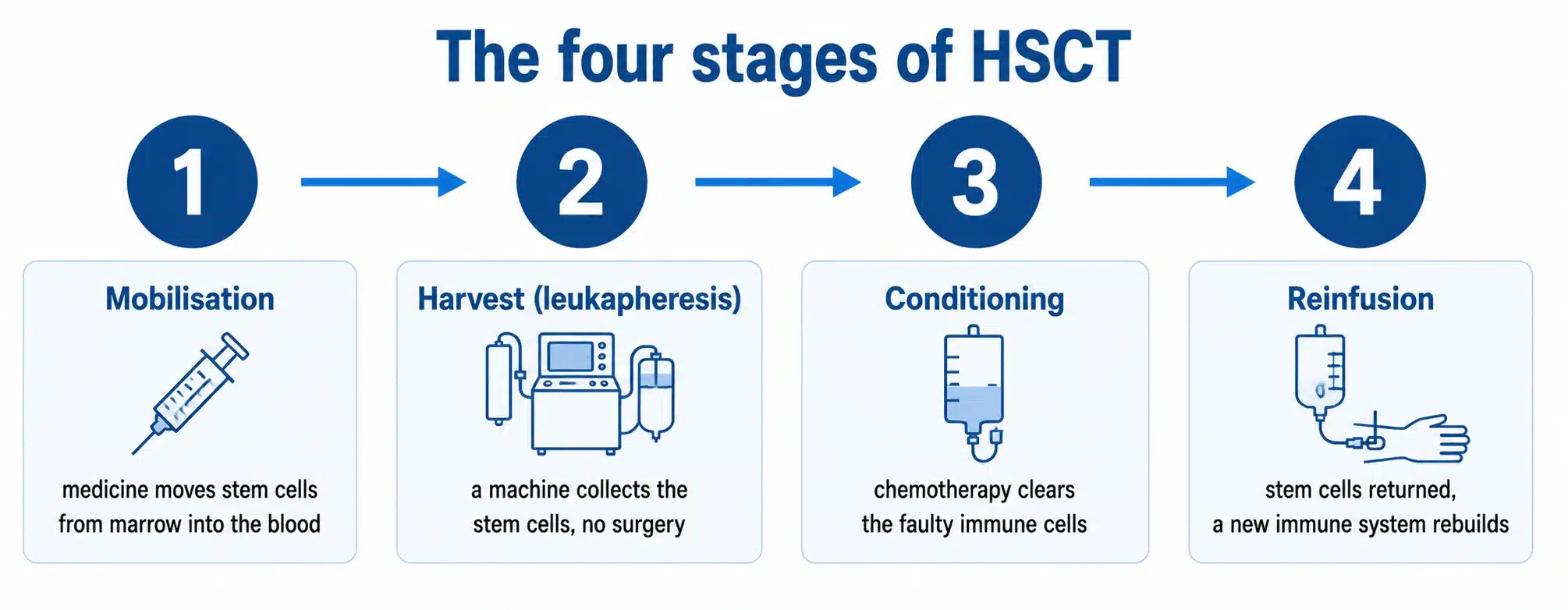
Figure 7. Mobilisation, harvest, conditioning and reinfusion, the four stages of the admission.
- Days 1 to 4 cover admission and workup. The patient has bloods, an MRI, cardiac and lung function checks, and dental and infection screening. Haematology and neurology review the patient together before treatment begins.
- Days 5 to 10 cover mobilisation. Injections push stem cells out of the bone marrow into the bloodstream. Aching in the hips and lower back is common at this stage and shows that the injections are working.
- Days 11 to 13 cover the harvest. The cells are collected from a vein through a machine, in a process closer to giving blood than to surgery. They are then counted and frozen.
- Days 14 to 19 cover conditioning. Chemotherapy clears the misdirected immune cells over several days. Anti sickness medication is given throughout.
- Day 20 covers the reinfusion. The stored cells go back through a drip. The infusion takes under an hour and is painless.
- Days 21 to 30 cover recovery. This period takes in the low count window and then engraftment, when the new immune system starts to work. Blood counts climb, appetite returns, and neuro physiotherapy starts as soon as the patient is able.
10. Who is a candidate for HSCT at HSCT Hospital India?
The assessment is made on the patient’s own records. The strongest candidates share a recognisable profile.
- Relapsing remitting MS, or progressive MS that still shows inflammatory activity on MRI
- Under 60, and the younger the better, because recovery capacity falls with age
- An EDSS score in the lower half of the scale, which usually means walking is still possible with or without support
- Relapses or new lesions in the last year or two, showing the disease is still active and therefore still treatable
- A shorter time since diagnosis, ideally under ten to fifteen years
- No serious heart, lung, liver or kidney disease, and no active infection
Weaker candidates have long standing progressive disease with a quiet MRI, high disability already fixed, and no inflammatory activity for years. In that situation the transplant has little inflammation left to stop, and HSCT Hospital India declines the case. Progressive MS with continuing activity is a different case, and the European guidance treats it as a clinical option rather than an automatic exclusion. The British series bears that out, since 38% of the 364 patients had progressive disease and disability still improved in a fifth of the whole cohort at five years.
11. What a second opinion reviews when Britain has said no
A refusal in Britain is either administrative or clinical.
An administrative no means the treatment is not commissioned where the patient lives, or the panel applied a threshold, or the trial is closed. That is a funding and policy decision. It is separate from any clinical judgement about the patient.
A clinical no means a doctor looked at the scans and the history and judged that the risks outweigh the likely gain. A second opinion reviews the same scans and history and states whether it reaches the same conclusion.
A review at HSCT Hospital India starts with the MRI films of the brain and the spine, then how many relapses there have been and when, the EDSS score as it stands, which disease modifying drugs have been used and why each one was stopped, and a recent blood panel. Haematology and neurology read the file together. The answer comes back as accepted, accepted with conditions, or not suitable, with the reason stated. There is no charge for it. Patients who have already been turned down in Britain are the largest single group who ask.
12. What does HSCT for MS in the UK cost against India?
HSCT Hospital India charges 30,000 US dollars, all inclusive, which is roughly 22,250 pounds at the rate of 0.7417 dollars to the pound on 2 August 2026. The price is quoted before travel and nothing is added afterwards.
| Route | Price to the patient | What that buys, and the conditions attached |
|---|---|---|
| NHS in England, if accepted | Nothing | Treatment at an English specialist centre. Requires a neurologist referral and a panel decision against the published criteria |
| STAR-MS trial place | Nothing | Closed to recruitment since 2024. No new places until the trial reports in July 2027 at the earliest |
| HSCT Hospital India | US $30,000, about 22,250 pounds | Thirty days inpatient for the patient and one attendant, all testing, MRI, the full procedure, fees, medicines, neuro physiotherapy, food, laundry and airport transfers |
| Clinica Ruiz, Puebla, Mexico | Around US $54,500 | About four weeks, largely outpatient, with apartment accommodation rather than a hospital bed |
| Moscow, Russia | US $40,000 to $45,000 | Five to six weeks inpatient |
| United States, privately | US $150,000 to $200,000 | Six to seven weeks inpatient, and usually available only inside a clinical trial |
Sources: the HSCT Hospital India package page, and the comparison set out in HSCT cost by country. Prices at other centres are published programme prices and can change.

Figure 8. What the 30,000 US dollar price includes and what it excludes.
The price covers every pre-treatment investigation, the MRI, the procedure itself, up to thirty days as an inpatient in the filtered private room, the fee of every doctor involved, consultations and laboratory work, medicines and consumables, neuro physiotherapy, meals and laundry for two people, and the car to and from the airport. The price does not cover international flights, a private nurse attendant if the patient travels without one at 1,500 US dollars for the thirty days, and any stay that runs beyond thirty days. The full breakdown is on the HSCT treatment package page and the sequence is set out under how it works.
Patients comparing other destinations can read the sibling pages for HSCT for MS in Ireland, Canada, Mexico, the Netherlands and the USA. Patients raising money for treatment often start with the guide to raising funds online.
13. The changes patients report in the first year home
Disease activity stops. Relapses stop, MRI scans go quiet, and the disease modifying drugs stop, which ends the daily side effects of those drugs.
Some function returns. Nerve signalling that was inflamed rather than destroyed often recovers once the inflammation is gone, and that shows up as steadier walking, better bladder control, less spasticity, clearer thinking and a large drop in fatigue. In the British series, disability improved rather than merely stabilised in 24.2% of patients at two years. Improvement is most common in patients treated while the disease was still inflammatory.
Damage that has already destroyed myelin and axons does not reverse, and nobody should travel expecting that. The treatment stops further damage and allows recovery of function that active inflammation was suppressing. Long term follow up is summarised in HSCT for MS long term results.
14. Travel, visas and what to pack for thirty days
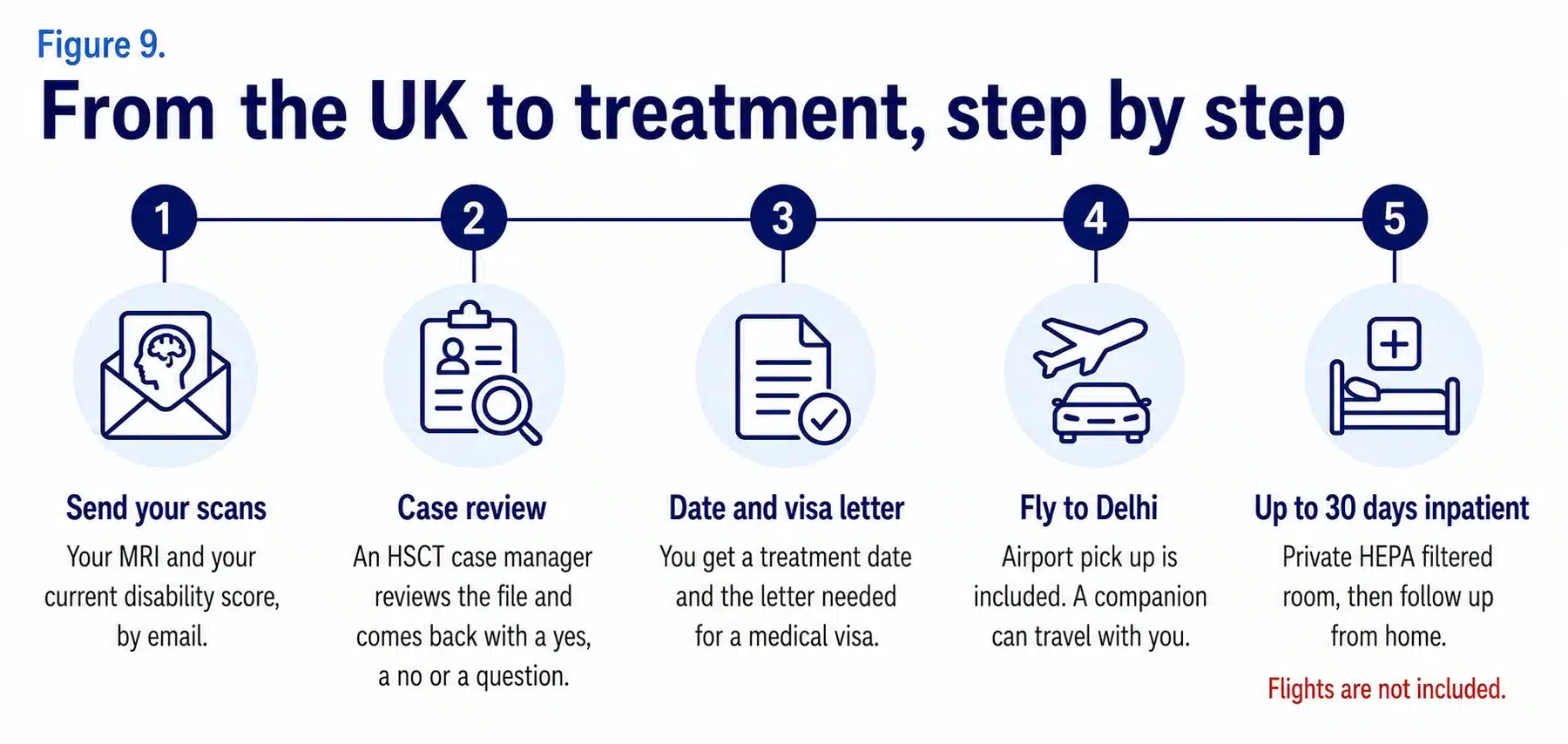
Direct flights run to Delhi from Heathrow, Gatwick, Manchester, Birmingham and Edinburgh, and the flight takes eight to nine hours. An HSCT case manager sends a visa letter with the confirmed admission date. British passport holders apply for an Indian e-medical visa online, and up to two e-medical attendant visas can be granted against one patient visa, which covers a partner and a parent travelling together. Applications go through the official Indian e-visa portal and no one should pay an agent for it.
Airport pick up and drop back are inside the package. The attendant stays in the room for the full thirty days, with meals and laundry included for both people.
A British patient should pack loose comfortable clothing for a month indoors, a light layer because rooms are air conditioned, all current medication in original packaging with the prescription, copies of MRI films on disc as well as reports, a UK to India plug adapter, a laptop or tablet, and something to read or watch.
15. Follow up once the patient is back with their own neurologist
Follow up happens in Britain with the patient’s own team. It is arranged before travelling.
The hospital discharges the patient with the complete file a British neurologist and haematologist need: the conditioning regimen used, the cell dose returned, the daily blood counts, every complication and how it was handled, the discharge medication, the vaccination schedule and the monitoring plan. The treating specialists remain reachable afterwards for questions from the patient’s own doctors.
In practice the first year involves regular blood counts, a repeat MRI at around six to twelve months to confirm the disease is quiet, revaccination on a set schedule because the new immune system has lost its childhood immunity, and neuro physiotherapy at home to convert reduced inflammation into recovered function. The GP and the neurologist should be told before the patient travels.
16. Three British patients and what changed
Jayne, relapsing remitting MS. Jayne travelled from the United Kingdom with her mother in law Debra as her attendant, and both stayed the full thirty days. She could not stand or walk unaided before treatment. Five days after the transplant she stood and walked on her own, which the hospital credits to post HSCT rehabilitation physiotherapy and her own determination. Her account is on the Jayne from the United Kingdom page.
Margaret, diagnosed in 2013. Margaret arrived with an EDSS score of 8.5, at the severe end of the scale, and stayed in a triple HEPA deluxe room for thirty days. In her own words: “I can move my legs, the legs I haven’t been able to move. I can hold a pen and actually write as legible. All the little things have started to get better.” Her story is on the Margaret from the UK page.
A 36 year old patient from the UK. He asked for his privacy to be protected and is referred to as Justin. He recovered well within days of the transplant and reported being satisfied with the medical staff, the protocol and the rehabilitation physiotherapy. His video is on the 36 years young MS patient from the UK page.
More British accounts, including Gudrun R, Gary, Victor Halls and Su, are collected on the UK MS patient testimonials page and on the UK HSCT for MS page, and the full library is at patient testimonials.
17. Questions British MS patients send in most
Can a patient in Scotland, Wales or Northern Ireland get HSCT on the NHS?
Today HSCT is funded on the NHS in England only. AIMS Charity states that HSCT is currently available on the NHS in England only, and that in Scotland, Wales and Northern Ireland patients have yet to be accepted because of funding. An individual funding request can be submitted, but it is decided case by case. Self funding abroad is the route most patients outside England end up considering, and German patients reach the same point.
Will the NHS pay for a transplant done outside Britain?
No. NHS funding covers treatment at an English specialist centre for patients who meet the criteria. It does not fund a transplant at HSCT Hospital India, so that route is self funded at 30,000 US dollars, about 22,250 pounds. Where the NHS in England grants funding, the treatment is paid for. That applies in England only, and only to patients who meet the NHS criteria.
Is HSCT for MS in the UK possible privately?
There is no established private HSCT for MS market in Britain. British centres performing the procedure do it through the NHS pathway, and Sheffield Teaching Hospitals directs patients to be referred by a consultant neurologist or GP. That is why British patients who fall outside the criteria look overseas rather than to a private hospital at home.
What is the total price at HSCT Hospital India, and what sits outside it?
30,000 US dollars buys a thirty day inpatient admission covering two people, the patient and one attendant. It takes in the workup investigations, the MRI, the procedure, every specialist fee, consultations and laboratory work, medicines and consumables, neuro physiotherapy, meals and laundry for two, and airport transfers both ways. The price does not cover international flights, a private nurse attendant at 1,500 US dollars across the thirty days if the patient travels alone, or any night beyond the thirtieth.
Is progressive MS ruled out?
Progressive MS is assessed case by case. Suitability depends on whether inflammation is still active on MRI. Progressive MS with continuing activity is treated as a clinical option in the ECTRIMS and EBMT guidance, and progressive disease with no inflammatory activity left is not recommended for transplant. In the 364 patient British series, 38% had progressive MS, and disability improved in 20.4% of the whole cohort at five years.
How does treatment in India compare on safety?
HSCT Hospital India works with the lower intensity Burt protocol, the regimen used in the MIST randomised trial where there were no treatment related deaths. The hospital holds JCI-USA accreditation alongside NABH and NABL accreditation, nurses every patient in a single room on three stage filtered air, with intensive care on the same floor. For comparison, the British 364 patient series recorded transplant related mortality of 1.4%.
How quickly can a date be confirmed?
A date is usually confirmed within weeks. The patient’s own stem cells are used, so there is no donor search and no matching. Once the records are reviewed and the patient is accepted, admission is usually scheduled within a few weeks, which is often the deciding factor for someone whose disease is moving.
Does the disease return years later?
Most patients stay free of relapses. In the British series, 88.6% were relapse free at five years and 80.1% had no new MRI activity. A minority do see activity return, and it is generally milder and treatable. Outcomes are consistently better for patients treated earlier and with lower disability.
Who looks after the patient once they land back in Britain?
Care passes to the patient’s own consultant neurologist and haematologist, working from the discharge file the hospital provides. The handover works better when the GP and the neurologist are told before travel. The treating specialists in India remain available to answer questions from the British team.
Can a partner or parent travel with the patient?
Yes, and one attendant is included in the price for the full thirty days, staying in the room. India grants up to two e-medical attendant visas against a single patient visa, so a partner and a parent can both travel, although only one attendant is covered by the package.
What does HSCT Hospital India need to give an answer?
HSCT Hospital India needs recent MRI films of the brain and the spine, the latest EDSS score, a short account of how the MS has behaved, the drugs already tried with the reason each one was stopped, and a recent blood panel. Haematology and neurology read it together and state whether the patient is suitable. Nothing is charged for that opinion.
18. What happens when someone gets in touch?
The first step is a review of the patient’s records. A named HSCT case manager takes the file, the specialists read it, and the answer comes back in plain language with the reason attached, whether that answer is yes or no. If it is yes, the written cost, the admission date and the visa letter follow.
The building, the accreditation and the wards are described on the HSCT Hospital India page. Names and qualifications of the doctors sit on the medical team page. The case for choosing this protocol is made at why choose HSCT Hospital India, and every condition is indexed at HSCT treatment guides.
This information is written for people with multiple sclerosis in the United Kingdom and their families. It is general information about a medical procedure and it is not a substitute for advice from a doctor who has examined the patient and read their scans. Suitability for HSCT is decided case by case by haematology and neurology together. Figures for NHS eligibility, prevalence and cost are quoted from the sources named in the text and were checked on 3 August 2026. Prices at other centres are published programme prices and are liable to change. Last reviewed 3 August 2026.
Why choose HSCT Hospital India
 HSCT Hospital India holds JCI-USA accreditation alongside NABH and NABL. The bone marrow transplant unit keeps its intensive care on its own floor. JCI-USA accreditation requires infection control to be audited against an international standard.Look inside the transplant unit
 The patient has a private room for the whole month, with a bed for the attendant alongside. Air reaches the room through three stages of HEPA filtering. Filtered air lowers the infection risk during the ten days when immune defence is at its lowest.See what the thirty day package includes


Real Patients, Real Stories
A Finland Patient’s Inspiring Recovery from Multiple Sclerosis after HSCT Treatment at JCI-USA Accredited World Class Hospital in India
Jukka from Finland, who has primary progressive MS, completed the full 30 day HSCT programme at HSCT Hospital India.

American Cop Flies to India for HSCT: 95% Symptom free, 5 Months after HSCT Treatment at JCI-USA Accredited World Class Hospital in India
Dylan, a US police officer with small fibre neuropathy, had about 95 per cent of his symptoms gone five months after HSCT.
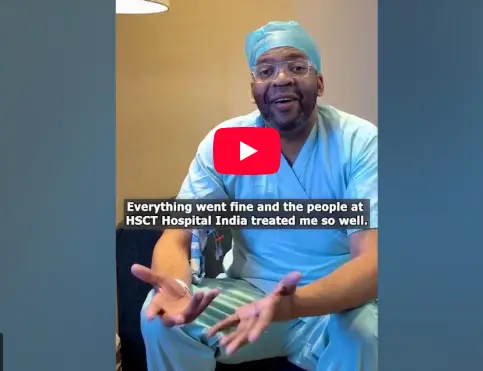
Sergel, 38M from Holland: Multiple Sclerosis Patient shares after HSCT Treatment at JCI-USA Accredited World Class Hospital in India
Watch this Video testimonial: Sergel, 38 years young man from Netherlands suffering from Multiple Sclerosis