HSCT for MS in Canada: What Canadian Patients Need to Know
HSCT for MS in Canada exists, but access to it is narrow. Autologous haematopoietic stem cell transplant, usually shortened to HSCT or AHSCT, is a one-time procedure that resets the immune system using a patient’s own blood stem cells, and Canadian researchers were among the first to prove it can stop aggressive multiple sclerosis.
Most Canadians who ask for the treatment are still turned away, because the public system accepts only a small group and delivers the procedure through a few centres that carry long waiting lists.
HSCT Hospital India offers a different route. The hospital uses the lower-risk non-myeloablative protocol, a regimen that resets the immune system without destroying the bone marrow, developed by Professor Richard Burt.
It assesses eligibility for each patient individually, keeps only a short waiting period, and delivers the whole treatment all-inclusive at US $30,000 in a JCI-USA accredited hospital. If your Canadian neurologist has raised HSCT and then explained that you do not qualify at home, this guide is written for you.
It sets out what the published evidence shows, why Canada restricts the procedure so tightly, and how a Canadian patient can be assessed for MS stem cell treatment abroad.
1. What is HSCT, and why is it used for multiple sclerosis?
HSCT is a procedure that collects a patient’s own blood-forming stem cells, clears the misdirected immune system with chemotherapy, and then returns those stem cells to grow a new immune system that no longer attacks the central nervous system.
The word autologous means the stem cells come from the patient’s own body rather than a donor, which removes any risk of the graft being rejected.
In multiple sclerosis, an autoimmune disease in which immune cells cross into the brain and spinal cord and strip away myelin, the fatty insulation that lets nerve signals travel at speed, this reset can stop the inflammatory attacks that cause relapses.
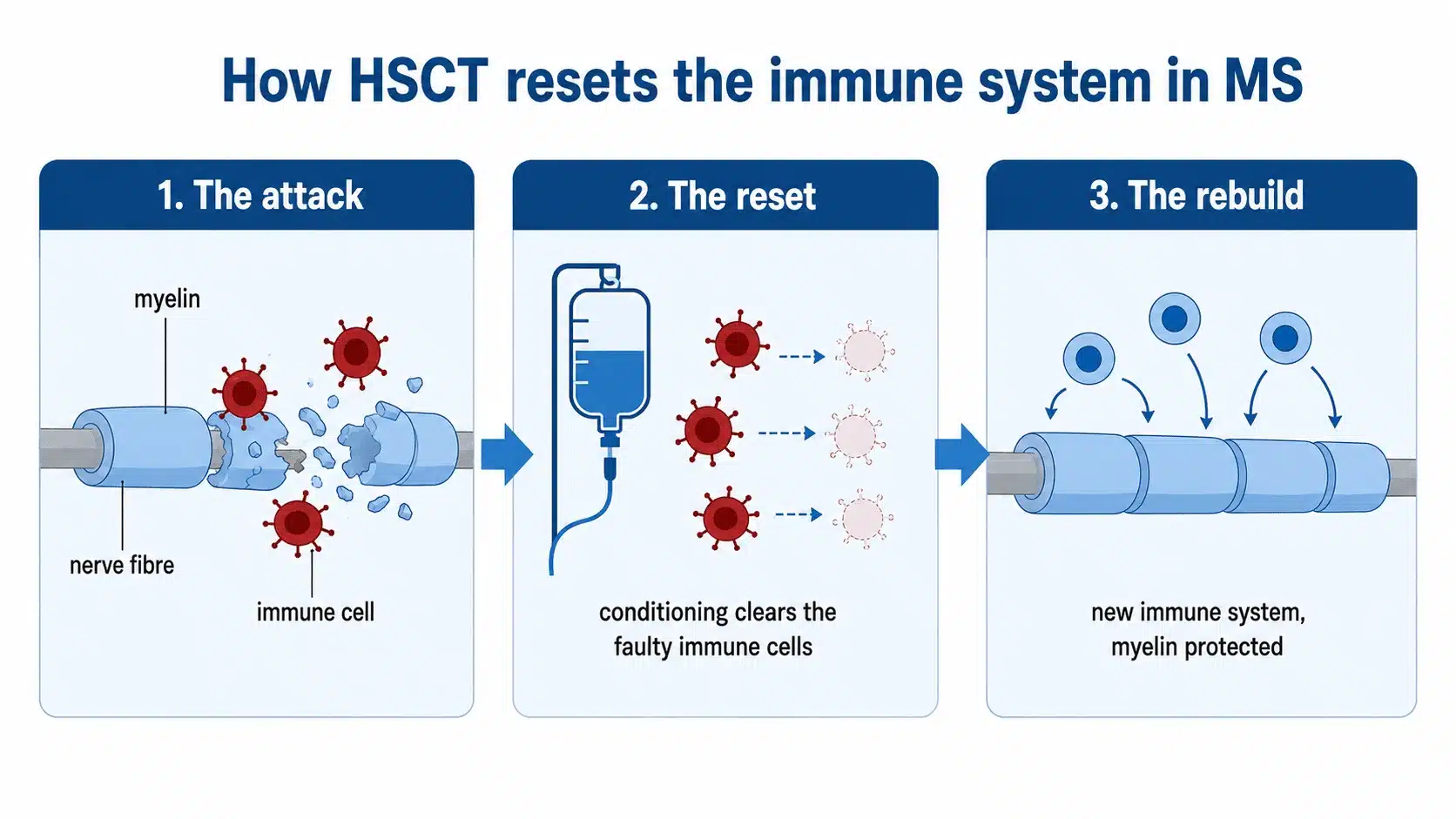
Most people begin with relapsing-remitting MS, the form in which symptoms flare during a relapse and then partly settle again. Each flare can leave a lesion, an area of scarred myelin that shows up as a bright spot on an MRI scan, and neurologists track the resulting disability on the EDSS disability scale, a score that runs from 0 for no disability to 10.
Standard care relies on disease-modifying therapy, the long-term drugs that lower how often relapses happen, but these drugs work only while a patient keeps taking them and some people keep worsening despite them.
Public information from the United States National Institute of Neurological Disorders and Stroke describes MS as a chronic disease of the central nervous system with no drug cure at present (NINDS).
HSCT is used because it aims at the immune process itself, and the wider evidence for HSCT for multiple sclerosis shows it can halt relapsing disease in well-selected patients.
 Get the HSCT India Brochure by email
2. Is HSCT for MS proven to work?
Yes. HSCT for MS is backed by randomised trial evidence showing it controls relapsing disease better than standard drugs, and the strongest single result comes from the MIST trial.
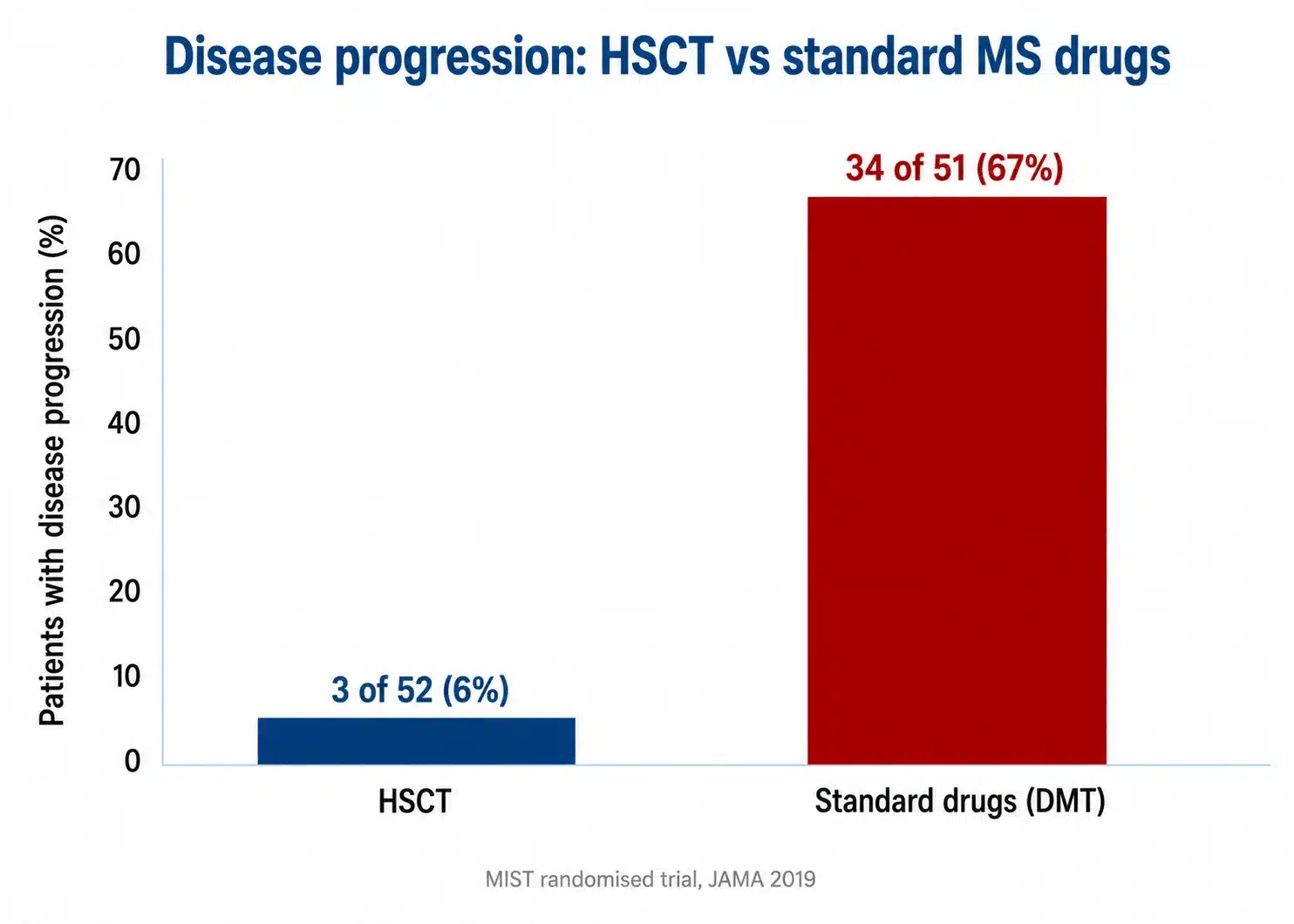
In that trial, led by Professor Richard Burt and published in JAMA in 2019, 110 patients with relapsing multiple sclerosis were randomly assigned to non-myeloablative HSCT or to continued disease-modifying therapy, and disease progression occurred in only 3 of 52 transplanted patients compared with 34 of 51 patients who stayed on drugs, with no treatment-related deaths (MIST trial, JAMA 2019).
Canada produced some of the most striking evidence of its own. In the trial reported by Atkins and colleagues in the Lancet in 2016, 24 Canadians with aggressive MS were treated with a high-intensity regimen, and no further relapses and no new MRI lesions were seen across years of follow-up (Atkins, Lancet 2016).
That durability is real, and it is part of why HSCT is taken seriously by neurologists. The Canadian result also carried a cost that shapes how the procedure is offered today: the high-intensity conditioning used in that trial contributed to the death of one of the 24 patients.
The non-myeloablative protocol tested in the MIST trial, and used at HSCT Hospital India, is the gentler version that recorded no treatment-related deaths while still stopping progression in almost every patient.
For a Canadian reader, the useful point is that the evidence and the protocol can be separated from the country: the trials show HSCT works, and the lower-risk version of it is the one HSCT Hospital India offers.
| What patients ask | What the published data show |
|---|---|
| Does HSCT stop MS better than the drugs? | In the MIST randomised trial, disease progression occurred in 3 of 52 patients after non-myeloablative HSCT, against 34 of 51 who stayed on disease-modifying therapy (JAMA 2019). |
| How long does the effect last? | In the Canadian aggressive-MS trial, no relapses and no new or active MRI lesions were seen on sequential scans over follow-up that reached several years (Lancet 2016). |
| Is it safe? | The non-myeloablative MIST trial recorded no treatment-related deaths. The high-intensity myeloablative regimen in the Canadian trial recorded one death among 24 patients, which is why lower-intensity conditioning is now preferred for most patients. |
3. Why is HSCT so hard to get in Canada?
HSCT is hard to get in Canada because the public system offers it only to a small group of patients with aggressive, treatment-resistant relapsing MS, through a handful of specialised centres that carry long waiting lists.
The procedure was pioneered in Canadian research, yet the same intensity that made those early trials risky is one reason the criteria stayed strict.
A patient generally has to show that relapses are continuing despite standard drugs, that the disease is still actively inflammatory, and that disability has not already advanced too far, and even then a place on a programme is limited.
Because active MS can keep damaging the nervous system while a patient waits, a long queue carries its own cost and can move someone past the window in which HSCT works best.
Patient information from MS Canada presents stem cell transplant as an option for carefully selected cases rather than a widely available treatment, and national health-technology bodies such as CDA-AMC set a high threshold for who a public system will fund.
The result is that many Canadians who could benefit are declined, and others are told to keep trying drugs while the window in which HSCT works best slowly closes.
For those patients, HSCT Hospital India reviews eligibility individually and can often accept people a Canadian programme has turned down, so the friction at home resolves into a clear route abroad.
4. How does the protocol in India differ from the Canadian one?
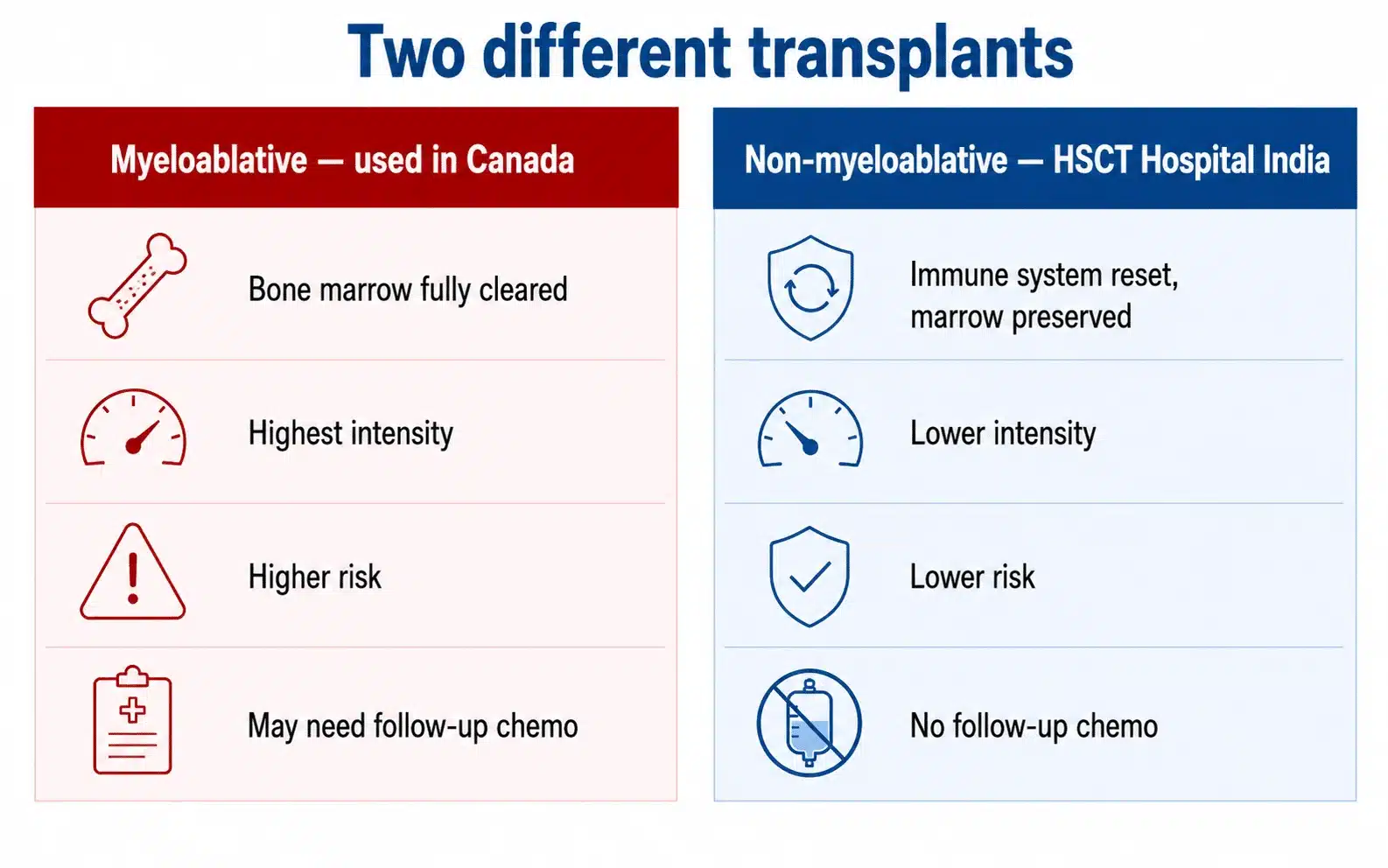
The main difference is the intensity of conditioning. Canadian programmes have used a myeloablative regimen that destroys the bone marrow completely, while HSCT Hospital India uses the non-myeloablative protocol, which suppresses and resets the immune system without wiping out the marrow, so recovery is faster and the risk is lower.
Conditioning is the chemotherapy stage that clears the faulty immune cells before the stem cells are returned. A myeloablative regimen uses high-dose chemotherapy, often including a drug called busulfan, to shut the marrow down entirely, an approach sometimes described as full immunoablation, meaning the complete removal of the existing immune system.
The non-myeloablative regimen developed by Professor Richard Burt uses cyclophosphamide together with anti-thymocyte globulin to switch off the misdirected immune response while leaving enough marrow to recover quickly.
Both approaches aim to reset immune tolerance, but the lower-intensity version carries less transplant-related risk, which matters greatly to a patient weighing the procedure. The table below sets the two side by side on the points a Canadian patient tends to ask about.
| Feature | Canada, myeloablative | HSCT Hospital India, non-myeloablative |
|---|---|---|
| Conditioning intensity | High intensity, marrow fully cleared, often with busulfan | Lower intensity, immune system reset with cyclophosphamide and anti-thymocyte globulin, marrow preserved |
| Follow-up chemotherapy | Intensive regimen with a heavier chemotherapy load | No further chemotherapy needed after the transplant |
| Transplant-related risk | Higher; one death recorded among 24 patients in the 2016 Canadian trial | Lower; no treatment-related deaths in the MIST trial of the same protocol |
| Who is accepted | A narrow group with aggressive, treatment-resistant relapsing MS | Assessed individually; often includes patients Canada declined, where active inflammation is present |
| Waiting time | Long waiting lists at a few centres | Short waiting period after records are reviewed |
| Cost to patient | Funded only if accepted into the public programme | US $30,000 all-inclusive for patient and one attendant |
5. Why do Canadian patients travel to HSCT Hospital India?
Canadian patients travel to HSCT Hospital India because it gives them a treatment their own system rations: individual eligibility assessment, the lower-risk non-myeloablative protocol, a short waiting period, and one clear all-inclusive price at an internationally accredited hospital.
Instead of being measured against a national quota, each patient is judged on the state of their own disease, which is why people who were declined or asked to wait at home are frequently accepted in India.
The hospital treats an international caseload, and more than 1,500 patients from Europe, North America and Australia have already been treated at HSCT Hospital India.
For a Canadian family, the appeal is a combination of proven protocol, transparent cost and speed, since disability from active MS can accumulate during the months that a home waiting list would take.
An accredited, high-volume centre also gives a family a measure of reassurance, because the team has managed the same procedure for patients arriving with the same fears and the same questions many times before.
The hospital coordinates the whole journey so that a patient arriving from Canada is guided through every stage rather than left to arrange care in an unfamiliar country.
6. How does a stem cell transplant for MS work?
A stem cell transplant for MS works in four stages carried out over about a month: mobilisation, harvest by leukapheresis, conditioning, and reinfusion. Each stage has a clear purpose, and knowing the sequence helps a Canadian patient picture the 30 days in hospital before travelling.
The same sequence is set out visually in the hospital guide to how HSCT works step by step.
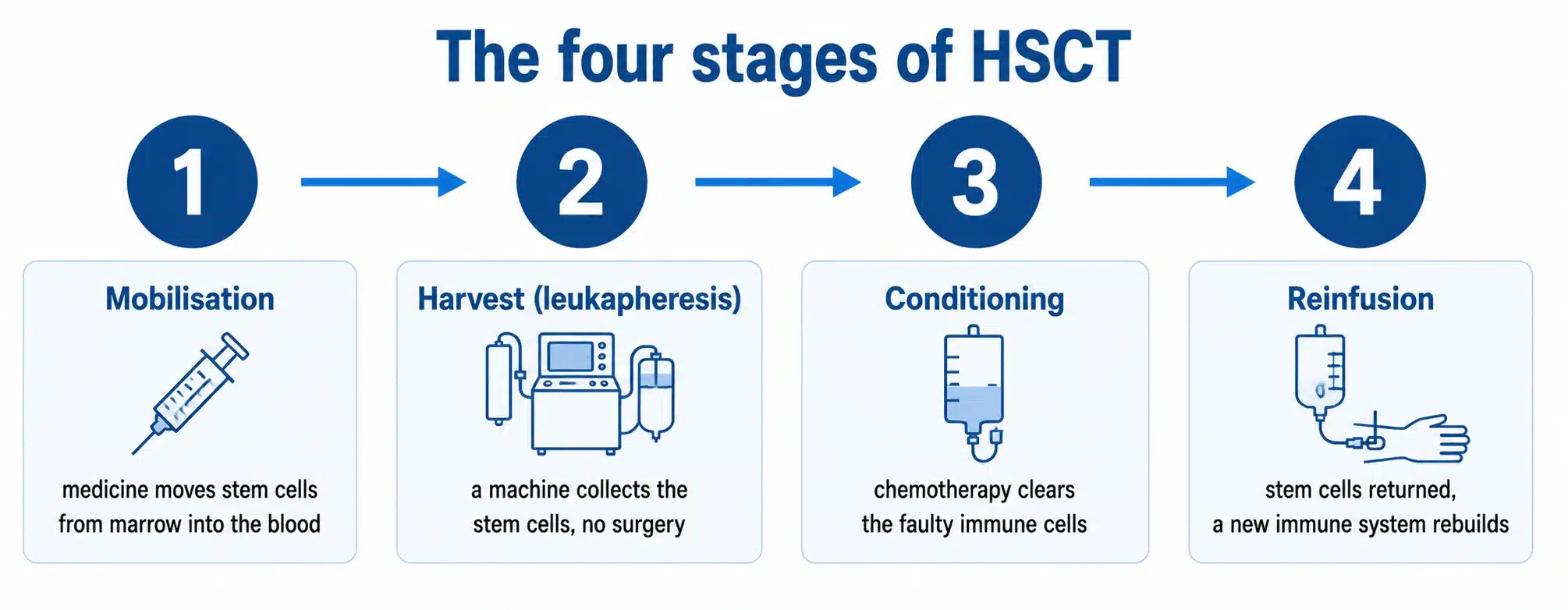
In mobilisation, a medicine encourages the bone marrow to release large numbers of blood stem cells into the bloodstream so they can be collected.
In the harvest stage, those cells are gathered by leukapheresis, a process in which blood is drawn through a machine that separates out the stem cells and returns the rest of the blood to the body, with no surgery involved. In conditioning, the non-myeloablative chemotherapy clears the misdirected immune cells that have been attacking myelin.
In reinfusion, the stored stem cells are returned through a drip, where they settle back into the marrow and rebuild an immune system that no longer treats the nervous system as a target. Over the following weeks the new immune system matures, and the patient is monitored closely until blood counts recover.
7. What are the risks of HSCT, and how are they lowered?
HSCT is a serious procedure with genuine risks, and at HSCT Hospital India those risks are lowered by three choices: the non-myeloablative protocol, triple HEPA-filtered private rooms, and close monitoring through the weeks when the immune system is rebuilding.
Most patients pass through the procedure without a severe complication, and the design of the programme is aimed at keeping it that way.
The main early risk is infection, because during and after conditioning the immune system is temporarily very low.
To manage this, HSCT Hospital India admits each patient to a triple HEPA private room, where the air is filtered to remove the organisms that a weakened immune system cannot fight off, and the team gives preventive medication and watches blood counts daily.
Transplant-related mortality is tied directly to the intensity of conditioning, which is the central safety argument for the gentler protocol: the high-intensity Canadian regimen recorded one death among 24 patients, while the non-myeloablative protocol in the MIST trial recorded none.
Chemotherapy can also affect fertility, so the team discusses fertility preservation with younger patients before treatment begins, and it explains temporary effects such as hair loss and fatigue plainly so that nothing during recovery comes as a surprise.
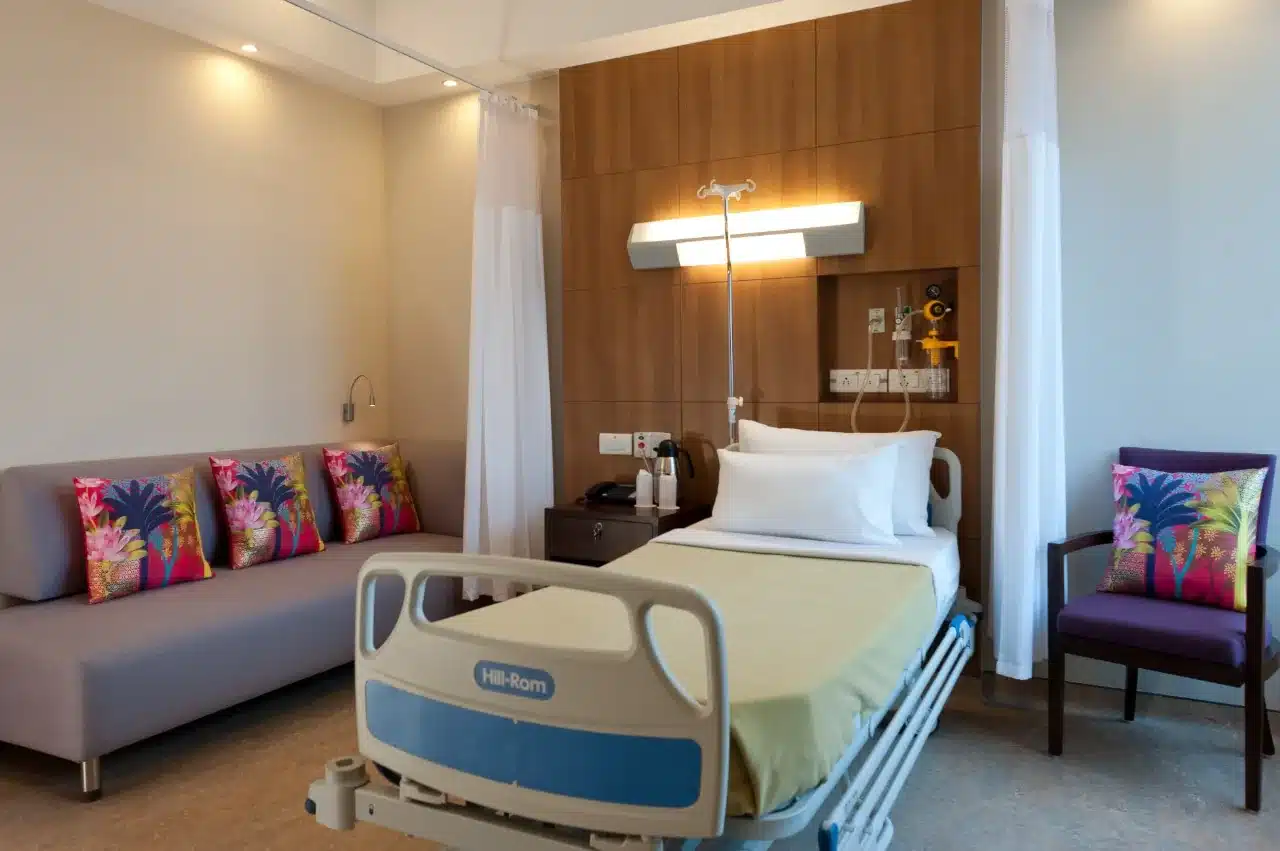
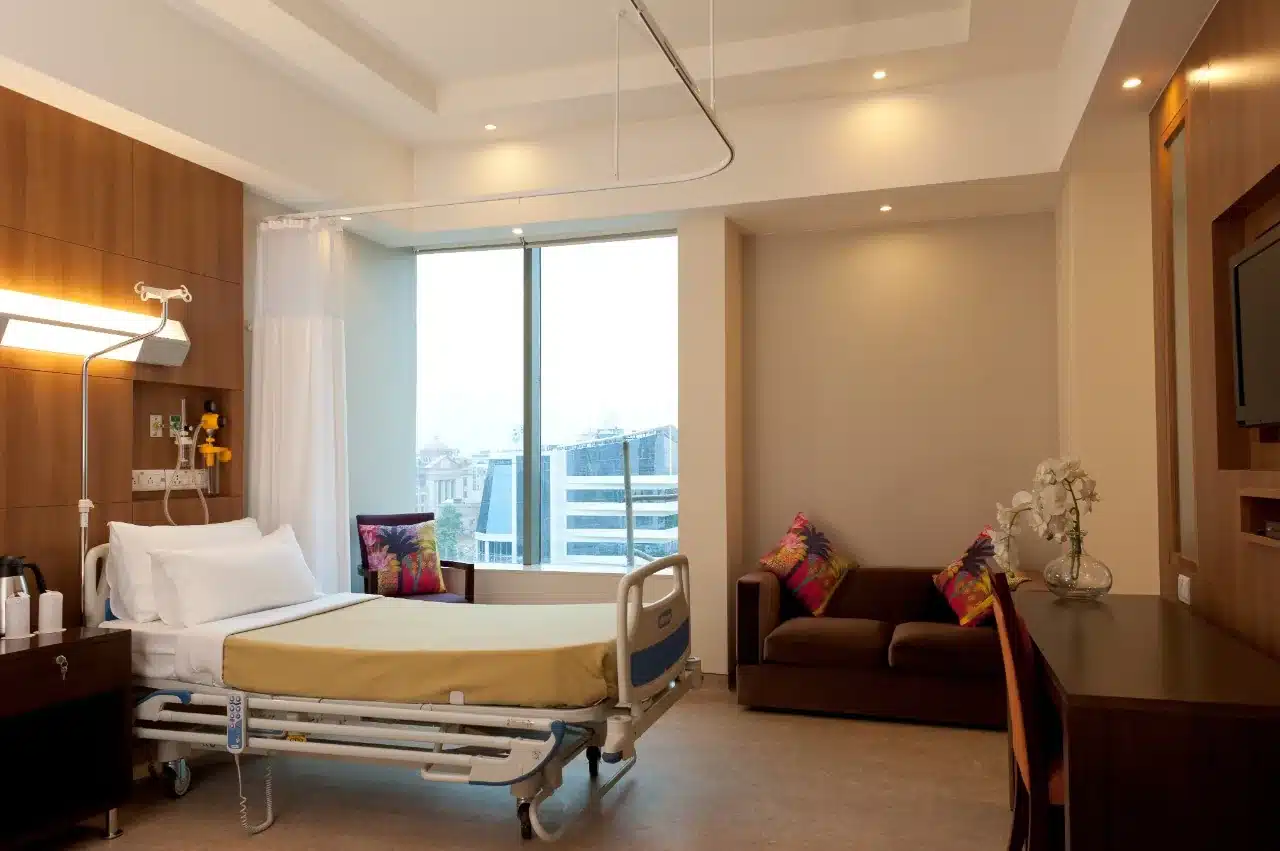
The deluxe private HSCT rooms at HSCT Hospital India, where the full 30 day treatment and recovery take place, with attendant seating and triple HEPA air filtration.
8. What results can a patient expect after HSCT for MS?
Most patients who are well selected for HSCT stop having relapses and see their MS activity halt, and a proportion of them regain some function that recent inflammation had taken away.
In the MIST trial almost every transplanted patient remained free of disease progression a year after treatment, and only one suffered a relapse across the follow-up period, against many relapses in the group that stayed on drugs. For a patient who has watched relapses stack up despite every drug, a stable scan and a stable body is the outcome that matters.
Stability of this kind is tracked over years with repeat MRI scans and clinical review, and for many patients the absence of new lesions is the clearest sign that the reset has held.
The honest limit sits alongside that result. HSCT acts on the active, inflammatory part of MS, so it cannot rebuild nerve tissue that has already been permanently scarred, and a patient whose disability comes mainly from old damage may see it hold steady rather than reverse.
Even so, the same trials show that halting new damage often lets the nervous system settle and some existing symptoms ease over the months after treatment. The realistic expectation is a disease that stops advancing, frequently with some recovery, which for active relapsing MS is a meaningful change in the course of the illness.
 Request a Call Back
9. Which MS patients are candidates for HSCT?
The strongest candidates for HSCT are patients with active, inflammatory relapsing MS who are still having relapses or showing new lesions on MRI despite disease-modifying drugs, who are usually under about 60, and whose disability still sits within a treatable range on the EDSS scale.
Active inflammation is the signal the transplant can act on, so recent relapses or fresh MRI activity are exactly what makes a patient suitable rather than what rules them out. This includes patients whose disease keeps breaking through high-efficacy or second-line therapy, where the conventional options have effectively been exhausted.
Progressive MS that advances steadily without relapses or new lesions responds less well, because the disability there is driven by nerve degeneration rather than the active inflammation HSCT switches off. European transplant registries reported through the EBMT consistently show the best results in the active relapsing group.
This is also where HSCT Hospital India and the Canadian system differ in practice: rather than declining a patient for falling outside a fixed national list, the transplant team reviews each set of MRI scans and relapse history to judge whether enough active inflammation is present for the procedure to help.
A patient uncertain where they sit can be assessed directly, which is often the fastest way to a real answer. Age and general health are weighed alongside disease activity, since the procedure asks the body to recover from chemotherapy, and the team looks at heart, lung and kidney function as part of deciding whether HSCT is safe for a particular patient.
10. Can HSCT Hospital India treat me if Canada said no?
Often, yes. HSCT Hospital India assesses each patient individually rather than against a national quota, so many Canadians who were declined at home, or told to keep waiting, are found eligible for the non-myeloablative protocol in India.
A Canadian decision reflects the limits of a public programme with few places and strict rules, and it is not always the same as a clinical judgment that HSCT cannot help.
The way to find out is straightforward. A patient sends recent MRI reports, a neurologist’s summary and a current medication list, and the transplant team at HSCT Hospital India reviews them to see whether the disease is still actively inflammatory and whether disability sits within a range the procedure can help.
If it does, the hospital explains the plan, the timing and the cost before any commitment is made.
Patients whose MS has continued to relapse or progress despite high-efficacy or second-line disease-modifying therapy are exactly the cases the transplant team is asked to assess, and where a patient has already completed pre-transplant testing in Canada, those results are reviewed directly so the evaluation moves quickly.
This is why a Canadian who has heard no at home should still ask the question here, because the answer is decided on the evidence of their own scans rather than on a waiting-list policy.
11. How much does HSCT for MS cost for a Canadian patient?
For a Canadian patient the real cost of HSCT depends entirely on the route.
The public programme is free only if a patient is accepted into it, private treatment in the United States runs to roughly US $150,000 to $200,000, and HSCT Hospital India provides the whole procedure all-inclusive at US $30,000 for a 30-day stay that covers both the patient and one attendant.
The India price is not a deposit or a starting figure; it is the package cost.
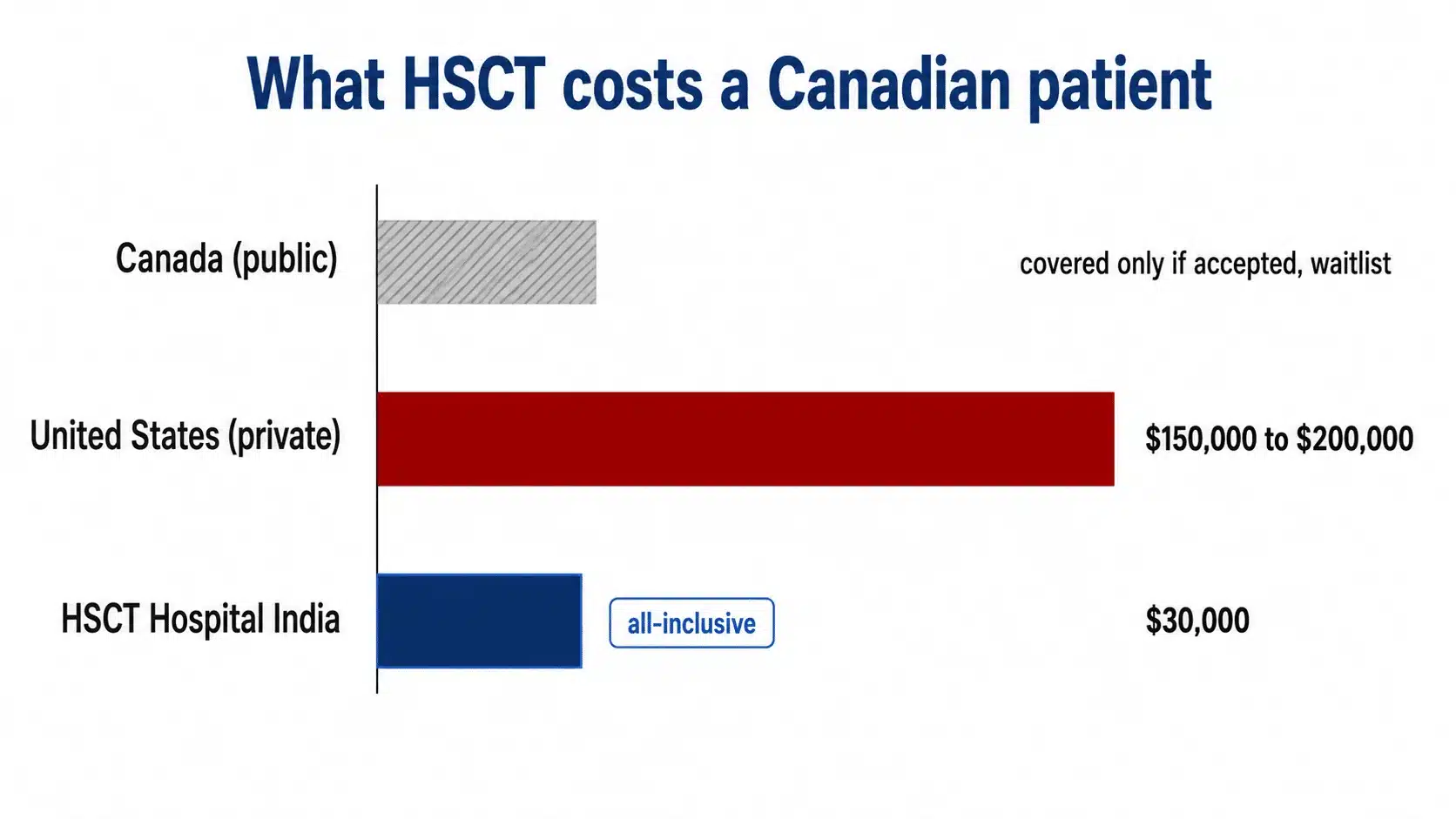
Because it is all-inclusive, the US $30,000 covers the transplant, the hospital room, the medical team and the monitoring across the full admission, which makes it simple to compare against the fragmented private costs elsewhere.
Patients who want a wider picture can read the hospital guide to the best HSCT hospitals and centres worldwide, and a country-by-country breakdown of HSCT cost in Mexico, Russia and the USA shows where India sits against the other main destinations. Canadian patients who are also weighing Puebla can read what the Mexican programme charges and how its protocol differs on the page covering HSCT for MS in Mexico, and how access is rationed in another country with a public system in HSCT for MS in Australia, HSCT for MS in Ireland and HSCT for MS in the UK. American patients can read what access and cost look like at home on HSCT for MS in the USA.
National reimbursement rules fund the procedure only inside the approved Canadian pathway, so most patients travelling abroad plan to pay the package price themselves.
| Route | What it means for a Canadian patient |
|---|---|
| Canada, public programme | Covered by the public system, but only if the patient is accepted into a narrow aggressive-MS group. Long waiting lists at a few centres, and not a realistic option for most people who ask. |
| United States, private | Available privately at roughly US $150,000 to $200,000, usually before travel, accommodation and attendant costs are added. |
| HSCT Hospital India | US $30,000 all-inclusive for a 30-day stay covering patient and one attendant, in a triple HEPA private room, at a JCI-USA accredited hospital, using the non-myeloablative protocol with no follow-up chemotherapy and a short waiting period. |
12. Is HSCT a cure for MS?
No, HSCT is not a cure for MS, and no responsible transplant programme describes it as one. What the procedure can do is halt the inflammatory disease process, stop relapses and prevent new lesions from forming, which changes the course of the illness for many patients with active relapsing disease.
That is a powerful outcome, and it is a different claim from a cure.
The distinction is honest and it matters for a patient making a decision. MS damage that has already become permanent is not reversed by resetting the immune system, so HSCT is best understood as a way to stop the disease from advancing further rather than to erase what it has already done.
HSCT Hospital India frames the treatment in exactly these terms, because a frightened patient deserves an accurate picture of what a transplant can and cannot achieve. Doctors describe the best result as long-term remission, a state in which the disease stays quiet and inactive, which is a realistic goal even though it is not the same as a cure.
13. What is the journey from Canada like?
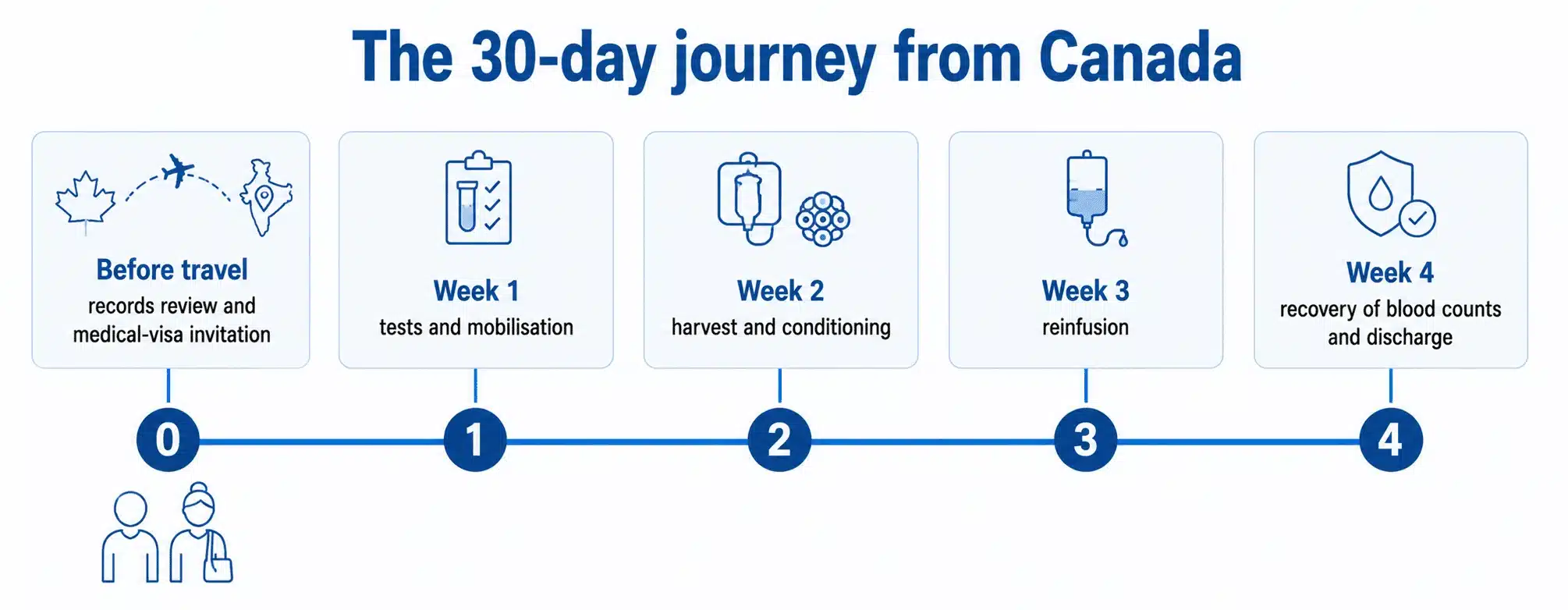
The journey from Canada is coordinated from start to finish. A patient first sends recent medical records for review, receives a formal invitation letter that supports a medical visa once accepted, and then travels for a stay of about 30 days with one attendant, while the transplant team at HSCT Hospital India manages every clinical stage.
Because records are reviewed before travel, a patient knows they are eligible and knows the plan before they board a plane.
Practical support runs alongside the medical care. The hospital’s coordination team helps with the invitation letter, airport arrival, accommodation for the attendant and the day-to-day logistics of a month abroad, so a Canadian family is not left to work out an unfamiliar system alone.
Clinical questions are handled directly by the HSCT medical team, who set out the schedule of mobilisation, harvest, conditioning and reinfusion so the patient understands what each week holds. The aim is a journey that feels planned and supported rather than improvised.
Across the 30 days the schedule moves from tests and mobilisation in the first week, through harvest and conditioning, to reinfusion and the recovery of blood counts before discharge, and the attendant stays with the patient throughout.
14. Real patients, real stories
Among the international patients treated at HSCT Hospital India is Janet from Canada, who travelled for the same non-myeloablative protocol as an MS patient and shares her experience in the hospital’s story library. Her account gives a Canadian reader a real, named example of someone who made the same journey, rather than an anonymous claim.
You can read her full story as Janet from Canada, and see more accounts from people who came from abroad for treatment among the hospital’s patient testimonials. These are the words of the patients themselves, and they are the honest measure of what the experience is like.
15. Frequently asked questions about HSCT for MS in Canada
Is HSCT available in Canada?
HSCT is available in Canada, but only for a small group of patients with aggressive, treatment-resistant relapsing multiple sclerosis, and it is delivered through a few specialised centres with long waiting lists. Most Canadians who ask about HSCT for MS are found ineligible under the strict public criteria.
HSCT Hospital India assesses eligibility individually and can often accept patients Canada has declined, using the lower-risk non-myeloablative protocol at an all-inclusive price of US $30,000.
Can HSCT help progressive MS?
HSCT works best for active, inflammatory relapsing MS, where new relapses or new MRI lesions show the immune system is still driving the disease. Progressive MS that advances without relapses or new lesions responds less well, because the disability is caused by nerve degeneration rather than the active inflammation the transplant switches off.
HSCT Hospital India reviews each patient’s MRI scans and history to judge whether enough active inflammation is present for the procedure to help.
Is HSCT in India as safe as in Canada?
HSCT Hospital India uses the non-myeloablative protocol, the same lower-intensity regimen that recorded no treatment-related deaths in the MIST randomised trial, and treats patients in triple HEPA-filtered private rooms to guard against infection.
The high-intensity myeloablative regimen used in the Canadian aggressive-MS trial carried more risk and recorded one death among 24 patients. Safety depends more on the intensity of the protocol and the quality of the centre than on the country, and HSCT Hospital India is accredited by JCI-USA, NABH and NABL.
How long is the wait for HSCT?
Public HSCT programmes in Canada carry long waiting lists because only a few centres perform the procedure for a narrow group of patients.
HSCT Hospital India has a short waiting period and begins with a review of the patient’s medical records, so accepted patients can usually plan travel within weeks rather than waiting many months while disability accumulates.
Does OHIP or provincial insurance cover HSCT abroad?
Provincial health plans such as OHIP fund HSCT only inside the approved Canadian public programme and generally do not cover elective treatment obtained abroad.
A Canadian patient travelling to HSCT Hospital India should expect to pay the all-inclusive package price of US $30,000, which covers the transplant, the hospital stay and care for both the patient and one attendant over about 30 days. Patients are advised to confirm their own coverage with their provincial plan and insurer.
How much does HSCT for MS cost?
HSCT for MS costs US $30,000 all-inclusive at HSCT Hospital India, covering the full non-myeloablative transplant, a 30-day hospital stay, and care for the patient plus one attendant. Private HSCT in the United States runs to roughly US $150,000 to $200,000. In Canada the procedure is funded only for the small group accepted into the public programme.
Does HSCT cure MS?
HSCT does not cure MS. The procedure can halt the inflammatory disease process, stop relapses and prevent new lesions from forming, and in some patients it allows a degree of recovery, but it cannot repair nerve damage that is already permanent.
No responsible transplant programme describes HSCT as a cure, and HSCT Hospital India frames it as a way to stop the disease progressing rather than to reverse it.
What do I need to start?
To start, a patient sends recent MRI reports, a neurologist’s summary and a list of current medications to HSCT Hospital India for review. The transplant team assesses whether the patient has active, inflammatory relapsing MS suitable for the non-myeloablative protocol, and if accepted, issues a formal invitation letter for a medical visa.
No referral from a Canadian programme is required.
How many patients has the hospital treated?
HSCT Hospital India has treated more than 1,500 international patients from Europe, North America and Australia. It performs autologous HSCT for multiple sclerosis and a range of other autoimmune diseases using the non-myeloablative protocol, and it is accredited by JCI-USA, NABH and NABL.
Is the protocol the same as the Canadian trial?
The protocol at HSCT Hospital India is the non-myeloablative regimen developed by Professor Richard Burt, which resets the immune system without destroying the bone marrow.
The Canadian aggressive-MS trial used a higher-intensity myeloablative regimen with busulfan, which suppressed disease strongly but carried more risk and recorded one treatment-related death. The non-myeloablative protocol used in India is the same approach tested in the MIST randomised trial, which recorded no treatment-related deaths.
What if conventional treatments have not worked for my MS?
Patients whose MS keeps relapsing or progressing despite disease-modifying therapy, including high-efficacy and second-line drugs, are exactly the group HSCT is assessed for, because it is the continued inflammatory activity that the transplant acts on.
HSCT Hospital India reviews each refractory case on its own evidence, and where pre-transplant testing has already been completed in Canada, those results are used to move the evaluation along faster.
16. What is the next step?
The next step is a formal transplant evaluation, which HSCT Hospital India offers to any patient whether or not a Canadian programme has already assessed them.
This evaluation reviews the actual state of the disease and gives a clear, individual answer on whether the non-myeloablative protocol can help, which is exactly the answer a public waiting list rarely provides quickly.
A patient begins by sending recent MRI reports, a neurologist’s summary and current medications for review, and the transplant team responds with an assessment of eligibility, the plan and the cost. From there a patient can decide with full information rather than uncertainty.
Anyone still gathering background can read the full set of hospital HSCT treatment guides to understand how the procedure is used across MS and related autoimmune conditions before making contact.
17. Why choose HSCT Hospital India
For a Canadian patient weighing HSCT abroad, HSCT Hospital India brings together what matters most in one place: a proven protocol, an internationally accredited hospital, honest eligibility and a single all-inclusive price. Seven reasons stand out.
- Internationally accredited care. HSCT Hospital India holds JCI-USA accreditation, the global gold standard for hospital quality and patient safety, which places it in the same tier as leading transplant centres in North America and Europe.
- A fraction of the Western cost. Treatment is priced at US $30,000 all-inclusive, roughly 75 to 85 percent below the US $125,000 to US $200,000 charged privately in the United States. The saving comes from lower operating costs, not from any compromise on clinical quality or infrastructure.
- Wider eligibility. The hospital assesses every MS subtype, including primary progressive and secondary progressive MS, and does not require prior failure of two disease-modifying drugs, so many Canadians turned away at home are accepted here.
- Deep autoimmune experience. Beyond MS, the same non-myeloablative protocol treats CIDP, neuromyelitis optica, autoimmune small fibre neuropathy, myasthenia gravis, stiff person syndrome and other autoimmune neurological conditions.
- Everything under one roof. A full blood bank, haematopathology, microbiology, histopathology, ICU, neurology, cardiology, gastroenterology, nephrology and radiology sit on site, so a patient is never transferred elsewhere during the critical stages of treatment.
- Double-level HEPA-filtered rooms. Every transplant room uses double-level HEPA air filtration, one of the most rigorous infection-control standards available anywhere, protecting the patient through the immunosuppressed weeks that follow the transplant.
- Stay for patient and attendant included. The package covers a deluxe private room for the full 30-day stay, with medical care and meals for both the patient and one accompanying person, a practical and financial advantage that US and European centres do not match.
This page is medical information, not medical advice, and it does not promise any individual outcome. HSCT does not cure multiple sclerosis. Whether HSCT is right for you depends on a formal evaluation of your own scans, history and current disease activity by the transplant team.