HSCT for MS in the USA: Cost, Access and Eligibility
HSCT for MS in the USA reaches almost no one outside a clinical trial. The Food and Drug Administration has not approved the procedure as a treatment for multiple sclerosis, American health plans classify it as experimental, and the main American trial takes patients aged 18 to 55 with an EDSS of 6.0 or lower. HSCT Hospital India treats American patients outside that system for 30,000 US dollars all inclusive, covering thirty days for the patient and one attendant in a private room with triple HEPA filtered air at a JCI-USA accredited hospital.
Can I get HSCT for MS in the USA, and what does it cost?
- HSCT Hospital India treats American patients with multiple sclerosis for 30,000 US dollars all inclusive, covering thirty days for the patient and one attendant in a private room with triple HEPA filtered air at a JCI-USA accredited hospital.
- That price covers every pre-treatment investigation, the full procedure, every doctor’s fee, all medicines, neuro physiotherapy, meals, laundry and airport transfers, and no further invoice follows discharge.
- Americans who pay privately in the United States are quoted 150,000 to 200,000 US dollars for a six to seven week inpatient course, and American MS drugs cost 80,000 to 100,000 dollars per patient per year for as long as they are taken.
- The Food and Drug Administration has not approved HSCT as a treatment for multiple sclerosis, so American access runs through clinical trials at academic centres.
- The BEAT-MS trial accepts participants aged 18 to 55 who carry an EDSS score of 6.0 or lower, and half of the 156 participants are assigned to drugs rather than to the transplant.
- Medicare national coverage determination 110.23 does not list multiple sclerosis, and Aetna clinical policy bulletin 0606 classifies stem cell transplantation for multiple sclerosis as experimental.
- HSCT Hospital India assesses patients up to about 60, accepts progressive MS where the MRI still shows inflammatory activity, and charges nothing for the assessment.
An estimated 727,344 American adults were living with multiple sclerosis in 2010, a prevalence of 309.2 per 100,000, with the rate in women running 2.8 times the rate in men. Those figures come from a claims-based national estimate published in Neurology in 2019. American disease modifying drugs cost between 80,000 and 100,000 US dollars per patient per year, and that spending repeats every year the drug is taken.
One HSCT admission at HSCT Hospital India costs 30,000 US dollars once. A single year of American MS drugs costs more than that.
1. What is HSCT, and what are the four stages?
Multiple sclerosis begins with the immune system turning on myelin, the fatty coating that keeps an electrical signal moving quickly and accurately down a nerve fibre. Relapse by relapse, that coating is worn away. Disease modifying drugs suppress the attack for as long as a patient keeps taking them, and the attack picks up again once they stop. HSCT clears out the immune cells responsible and grows a replacement immune system from blood stem cells taken from the patient.
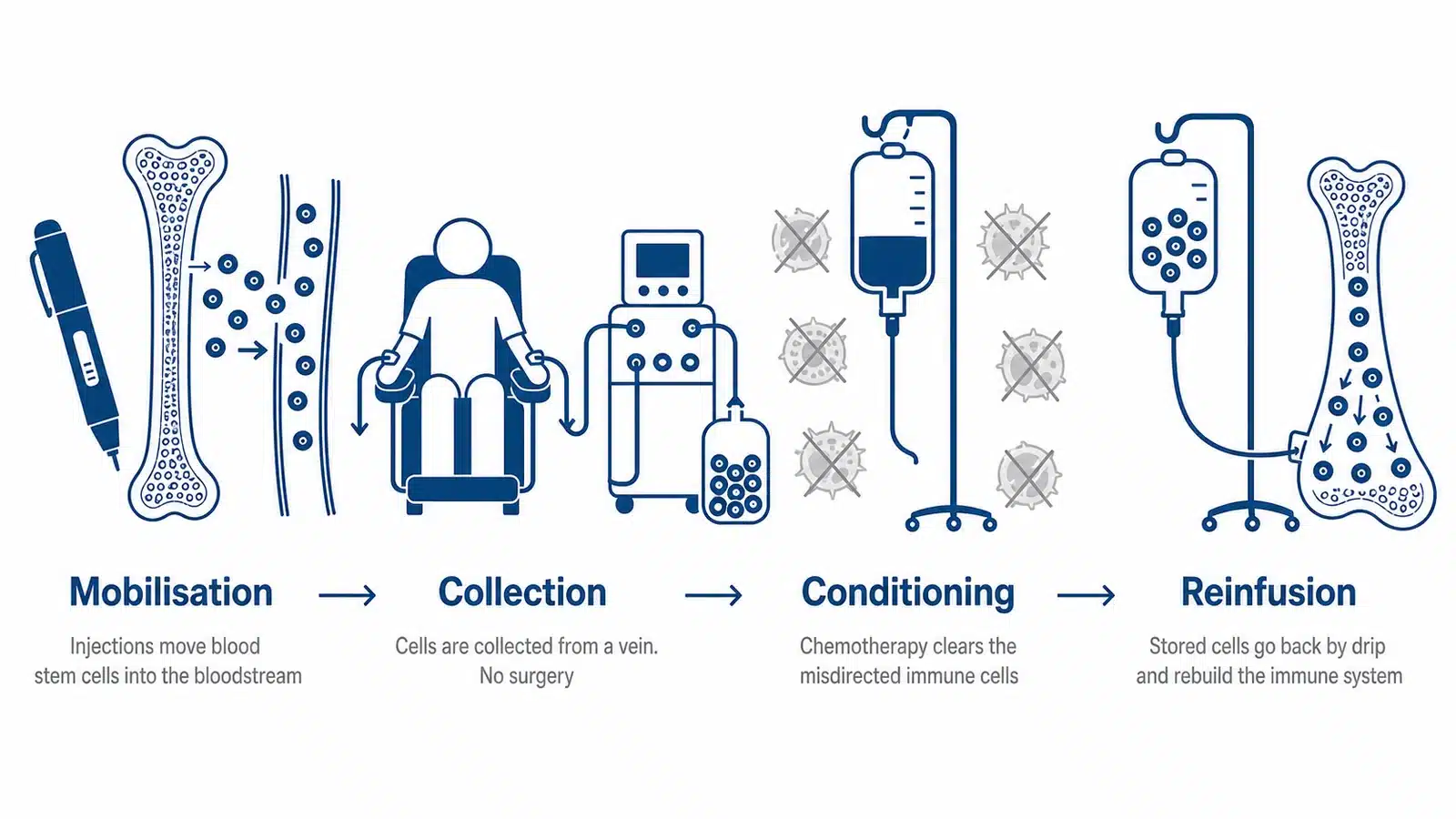
The procedure runs in four stages inside one admission.
- Mobilisation moves the cells into the blood. An injected growth factor drives blood stem cells out of the bone marrow and into the bloodstream, where they can be reached without surgery.
- Collection takes the cells out and freezes them. Blood runs from a vein into a machine that filters the stem cells off and sends everything else back. The harvested cells are counted and placed in frozen storage.
- Conditioning clears the faulty immune cells. A course of chemotherapy given across several days wipes out the immune cells responsible for the attack on myelin.
- Reinfusion returns the cells and rebuilds the immune system. The frozen cells are warmed and given back through a drip. They travel to the marrow and grow a fresh immune system across the next fortnight or so.
The whole sequence happens once. No other MS treatment is given as a single course aimed at halting the disease process itself. The clinical reasoning sits in the multiple sclerosis treatment guide, and the identical procedure is used against CIDP, NMOSD, stiff person syndrome and the rest of the conditions indexed under HSCT for autoimmune diseases.
2. Where can an American patient actually get HSCT for MS in the USA?
An American patient reaches HSCT for MS inside a clinical trial, at a small number of academic centres. The National Institutes of Health described HSCT for multiple sclerosis as experimental when it announced the current American trial in January 2020.
That trial is BEAT-MS. It is a phase 3 randomised trial sponsored by the National Institute of Allergy and Infectious Diseases and run through the Immune Tolerance Network, registered as NCT04047628. Recruitment opened on 19 December 2019 with a target of 156 participants. The trial compares the transplant against the strongest licensed MS drugs, and its main measure is relapse free survival over three years. The registry record was last updated on 2 January 2026 and still lists the trial as recruiting, with primary completion estimated for October 2026 and full completion for October 2029.
The listed American sites include Stanford, Mayo Clinic in Rochester, the Mellen Center at Cleveland Clinic, the Corinne Goldsmith Dickinson Center at Mount Sinai, Fred Hutchinson Cancer Center, Northwestern, Penn, Duke, Washington University in St Louis, UT Southwestern, Baylor, Oregon Health and Science University, the Rocky Mountain MS Center in Colorado and the Medical College of Wisconsin, among others.
The entry criteria are narrow. A participant has to be aged 18 to 55, carry an EDSS score of 6.0 or lower at randomisation, and have had at least two episodes of disease activity in the previous 36 months. At least one of those episodes must have followed a month or more on an approved MS drug, at least one must have occurred within the previous 12 months, and at least one must be a confirmed clinical relapse. The participant also has to be a candidate for one of the comparison drugs. A patient who is 57, or whose EDSS is 6.5, or whose last relapse was two years ago, falls outside all of that. An explanation of the scale itself sits on the EDSS page.

Randomisation is the other barrier. Half the participants are assigned to drugs rather than to the transplant, and the American trial uses a high dose BEAM chemotherapy regimen rather than the lower intensity regimen used at HSCT Hospital India.
Outside the trial, the picture narrowed in 2019. The immunotherapy and autoimmune diseases programme at Northwestern Memorial Hospital in Chicago, run by Professor Richard Burt and the highest volume HSCT for MS programme in the country, stopped accepting new patients that year when Burt left for a research sabbatical. Patients who had been referred there had to look elsewhere.
The National Multiple Sclerosis Society published its position in JAMA Neurology in 2021. Its National Medical Advisory Committee concluded that HSCT may be a useful option for people with relapsing multiple sclerosis who show substantial breakthrough disease activity despite a high efficacy drug, or who cannot take one. It named the best candidates as people younger than 50 with disease duration under 10 years, and stated that the procedure should be performed only at centres with substantial experience.
3. What does HSCT for MS cost in the USA, India, Mexico and Russia?
One published figure exists for the American cost. A team at Northwestern Memorial Hospital in Chicago collected the costs of every HSCT performed there for relapsing remitting MS between January 2017 and January 2019 and published them in Multiple Sclerosis and Related Disorders in 2020. The mean total cost was 85,184 US dollars, with a range of 70,635 to 120,260 dollars, and mean revenue collected was 95,268 dollars. The same paper put American disease modifying drug costs at 80,000 to 100,000 dollars per patient per year in 2019.
That 85,184 dollar figure is a hospital’s own accounting for a trial patient. Americans who pay privately are quoted 150,000 to 200,000 dollars for a six to seven week inpatient course.
| Destination | Price to the patient | Length of stay | What the price buys |
|---|---|---|---|
| HSCT Hospital India, Delhi NCR | US $30,000, all inclusive | 30 days | Fully inpatient for the patient and one attendant, in a private room with triple HEPA filtered air. All testing, the MRI, the whole procedure, every doctor’s fee, medicines, consumables, neuro physiotherapy, meals, laundry and airport transfers are inside the price. |
| Pirogov Centre, Moscow, Russia | US $40,000 to $45,000 | 5 to 6 weeks | The whole course is inpatient, and the admission and the journey from the United States are both longer. |
| Clinica Ruiz, Puebla, Mexico | Around US $54,500 | About 4 weeks | The course is largely outpatient. Patients live in a dedicated apartment building and attend the clinic. The clinic’s own site prices a caregiver service at US $2,750 for 28 days and an MRI at about US $750 on top. |
| United States, inside BEAT-MS | Trial funded | 6 to 7 weeks | Only for the 156 participants who meet the criteria, and only half of those are assigned to the transplant. |
| United States, paying privately | US $150,000 to $200,000 | 6 to 7 weeks | Inpatient at an academic centre, where a self-pay place is rarely offered at all outside a trial. |
Sources for the table: the Northwestern cost study published in Multiple Sclerosis and Related Disorders in 2020, the programme prices gathered on HSCT cost by country, and the treatment information pages of the Mexican programme, read on 5 August 2026. Figures quoted for centres outside India are their own advertised programme prices, and any of them can move.
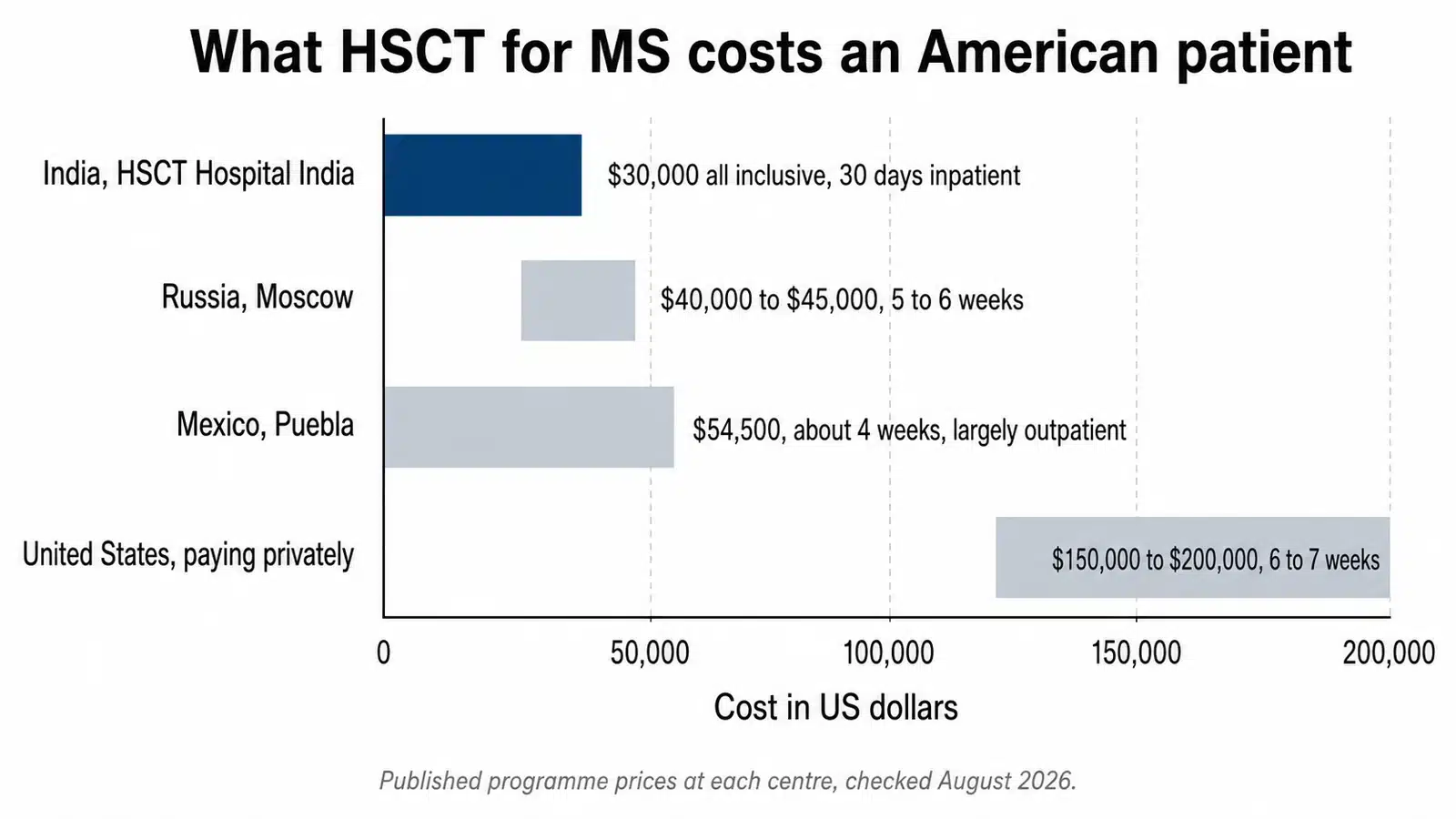
The Indian price covers two people for thirty days. The Mexican and Russian prices cover the patient. Accommodation, meals and a caregiver are billed separately in Puebla, which is where the gap between the headline figure and the final figure opens up. The Mexican programme is broken down in detail on the HSCT for MS in Mexico page. Americans raising money towards the cost commonly begin with the guide to raising funds online.
4. Why do American insurers call HSCT experimental, and what does an appeal involve?
Medicare works from a national coverage determination. NCD 110.23 lists the conditions for which a stem cell transplant using the patient’s own cells is covered: certain acute leukaemias in remission, certain non-Hodgkin lymphomas, recurrent neuroblastoma, advanced Hodgkin disease, multiple myeloma at defined stages, and primary AL amyloidosis meeting set criteria. Multiple sclerosis does not appear anywhere in the document.
Commercial plans take the same line in their own policy documents. Aetna clinical policy bulletin 0606, last reviewed on 10 September 2025, lists multiple sclerosis among the autoimmune conditions for which stem cell transplantation is considered experimental, investigational or unproven, on the stated rationale that effectiveness has not been established. Other national plans publish comparable bulletins.
An American patient denied coverage has two levels of appeal. The first is an internal appeal to the plan. The second is an independent external review, and the rules for it are set out by HealthCare.gov. A written request for external review has to be filed within four months of the final denial notice. A standard review is decided no later than 45 days after the request is received, and an expedited review within 72 hours where the medical situation demands it. The insurer is required by law to accept the external reviewer’s decision. The federal process costs nothing, and other processes cannot charge more than 25 dollars.
An external reviewer examines whether the plan applied its own coverage policy correctly. Where that policy classifies the procedure as experimental for multiple sclerosis, the reviewer is examining a policy that already says no. Some appeals succeed on the strength of an individual case. Many do not, and the process itself runs for months while the disease keeps moving. The argument about time is developed at length under why delaying HSCT is not an option for MS patients.
5. What does the published evidence show?
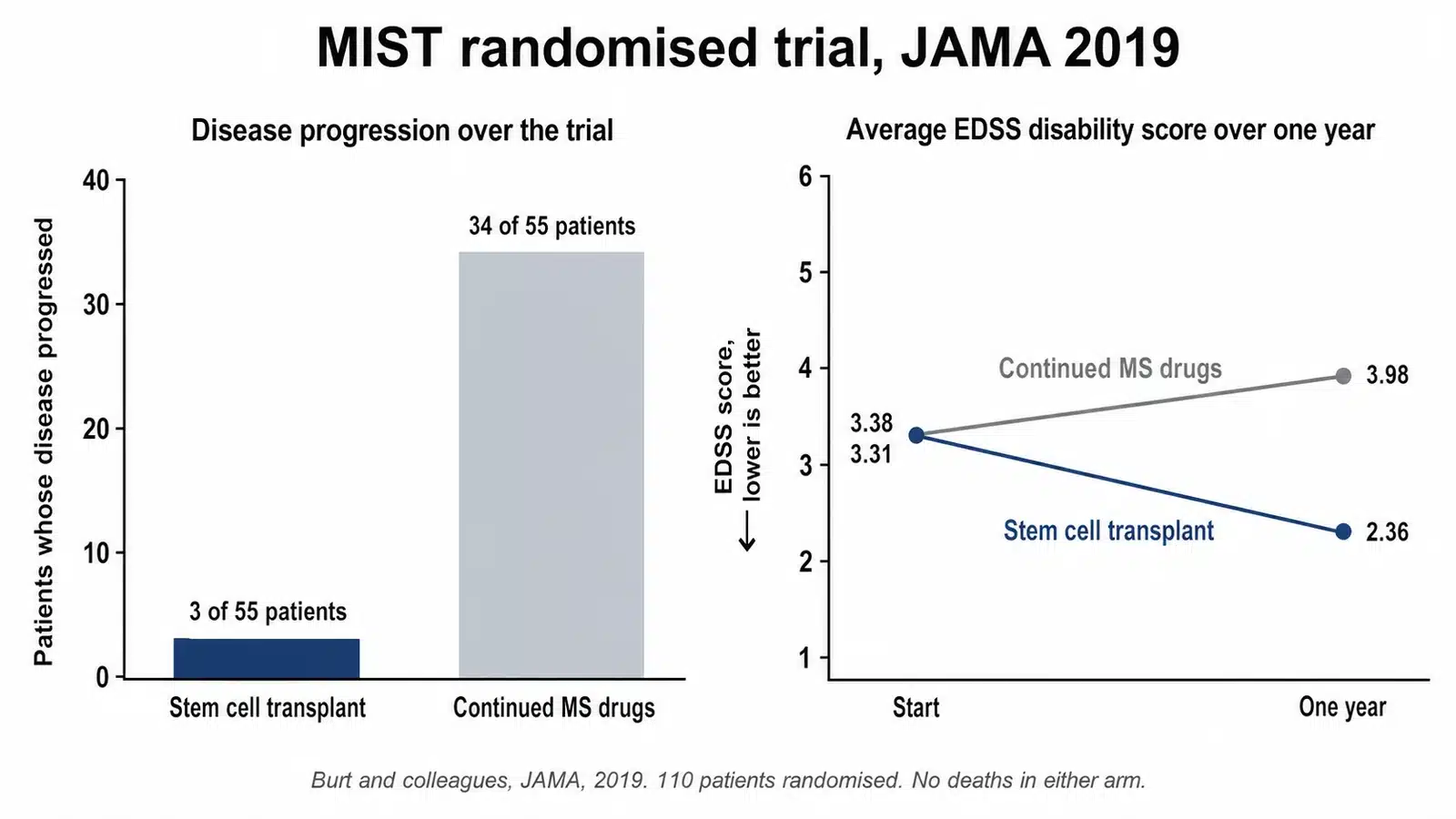
The strongest evidence is randomised and it comes from MIST, a trial run by Professor Richard Burt whose results appeared in JAMA in 2019. Recruitment ran from 20 September 2005 to 7 July 2016 and took in 110 people with relapsing remitting MS at four centres across the United States, Europe and South America. Everyone entering carried an EDSS score between 2.0 and 6.0 and had relapsed at least twice in the preceding year while taking a disease modifying drug. Fifty-five went to the transplant arm and 55 to a drug of higher efficacy or a different class.
Disease progression occurred in 3 of the 55 transplant patients and 34 of the 55 drug patients. Median follow up was 2 years and mean follow up 2.8 years. During the first year the average EDSS score fell from 3.38 to 2.36 in the transplant group and rose from 3.31 to 3.98 in the drug group. There were no deaths in the trial, and no transplant patient developed a grade 4 toxicity outside the blood system.
Three large observational series fill in the longer picture.
| Study | Patients | What was recorded |
|---|---|---|
| MIST randomised trial, JAMA, 2019 | 110 randomised, 55 per arm | Progression occurred in 3 of 55 after transplant against 34 of 55 on drugs. EDSS improved from 3.38 to 2.36 after transplant and worsened from 3.31 to 3.98 on drugs. There were no deaths. |
| Canadian phase 2 trial, The Lancet, 2016 | 24, treated with a heavy chemotherapy regimen | No relapses and no new or active lesions across 314 scans over follow up reaching 13 years. 35% had a sustained EDSS improvement. One of the 24 died of transplant related complications. |
| European registry series, JAMA Neurology, 2017 | 281 across 25 centres in 13 countries, treated 1995 to 2006 | 78% had progressive MS and median EDSS at entry was 6.5. Progression free survival at 5 years was 46% and overall survival 93%. Eight patients died within 100 days, a rate of 2.8%. |
| UK real world series, JNNP, 2026 | 364 across 14 UK centres, treated 2002 to 2023 | At 2 years then 5 years, relapse free survival ran 94.6% and 88.6%, freedom from MRI activity 93.1% and 80.1%, and progression free survival 83.5% and 62.4%. Disability improved in 24.2% of patients at 2 years and 20.4% at 5 years. Five of the 364 died, a treatment related mortality of 1.4%. |
The UK series is the largest real world dataset on HSCT for MS published to date. Of the 271 patients with complete neurological follow up, 168 had relapsing remitting MS and 103 had progressive MS. Median disease duration at treatment was 10 years and median EDSS was 6, so the group already carried substantial disability. Patients with relapsing remitting disease did better on both progression free survival and complete freedom from disease activity.
The 2026 position on which patients benefit is set out in the joint ECTRIMS and EBMT recommendations published in Nature Reviews Neurology in 2025. Transplant after failure of a high efficacy drug in aggressive relapsing remitting MS is a generally accepted indication. Progressive MS remains uncertain, with five year progression free survival reported between 33% and 71% in secondary progressive disease and smaller benefit than in relapsing disease. The same paper reports a meta-analysis in which treatment related mortality among 349 people treated after 2005 was 0.3%, against 3.6% before 2005. Longer term follow up is collected in HSCT for MS long term results.
6. Who does HSCT Hospital India accept, and who does it decline?
Assessment is made on the patient’s own scans and history rather than against a fixed national list. A recognisable profile runs through the strongest candidates.
- Relapsing remitting MS qualifies, and so does progressive MS where inflammatory activity is still visible on the MRI
- Age below 60, and the body handles chemotherapy better towards the younger end of that range
- An EDSS score sitting in the lower half of the scale, so walking is generally possible, with a stick or a frame if one is needed
- A relapse or a fresh lesion inside the past year or two, since continuing activity is what the transplant acts on
- A diagnosis made recently rather than decades ago, with under ten to fifteen years preferred
- Heart, lung, liver and kidney function within normal limits, with no infection running at the time
HSCT Hospital India turns down long standing progressive disease where the MRI has gone quiet, the disability is already fixed and no inflammatory activity has appeared for years. Nothing active remains for the transplant to switch off in that situation, and the hospital gives that answer rather than taking the case. Progressive MS that still shows activity is judged on its own evidence, which is the position the ECTRIMS and EBMT recommendations take.
Falling outside the BEAT-MS criteria on age, on EDSS or on the date of a last relapse is not a clinical verdict on any patient. Trial criteria exist to give a research question a clean answer. An assessment at HSCT Hospital India works from the MRI films of brain and spine, the relapse history, the current EDSS score, the list of drugs already used with the reason each was stopped, and recent blood work. Haematology and neurology go through it together. The reply states accepted, accepted with conditions, or not suitable, and gives the reason. There is no fee.
7. What are the risks?
One period carries most of the risk and it lasts about ten days. Between the last dose of chemotherapy and the moment the new immune system comes online, the patient has very little protection against infection. The whole design of the admission is built around that gap.
Published mortality moves with the strength of the chemotherapy and the decade of treatment. The ECTRIMS and EBMT meta-analysis recorded 0.3% among 349 people treated after 2005. The UK series of 364, whose median EDSS at treatment was 6, recorded 1.4%. The European registry cohort from 1995 to 2006, in which 78% had progressive disease and the median EDSS was 6.5, recorded 2.8%. Lighter regimens and earlier treatment with less disability both push the number down. HSCT Hospital India works with the reduced intensity regimen Professor Richard Burt designed, the one used in MIST, where nobody died.
Each patient at HSCT Hospital India is nursed alone in a deluxe private room for the entire admission. Every cubic metre of air entering it passes three separate HEPA stages. Blood specialists, the bone marrow transplant unit and intensive care share a single floor. Filtered air through the low count days is the measure that does most to keep infection rates down. The attendant remains in the room, which cuts out the coming and going of an open ward.
The remaining effects run to a familiar pattern. Hair thins or comes out and then grows back in. Fatigue sits heavily for a few weeks and eases across the following months. Nausea is controlled with medication. Chemotherapy can damage fertility, and fertility preservation is raised with younger patients before they fly rather than afterwards, a subject taken up in fertility preservation before HSCT. Myelin and nerve fibres already destroyed do not come back. What HSCT does is halt further inflammatory damage, after which function that inflammation had been holding down can return.
8. What does the thirty day admission in India involve?
The admission runs to a fixed sequence, and an American patient arrives knowing the plan.
- Days 1 to 3 are given over to admission and testing. The patient has blood work, an MRI, heart and lung function tests, dental checks and infection screening. Haematology and neurology see the patient together before anything starts.
- Days 4 to 9 are the mobilisation stage. Daily injections push blood stem cells out of the marrow into the bloodstream. Aching across the hips and lower back is common at this point and signals that the injections are working.
- Days 10 to 12 are when the cells are collected. The cells are gathered from a vein through a machine over one or two sessions. There is no surgery and no general anaesthetic. The cells are counted and frozen.
- Days 13 to 18 are the conditioning stage. The chemotherapy runs over several days with anti-sickness medication given throughout. Blood counts begin to fall towards the end of this period.
- Day 19 is the reinfusion. The stored cells are warmed and go back in through a drip. It takes less than an hour and the patient feels nothing.
- Days 20 to 30 are recovery. The low count days come first, then engraftment, when the new immune system starts working. Counts rise, appetite comes back, and neuro physiotherapy begins as soon as the patient can manage it.
A step by step version with photographs is on the how it works page. Delhi has direct flights from Newark, JFK, Chicago O’Hare, Washington Dulles and San Francisco. An HSCT case manager issues a visa letter showing the confirmed admission date, and American passport holders apply online for an Indian e-medical visa. Collection from the airport and the return trip both sit inside the package.
9. What does the 30,000 US dollar package cover, and what sits outside it?
The price is 30,000 US dollars. It is quoted before you travel and nothing is added afterwards. It covers two people for thirty days.
The price includes all of the following.
- Every pre-treatment investigation, including the MRI
- The complete procedure across all four stages
- Up to 30 days as an inpatient in a deluxe private room with triple HEPA filtered air
- The fee of every doctor involved, plus consultations and all laboratory work
- All medicines and consumables used during the admission
- Neuro physiotherapy through the recovery period
- Meals and laundry for the patient and one attendant
- Airport pick up on arrival and drop back on departure
The price does not include the following.
- International airfares
- A private nurse attendant, priced at 1,500 US dollars across the thirty days, where a patient travels without a companion
- Any night spent beyond the thirtieth
There is no follow-up chemotherapy after the transplant and no maintenance drug regimen, so there is no recurring cost after discharge. The full line by line breakdown is on the HSCT treatment package page.
10. Accreditation, the private room and the HSCT case manager
HSCT Hospital India carries JCI-USA accreditation together with NABH and NABL. Earning JCI-USA means infection control at the hospital is audited against an international benchmark, and infection control is what decides the outcome across the ten days when immune defence is lowest. More than 1,500 MS patients have been treated there.
The blood bank, microbiology, histopathology, radiology, neurology, cardiology and nephrology all sit on site, so no patient is moved to another building mid-treatment.
One named HSCT case manager owns the file from the opening email through to discharge, and every ward round is conducted in English. Waiting time is short because the cells come from the patient, so nobody is searching for a donor or matching tissue types. An accepted patient normally receives an admission date inside a few weeks. Photographs of the building and the wards are on the HSCT Hospital India page, the doctors and their qualifications are listed on the medical team page, and the case for the protocol is made at why choose HSCT Hospital India.
11. Americans who travelled to India for HSCT
David Karczewski wrote eleven months after his transplant. Before treatment his MS symptoms included numbness in his legs and feet, speech difficulty, chronic fatigue, and problems with balance and dexterity. In his own words: “I have feeling back in my feet and legs. I am not using a walker any more. My balance is almost normal. I have mostly clear thoughts and my stuttering and word find is significantly reduced.” His full account is on the David from USA page.
Kathryn had lived with MS for more than thirty years. Her attendant Corrinne came with her, and the two of them spent a month in a triple HEPA deluxe room. She reported better physical movement, clearer thinking, and recovery in kidney and bowel function. Her video is on the Kathryn from USA page.
David Ellis was diagnosed with MS in 2011. His mother Nancy came along as caregiver, and the pair had a triple HEPA deluxe room for the month. Physical improvement showed within days of the transplant. He spoke afterwards about the competence of the nursing and medical staff, about the protocol, and about the rehabilitation physiotherapy that followed. His video sits on the David Ellis from USA page.
More American accounts are on the site, including Christa, who came with her friend Ellen as her attendant, Justin, who came with his caregiver, and Dinev Dimov, whose attendant Mariya describes the month. An American patient with autoimmune small fibre neuropathy describes a different condition treated with the same procedure on the USA patient with small fibre neuropathy page. The American accounts are collected at American MS patient testimonials after HSCT treatment, and the full library is at patient testimonials.
12. Questions American MS patients ask most
Is HSCT for MS FDA approved in the United States?
No. The Food and Drug Administration has not approved HSCT as a treatment for multiple sclerosis, and the National Institutes of Health described it as experimental when it announced the BEAT-MS trial in January 2020. American access runs through clinical trials at academic centres. HSCT Hospital India treats patients directly, without a trial place and without an American referral, at 30,000 US dollars all inclusive.
Which US centres perform HSCT for MS?
The academic centres listed as BEAT-MS sites include Stanford, Mayo Clinic in Rochester, the Mellen Center at Cleveland Clinic, Mount Sinai in New York, Fred Hutchinson Cancer Center, Northwestern, Penn, Duke, Washington University in St Louis, UT Southwestern, Baylor, Oregon Health and Science University and the Rocky Mountain MS Center in Colorado. Treatment at those sites runs inside the trial protocol, so a patient has to meet the trial criteria and accept randomisation. The Northwestern programme that treated the largest number of American MS patients stopped accepting new patients in 2019.
Will my insurance pay for HSCT for MS?
Generally no. Medicare national coverage determination 110.23 lists the conditions covered for a stem cell transplant using the patient’s own cells, and multiple sclerosis is not among them. Aetna clinical policy bulletin 0606, last reviewed on 10 September 2025, lists multiple sclerosis among the autoimmune conditions for which the procedure is considered experimental, investigational or unproven. Other national plans publish comparable positions.
How does an insurance appeal work if HSCT is denied?
There are two stages. An internal appeal goes to the plan itself. An independent external review follows, and a written request has to be filed within four months of the final denial notice. A standard external review is decided within 45 days, and an expedited review within 72 hours where the medical situation demands it. The insurer is required by law to accept the reviewer’s decision. The federal process is free and other processes cannot charge more than 25 dollars. The reviewer examines whether the plan applied its own policy correctly, and that policy already classifies HSCT for MS as experimental.
How much does HSCT for MS cost in the USA compared with Mexico and India?
A published cost study from Northwestern Memorial Hospital put the mean total cost of the procedure at 85,184 US dollars, with a range of 70,635 to 120,260 dollars. Americans paying privately are quoted 150,000 to 200,000 dollars for a six to seven week inpatient course. Clinica Ruiz in Puebla, Mexico charges around 54,500 dollars for about four weeks that are largely outpatient, with a caregiver service and MRI priced separately. HSCT Hospital India charges 30,000 dollars all inclusive for thirty days as an inpatient, covering the patient and one attendant.
Why is HSCT so much cheaper in India?
Salaries, facility costs and drug prices in India are a fraction of American levels, and the hospital runs a high volume of these admissions. The protocol is the lower intensity regimen tested in the MIST randomised trial, the accreditation is JCI-USA alongside NABH and NABL, and every patient is nursed in a private room with triple HEPA filtered air. The price difference comes from the cost base rather than from a shorter admission or a lighter standard of care.
Can I get HSCT if I do not qualify for BEAT-MS?
Yes, subject to assessment. BEAT-MS accepts participants aged 18 to 55 with an EDSS of 6.0 or lower and a specific pattern of recent disease activity. HSCT Hospital India assesses patients up to about 60 and considers progressive MS where the MRI still shows inflammatory activity. The review is made on the patient’s own MRI films, relapse history, EDSS score, drug history and blood work, and there is no charge for it.
Does HSCT work for progressive MS?
That turns on whether inflammation is still running. The ECTRIMS and EBMT recommendations put five year progression free survival between 33% and 71% for secondary progressive MS, a smaller benefit than relapsing remitting disease shows. Among the 271 UK patients with full follow up, 103 had progressive MS, and disability improved across 20.4% of the whole cohort at five years. Where an MRI shows no inflammatory activity left, HSCT Hospital India does not accept the patient for transplant.
What are the chances of dying from the procedure?
The published figures depend on the chemotherapy intensity and the year of treatment. Treatment related mortality was 0.3% among 349 people treated after 2005 in the ECTRIMS and EBMT meta-analysis, against 3.6% before 2005. The 364 patient UK series recorded 1.4%, five deaths, in a group whose median EDSS at treatment was 6. The MIST randomised trial recorded no deaths in either arm. HSCT Hospital India uses the same lower intensity regimen tested in MIST.
Is HSCT a cure for MS?
No. In well selected patients HSCT halts the inflammatory disease process, ends relapses and prevents new lesions from forming, and some patients regain function that active inflammation had been holding down. In the UK series, 24.2% of patients showed improved disability by the two year mark. Nerve damage that has already become permanent is not reversed, and no responsible programme calls the procedure a cure.
How long does it take to get a date, and who looks after me at home?
An accepted patient normally gets an admission date inside a few weeks, since the cells come from the patient and no donor has to be found. Afterwards care returns to the patient’s own neurologist and haematologist in the United States, who work from the discharge file the hospital supplies. That file records the conditioning regimen given, how many cells went back in, the blood counts day by day, every complication with its management, the medication at discharge, the revaccination schedule and the plan for monitoring. The Indian specialists stay contactable for questions coming from the American doctors.
13. What happens when an American patient makes contact?
It starts with a records review. A named HSCT case manager opens the file, haematology and neurology read it together, and the reply comes back in ordinary language with the reasoning attached, whichever way it goes. An acceptance is followed by the written price, the admission date and the visa letter.
American patients comparing destinations can read the sibling pages covering HSCT for MS in Canada, Mexico, the UK, Ireland and Australia. Patients with a different diagnosis can read the guides for lupus, scleroderma, Crohn’s disease and myasthenia gravis, and every condition carries its own entry in the HSCT treatment guides index.
This information is addressed to people in the United States living with multiple sclerosis, and to their families. What follows describes a medical procedure in general terms and does not stand in for the judgement of a clinician who has examined the patient and looked at their scans. Whether HSCT suits a particular patient is settled case by case by haematology and neurology together. Trial status, coverage policy, prevalence figures and prices are taken from the sources named above and were checked on 5 August 2026. Programme prices at centres outside India are those centres’ own published figures and can change. Last reviewed 5 August 2026.
Why choose HSCT Hospital India
 JCI-USA accreditation sits alongside NABH and NABL at HSCT Hospital India. Blood specialists, the bone marrow transplant unit and intensive care all work from one floor. Holding JCI-USA means infection control here is audited to an international benchmark.Look inside the transplant unit
 A deluxe private room belongs to the patient for the whole month, with the attendant’s bed beside it. Three HEPA stages clean the air before it enters. Those filters do the heavy work on infection risk across the ten lowest days.See what the thirty day package includes


Real Patients, Real Stories
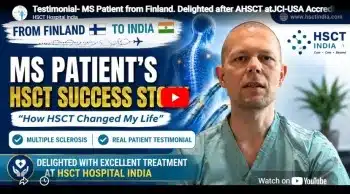
A Finland Patient’s Inspiring Recovery from Multiple Sclerosis after HSCT Treatment at JCI-USA Accredited World Class Hospital in India
Jukka from Finland, who has primary progressive MS, completed the full 30 day HSCT programme at HSCT Hospital India.

American Cop Flies to India for HSCT: 95% Symptom free, 5 Months after HSCT Treatment at JCI-USA Accredited World Class Hospital in India
Dylan, a US police officer with small fibre neuropathy, had about 95 per cent of his symptoms gone five months after HSCT.
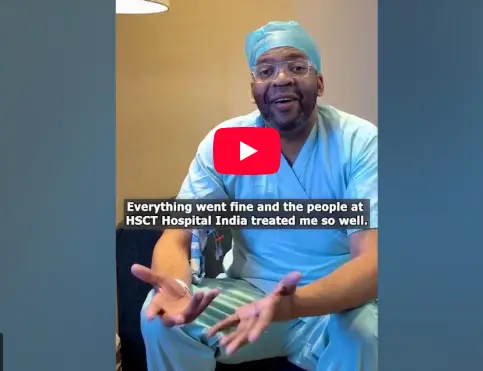
Sergel, 38M from Holland: Multiple Sclerosis Patient shares after HSCT Treatment at JCI-USA Accredited World Class Hospital in India
Watch this Video testimonial: Sergel, 38 years young man from Netherlands suffering from Multiple Sclerosis