HSCT for Scleroderma (Systemic Sclerosis): Life Changing Stem Cell Therapy
Medically reviewed by the board of haematologists at HSCT Hospital India, whose transplant physicians hold DM Clinical Haematology qualifications and fellowship training in stem cell transplantation. The programme runs at a JCI-USA, NABH and NABL accredited hospital that has treated more than 1500 patients.
Last reviewed: 16 July 2026. This guide cites peer-reviewed studies, which are linked throughout.
After multiple sclerosis, scleroderma has the strongest evidence for HSCT of any autoimmune disease. This guide explains what scleroderma is, why early, active disease responds to a transplant while established scarring does not, what the trials show, who is eligible, and what to realistically expect.
What Is Scleroderma?
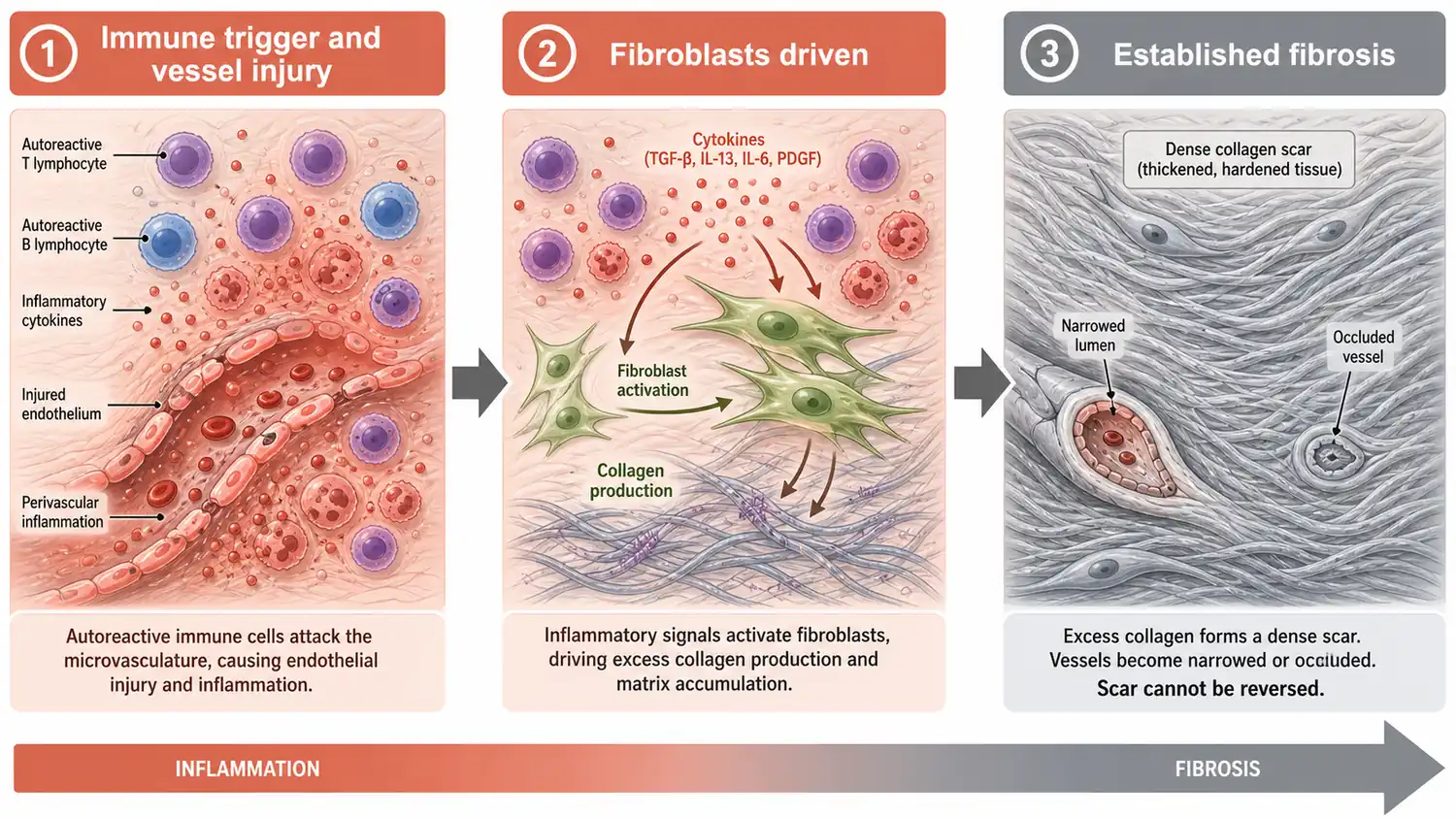
Scleroderma, known medically as systemic sclerosis, is an autoimmune disease in which the immune system drives the overproduction of collagen, the protein that forms scar tissue. The result is fibrosis, the thickening and hardening of the skin and, in the more serious forms, of internal organs such as the lungs, heart, kidneys and gut. The name means hardened skin, but the disease that threatens life is the fibrosis inside.
The single fact that governs this entire page is that scleroderma has two phases. There is an active, inflammatory phase, in which the immune system is driving new fibrosis, and this phase is treatable. And there is established fibrosis, which is scar tissue that has already formed, and scar cannot be un-made. A treatment that resets the immune system can switch off the process laying down new scar; it cannot dissolve scar that is already there. Everything about who benefits from a transplant, and when, follows from this distinction.
Scleroderma is uncommon, affecting roughly 1 in 10,000 people, and it is most often diagnosed between the ages of thirty and fifty, affecting women several times more often than men. It carries the highest mortality of any autoimmune rheumatic disease, which is precisely why an effective treatment for its severe form matters so much.
Scleroderma Symptoms: Skin, Blood Vessels and Internal Organs
Scleroderma usually announces itself in the skin and the circulation before it reaches the organs:
- Raynaud’s phenomenon, in which the fingers turn white then blue in the cold, is the earliest sign in most patients, often years before diagnosis
- Skin thickening and tightening, beginning in the fingers and hands and, in the diffuse form, spreading to the arms, trunk and face
- Puffy, swollen fingers, and later shiny, taut skin that restricts movement
- Digital ulcers, painful sores at the fingertips from poor circulation
- Heartburn and difficulty swallowing, from fibrosis of the oesophagus
- Breathlessness and a dry cough, the warning signs of lung involvement
- Fatigue and joint pain
The symptoms that determine prognosis are not on the skin. They are internal: interstitial lung disease, in which the lungs stiffen and scar; pulmonary arterial hypertension, in which the blood vessels of the lungs narrow and strain the heart; scleroderma renal crisis, a sudden dangerous rise in blood pressure; and involvement of the heart itself. Recognising and screening for these is central to managing the disease.
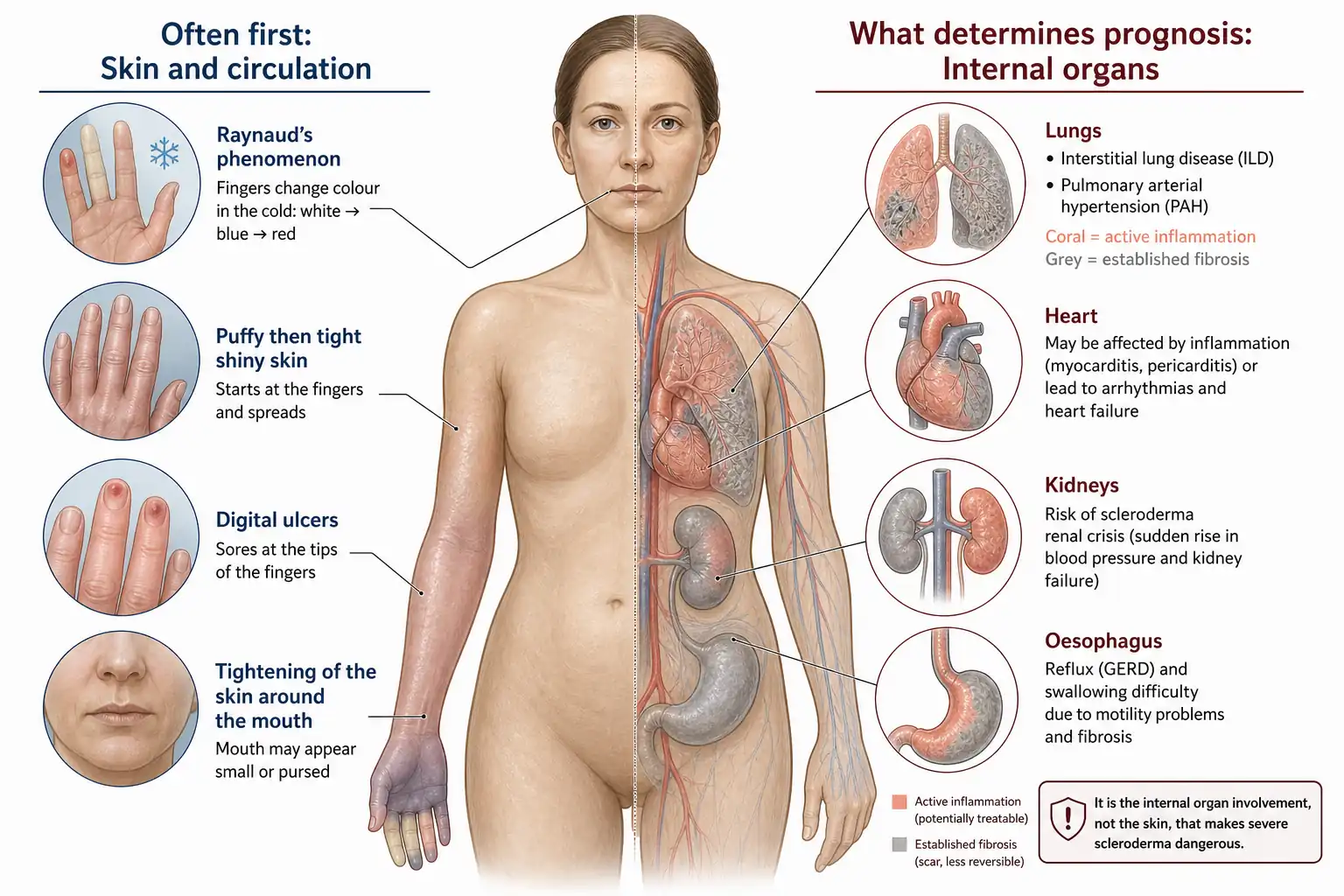
Figure 1. Scleroderma shows first in the skin and circulation, but it is the internal organs, above all the lungs, that decide the outlook.
How Is Scleroderma Diagnosed?
Diagnosis combines the clinical picture with specific tests:
- Autoantibody blood tests. Almost all patients have a positive antinuclear antibody. More specific antibodies predict the pattern of disease: anti-topoisomerase (anti-Scl-70) is associated with diffuse skin disease and lung fibrosis, anti-RNA-polymerase III with rapidly progressive skin disease and renal crisis, and anti-centromere with the more limited form.
- The modified Rodnan skin score, in which a clinician grades skin thickness across seventeen body areas. It measures how active and extensive the skin disease is, and rising scores signal an active, progressing disease that a transplant is designed to arrest.
- Nailfold capillaroscopy, which shows the characteristic damaged small blood vessels.
- Organ screening from the outset: high-resolution CT of the chest and lung function tests for interstitial lung disease, an echocardiogram for pulmonary hypertension and cardiac function, and monitoring of blood pressure and kidney function.
The antibody a patient carries and the rate at which the skin score is rising together tell us whether the disease is in its active, treatable phase, which is the phase in which a transplant works.
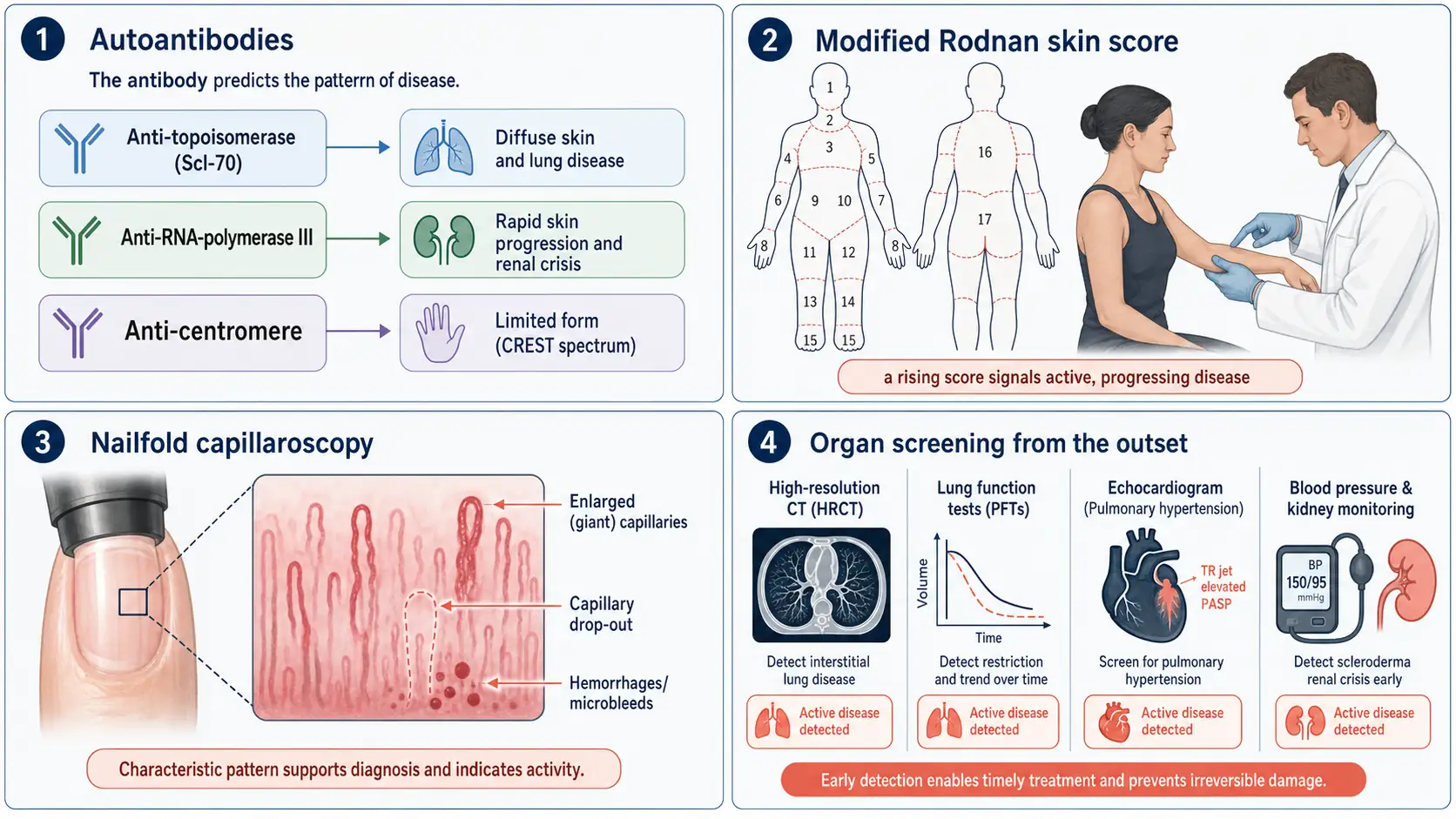
Figure 2. Diagnosis combines antibody testing, the skin score, and organ screening. The antibody and the rate the skin score is rising tell us whether the disease is in its active, treatable phase.
What Causes Scleroderma?
Scleroderma arises where a genetic susceptibility meets an environmental trigger, and it involves three interacting processes: an autoimmune attack, injury to small blood vessels, and the excessive fibrosis that follows. Immune cells, including T and B lymphocytes, release signals that drive fibroblasts, the cells that make collagen, to lay down scar tissue relentlessly. Certain occupational exposures, such as silica dust, are recognised contributors, but for the great majority of patients there is no identifiable cause and nothing they did to bring it on. Because the fibrosis is driven by the immune system, a treatment that resets that system addresses the disease at its origin.
Is Scleroderma Progressive? Will It Get Worse? Scleroderma Prognosis
The course of scleroderma is most dangerous early. In diffuse disease, skin thickening and internal organ involvement progress fastest in the first three to five years after the first non-Raynaud’s symptom, and it is in this window that the immune-driven fibrosis is most active and most treatable. After this period the skin often softens somewhat on its own, but any organ damage sustained, particularly lung fibrosis, tends to persist.
Prognosis depends almost entirely on internal organ involvement. Limited scleroderma, confined largely to the skin and extremities, generally carries a good outlook. Diffuse scleroderma with progressive lung fibrosis, pulmonary hypertension or cardiac involvement carries a serious one, and these complications are the leading causes of death in the disease. This is the central reason to act during the early, active phase: every month of uncontrolled inflammation is a month in which reversible disease is converted into irreversible organ scarring. Treating early is not caution, it is the whole strategy.
In numerical terms, prognosis is shaped by which organs are involved and how far. Limited cutaneous disease without significant internal involvement is compatible with a near-normal life expectancy. Diffuse disease with progressive interstitial lung disease or pulmonary arterial hypertension carries the highest risk, and lung involvement is now the leading cause of scleroderma-related death. The features that most worsen the outlook are a rapidly rising skin score, older age at onset, and early cardiac, pulmonary or renal involvement. What a transplant changes is precisely this trajectory: by halting the immune-driven fibrosis before an organ is lost, it protects the lung function and cardiac reserve on which survival depends, which is why the randomised trials measured their benefit not only in skin scores but in years of life. Understanding your own prognosis therefore means understanding your organ status, and it is the organ assessment, not the appearance of the skin, that determines both the danger and the case for early treatment.
The Main Types of Scleroderma: Localised and Systemic
| Type | Defining feature | Relevance to HSCT |
|---|---|---|
| Limited cutaneous systemic sclerosis | Skin involvement confined to the hands, forearms, feet and face; slower course; often anti-centromere positive | Usually managed with standard treatment; transplant rarely indicated |
| Diffuse cutaneous systemic sclerosis | Widespread skin involvement including the trunk; rapid early progression; higher risk of lung, heart and kidney disease | The form with the strongest transplant evidence, when it is early, active and progressing |
| Systemic sclerosis with interstitial lung disease | Progressive scarring of the lungs | A key organ indication, provided lung function is not already end-stage |
| Scleroderma with severe cardiac or pulmonary hypertension | Significant heart or pulmonary vascular involvement | Increases transplant risk substantially; requires the most careful selection |
Table 1. The forms of scleroderma. Early, active, diffuse disease with organ involvement that is progressing but not yet end-stage is the setting in which HSCT has been proven to help.
What Untreated Scleroderma Does Over Time
Untreated progressive diffuse scleroderma follows the fibrosis inward. Skin tightening restricts the hands, the mouth and the chest wall. The lungs stiffen and scar, reducing the ability to breathe. Pulmonary hypertension strains the right side of the heart. Renal crisis can cause sudden kidney failure. It is these organ complications, not the skin, that make severe scleroderma one of the most lethal autoimmune diseases. The purpose of treating aggressively and early is to halt the immune-driven fibrosis before it has claimed an organ, because once an organ is scarred, no treatment can restore it.
Standard Scleroderma Treatment, and Where It Reaches Its Limits
Standard treatment targets the immune system and protects the organs, and HSCT is considered only when this is not enough:
- Immunosuppression to slow the fibrosis: mycophenolate mofetil is now widely used first, with methotrexate for skin disease, and intravenous cyclophosphamide reserved for aggressive lung or skin involvement.
- Antifibrotic therapy: nintedanib slows the decline in lung function in scleroderma-associated interstitial lung disease.
- Organ-specific treatment: drugs to widen blood vessels for Raynaud’s and digital ulcers, ACE inhibitors that transformed the outlook for renal crisis, targeted therapies for pulmonary hypertension, and acid suppression for the gut.
- Biologics such as rituximab and tocilizumab in selected patients.
These treatments can slow the disease, but for a patient with early, rapidly progressing diffuse scleroderma, they often do not stop it, and the organ damage continues to accrue. It was precisely this group, severe progressive diffuse disease, that the transplant trials studied, and in whom a one-time immune reset outperformed continued drug therapy.
 Get HSCT India Brochure Emailed to you
Can HSCT Treat Scleroderma? What the Evidence Shows
Scleroderma is the autoimmune disease in which HSCT has been tested most rigorously, in three randomised controlled trials, and in each it outperformed the standard drug. In the ASSIST trial, published in the Lancet in 2011, every patient who received a non-myeloablative transplant improved, while those on monthly cyclophosphamide did not. In the ASTIS trial, published in JAMA in 2014, autologous HSCT produced a significant long-term survival benefit over intravenous cyclophosphamide in early diffuse disease, despite a higher risk in the first year. In the SCOT trial, published in the New England Journal of Medicine in 2018, myeloablative transplant was superior to cyclophosphamide across survival, organ function and quality of life, with benefits that were durable for years. A meta-analysis of these trials confirmed both the long-term survival advantage and the need for careful patient selection.
What these trials show, consistently, is that in early, active, diffuse scleroderma, HSCT does something no drug does: it halts the immune-driven fibrosis, softens skin that was thickening, stabilises lungs that were declining, and it improves how long patients live. That benefit is real and lasting, and it goes to the patients selected for it, those whose heart and lungs can safely undergo the procedure. Selection is not a limitation of the treatment, it is how the treatment is made safe, and the risks and eligibility sections below set out exactly how it is done. The same non-myeloablative approach is used across our autoimmune programme, including our guide to HSCT for multiple sclerosis.
| Trial | Comparison | Key finding |
|---|---|---|
| ASSIST, Lancet 2011 | Non-myeloablative HSCT vs monthly cyclophosphamide | All transplanted patients improved; the drug group did not |
| ASTIS, JAMA 2014 | HSCT vs IV cyclophosphamide, early diffuse disease | Long-term survival benefit despite higher first-year risk |
| SCOT, NEJM 2018 | Myeloablative HSCT vs cyclophosphamide | Superior survival, organ function and quality of life, durable for years |
Table 2. The three randomised trials of HSCT for scleroderma. Full citations link to PubMed.
How Autologous HSCT Resets the Immune System in Scleroderma
Because the graft is autologous, it is built from the patient’s own blood-forming (haematopoietic) stem cells rather than a donor’s, which removes any possibility of graft-versus-host disease. The procedure unfolds across four stages:
- Mobilisation. A brief course of chemotherapy, given with a growth factor, coaxes stem cells out of the bone marrow and into the circulating blood.
- Harvest, or leukapheresis. The stem cells are collected from the blood and cryopreserved, meaning frozen and stored. In scleroderma the graft is often purified, a step called CD34 selection, to remove contaminating immune cells.
- Conditioning. Immunosuppressive conditioning chemotherapy depletes the autoreactive immune cells that are driving the fibrosis. HSCT Hospital India uses a non-myeloablative protocol, calibrated to reset the immune system rather than to destroy the bone marrow.
- Reinfusion. The stored stem cells are returned through a drip and rebuild a new immune system that no longer drives collagen overproduction.
The aim is to stop new fibrosis, allow inflamed, recently thickened skin to soften, and protect the organs that are still healthy. It cannot reverse fibrosis that has already hardened into scar, which is why timing matters so much.
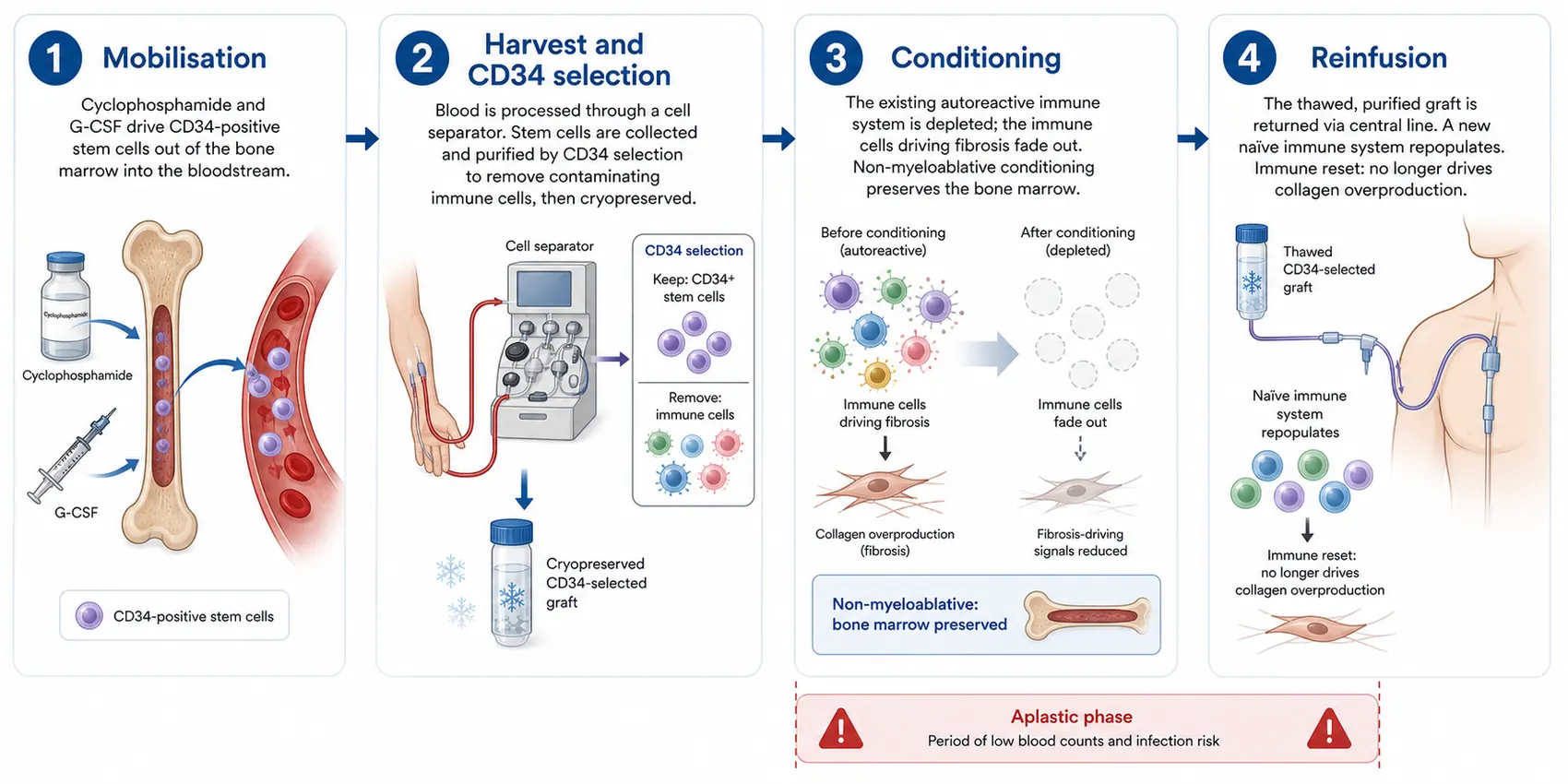
Figure 3. The four stages of autologous HSCT for scleroderma, including CD34 graft selection. The window between conditioning and engraftment, called the aplastic phase, is when infection risk peaks.
The Thirty-Day Inpatient Transplant, Week by Week
The entire transplant at HSCT Hospital India is carried out on an inpatient basis over about thirty days. The opening days are given to the stem cell harvest and the start of conditioning. In the second week the immune system reaches its lowest point, the aplastic phase, when the white cell count is very low and infection risk is highest, spent in a private room with triple HEPA air filtration and 24 hour nursing. In scleroderma the inpatient setting matters especially, because heart, lung, kidney and blood pressure are monitored continuously through the transplant by a team ready to act at once. By the third and fourth weeks the graft has taken, blood counts climb back, and the patient is readied for discharge. No follow-up chemotherapy is required.
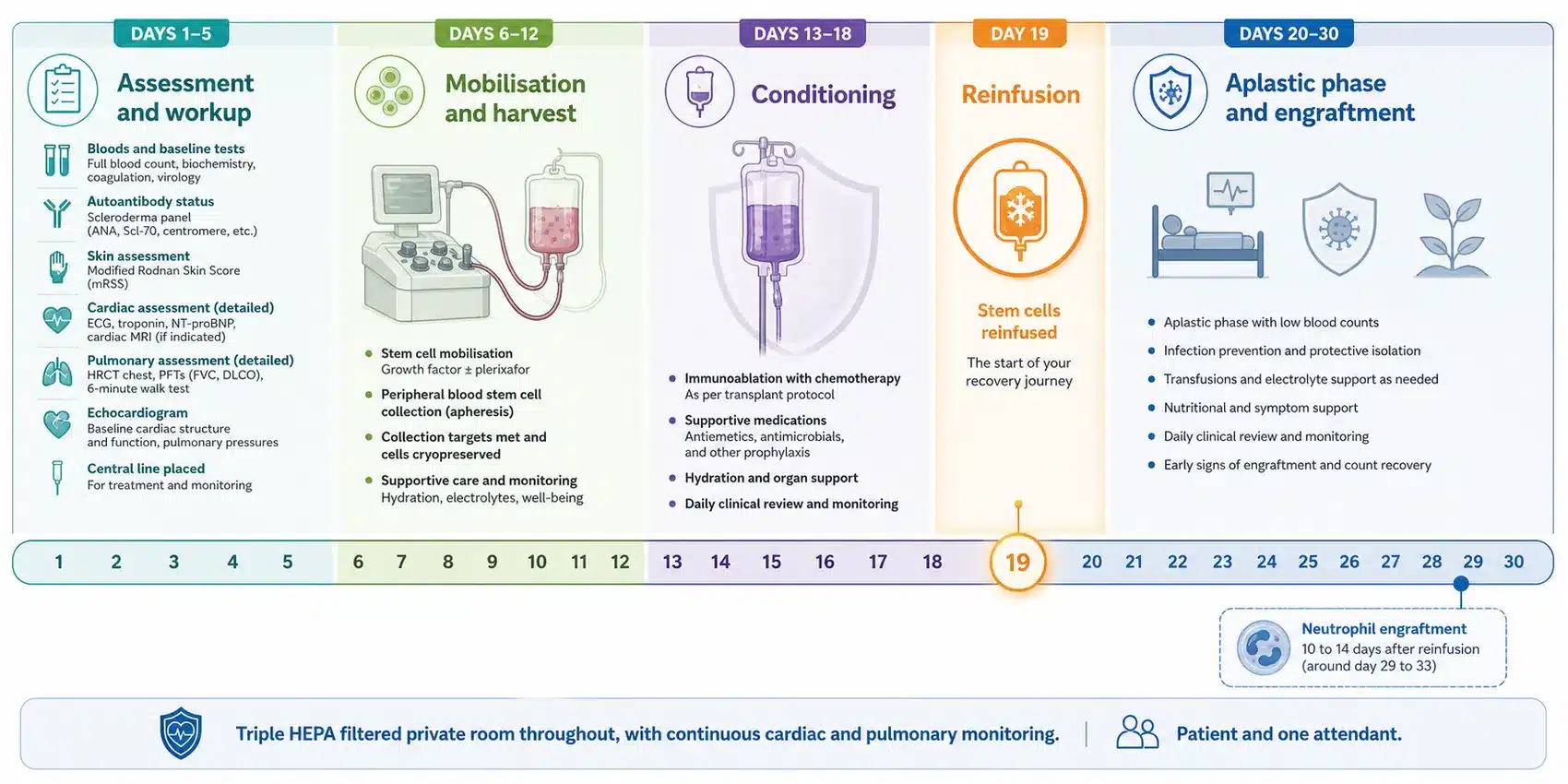
Figure 4. The 30 day inpatient programme. For scleroderma patients, the heart and lungs are monitored continuously, which is central to the treatment’s safety.
The Risks of Scleroderma HSCT, and How They Are Managed
HSCT for scleroderma carries a higher upfront risk than for most other autoimmune diseases, for a specific and understood reason: scleroderma itself can affect the heart and lungs, the very organs a transplant places under stress. The randomised trials recorded a higher risk in the first year, and then a clear survival advantage over every year that followed. That trade-off is managed through selection. The heart is assessed in detail before any transplant, because unrecognised cardiac involvement is the main driver of transplant risk in scleroderma, and patients whose heart or lungs cannot safely tolerate the procedure are not put through it. The general risks of HSCT also apply: infection during the aplastic phase, the temporary effects of chemotherapy, and a possible effect on fertility that is planned for beforehand. This is a powerful treatment with a real, concentrated and manageable upfront risk, and careful cardiac and pulmonary screening is precisely what turns that risk into a durable survival benefit for the right patient. The decision is made together, formally, before anything begins.
Can Scleroderma Be Cured?
Autologous HSCT is the only treatment shown to improve long-term survival in severe scleroderma, and in the patients who respond it can soften thickened skin, stabilise the lungs and end the relentless progression, which is an outcome no drug has matched. The medical literature does not call any scleroderma treatment a cure, so a centre that promises one should be viewed with caution. A transplant halts the process that lays down new scar; it does not dissolve fibrosis that has already formed, which is why the benefit is greatest in early, active disease and least once organs are heavily scarred. For a patient in the early, inflammatory, progressing phase of diffuse scleroderma, that is the strongest case in autoimmune medicine for treating early rather than waiting.
Who Qualifies for Scleroderma HSCT, and How Eligibility Is Decided
HSCT is not the right fit for every person with scleroderma, and for those with limited or stable disease it is not needed. It is considered for early, active, progressing diffuse disease, and eligibility turns on a single principle drawn from everything above: the patient who benefits is the one whose disability is still being driven by active inflammation and fibrosis, and whose heart and lungs can safely undergo the procedure. Our multi-disciplinary team assesses:
- A confirmed diagnosis of diffuse cutaneous systemic sclerosis
- Early, active disease, shown by a rising modified Rodnan skin score and progression despite standard treatment
- Significant or progressing organ involvement, particularly interstitial lung disease, that is not yet end-stage
- Adequate cardiac function, confirmed by detailed cardiac screening, which is the decisive safety assessment in scleroderma
- Adequate kidney, liver and general fitness for the procedure
A patient with long-standing, burnt-out disease, or with severe cardiac involvement, is the patient for whom a transplant offers least and risks most, and we will say so. Selection is not a formality in scleroderma. It is what makes the treatment safe. We bring the same careful work-up to the other conditions treated here, among them myositis, lupus, multiple sclerosis and myasthenia gravis.
 Request a Call Back
Scleroderma HSCT Cost in India, and How It Compares
At HSCT Hospital India the transplant is billed as one all-inclusive package priced at 30,000 US dollars. That figure covers about thirty days in hospital for the patient and one attendant, a deluxe private room under triple HEPA air filtration, and every clinical cost along the way: doctors’ fees, tests, medicines, consumables, physiotherapy, meals and laundry for both, and airport transfers.
| Country | Typical all-inclusive cost | Care model |
|---|---|---|
| India (HSCT Hospital India) | $30,000 | Fully inpatient care in a JCI-USA accredited, HEPA-filtered transplant unit |
| Russia (Pirogov Centre, Moscow) | $40,000 to $45,000 | Inpatient |
| Mexico (Clinica Ruiz) | Around $54,500 | Largely outpatient |
| USA | $150,000 to $200,000 | Inpatient, and usually only within a clinical trial |
Table 3. Representative all-in pricing for scleroderma HSCT across countries. A fully sourced comparison appears in our HSCT cost by country guide.
Frequently Asked Questions About HSCT for Scleroderma
Can HSCT cure scleroderma?
No treatment for scleroderma is described as a cure, but autologous HSCT is the only treatment shown in randomised trials to improve long-term survival, and in responders it softens thickened skin and stabilises the lungs. It halts the fibrosis that is still forming; it cannot reverse scar already present, which is why it works best in early, active disease.
Is HSCT better than cyclophosphamide for scleroderma?
In three randomised trials, ASSIST, ASTIS and SCOT, HSCT was superior to cyclophosphamide across skin, lung function, quality of life and, in ASTIS and SCOT, long-term survival. The advantage came with a higher risk in the first year, which is managed by careful patient selection.
Who is a candidate for HSCT for scleroderma?
People with early, active, diffuse systemic sclerosis that is progressing despite standard treatment, with organ involvement that is significant but not end-stage, and with heart and lung function able to tolerate the procedure. Limited or stable disease is not an indication.
Is HSCT safe for scleroderma?
It carries a higher risk than for most autoimmune diseases, because scleroderma can affect the heart and lungs. That risk is concentrated in the first year and is managed by detailed cardiac screening before treatment. In properly selected patients the long-term survival benefit outweighs the upfront risk.
Why is cardiac screening so important before HSCT for scleroderma?
Because unrecognised heart involvement is the main cause of transplant-related risk in scleroderma. Thorough cardiac assessment identifies the patients who can undergo the procedure safely and those who cannot, and it is the single most important part of selection.
How does HSCT work for scleroderma?
It uses immunosuppressive chemotherapy to remove the immune cells driving collagen overproduction, then reinfuses the patient’s own stored stem cells to rebuild an immune system that no longer drives fibrosis.
Will my skin improve after HSCT?
Often yes. Skin that has thickened recently, in the active phase, frequently softens after a successful transplant, as measured by a falling skin score. Skin that has long since hardened is less likely to change.
Do I need medication for life after HSCT?
The aim is to stop the disease process with a single treatment. Many patients reduce or stop immunosuppression after a successful transplant, guided by their response.
How much does HSCT for scleroderma cost in India?
The all-inclusive package is 30,000 US dollars, covering thirty days in hospital for the patient and one attendant, with all fees, tests, medicines, physiotherapy, food and airport transfers included.
How soon should scleroderma be treated with HSCT?
Early. The benefit is greatest while the disease is active and progressing and before organs are heavily scarred, because a transplant stops new fibrosis but cannot reverse established scar.
What Is the Next Step?
No web page can tell you whether HSCT is the right choice in your case. That question is answered by a formal transplant evaluation, which reviews your skin score, your antibody status, your lung and heart function and the rate at which your disease is progressing together, confirms whether you are in the active phase and can safely undergo the procedure, and sets out the fixed package cost in writing. Providing that evaluation is our work, and the section that follows introduces the centre where it is done.
Get HSCT India Brochure Emailed to you. Consult Top HSCT Doctors
Send us your skin score, your antibody status and your recent lung and heart reports, and we will email you the HSCT information booklet with the full costed package and arrange a call with our HSCT doctors, free of charge. Click here to send your enquiry.
Why Choose HSCT Hospital India for Life Changing Scleroderma Treatment

 Complete 30 day HSCT done in hospital. Private deluxe rooms are very well served for patient and attendant comfort and equipped with HEPA Filter with Triple Level Air Filtration. No outside hospital stay avoids risk of infection during the aplastic phase, 24 x 7 nursing care and best medical attention. The advanced HSCT protocol used does not require any further chemo or treatment after leaving the hospital. Click here to get complete details
 International and Globally Renowned Accreditations. HSCT Hospital India is accredited by the Joint Commission International, USA, the National Accreditation Board for Hospitals and Healthcare Providers (NABH), and the National Accreditation Board for Laboratories (NABL) for processes and high quality patient care. Click here to know more

Real Patients,Real Stories
A Finland Patient’s Inspiring Recovery from Multiple Sclerosis after HSCT Treatment at JCI-USA Accredited World Class Hospital in India
Jukka from Finland, who has primary progressive MS, completed the full 30 day HSCT programme at HSCT Hospital India.

American Cop Flies to India for HSCT: 95% Symptom free, 5 Months after HSCT Treatment at JCI-USA Accredited World Class Hospital in India
Dylan, a US police officer with small fibre neuropathy, had about 95 per cent of his symptoms gone five months after HSCT.
Sergel, 38M from Holland: Multiple Sclerosis Patient shares after HSCT Treatment at JCI-USA Accredited World Class Hospital in India
Watch this Video testimonial: Sergel, 38 years young man from Netherlands suffering from Multiple Sclerosis