Can MS Come Back After HSCT? Relapse After HSCT Explained
Medically reviewed by the board of haematologists at HSCT Hospital India, whose transplant physicians hold DM Clinical Haematology qualifications and fellowship training in stem cell transplantation. The programme runs at a JCI-USA, NABH and NABL accredited hospital that has treated more than 1500 patients.
Last reviewed: 30 September 2026. This guide cites peer-reviewed studies, which are listed at the end.
In the large published studies, most patients have no further MS relapse for years after HSCT. In a Swedish national study, 87 per cent of patients were still free of relapses five years after treatment. MS can come back in some patients, and a relapse is a new attack in which new symptoms appear or old ones clearly worsen.
HSCT stands for autologous haematopoietic stem cell transplantation, and autologous means the stem cells are your own. Chemotherapy removes the faulty immune cells that damage the coating of your nerves in MS. Your own stem cells are then returned, and they produce new blood and immune cells. The aim is to stop MS activity with one course of treatment, without an MS drug taken for years afterwards.
At HSCT Hospital India, more than 1,500 MS patients from over 30 countries have been treated since 2016. Conditioning there combines cyclophosphamide and ATG in the non-myeloablative protocol developed by Dr Richard Burt, which weakens the bone marrow without destroying it. After you go home, your blood results are shared with its HSCT specialists, so the doctors who treated you follow your recovery.
How often does MS come back after HSCT?
The chance of MS coming back after HSCT has been measured in several countries, and the figures are close to each other. Doctors measure it as relapse free survival, meaning the share of patients who have had no relapse by a set point after treatment. In the Swedish study, 41 patients were followed for at least a year, and relapse free survival was 87 per cent at five years.
An Italian study followed 210 patients for an average of about six years. Among those with relapsing remitting MS, the form in which attacks come and go, 85.5 per cent had no worsening of disability five years after HSCT. At ten years the figure was 71.3 per cent. This means that most patients kept the level of walking and daily function they had when they were treated, or improved on it.
Two recent studies compared HSCT with ocrelizumab, sold as Ocrevus, which is one of the strongest MS drugs in use. A 2025 London study counted 0.028 relapses a year after HSCT, against 0.073 on ocrelizumab. Put in everyday terms, that is about one relapse for every 36 years of patient life after HSCT. The full comparison is on the page about HSCT or Ocrevus for MS.
| Study | Patients | What was found |
|---|---|---|
| Swedish national study, 2014 | 41 patients followed for a year or more, most with relapsing remitting MS | At five years, 87 per cent had no relapse and 85 per cent had no new activity on MRI. |
| Italian multicentre study, 2021 | 210 patients, followed for about six years | In relapsing remitting MS, 85.5 per cent had no disability worsening at five years and 71.3 per cent at ten years. |
| MIST randomised trial, 2019 | 110 patients with relapsing remitting MS | Lasting worsening of disability was seen in 3 of 52 HSCT patients and in 34 of 51 on MS drugs. |
| London study against ocrelizumab, 2025 | 103 HSCT patients and 314 on ocrelizumab | The HSCT group had 0.028 relapses a year, against 0.073 on ocrelizumab. |
How can I tell a relapse from a pseudo relapse after HSCT?
Not every return of an old symptom after HSCT is MS coming back. Neurologists use a set of rules to decide whether new or worse symptoms are a relapse. The symptoms must last at least 24 hours and start at least 30 days after the last relapse. There must also be no infection or other cause behind them.
A pseudo relapse is different. It is the short return of symptoms you already had, such as weakness in a leg or blurred vision, brought on by something else in the body. The usual triggers are a fever, an infection, heat, stress, poor sleep or severe tiredness. Once the trigger is treated, the symptoms go back to where they were, because no new damage has been done to the nerves.
The two are treated differently. A pseudo relapse is managed by treating its cause, for example an infection. A true relapse is assessed by your neurologist, usually with an MRI scan, which is a scan that shows areas of active MS in the brain and spinal cord.

Why can my old symptoms flare in the first months after HSCT?
A review by the European Society for Blood and Marrow Transplantation reports that 17 per cent of patients had a worsening of neurological symptoms within 60 days of HSCT. The same review explains that a raised temperature can bring back MS symptoms for a while. The fever can come from an infection, or from ATG, the antibody medicine given during conditioning.
Doctors call the effect of heat on MS symptoms Uhthoff’s phenomenon, and it passes when the temperature comes down. The review also notes that several weeks of reduced activity during treatment can leave patients weaker, stiffer and more tired for a time. These changes come from the treatment period, not from new MS damage.
HSCT Hospital India plans for these effects during the 30 day stay. A fever during the stay is picked up quickly, because nursing care runs around the clock, and the cause is treated at once. Neuro-physiotherapy, which means exercise sessions built around your strength and balance, keeps your muscles working so that bed rest leaves less weakness behind. The side effects of each stage are set out on the page about the side effects of HSCT for MS.
Can my disability get worse after HSCT even without a relapse?
MS can cause slow worsening of disability without any relapse, and doctors call this progression independent of relapse activity. It is the part of MS that most drugs affect least. HSCT has been studied for this as well as for relapses.
The strongest evidence comes from MIST, a randomised trial reported in JAMA, the journal of the American Medical Association, in 2019. Its 110 patients with relapsing remitting MS were assigned by chance either to HSCT or to continue on MS drugs. Among 52 HSCT patients, 3 had lasting worsening of disability, compared with 34 of the 51 who stayed on drugs. In the first year, the average score on the EDSS disability scale also improved after HSCT, from 3.38 to 2.36.

A 2026 study from Florence looked at this slow worsening over ten years. Ten years after HSCT, 10 per cent of patients had this type of worsening, against 49 per cent of matched patients who took natalizumab and then other MS drugs. The Florence centre uses a different conditioning regimen, called BEAM with ATG, from the one used at HSCT Hospital India.
Results are also measured in progressive MS, the form in which disability builds steadily. In the Italian study, 71 per cent of patients with progressive MS had no disability worsening at five years. The options for this group are explained on the page about HSCT for progressive MS.
Send your diagnosis, your latest MRI report and your relapse history through the enquiry form. The HSCT specialist doctors at HSCT Hospital India review every case without charge, and an HSCT Case Manager replies to you by email.
What happens if my MS becomes active again after HSCT?
If new symptoms appear or a scan shows a new lesion, the first step is an assessment by your own neurologist. A lesion is an area of inflammation or damage in the brain or spinal cord that shows on MRI. Your neurologist checks whether it is a true relapse or a pseudo relapse, and whether an infection is behind it.
Your neurologist has a written record of your treatment. You fly home with a Discharge Summary, which records the treatment you had at HSCT Hospital India, and your own doctors can read it. Your blood results are also shared with the hospital, so the HSCT specialists who treated you are kept informed and can advise.
A true relapse can be treated in the usual way, and a plan for the months ahead is then agreed. That plan can include restarting an MS medicine, and in some patients a second HSCT has been used. The 2020 guidelines of the European Society for Blood and Marrow Transplantation state that there is no single agreed approach yet. Because of this, the choice is made for each patient by the neurologist, with the HSCT specialists involved.

How is my MS followed after I leave HSCT Hospital India?
Follow up starts on the day you are discharged. Two documents go home with you: a Discharge Summary written for your own GP or neurologist, and an Aftercare Manual that lists your medicines, your blood test schedule and the dates for returning to normal activities.
Blood tests at home follow a fixed schedule: two a month for the first two months, then one a month until your counts are back in the normal range. HSCT Hospital India receives every result. These tests follow the recovery of your immune system, which is the part of HSCT that takes the longest.
Your MS itself is followed by your own neurologist. The European guidelines recommend an MRI scan at six months after HSCT and once a year after that, together with regular neurological check ups. A scan on this schedule can show new activity before any symptom appears. The timing of each stage of recovery is on the page about recovery time after HSCT for MS.

HSCT Hospital India emails its brochure to any patient who asks for it. The brochure covers the treatment, the 30 day stay, the follow up at home and everything the one price includes.
Which patients are least likely to see their MS come back after HSCT?
Published studies report better results when MS is still active and inflammatory. In the Swedish study, patients whose MRI showed active lesions before treatment did better. Of those patients, 79 per cent had no relapse, no new MRI lesion and no disability worsening at five years. The figure was 46 per cent in patients without active lesions.
Age and disability at the time of treatment also make a difference. In the Florence study, older age and a higher disability score before treatment both predicted slow worsening later. The Italian study found better results in relapsing remitting MS than in progressive MS. For you, this means the timing of HSCT affects how long its benefit lasts.
This is why HSCT Hospital India reviews every case before any decision is taken. The HSCT specialist doctors look at the disability score recorded by your neurologist, your MRI scans over time and your relapse history. Who can have HSCT is set out on the page about HSCT eligibility at HSCT Hospital India.
Why do patients choose HSCT Hospital India for their HSCT?
Once patients know the results of HSCT, they choose where to have it. HSCT Hospital India holds JCI-USA accreditation, the international quality and safety standard awarded by Joint Commission International, alongside NABH and NABL accreditation in India. The team has treated more than 1,500 MS patients from over 30 countries since 2016.
The price is agreed before you travel, and there is no long waiting list. One all-inclusive payment of US $30,000 covers pre-testing, MRI, the full HSCT treatment and up to 30 days in hospital. You stay in a deluxe private room with Triple HEPA air filtration. The payment also covers doctors’ fees, tests and consultations, medicines and consumables, neuro-physiotherapy, food and laundry for both the patient and the attendant, and airport pick-up and drop-back.
Patients from the United States, the United Kingdom and Europe describe their treatment on video on the patient stories page.
Many patients have questions about relapses, follow up at home and what their own neurologist will need. An HSCT Case Manager will call you at a time that suits you, at no cost.
 Request a Call Back
Answers to Frequently Asked Questions (FAQs) about relapse after HSCT for MS
Can MS come back after HSCT?
In a Swedish national study, 87 per cent of patients had no relapse five years after HSCT. MS can come back in some patients, and a new attack is assessed by their neurologist.
Will I need MS drugs after HSCT?
The aim of HSCT is to stop MS activity without an ongoing MS drug. An MS medicine is restarted only if your neurologist finds that your MS has become active again.
What is a pseudo relapse after HSCT?
A pseudo relapse is the short return of old symptoms, brought on by a fever, an infection, heat or tiredness. The symptoms go back to where they were once the cause is treated, because no new damage has been done.
How soon after HSCT would a relapse show?
A relapse can happen at any time, and old symptoms can flare for a short time in the first months without being a relapse. The European guidelines recommend an MRI at six months and then once a year, so new activity is found early.
What treatment is given if MS comes back after HSCT?
Your neurologist assesses the relapse first, and a plan is then agreed for you. That plan can include restarting an MS medicine, and a second HSCT has been used in some patients.
Can I have HSCT a second time?
A second HSCT has been used in some patients whose MS became active again. The decision is made for each patient by the neurologist and the HSCT specialists, because no single approach has been agreed.
Does HSCT stop disability getting worse?
In the MIST trial, disability got worse in 3 of 52 patients after HSCT, against 34 of 51 on MS drugs. In the same trial the average disability score improved in the first year after HSCT.
Who follows my MS after I return home from India?
Your own neurologist follows your MS, using the Discharge Summary from HSCT Hospital India. Your blood results are shared with the hospital, so the HSCT specialists who treated you are kept informed.
This page was medically reviewed on 30 September 2026 against the published research listed below.
References
- Burman J, Iacobaeus E, Svenningsson A, et al. Autologous haematopoietic stem cell transplantation for aggressive multiple sclerosis: the Swedish experience. Journal of Neurology, Neurosurgery and Psychiatry. 2014;85(10):1116-1121. PMID 24554104.
- Boffa G, Massacesi L, Inglese M, et al. Long-term clinical outcomes of hematopoietic stem cell transplantation in multiple sclerosis. Neurology. 2021;96(8):e1215-e1226. PMID 33472915.
- Burt RK, Balabanov R, Burman J, et al. Effect of nonmyeloablative hematopoietic stem cell transplantation vs continued disease-modifying therapy on disease progression in patients with relapsing-remitting multiple sclerosis: a randomized clinical trial. JAMA. 2019;321(2):165-174. PMID 30644983.
- Muraro PA, Zito A, Signori A, et al. Effectiveness of autologous hematopoietic stem cell transplantation versus alemtuzumab and ocrelizumab in relapsing multiple sclerosis: a single center cohort study. Annals of Neurology. 2025;98(2):294-307. PMID 40251896.
- Mariottini A, Mazzeo AC, Simonetti E, et al. Autologous haematopoietic stem cell transplantation affects long-term progression independent of relapse activity in aggressive multiple sclerosis: a comparative matched study. Journal of Neurology, Neurosurgery and Psychiatry. 2026;97(2):156-164. PMID 41115787.
- Ismail A, Sharrack B, Saccardi R, Moore JJ, Snowden JA. Autologous haematopoietic stem cell therapy for multiple sclerosis: a review for supportive care clinicians on behalf of the Autoimmune Diseases Working Party of the European Society for Blood and Marrow Transplantation. Current Opinion in Supportive and Palliative Care. 2019;13(4):394-401. PMID 31599815.
- Sharrack B, Saccardi R, Alexander T, et al. Autologous haematopoietic stem cell transplantation and other cellular therapy in multiple sclerosis and immune-mediated neurological diseases: updated guidelines and recommendations from the EBMT Autoimmune Diseases Working Party (ADWP) and the Joint Accreditation Committee of EBMT and ISCT (JACIE). Bone Marrow Transplantation. 2020;55(2):283-306. PMID 31558790.
Read next
- What are the side effects of HSCT for MS?
- HSCT or Ocrevus for MS: how the two treatments compare
- How long does it take to recover after HSCT for MS?
- HSCT for MS long term results: 10 year outcomes data
- HSCT for primary and secondary progressive MS
- HSCT for multiple sclerosis
Why Choose HSCT Hospital India for Life Changing Multiple Sclerosis Treatment

 Complete 30 day HSCT done in hospital. Private deluxe rooms are very well served for patient and attendant comfort and equipped with HEPA Filter with Triple Level Air Filtration. No outside hospital stay avoids risk of infection during the aplastic phase, 24 x 7 nursing care and best medical attention. Advanced HSCT protocol used does not require any further chemo or treatment after leaving the hospital. Click here to get complete details
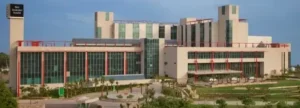 International and Globally Renowned Accreditations. HSCT Hospital India is accredited by the Joint Commission International, USA, the National Accreditation Board for Hospitals and Healthcare Providers (NABH), and the National Accreditation Board for Laboratories (NABL) for processes and high quality patient care. Click here to know more