HSCT or Lemtrada for MS: How the Two Treatments Compare
Medically reviewed by the board of haematologists at HSCT Hospital India, whose transplant physicians hold DM Clinical Haematology qualifications and fellowship training in stem cell transplantation. The programme runs at a JCI-USA, NABH and NABL accredited hospital that has treated more than 1500 patients.
Last reviewed: 3 October 2026. This guide cites peer-reviewed studies, which are listed at the end.
Lemtrada is the brand name of alemtuzumab, a medicine for relapsing multiple sclerosis. It is given as two short courses of drips into a vein, one year apart. HSCT, short for autologous haematopoietic stem cell transplantation, is also given once. It uses chemotherapy to clear the immune cells that damage the nerves in MS, and then returns the patient’s own stem cells so the immune system can recover.
Doctors call both treatments immune reconstitution therapies. This means each one removes a large part of the immune system and lets it regrow, rather than controlling MS with a medicine taken for years. Because of this, Lemtrada and HSCT are the two treatments most often compared with each other in MS research.
HSCT Hospital India has treated more than 1,500 MS patients from over 30 countries since 2016. It uses the non-myeloablative protocol developed by Dr Richard Burt, in a JCI-USA accredited hospital that also holds NABH and NABL accreditation. The whole programme costs one all-inclusive price of US $30,000 for up to 30 days, and there is no long waiting list.
How do Lemtrada and HSCT act on my immune system?
Lemtrada and HSCT both remove the white blood cells that drive MS. In MS, these immune cells damage myelin, the protective coating around the nerves of the brain and spinal cord. That damage disturbs the signals that control sight, movement and feeling.
Lemtrada is a monoclonal antibody, a protein made in a laboratory to attach to one chosen target. Its target is a marker called CD52, found on most T cells and B cells, the two types of white blood cell involved in MS. After each course, those cells fall to very low levels. They then regrow from the cells left in your body over the following months and years.
HSCT acts on the immune system in a different way. At HSCT Hospital India, chemotherapy with cyclophosphamide and ATG, short for anti-thymocyte globulin, clears the T cells and B cells behind your MS. Your own stem cells, collected and frozen earlier in the stay, are then returned to you. These stem cells produce new immune cells, and for most patients no MS medicine is needed afterwards.

How do HSCT and Lemtrada compare, side by side?
Patients weighing the two treatments usually ask the same six questions. The answers are based on research published up to October 2026.
| Question | HSCT at HSCT Hospital India | Lemtrada (alemtuzumab) |
|---|---|---|
| How is it given? | It is given during one hospital stay of up to 30 days in New Delhi. | It is given as drips on five days in the first year and three days a year later. |
| What follow up does it need? | Blood tests are taken often in the first months, and then you have regular check ups. | Blood and urine tests are taken every month until four years after the last drip. |
| What does it act on? | It clears the T cells and B cells involved in MS, and your own stem cells then produce new immune cells. | It removes most T cells and B cells, which then regrow from the cells left in your body. |
| How did it do in the same study? | In a Swedish study, 88 per cent of patients had no sign of MS activity three years after HSCT. | In the same Swedish study, 37 per cent of patients had no sign of MS activity at three years. |
| What are the main side effects? | They are mostly short term, from the chemotherapy, and are treated in hospital as they happen. | Thyroid problems are the most common, and they can appear years after the drips. |
| What does it cost? | One all-inclusive price of US $30,000 covers the whole programme. | The cost covers the drug and four years of monthly tests, paid by you, your insurer or your health service. |
What is Lemtrada, and who is it given to?
Lemtrada was approved in Europe in 2013 and in the United States in 2014 for relapsing MS. Relapsing MS is the form in which symptoms come in attacks, called relapses, with periods of partial or full recovery between them. In 2019 the European Medicines Agency narrowed its use after reports of serious side effects, including stroke soon after a drip.
Since then, Lemtrada is given in Europe only to people whose relapsing MS is highly active. In practice, this means MS that keeps causing relapses or new MRI lesions despite another medicine, or MS that is severe and worsening quickly from the start. Lesions are areas of damage to myelin that show up on the scan.
The first course is a drip of 12 mg on five days in a row. Twelve months later, a second course of 12 mg is given on three days in a row. Each drip takes about four hours, and steroids are given beforehand to lower the chance of a reaction.
How well does Lemtrada work for MS?
Lemtrada was approved on the results of two randomised trials, called CARE-MS I and CARE-MS II. In a randomised trial, patients are assigned to one treatment or another by chance. Both trials compared Lemtrada with interferon beta-1a, an older injected MS medicine.
Over two years, patients on Lemtrada had 55 per cent fewer relapses than patients on interferon in the first trial. In the second trial, which included people whose MS had stayed active on another medicine, they had 49 per cent fewer relapses.
What happens during HSCT at HSCT Hospital India, compared with a course of Lemtrada?
A course of Lemtrada is given as day visits to a clinic or a short hospital stay. HSCT at HSCT Hospital India is a single in-patient stay of up to 30 days, and your attendant shares your private room throughout. The stay opens with a full medical evaluation, followed by four stages of treatment in a fixed order.
The four stages are mobilisation, collection, conditioning and reinfusion. In the first two, a growth factor and a short course of chemotherapy move stem cells from the bone marrow into the blood. A machine then collects them over several hours, a little like giving blood, and they are frozen until they are needed.
Conditioning is the chemotherapy with cyclophosphamide and ATG, given through a drip over several days. ATG can bring a fever, chills or a rash while it runs, and nurses treat these as they happen. Your frozen stem cells are then thawed and returned through a drip, and within days they start producing new blood cells.
In the days after reinfusion your white cell count is very low, a stretch doctors call the aplastic phase. HSCT Hospital India keeps every patient in hospital through this period. The private room has Triple HEPA air filtration and nursing around the clock, so any fever is treated immediately.
The full sequence, from your first enquiry to your flight home, is on the page about how HSCT works at HSCT Hospital India.

Send your diagnosis, your latest MRI report and the MS medicines you have tried, including Lemtrada, through the enquiry form. The HSCT specialist doctors at HSCT Hospital India review every case without charge, and an HSCT Case Manager replies to you by email.
Has HSCT been compared with Lemtrada in research?
HSCT has been compared with Lemtrada more often than with any other MS medicine. No completed randomised trial has compared them yet. The comparisons so far follow patients who had each treatment in everyday care, matched on age, disability and relapse history.
The closest comparison to the treatment given in India comes from Sweden. A 2021 study in the Journal of Neurology, Neurosurgery and Psychiatry followed 69 patients treated with HSCT and 75 treated with Lemtrada. The HSCT patients had cyclophosphamide with ATG, the same combination used at HSCT Hospital India.
Three years after treatment, 88 per cent of the HSCT group had no evidence of disease activity, against 37 per cent of the Lemtrada group. No evidence of disease activity means no relapses, no new MRI lesions and no disability getting worse. The HSCT group also had fewer relapses, about one for every 25 years of follow up against one for every 10 years on Lemtrada.
A 2025 study from a London hospital, published in the Annals of Neurology, compared 103 patients treated with HSCT against 204 treated with Lemtrada. Over five years, the HSCT group had about 70 per cent fewer relapses and two thirds less new activity on MRI scans. The risk of disability getting worse was similar in both groups.
In 2026, researchers pooled ten of these studies, covering 1,887 patients. Across them, HSCT patients were about twice as likely to see their disability score improve. They also had fewer relapses and were more likely to stay free of MS activity.

Which trials are comparing HSCT with Lemtrada now?
Two randomised trials include Lemtrada in the comparison with HSCT. In the United Kingdom, the StarMS trial compares HSCT with alemtuzumab, ocrelizumab, ofatumumab and cladribine. In Norway, the RAM-MS trial compares HSCT with alemtuzumab, cladribine or ocrelizumab in relapsing remitting MS.
These trials follow the MIST trial, published in 2019 in the Journal of the American Medical Association. MIST randomly allocated 110 people with relapsing MS to HSCT or to the MS drugs then in use. Disability got worse in 3 of 52 patients after HSCT, against 34 of 51 of those who stayed on drugs.
What side effects should I expect from each treatment?
The side effects of the two treatments arrive at different times. With HSCT, most side effects come during the 30 day stay, while HSCT Hospital India is looking after you. With Lemtrada, the main side effects can appear months or years after the drips, which is why the monthly tests run for four years.
During a Lemtrada drip, most patients have a reaction such as a rash, a headache, a fever or flushing, and steroids given beforehand lower this. Later, Lemtrada can cause the immune system to attack the body’s own tissues. The thyroid gland is affected most often. In the Swedish study, 46 per cent of Lemtrada patients had a thyroid problem by three years, against 21 per cent after HSCT.
Lemtrada can also cause a fall in platelets, the blood cells that help clotting, in about 2 in 100 patients. Rarely, it affects the kidneys. The monthly blood and urine tests are there to catch these problems early, when they are easiest to treat.
With HSCT, the side effects come mainly from the chemotherapy and the weeks of low immunity. Hair loss is expected, and hair usually starts growing back from about three months. Nausea is treated with anti-nausea medicine, and tiredness eases as your blood counts rise.
Infection is the main risk while your immunity is low, and fever is common in this stretch. In the Swedish study, 48 of 69 HSCT patients had a side effect graded as severe in the first 100 days, while their immunity was lowest. For this reason the whole stay at HSCT Hospital India is in-patient, in a Triple HEPA filtered room. Medicines to prevent infection also continue after you go home.
Cyclophosphamide can affect fertility. Fertility preservation is discussed with you before treatment begins. Further detail is on the page about the side effects of HSCT for MS.
HSCT Hospital India emails its brochure to any patient who asks for it. The brochure covers the treatment, the 30 day stay and everything the one price includes.
I have had Lemtrada. Can I still have HSCT?
Yes, patients who have had Lemtrada are reviewed for HSCT. Many patients reviewed at HSCT Hospital India have already tried one or more MS medicines. What decides the case is whether your MS is still active, and whether HSCT is likely to help you.
The HSCT specialist doctors look at the date of your last Lemtrada course as part of your records. Your immune system takes time to regrow after Lemtrada, so they advise you on how much time should pass before HSCT. The decision is made together with your neurologist at home.
Some patients consider HSCT because their MS has stayed active after two courses of Lemtrada. A 2021 report described three such patients, and all three were free of MS activity at their last check after HSCT. Each case at HSCT Hospital India is reviewed on its own records.
How does HSCT Hospital India review a patient who has had Lemtrada?
Every referral to HSCT Hospital India is reviewed by its multi-disciplinary team of HSCT specialists before any decision is taken. The team reads the EDSS recorded by your treating neurologist, your MRI scans in order over time and your relapse history. For a patient who has had Lemtrada, this shows whether MS activity has returned since the last course and how quickly.
The review is free, and there is no obligation to go ahead. An HSCT Case Manager writes back to you personally with the doctors’ opinion and answers your questions about the stay. Because there is no long waiting list, a patient who is accepted can plan a treatment date without a long wait.
Send your diagnosis, your latest MRI report and the dates of your Lemtrada courses through the enquiry form. The HSCT specialist doctors at HSCT Hospital India review every case without charge, and an HSCT Case Manager replies to you by email.
Whose MS is HSCT at HSCT Hospital India most likely to help?
HSCT works best on MS that is still inflammatory, meaning relapses or new or enlarging lesions on an MRI from the past year. It is aimed at the immune cells producing that activity. This is the same group of patients Lemtrada is now given to in Europe.
HSCT Hospital India reviews people up to around 60 years old with an EDSS of 6.5 or below. EDSS is the 0 to 10 scale doctors use to measure MS disability, and at 6.5 walking usually needs two sticks or a similar aid. Relapsing remitting, secondary progressive and primary progressive MS are all considered.
Patients older than 60 or with a score above 6.5 are still reviewed one by one, and the doctors explain what their scans show. The complete criteria are on the page about HSCT eligibility at HSCT Hospital India.
What does HSCT Hospital India provide during the 30 day stay?
Once HSCT is the choice, the next decision is where to have it. HSCT Hospital India has treated more than 1,500 MS patients from over 30 countries since 2016. Its hospital holds JCI-USA accreditation, an international standard for hospital quality and patient safety, as well as NABH and NABL accreditation.
HSCT Hospital India uses the non-myeloablative protocol developed by Dr Richard Burt, the same approach tested in the MIST trial. Non-myeloablative means the chemotherapy weakens the bone marrow without destroying it. Because of this, blood counts recover sooner, and no further chemotherapy or MS treatment is needed after you leave the hospital.
Care is organised around the risk of infection. You stay in a deluxe private room with Triple HEPA air filtration for the whole treatment. Nurses are present day and night, and your attendant stays with you. Neuro-physiotherapy, meaning exercise sessions a physiotherapist plans for your strength and balance, runs through the stay.
The whole 30 day treatment is given in hospital, with no stay in an outside hotel or apartment. This matters most during the aplastic phase, when your immunity is lowest. Nursing care runs 24 hours a day, so a fever at that point is treated immediately.
The cost is agreed before you book travel. One all-inclusive payment of US $30,000 covers pre-testing, MRI, the full HSCT treatment and up to 30 days in hospital. It also covers doctors’ fees, tests and consultations, medicines, consumables and physiotherapy. Food and laundry for both you and your attendant are included, and so are airport pick-up and drop-back. An HSCT Case Manager supports your Indian medical visa application and remains your contact from the first email to the flight home. Prices in other countries are compared on the page about HSCT cost by country.

What do patients treated at HSCT Hospital India say about their HSCT?
Patients from the United States, the United Kingdom and Europe have described their treatment at HSCT Hospital India in their own words, and the results they describe are their own. Their full accounts are on the patient stories page, including Kathryn from the United States and Johannis from the Netherlands.
What follow up do I have at home after HSCT?
You leave India with no further chemotherapy to take, and most patients have no ongoing MS medicine either. Two documents go home with you. The Discharge Summary records the treatment you had, written for your own GP or neurologist. The Aftercare Manual lists your medicines, your blood test schedule and the dates for returning to normal activities.
Your blood results are shared with HSCT Hospital India after you go home. This means the HSCT specialists who treated you follow your recovery, and your neurologist can contact them with any question.
Blood tests check your counts twice a month for the first two months, and then once a month until they are normal. Usual activities typically resume after 2 to 4 months. Full recovery usually takes 3 to 12 months, and the page about recovery time after HSCT for MS explains it stage by stage.
How do the costs of HSCT and Lemtrada compare?
HSCT at HSCT Hospital India is paid once, as one all-inclusive price of US $30,000 for the treatment and the 30 day stay. Your travel to New Delhi and your check ups at home are the other costs to plan for.
Lemtrada is also paid for in two courses, but its costs continue after the drips. The monthly blood and urine tests run for four years after the last course. Your insurer or MS clinic can tell you what Lemtrada and its monitoring cost under your own plan.
The HSCT specialist doctors at HSCT Hospital India can tell you whether HSCT suits your MS, including if you have had Lemtrada. The review costs nothing, there is no obligation, and an HSCT Case Manager replies to you personally.
Answers to Frequently Asked Questions (FAQs) about HSCT and Lemtrada for MS
Is HSCT more effective than Lemtrada for MS?
In studies of patients treated in everyday care, HSCT has outperformed Lemtrada on relapses and on MS activity. A 2021 Swedish study found that 88 per cent of HSCT patients had no evidence of disease activity three years after treatment, against 37 per cent of Lemtrada patients. A 2026 analysis that pooled ten studies and 1,887 patients found HSCT patients were about twice as likely to see their disability score improve. No randomised trial has compared the two directly yet, and the StarMS and RAM-MS trials are doing so now.
Is Lemtrada still used for MS?
Yes, Lemtrada is still approved, but its use was narrowed in 2019. The European Medicines Agency now limits it to relapsing MS that is highly active, either despite another MS medicine or severe and worsening quickly from the start. The change followed reports of serious side effects, including stroke soon after a drip and autoimmune problems that appeared later.
Can I have HSCT after Lemtrada?
Yes, patients who have had Lemtrada are reviewed for HSCT at HSCT Hospital India. The HSCT specialists look at the date of your last course, your MRI scans over time and your relapse history. Because the immune system takes time to regrow after Lemtrada, they advise you on how much time should pass before HSCT. The decision is made together with your neurologist at home.
How long after Lemtrada can I have HSCT?
There is no single fixed gap, and the timing is set case by case. The HSCT specialist doctors at HSCT Hospital India read the date of your last Lemtrada course and your recent blood results before advising on a date. A 2021 report described three patients whose MS stayed active after Lemtrada and who then had HSCT, and all three were free of MS activity at their last check.
Which is safer, HSCT or Lemtrada?
The two treatments carry their risks at different times. With HSCT, most side effects come in the first weeks, while immunity is low, and HSCT Hospital India keeps every patient in hospital through that period in a Triple HEPA filtered private room. With Lemtrada, autoimmune problems can appear months or years later, which is why monthly blood and urine tests run for four years. In the Swedish study, thyroid problems affected 46 per cent of Lemtrada patients by three years, against 21 per cent after HSCT.
Why does Lemtrada cause thyroid problems?
As the immune system regrows after Lemtrada, it can turn against the body’s own tissues, and the thyroid gland is affected most often. The result is usually an overactive or underactive thyroid, which is treated with medicine. Thyroid tests are part of the monitoring after every Lemtrada course. Thyroid problems also occur after HSCT, but less often, at 21 per cent against 46 per cent by three years in the Swedish study.
Is Lemtrada a form of chemotherapy?
No, Lemtrada is a monoclonal antibody, a protein made in a laboratory to attach to a marker called CD52 on T cells and B cells. It removes most of those cells, and they then regrow over months and years. HSCT uses chemotherapy, given once during the conditioning stage, followed by the return of your own stem cells. At HSCT Hospital India the chemotherapy is cyclophosphamide with ATG, the combination used in the MIST trial.
How is Lemtrada given, and how is HSCT given?
Lemtrada is given as drips of 12 mg a day, on five days in the first year and three days a year later, with steroids beforehand. HSCT at HSCT Hospital India is one in-patient stay of up to 30 days in New Delhi, covering mobilisation, collection, conditioning and reinfusion. After HSCT, no further chemotherapy is needed, and most patients take no MS medicine afterwards.
Does HSCT work for MS that stayed active on Lemtrada?
HSCT is aimed at MS that is still inflammatory, meaning relapses or new MRI lesions in the past year, and MS that stays active after Lemtrada fits that description. HSCT Hospital India reviews such patients up to around 60 years old with an EDSS of 6.5 or below. Patients outside those limits are still reviewed one by one, and the doctors explain what their scans show.
How do the costs of HSCT and Lemtrada compare?
HSCT at HSCT Hospital India is one all-inclusive price of US $30,000. It covers pre-testing, MRI, the full treatment, up to 30 days in hospital, food and laundry for you and your attendant, and airport transfers. Lemtrada is paid for in two courses, and four years of monthly monitoring tests follow, so its total cost depends on your country and your insurance.
Does HSCT cause infertility?
Cyclophosphamide, the chemotherapy used in HSCT, can affect fertility. For this reason, fertility preservation is discussed with you before treatment begins at HSCT Hospital India, so that you can plan for it. Women should not become pregnant during treatment with either HSCT or Lemtrada, and your doctors advise you on the timing.
Can a family member stay with me in India?
Yes, your attendant shares your deluxe private room at HSCT Hospital India for the whole stay. Their food and laundry are part of the one price of US $30,000. An HSCT Case Manager also supports your Indian medical visa application and stays your contact until the flight home.
This page was medically reviewed on 3 October 2026 against the published research listed below.
References
- Zhukovsky C, Sandgren S, Silfverberg T, et al. Autologous haematopoietic stem cell transplantation compared with alemtuzumab for relapsing-remitting multiple sclerosis: an observational study. Journal of Neurology, Neurosurgery and Psychiatry. 2021;92(2):189-194. doi:10.1136/jnnp-2020-323992.
- Muraro PA, Zito A, Signori A, et al. Effectiveness of autologous hematopoietic stem cell transplantation versus alemtuzumab and ocrelizumab in relapsing multiple sclerosis: a single center cohort study. Annals of Neurology. 2025;98:294-307. doi:10.1002/ana.27247.
- Efficacy and safety of autologous hematopoietic stem cell transplantation versus alemtuzumab in multiple sclerosis: systematic review and individual patient data meta-analysis. Multiple Sclerosis and Related Disorders. 2026. doi:10.1016/j.msard.2026.107904.
- Burt RK, Balabanov R, Burman J, et al. Effect of nonmyeloablative hematopoietic stem cell transplantation vs continued disease-modifying therapy on disease progression in patients with relapsing-remitting multiple sclerosis: a randomized clinical trial. JAMA. 2019;321(2):165-174. doi:10.1001/jama.2018.18743.
- StarMS protocol. Efficacy and safety of autologous haematopoietic stem cell transplantation versus alemtuzumab, ocrelizumab, ofatumumab or cladribine in relapsing remitting multiple sclerosis. BMJ Open. 2024. doi:10.1136/bmjopen-2023-083582.
- Autologous hematopoietic stem cell transplantation following alemtuzumab therapy in aggressive multiple sclerosis: a report of three cases. Multiple Sclerosis Journal. 2021. doi:10.1177/1352458520914818.
- LEMTRADA (alemtuzumab) summary of product characteristics and prescribing information. Sanofi.
- European Medicines Agency. Measures to minimise risk of serious side effects of multiple sclerosis medicine Lemtrada. 2019.
Read next
- HSCT or Ocrevus for MS: how the two treatments compare
- What are the side effects of HSCT for MS?
- Can MS come back after HSCT?
- Which HSCT protocol is best for MS?
- Who is eligible for HSCT at HSCT Hospital India?
- How to pay for HSCT abroad: insurance, tax relief and funding
- HSCT for multiple sclerosis
Why Choose HSCT Hospital India for Life Changing Multiple Sclerosis Treatment

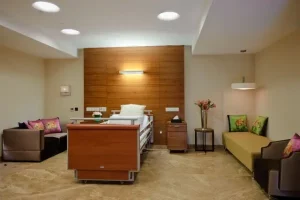 Complete 30 day HSCT done in hospital. Private deluxe rooms are very well served for patient and attendant comfort and equipped with HEPA Filter with Triple Level Air Filtration. No outside hospital stay avoids risk of infection during the aplastic phase, 24 x 7 nursing care and best medical attention. Advanced HSCT protocol used does not require any further chemo or treatment after leaving the hospital. Click here to get complete details
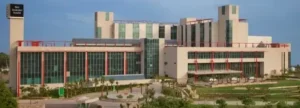 International and Globally Renowned Accreditations. HSCT Hospital India is accredited by the Joint Commission International, USA, the National Accreditation Board for Hospitals and Healthcare Providers (NABH), and the National Accreditation Board for Laboratories (NABL) for processes and high quality patient care. Click here to know more