HSCT for Myasthenia Gravis (MG): Life Changing Stem Cell Treatment
Medically reviewed by Dr. Saurabh Bansal, DM (Neurology), Consultant Neurologist at HSCT Hospital India, with the transplant led by the board of haematologists and the bone marrow transplant specialists at HSCT Hospital India.
Last reviewed: 16 July 2026. This guide cites peer-reviewed studies, which are linked throughout.
For most people with myasthenia gravis, conventional treatment controls the disease. This guide is written for the minority it does not. It explains what MG is, why it is so responsive to immune treatment, when a transplant should be considered, what the evidence shows, who is eligible, and what to realistically expect.
What Is Myasthenia Gravis?
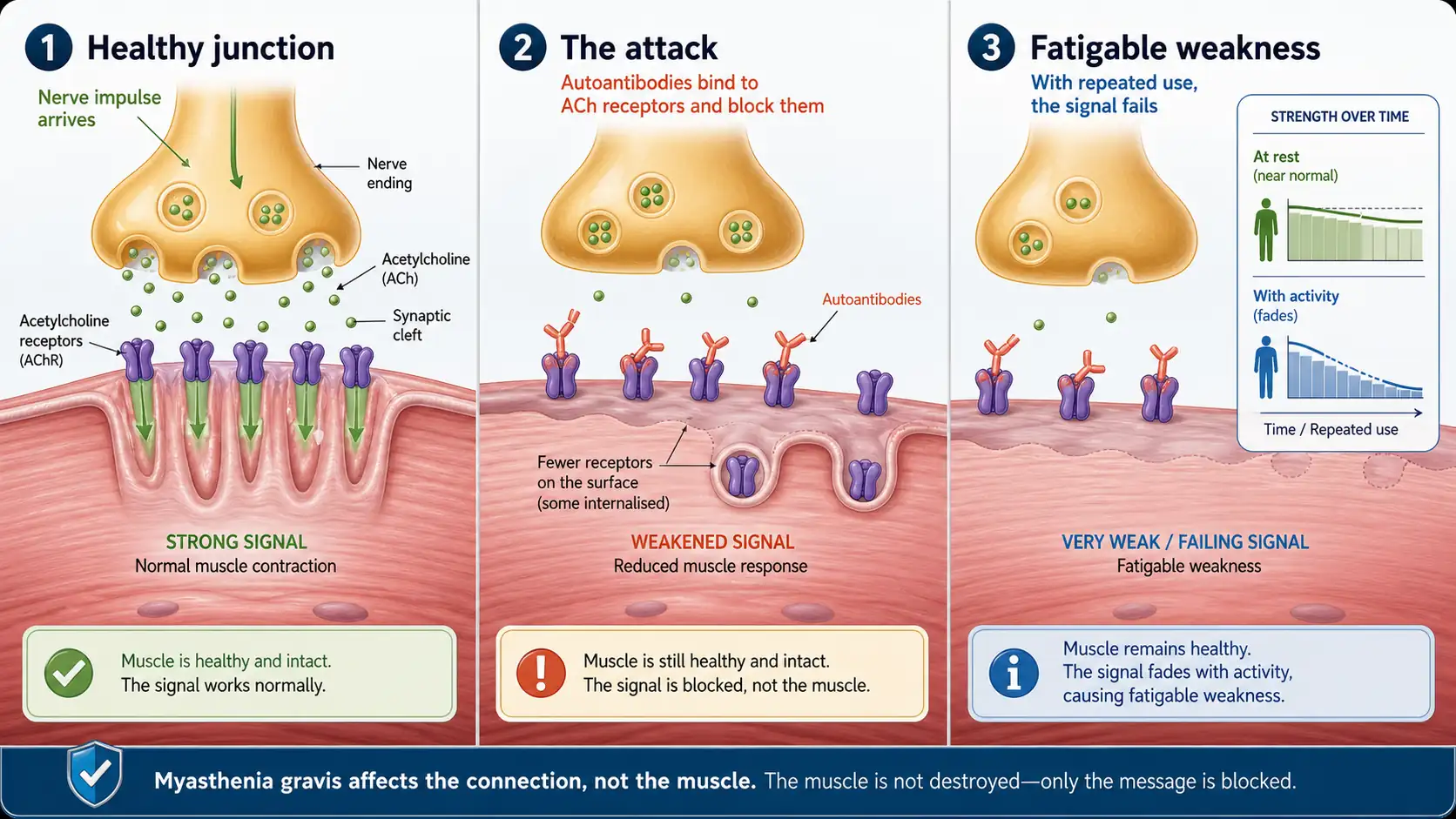
Myasthenia gravis is an autoimmune disease of the neuromuscular junction, the point where a nerve meets a muscle and tells it to contract. The nerve releases a chemical messenger, acetylcholine, which crosses a tiny gap and locks onto acetylcholine receptors on the muscle, triggering the contraction. In MG, the immune system produces autoantibodies, which are antibodies that mistakenly target the body’s own tissue, against these receptors. The autoantibodies block and destroy the receptors, so the signal to contract arrives weaker and weaker with repeated use. The result is fatigable weakness: muscle strength that is close to normal at rest but fades rapidly with activity and recovers with rest.
MG is a disease of blocked transmission, not of destroyed nerve or muscle. The muscle itself is intact. When the autoantibody attack is removed, the junction can work again. That is why myasthenia, unlike a degenerative disease, is in principle fully reversible, and it is the reason a treatment that resets the immune system can restore strength rather than merely slow a decline.
MG affects roughly 15 to 20 people in every 100,000. It can begin at any age, with one peak in women under forty and another in men over sixty.
Myasthenia Gravis Symptoms: Fatigable Weakness, Ptosis and Bulbar Signs
The hallmark of MG is weakness that worsens with use and improves with rest, and that characteristically fluctuates through the day, usually being worst in the evening. The muscles affected first are often those of the eyes and face:
- Drooping of one or both eyelids, called ptosis
- Double vision, called diplopia
- A change in facial expression, or difficulty smiling
- Slurred or nasal speech, and difficulty chewing and swallowing as a meal goes on
In generalised MG the weakness spreads to the neck, the limbs and, most dangerously, the muscles of breathing. Weakness of the respiratory and swallowing muscles severe enough to threaten breathing is called a myasthenic crisis, and it is a medical emergency. It is the existence of this risk that makes severe, poorly controlled MG a disease worth treating aggressively.
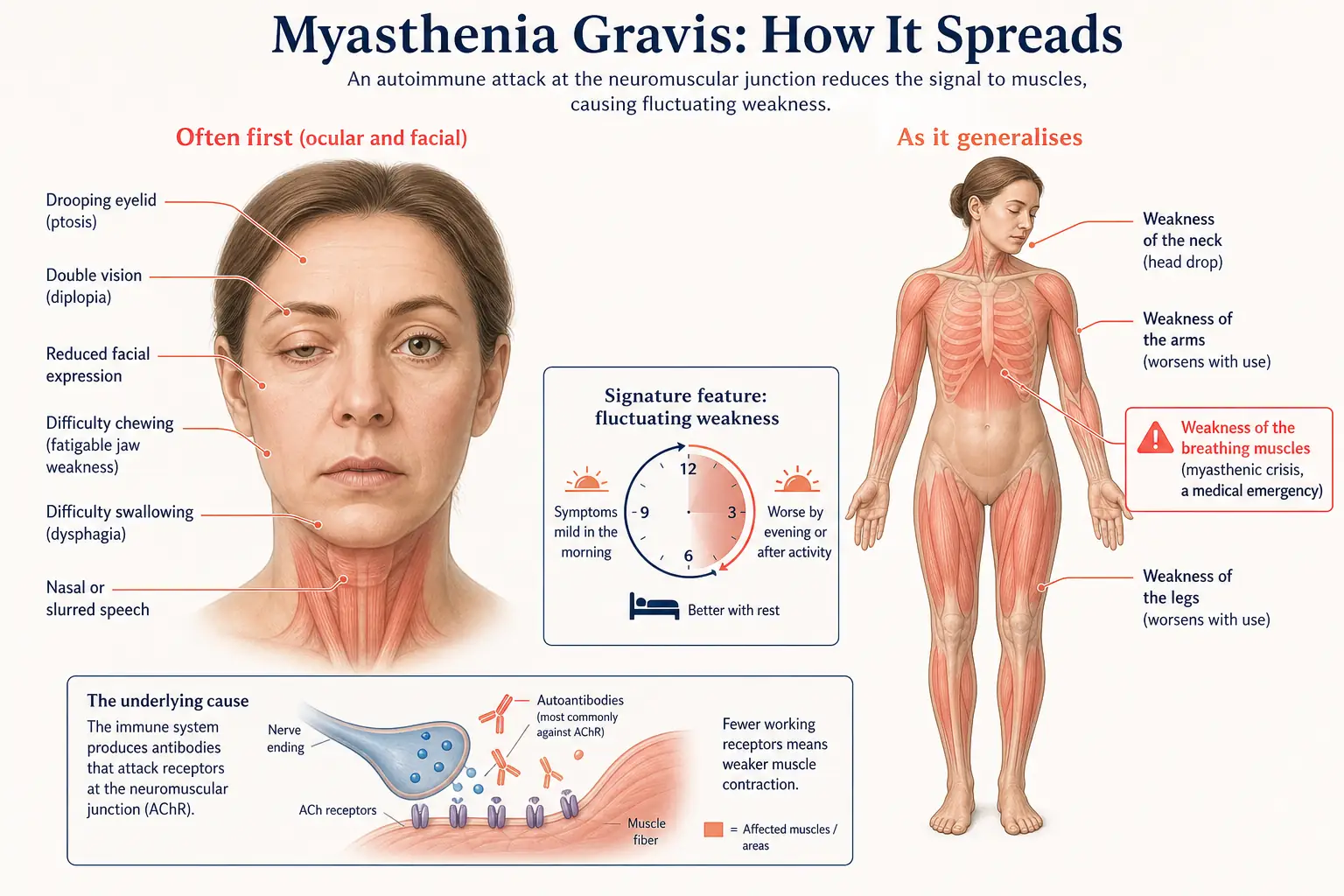
Figure 1. MG weakness worsens with use and improves with rest. It often starts in the eyes and face, and the danger is when it reaches the breathing muscles.
How Is Myasthenia Gravis Diagnosed?
Diagnosis combines the clinical picture of fatigable weakness with specific tests:
- Antibody blood tests. Most patients have antibodies to the acetylcholine receptor (AChR). A subset instead have antibodies to muscle-specific kinase (MuSK), a protein that helps cluster the receptors, and these patients often have prominent bulbar and respiratory involvement. A small group are seronegative, meaning no antibody is detected on standard testing, yet clearly have the disease.
- Electrophysiology. Repetitive nerve stimulation and single-fibre electromyography measure the failing transmission directly and are the most sensitive confirmatory tests.
- Edrophonium and ice-pack tests, which transiently improve weakness and support the diagnosis at the bedside.
- CT of the chest, to look for a thymoma, a tumour of the thymus gland found in a proportion of patients and relevant to treatment.
The antibody a patient carries matters, because it predicts how they will respond to different treatments, and it is part of deciding whether a transplant is appropriate.
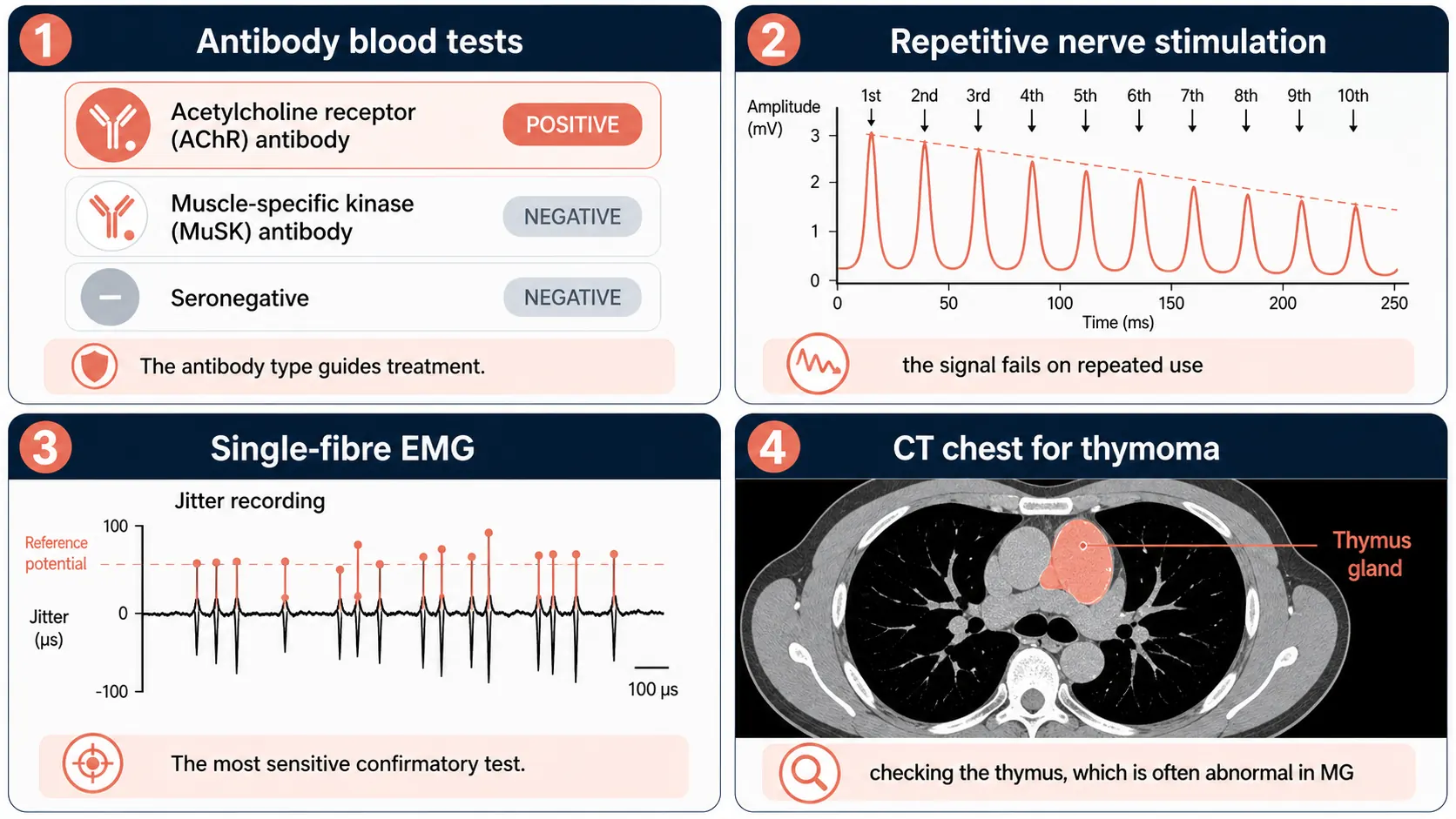
Figure 2. Diagnosis combines the pattern of fatigable weakness with antibody tests and nerve studies. The antibody a patient carries helps decide treatment.
What Causes Myasthenia Gravis?
MG is driven by the immune system, specifically by B lymphocytes and the long-lived plasma cells they become, which manufacture the autoantibodies, with help from T lymphocytes. The thymus gland, which trains the immune system early in life, is frequently abnormal in AChR-positive MG, showing either overgrowth or a thymoma, and is thought to help start and sustain the autoimmune process. There is a genetic susceptibility, but no single inherited cause and nothing a patient did to bring the disease on. Because the fault lies in the immune cells that make the antibodies, a treatment that removes and resets those cells addresses the disease at its source.
Is Myasthenia Gravis Progressive? Will It Get Worse?
MG does not steadily destroy tissue the way a neurodegenerative disease does. Instead it fluctuates, and its course varies widely. In many patients it can be controlled for years with medication. In others it generalises from the eyes to the whole body, becomes difficult to control, and produces repeated crises and repeated hospital admissions. The disease tends to be most active in the first few years. Because the weakness reflects a functional blockade rather than permanent damage, even long-standing severe MG can improve dramatically if the underlying antibody production is switched off. This is the crucial difference from a degenerative illness and the reason that a transplant, in the right patient, can restore function rather than merely halt a decline.
Ocular, Generalised and Antibody-Defined Forms of Myasthenia Gravis
| Type | Defining feature | Relevance to treatment |
|---|---|---|
| Ocular MG | Weakness confined to the eye muscles (ptosis, diplopia) | Often controlled with medication; rarely needs a transplant |
| Generalised AChR-positive MG | Antibodies to the acetylcholine receptor, weakness beyond the eyes | The commonest form; the group in which most refractory cases and most transplant experience sit |
| MuSK-positive MG | Antibodies to muscle-specific kinase; prominent bulbar and respiratory weakness | Often more severe and harder to treat; responds well to B-cell depletion |
| Seronegative MG | No antibody detected on standard testing | Diagnosed on clinical and electrophysiological grounds |
| Thymoma-associated MG | MG occurring with a thymus tumour | Requires removal of the thymoma (thymectomy) |
Table 1. The forms of myasthenia gravis. Severe, generalised, treatment-refractory disease, whatever the antibody, is the setting in which HSCT has been used.
Why Untreated Myasthenia Gravis Grows More Dangerous
Untreated or poorly controlled generalised MG carries a risk of myasthenic crisis, in which the muscles of breathing fail and the patient needs ventilation in intensive care. Repeated crises, repeated courses of rescue therapy, and the heavy side effects of long-term high-dose steroids and other immunosuppressants together take a serious toll on health and quality of life. The goal of treatment is not only to relieve weakness but to remove this ongoing danger, and it is patients who remain at that level of risk despite full conventional therapy for whom a transplant is considered.
Standard Myasthenia Gravis Treatment, and Why It Sometimes Falls Short
MG has a well-developed treatment ladder, and HSCT sits only at the very top of it, after the rungs below have failed:
- Symptomatic treatment with pyridostigmine, which boosts acetylcholine at the junction and improves strength without treating the underlying autoimmunity.
- Immunosuppression, usually starting with corticosteroids such as prednisolone, then steroid-sparing agents such as azathioprine, mycophenolate mofetil or ciclosporin.
- Rapid rescue therapies for crises and severe flares: intravenous immunoglobulin (IVIg) and plasma exchange (plasmapheresis), which remove or neutralise the circulating antibodies for a few weeks.
- Thymectomy, surgical removal of the thymus, which improves outcomes in AChR-positive generalised MG and is essential when a thymoma is present.
- B-cell depletion with rituximab, particularly effective in MuSK-positive disease.
- Newer targeted biologics: complement inhibitors such as eculizumab and ravulizumab, and neonatal Fc receptor blockers such as efgartigimod, which lower antibody levels. These are effective but must be given repeatedly and indefinitely, and they are extremely expensive.
A patient is described as refractory when severe, generalised MG remains uncontrolled, or controllable only at an unacceptable cost in side effects or repeated rescue therapy, despite these treatments. It is this group for whom a one-time immune reset becomes a rational option.
 Get HSCT India Brochure Emailed to you
Can HSCT Treat Myasthenia Gravis? What the Evidence Shows
For patients with severe, treatment-refractory generalised MG, autologous HSCT has produced long, drug-free remissions. In a study from The Ottawa Hospital in Canada, published in JAMA Neurology in 2016, all seven patients with severe MG went into complete remission and came off all MG medication. They were followed for a median of 40 months.
In 2025 the Ottawa and Calgary programmes reported on 21 patients. 16 of the 18 patients who could be assessed, 89%, were in remission or had only minimal symptoms without any MG treatment, over a median of 6.7 years. Patients with both AChR and MuSK antibodies responded. HSCT for myasthenia gravis is listed as a clinical option in the 2025 recommendations of the European Society for Blood and Marrow Transplantation.
The evidence base in MG is smaller than in multiple sclerosis, because refractory MG is rarer and a transplant is reserved for the most severe cases. What that evidence consistently shows, however, is that in the patient who has run out of other options, HSCT can end the disease and the lifelong treatment burden together. At HSCT Hospital India the same non-myeloablative protocol used across our autoimmune programme is applied, in a fully inpatient setting, to appropriately selected refractory MG patients. You can compare the approach with our guide to HSCT for multiple sclerosis.
How Autologous HSCT Clears the Antibody-Producing Cells in Myasthenia Gravis
An autologous transplant uses the patient’s own haematopoietic, or blood-forming, stem cells, so there is no donor and no risk of graft-versus-host disease. It proceeds in four stages:
- Mobilisation. A short course of chemotherapy and a growth factor move stem cells from the bone marrow into the bloodstream.
- Harvest, or leukapheresis. The stem cells are collected from the blood through a machine and cryopreserved, meaning frozen and stored.
- Conditioning. Immunosuppressive conditioning chemotherapy depletes the autoreactive lymphocytes and plasma cells that produce the anti-receptor antibodies. The dose is non-myeloablative, calibrated to reset the immune system rather than to destroy the bone marrow.
- Reinfusion. The stored stem cells are returned through a drip and rebuild a new immune system that no longer manufactures the antibodies attacking the neuromuscular junction.
Because the muscle and its receptors can recover once the antibody attack stops, the aim in MG is not damage limitation but the restoration of normal transmission.
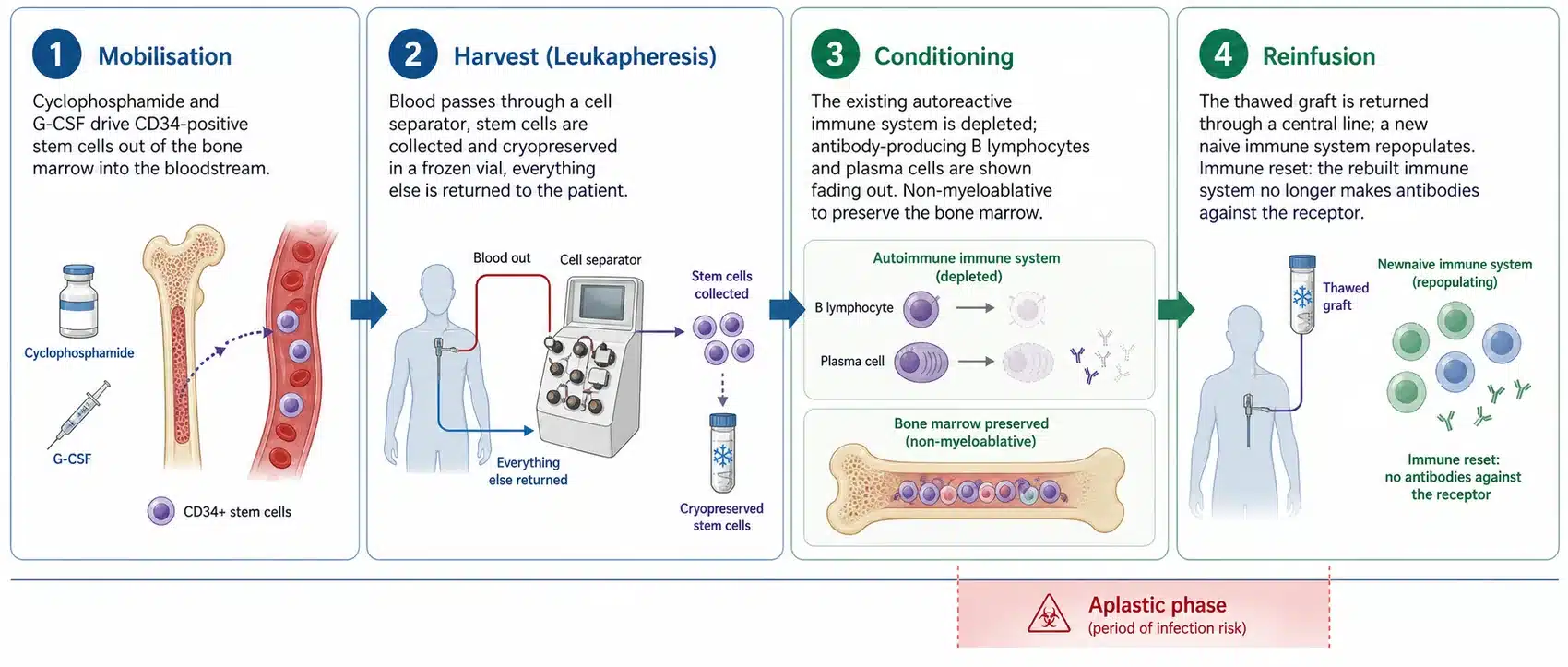
Figure 3. The four stages of an autologous transplant. Infection risk is highest during the aplastic phase, the gap between conditioning and engraftment.
The Thirty-Day Hospital Admission for Myasthenia Gravis
At HSCT Hospital India the whole treatment is done as an inpatient over roughly thirty days. The early days cover the harvest and the start of conditioning. In the second week the immune system reaches its lowest point, the aplastic phase, when the white cell count is very low and infection risk is highest; this period is spent in a private room with triple HEPA air filtration and 24 hour nursing. In MG this inpatient safety matters twice over, because the same nursing team is watching for any change in swallowing or breathing. In the third and fourth weeks the stem cells engraft, the counts recover, and the patient is prepared for discharge. No follow-up chemotherapy is required.
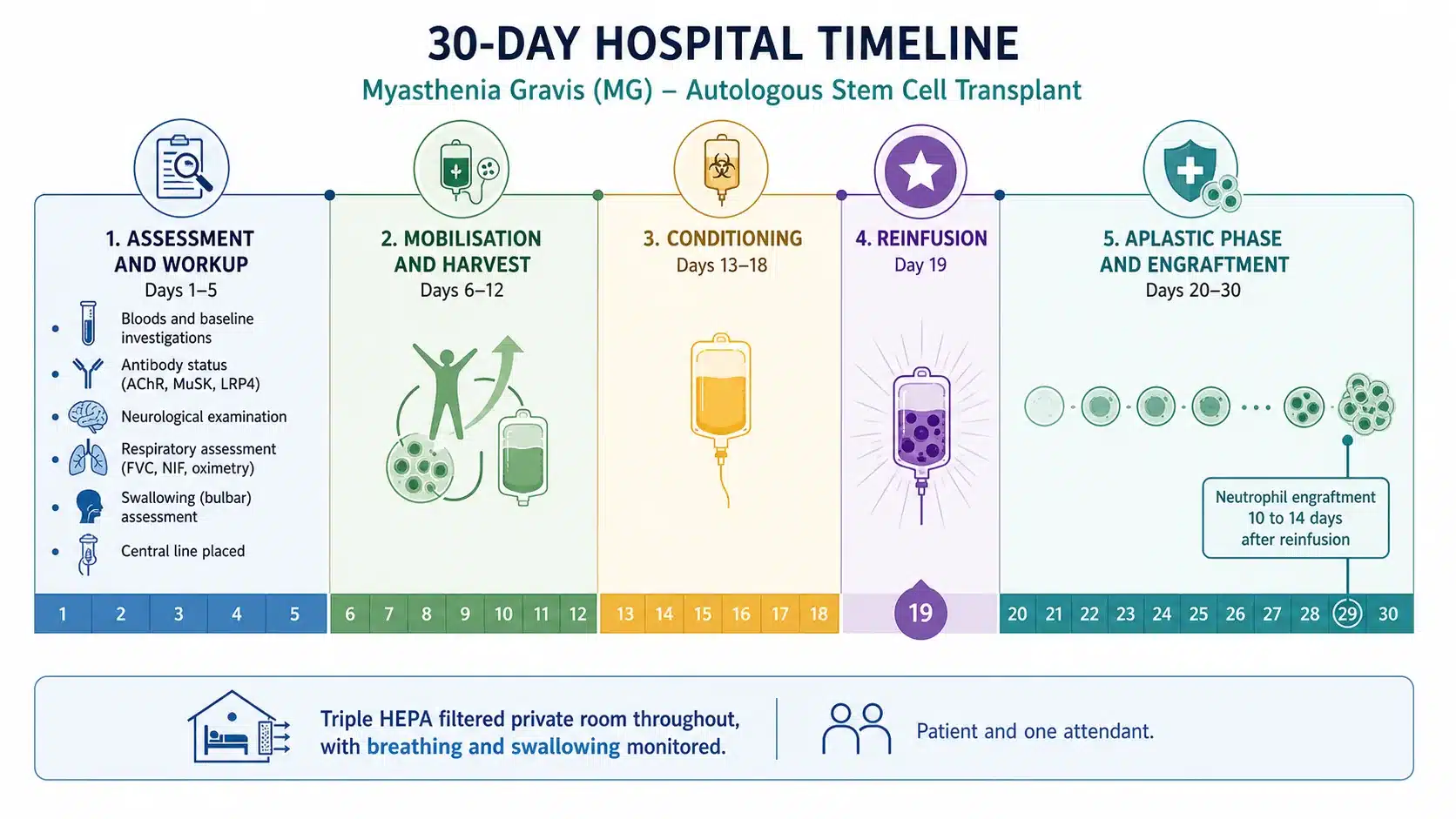
Figure 4. The 30 day inpatient programme. For myasthenia patients, breathing and swallowing are watched closely across the whole stay.
The Risks of HSCT in Myasthenia Gravis, and How We Contain Them
HSCT is a serious undertaking, and its risks are well understood and concentrated into one predictable window. The principal risk is infection during the aplastic phase, which is why the programme is inpatient in a Triple HEPA-filtered private room. There are the temporary effects of chemotherapy, such as nausea, mouth soreness and hair loss, and a risk of reduced fertility that is discussed beforehand. Transplant-related mortality in modern non-myeloablative programmes for autoimmune disease, in selected patients, is low. Two points apply specifically to myasthenia patients. Fertility preservation is discussed before treatment, because the conditioning chemotherapy can affect fertility, and the options are best arranged in advance. And the peri-transplant plan is built around respiratory and bulbar safety: swallowing and breathing are monitored closely throughout the aplastic phase, existing MG medication is managed carefully across the transplant window rather than stopped abruptly, and the 30 day in-hospital stay means any deterioration is recognised and treated immediately rather than at home. Set against the risk of recurrent myasthenic crises and a lifetime of immunosuppression, many patients with severe refractory disease judge the transplant risk, concentrated into a single managed window, to be one worth taking.
Should I Choose HSCT or Newer Biologic Drugs?
The modern alternative to a transplant is one of the newer targeted biologics, the complement inhibitors and the Fc receptor blockers, which are genuinely effective at lowering antibody levels and controlling symptoms. The difference is in kind and in time. These drugs work only while they are being given, must be continued indefinitely, and carry a very high recurring cost. HSCT is a single treatment that, in the patients who respond, ends both the disease activity and the need for any ongoing therapy. The case for a transplant is strongest in a younger patient with severe, generalised, refractory disease facing the prospect of decades of expensive continuous treatment; the case for staying on a biologic is strongest where it delivers full control and is affordable and tolerated. That balance is exactly what a formal evaluation exists to weigh.
Can Myasthenia Gravis Be Cured?
In severe refractory MG, autologous HSCT has produced something no continuous drug therapy offers: sustained, drug-free complete remission. Because MG is a reversible blockade rather than fixed damage, patients in remission can regain normal or near-normal strength, and in the reported series they came off all MG medication. No treatment for MG is licensed as a cure. The transplant evidence in MG is younger than in MS and rests on series rather than large randomised trials, but the responses in those series are the most complete reported for any therapy. For a patient who has run out of options on the conventional ladder, HSCT offers a realistic route to lasting remission and freedom from treatment, and that prospect is greatest in severe disease treated before years of crises have taken their toll.
Who Is Eligible for Myasthenia Gravis HSCT, and How We Decide
HSCT is not the right fit for every person with MG, and for most it is not needed at all. It is considered only for the severe, refractory end of the disease. Our multi-disciplinary team, led on the neurological side by a consultant neurologist and on the transplant side by our haematology team, assesses:
- A confirmed diagnosis of generalised myasthenia gravis
- Severe disease that remains uncontrolled, or controllable only at an unacceptable cost, despite the full conventional ladder including steroids, steroid-sparing agents, rituximab where indicated, thymectomy where indicated, and the newer biologics
- A pattern of repeated crises or heavy dependence on rescue therapy
- Adequate heart, lung, liver and kidney function, and general fitness for the procedure, with careful assessment of respiratory reserve
A patient whose MG is well controlled on standard treatment is not a candidate, and we will say so. The transplant is for the person the treatment ladder has failed. The same disciplined assessment guides the other conditions treated at the centre, including myositis, CIDP, NMOSD and lupus.
 Request a Call Back
Myasthenia Gravis HSCT Cost in India, With a Country Comparison
At HSCT Hospital India the whole transplant is charged as a single all-inclusive package of 30,000 US dollars. The figure takes in thirty days of inpatient care for the patient and one attendant, a deluxe private room with triple HEPA air filtration, and all doctors’ fees, tests, medicines, consumables, physiotherapy, meals and laundry for both, and airport transfers.
| Country | Typical all-inclusive cost | Care model |
|---|---|---|
| India (HSCT Hospital India) | $30,000 | Inpatient throughout, in a JCI-USA accredited hospital with Triple HEPA-filtered private rooms |
| Russia (Pirogov Centre, Moscow) | $40,000 to $45,000 | Inpatient |
| Mexico (Clinica Ruiz) | Around $54,500 | Largely outpatient |
| USA | $150,000 to $200,000 | Inpatient, and typically offered only in a clinical trial |
Table 2. Indicative cost of HSCT by country. Set against this, the newer MG biologics can cost more than this figure every year, indefinitely. A full, sourced comparison is in our HSCT cost by country guide.
Frequently Asked Questions About HSCT for Myasthenia Gravis
Can HSCT cure myasthenia gravis?
In severe, treatment-refractory MG, autologous HSCT has produced sustained, drug-free complete remission, and because MG is a reversible blockade of transmission rather than fixed tissue damage, patients in remission can regain normal strength. No treatment is described as a guaranteed cure, and the evidence in MG comes from series rather than large randomised trials, but the responses reported are the most complete of any therapy.
Who is a candidate for HSCT for myasthenia gravis?
People with severe, generalised MG that remains uncontrolled, or controllable only at an unacceptable cost, despite the full conventional ladder, including steroids, steroid-sparing drugs, rituximab, thymectomy where indicated, and the newer biologics. Well-controlled MG is not an indication.
Is HSCT safe for myasthenia gravis?
It carries real risk, concentrated in the two-week aplastic phase, which is why the whole thirty-day programme is inpatient in a HEPA-filtered BMT room with 24 hour nursing, in a JCI-USA accredited hospital, with particular attention to breathing and swallowing.
How does HSCT work for myasthenia gravis?
It uses immunosuppressive chemotherapy to remove the immune cells that produce the anti-receptor antibodies, then reinfuses the patient’s own stored stem cells to rebuild an immune system that no longer attacks the neuromuscular junction.
Is HSCT better than efgartigimod or eculizumab for MG?
The newer biologics are effective but must be taken indefinitely at very high recurring cost. HSCT is a single treatment that, in responders, ends both the disease and the need for ongoing therapy. Which is right depends on disease severity, response to drugs, and the burden of lifelong treatment.
Will my strength come back after HSCT for MG?
Often yes. Because the muscle and its receptors are intact and the problem is a blockade, once the antibody attack is removed the junction can work again, and patients in remission frequently regain normal or near-normal strength.
Do I need medication for life after HSCT?
In patients who achieve remission, no. The reported experience is of patients coming off all MG medication after a successful transplant.
How much does HSCT for myasthenia gravis cost in India?
The all-inclusive package is 30,000 US dollars, covering thirty days in hospital for the patient and one attendant, with all fees, tests, medicines, physiotherapy, food and airport transfers included.
How long does the treatment take?
About thirty days in hospital, followed by recovery at home over the following months as the new immune system matures. No follow-up chemotherapy is needed.
How soon can I be treated?
Weeks, not years. Because severe MG carries the risk of crisis, waiting has a real clinical cost.
How Soon Does Strength Return After a Transplant for Myasthenia Gravis?
Recovery in MG follows the biology of the disease rather than a fixed calendar, and understanding the sequence helps set realistic expectations. Because the weakness of myasthenia is caused by circulating autoantibodies and the immune cells that make them, improvement tracks the fall in those antibodies. In the weeks after conditioning, as the antibody-producing plasma cells are cleared and the new immune system engrafts, antibody levels decline and the neuromuscular junction is progressively freed to work normally again. Many patients notice that fatigable weakness, ptosis and bulbar symptoms ease over the first few months, and that their need for pyridostigmine and rescue therapy falls away.
The full benefit is judged over the first year, as the reconstituted immune system matures and stabilises. This is a genuine advantage of treating myasthenia rather than a degenerative disease: there is intact muscle and an intact receptor waiting to be uncovered, so recovery can be substantial rather than merely a halt to decline. Two points shape the size and durability of that recovery. The first is disease duration: a junction that has been under attack for a shorter time, in a younger patient, tends to recover more completely. The second is the removal of any thymoma beforehand, since a residual thymus tumour is a continuing source of the autoimmune drive and is dealt with before a transplant is considered. Recovery is monitored with the same antibody tests and clinical scoring used at diagnosis, so progress is measured, not assumed.
We use the same non-myeloablative protocol for other autoimmune neurological conditions, including stiff person syndrome, CIDP and NMOSD.
Evert from Canada Shares His Experience of HSCT for Myasthenia Gravis
Evert travelled from Canada with his cousin as his attendant. He came for HSCT because conventional MG treatment was making him very sick. In his video he describes how his breathing, hand strength and calf strength improved during his stay at HSCT Hospital India.
“My breathing has responded very well. I have no problem breathing anymore. I need no oxygen.”
What Is the Next Step?
Every patient is assessed individually. A world class team of HSCT specialists reviews the diagnosis, antibody status, treatment history and general fitness, and an HSCT Case Manager then contacts the patient by email to guide them through the next steps. The expert opinion is free of charge and carries no obligation.
Get HSCT India Brochure Emailed to you. Consult Top HSCT Doctors
Patients and families can send their details through the enquiry form at the foot of the page. The HSCT information booklet with the full 30,000 US dollar package is emailed back, and a call with the HSCT doctors is arranged free of charge.
Why Choose HSCT Hospital India for Life Changing Myasthenia Gravis Treatment

 Complete 30 day HSCT done in hospital. Private deluxe rooms are very well served for patient and attendant comfort and equipped with HEPA Filter with Triple Level Air Filtration. No outside hospital stay avoids risk of infection during the aplastic phase, 24 x 7 nursing care and best medical attention. The advanced HSCT protocol used does not require any further chemo or treatment after leaving the hospital. Click here to get complete details
 International and Globally Renowned Accreditations. HSCT Hospital India is accredited by the Joint Commission International, USA, the National Accreditation Board for Hospitals and Healthcare Providers (NABH), and the National Accreditation Board for Laboratories (NABL) for processes and high quality patient care. Click here to know more

Related reading: HSCT for Multiple Sclerosis, HSCT for CIDP, HSCT for NMOSD, HSCT for Lupus, HSCT for Scleroderma, HSCT cost by country.
Real Patients, Real Stories
A Finland Patient’s Inspiring Recovery from Multiple Sclerosis after HSCT Treatment at JCI-USA Accredited World Class Hospital in India
Jukka from Finland, who has primary progressive MS, completed the full 30 day HSCT programme at HSCT Hospital India.

American Cop Flies to India for HSCT: 95% Symptom free, 5 Months after HSCT Treatment at JCI-USA Accredited World Class Hospital in India
Dylan, a US police officer with small fibre neuropathy, had about 95 per cent of his symptoms gone five months after HSCT.
Sergel, 38M from Holland: Multiple Sclerosis Patient shares after HSCT Treatment at JCI-USA Accredited World Class Hospital in India
Watch this Video testimonial: Sergel, 38 years young man from Netherlands suffering from Multiple Sclerosis