HSCT for MS in Germany: Access, Criteria and Cost
Medically reviewed by the board of haematologists at HSCT Hospital India, whose transplant physicians hold DM Clinical Haematology qualifications and fellowship training in stem cell transplantation. Reviewed 17 August 2026.
Who this page is for. German families weighing a stem cell transplant for multiple sclerosis. HSCT for MS in Germany is real and it is performed at university centres, under a written national recommendation that took its present form in February 2025. That opinion is free and a haematologist gives it after reading the scans.
Multiple sclerosis in Germany, the numbers
Germany carries one of the largest MS populations in Europe. More than 280,000 people there live with multiple sclerosis, a figure the Deutsche Multiple Sklerose Gesellschaft attributes to the Bundesversicherungsamt (DMSG, 2026). More than 15,000 more receive the diagnosis every year.
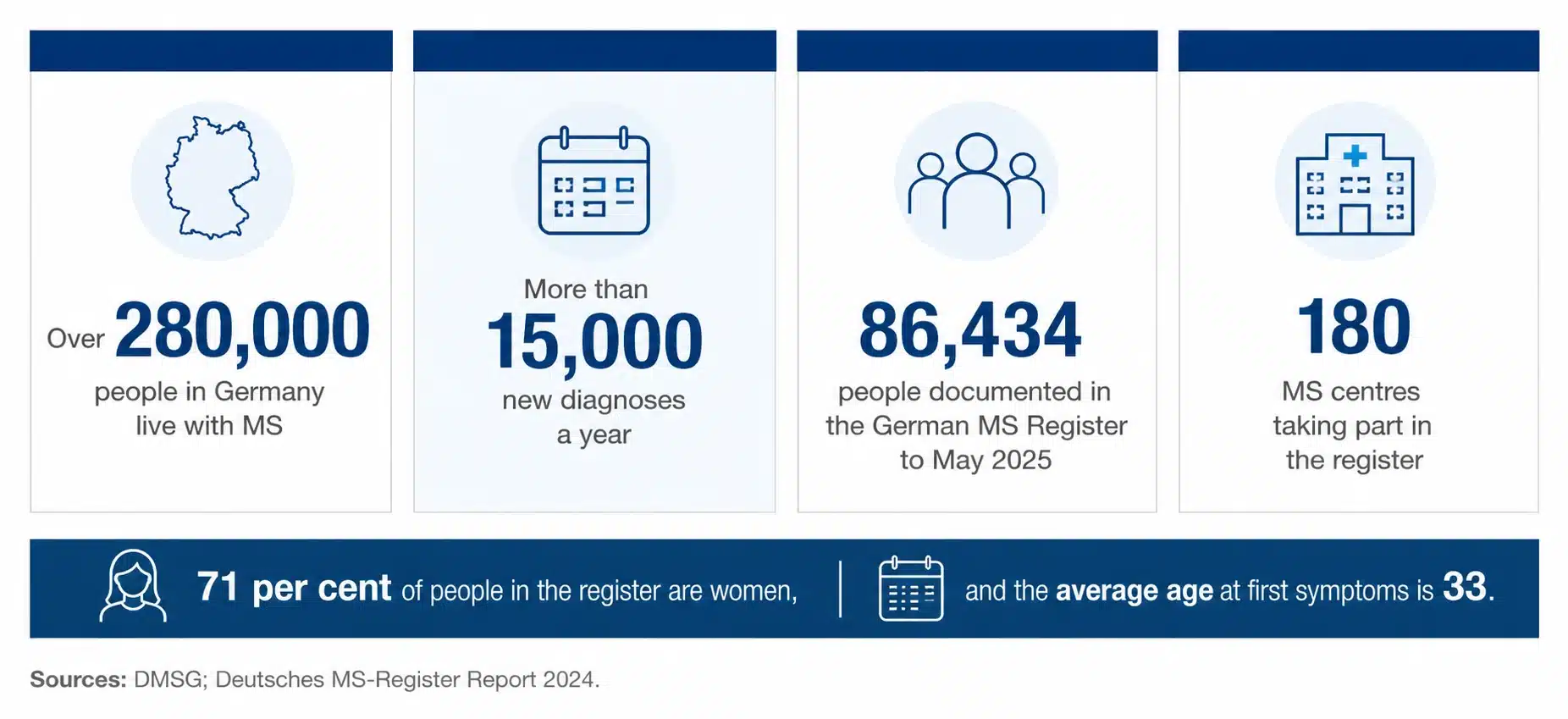
Onset comes early in adult life. Diagnosis usually falls between the ages of 20 and 40, and women are affected about twice as often as men (DMSG, 2026). Those are also the years the German recommendation is written around, and assessment at HSCT Hospital India continues to about 60, so a patient who has spent years working through drugs is still judged on current disease activity.
Few countries track the disease as closely. The Deutsches MS-Register, operated by the DMSG since 2001, had accumulated 86,434 documented cases by its May 2025 data cut, gathered through 180 participating centres (Deutsches MS-Register, Report 2024). Inside that dataset, women make up 71.1 per cent, first symptoms appear at a mean age of 32.7 years, and 79.6 per cent have a relapsing remitting course (Deutsches MS-Register, Report 2024). The register’s own headline estimate for the country is higher again, at more than 300,000 people (Deutsches MS-Register, Report 2024).
That register exists because German transplant guidance asks for every treated case to be entered and tracked afterwards. A patient who has a transplant abroad with no follow up plan drops out of that tracking, which is why the German aftercare handover is arranged at HSCT Hospital India before an admission date is agreed.
Is HSCT for MS in Germany available, and where
Autologous haematopoietic stem cell transplantation for MS is available in Germany, at a handful of university centres, outside clinical trials. Autologous means the blood stem cells come from the patient rather than a donor, so there is nothing for the body to reject.
Hamburg and Heidelberg carry the two largest German programmes. Universitätsklinikum Hamburg-Eppendorf and Universitätsklinikum Heidelberg jointly published the German outcome dataset covering transplants given between 2007 and 2025 (Fischbach and colleagues, Journal of Neurology, Neurosurgery and Psychiatry, 2026). Universitätsmedizin Mannheim has run an MS transplant programme as well.
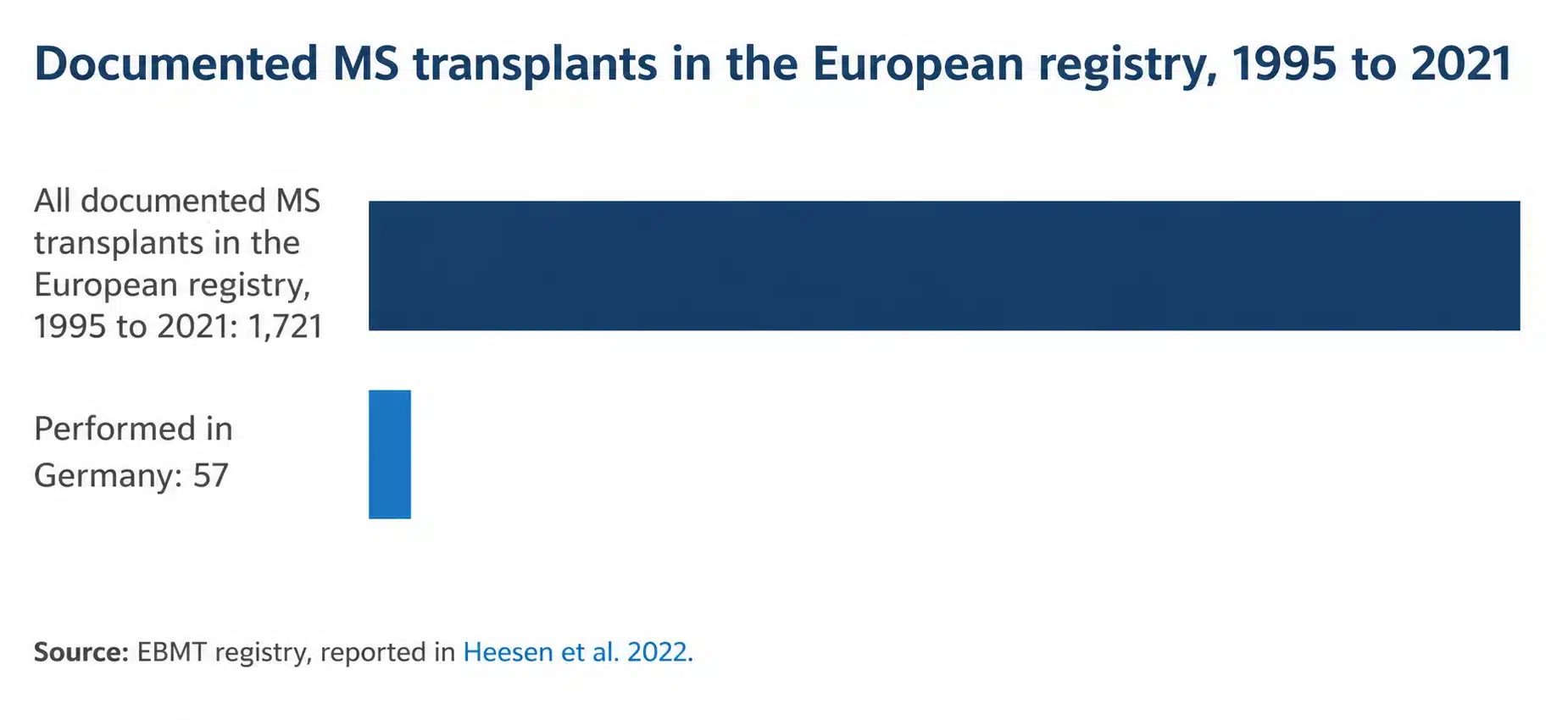
Volume, not skill, separates Germany from its neighbours. The European Society for Blood and Marrow Transplantation registry recorded 1,721 MS transplants between 1995 and 2021, and 57 of those took place in Germany (Heesen and colleagues, 2022). The same authors note that transplant volumes are far higher in Scandinavia, Italy, Spain and England (Heesen and colleagues, 2022).
Clinical capability is not what holds the number down. Hamburg and Heidelberg publish internationally and their reported results sit at the strong end of the literature.
Who qualifies for HSCT for MS in Germany
Germany has a written national standard. The recommendations describe it as a corridor to be checked case by case, and say the criteria need not all be met (KKNMS recommendation, version 1.1, February 2025). The Krankheitsbezogenes Kompetenznetz Multiple Sklerose issued that version on 28 February 2025, and it is the document a German stem cell board and an insurer’s medical service both work from.
The eligibility criteria inside it are not a German invention. They are the consensus core criteria developed by ECTRIMS together with the EBMT, which the German recommendation adopts as the national standard (Muraro and colleagues, Nature Reviews Neurology, 2025; KKNMS recommendation, version 1.1, February 2025).
The core criteria run as follows:
- Age 18 to 45.
- EDSS between 3.0 and 6.0. EDSS is the Expanded Disability Status Scale, the standard measure of MS disability, where 6.0 means walking about 100 metres with a stick.
- Disease duration of 10 years or less.
- Relapsing remitting MS, or secondary progressive MS progressing over 5 years or less.
- One relapse with a rise in EDSS, or two relapses, inside 12 months.
- One gadolinium enhancing lesion, or one new or enlarging T2 lesion of 3 mm or more, on MRI inside 12 months.
- An earlier failure of ocrelizumab, ofatumumab, ublituximab, rituximab, natalizumab, alemtuzumab or a similarly active substance.
Extended criteria widen each of those bounds: ages 46 to 55, EDSS as high as 6.5 and disease duration as long as 15 years (KKNMS recommendation, version 1.1, February 2025). The February 2025 version brought primary progressive MS into those extended criteria for the first time, where a licensed high efficacy drug has already failed, and added guidance on fertility preservation and on early menopause after conditioning.
The recommendations also state that patients without MRI activity remain suitable where they are young, early in the disease and progressing quickly (KKNMS recommendation, version 1.1, February 2025). A quiet scan on its own therefore does not answer the question.
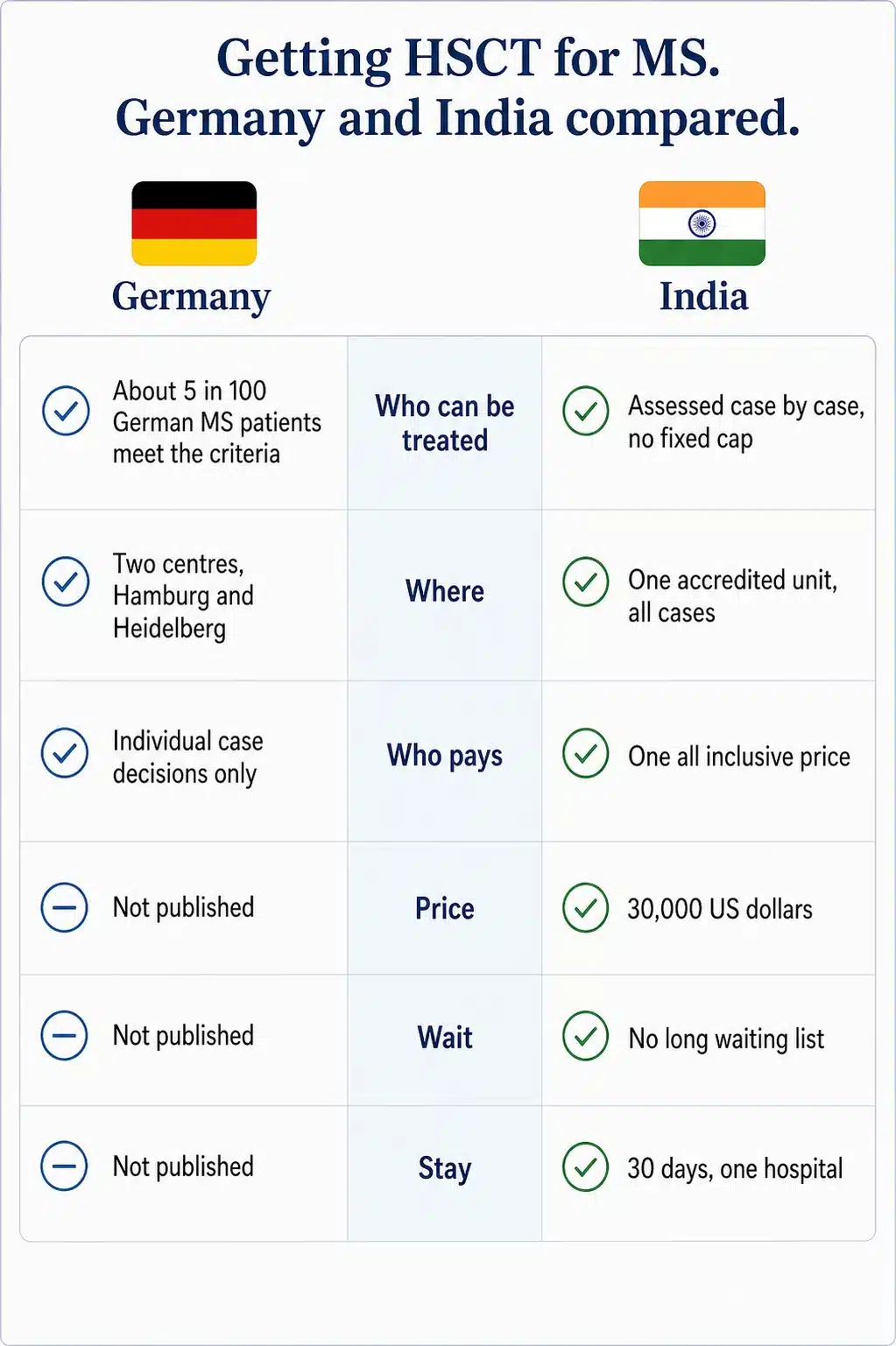
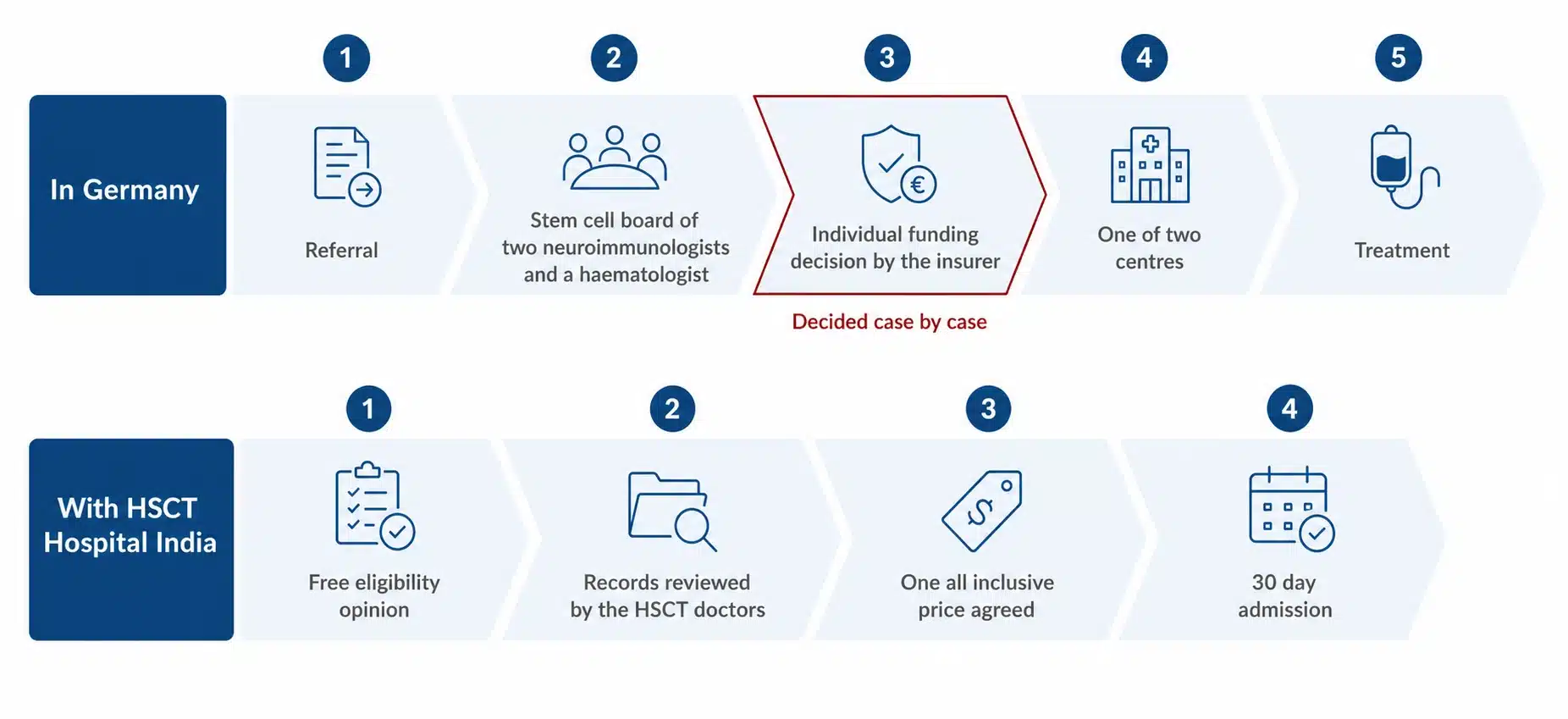
Decision making is specified too. A German centre convenes a stem cell board of two neuroimmunologists and a haemato-oncologist, ideally with a neuroradiologist alongside, and that board rules on the case collectively (KKNMS recommendation, version 1.1, February 2025). Up to 5 in 100 German MS patients have a course aggressive enough to bring them into scope at all (KKNMS taskforce, reported in Deutsches Ärzteblatt, 2022), which against a population above 280,000 is a large group of people.
Eligibility at HSCT Hospital India is worked out from a different starting point. Assessment is open to relapsing remitting, secondary progressive and primary progressive disease alike, and the deciding question is whether inflammatory activity is still visible on a recent MRI rather than the label on the diagnosis. Age is assessed up to about 60 rather than stopping at 45, and organ function carries equal weight, since the heart, lungs, liver and kidneys have to carry the conditioning comfortably. Every assessment comes back with its reasoning written out.
Not sure whether the criteria fit? A recent scan, a summary of the disease so far and a note of which drugs have already been tried are enough for a full eligibility assessment, at no cost and with nothing to commit to. Get Free Expert Opinion Now.
Who pays for HSCT for MS in Germany
Funding is decided patient by patient. German statutory insurance, the gesetzliche Krankenversicherung, reimburses autologous transplantation for MS on individual application rather than under a standing entitlement (Heesen and colleagues, 2022).
The one G-BA Erprobungs-Richtlinie in this area covers allogeneic stem cell transplantation in multiple myeloma beyond first line therapy, a blood cancer, and not MS (G-BA Erprobungs-Richtlinie, 2017). The revised German neurological society guideline calls transplantation a promising therapy and recommends continued study enrolment (German neurological society guideline, reported in Heesen and colleagues, 2022).
German health economists put the one off cost of the procedure in Germany at about 50,000 euros (Heesen and colleagues, 2022). German hospital funding runs through case based payments, so an individual centre’s figure comes from a written cost estimate. The same analysis judged the procedure highly cost effective against years of continuing drug therapy and the later costs of care (Heesen and colleagues, 2022).
Against that, the all inclusive figure at HSCT Hospital India is 30,000 US dollars, known before anything is booked, covering the patient and one companion for the whole admission.
The German trial that closed
Germany opened a randomised trial of its own, and recruitment did not follow. COAST set ocrelizumab or alemtuzumab against autologous transplantation as a phase 2 randomised trial at Universitätsklinikum Hamburg-Eppendorf and Universitätsklinikum Mannheim, opening on 27 August 2021 (COAST trial record, NCT04971005, ClinicalTrials.gov).
Termination came on 4 February 2022 with a single participant enrolled. The trial record gives the reason as lack of recruitment due to low acceptance of the control arm (COAST trial record, NCT04971005, ClinicalTrials.gov). People who had already reached the point of weighing a transplant declined to be randomised onto a drug.
Germany does not appear among the enrolling sites of the international randomised trials either. RAM-MS operates in Norway, Sweden, Denmark and the Netherlands, has closed recruitment and estimates primary completion in November 2026 (RAM-MS trial record, NCT03477500, ClinicalTrials.gov). BEAT-MS enrols in the United States (BEAT-MS trial record, NCT04047628, ClinicalTrials.gov). StarMS, based in the United Kingdom, tests transplantation against alemtuzumab, ocrelizumab, ofatumumab or cladribine (Brittain and colleagues, StarMS protocol, BMJ Open, 2024). For German patients today, treatment therefore runs through the individual application at home or through an assessment abroad.
Two routes, side by side
Medically the two routes converge. Each begins with a specialist reading the file and each finishes with the same four stage procedure. They differ in the middle, in how many separate approvals a patient must collect.
| Route | What a German patient faces |
|---|---|
| Referral | A treating neurologist puts the case forward. |
| Stem cell board | Two neuroimmunologists and a haemato-oncologist rule on the case against the national corridor. |
| Funding | Cover is agreed for the named patient before admission. |
| Centre | Hamburg or Heidelberg for most cases, so domestic travel is usual. |
| Price | About 50,000 euros as a one off cost, per German health economic analysis. |
| At HSCT Hospital India | A free eligibility opinion, records read by the haematologists, one all inclusive price of 30,000 US dollars, and a 30 day admission without a long waiting list. |
What MS drugs cost in Germany every year
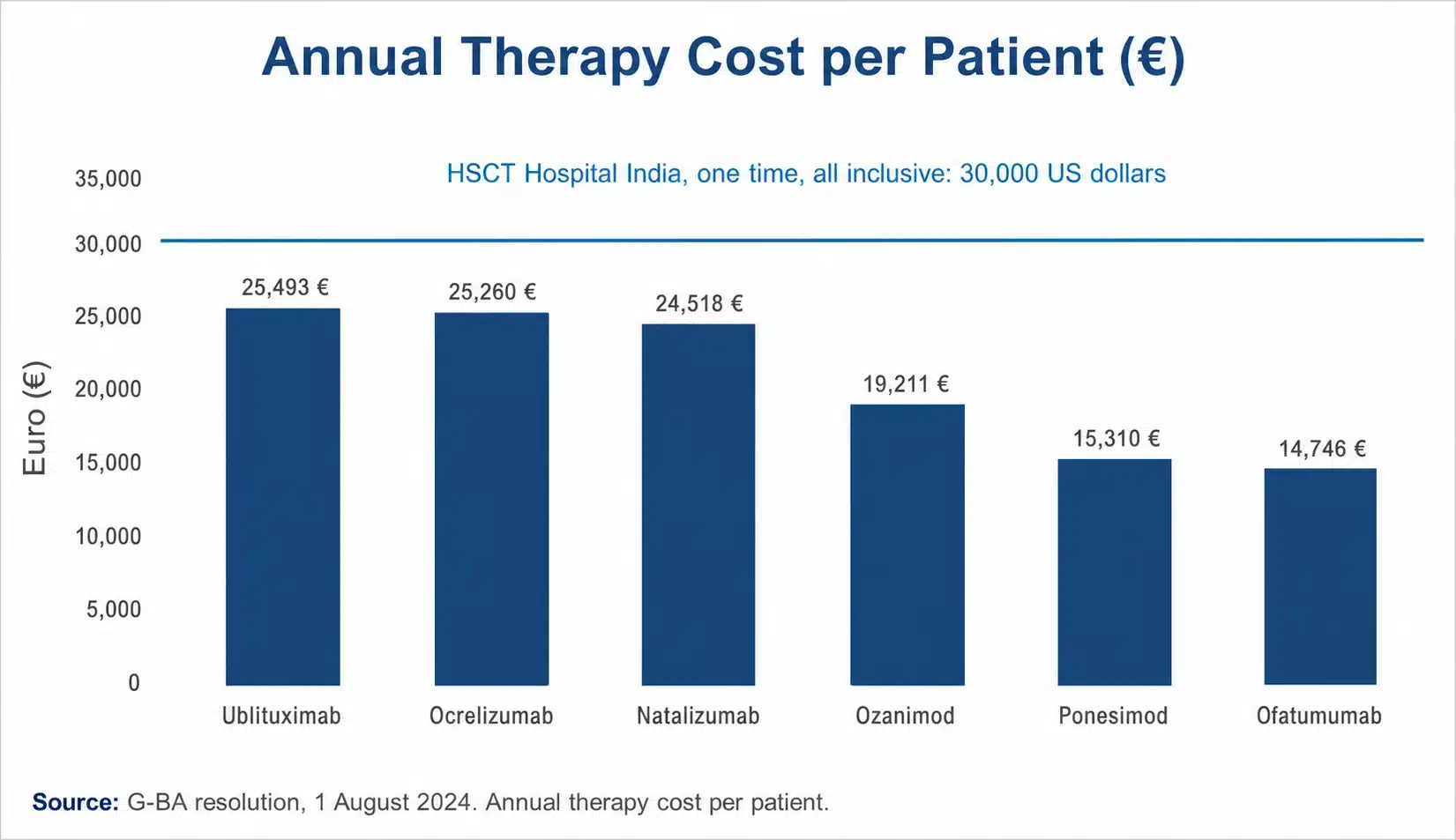
German drug costs are published by the regulator, to the cent. Every benefit assessment resolution from the Gemeinsamer Bundesausschuss carries an annual therapy cost per patient. These figures are drawn from the ublituximab resolution, for patients with active disease despite earlier treatment (G-BA resolution, 1 August 2024).
| Drug | Annual therapy cost per patient, euros |
|---|---|
| Ublituximab | 25,493.07 |
| Ocrelizumab | 25,259.70 |
| Natalizumab | 24,518.26 |
| Ozanimod | 19,211.37 |
| Ponesimod | 15,309.62 |
| Ofatumumab | 14,745.92 |
Each of those figures recurs annually, for as long as the drug continues. A transplant is given once, and no maintenance drug follows it. The treatment package page itemises the 30,000 US dollars, and the country by country cost comparison places it beside other destinations.
How the treatment runs at HSCT Hospital India
Treatment finishes inside a single 30 day admission, at one price agreed before anyone books a flight. Autologous transplantation for MS was first performed in India in 2016, at HSCT Hospital India. The facility is accredited by JCI-USA, and holds NABH and NABL accreditation beside that international standard. More than 1,500 international patients from Europe, America and Australia have been treated there since, and a world class team of HSCT specialists reads every file before anyone is accepted. Further background sits on the what HSCT is page and in the multiple sclerosis treatment guide.
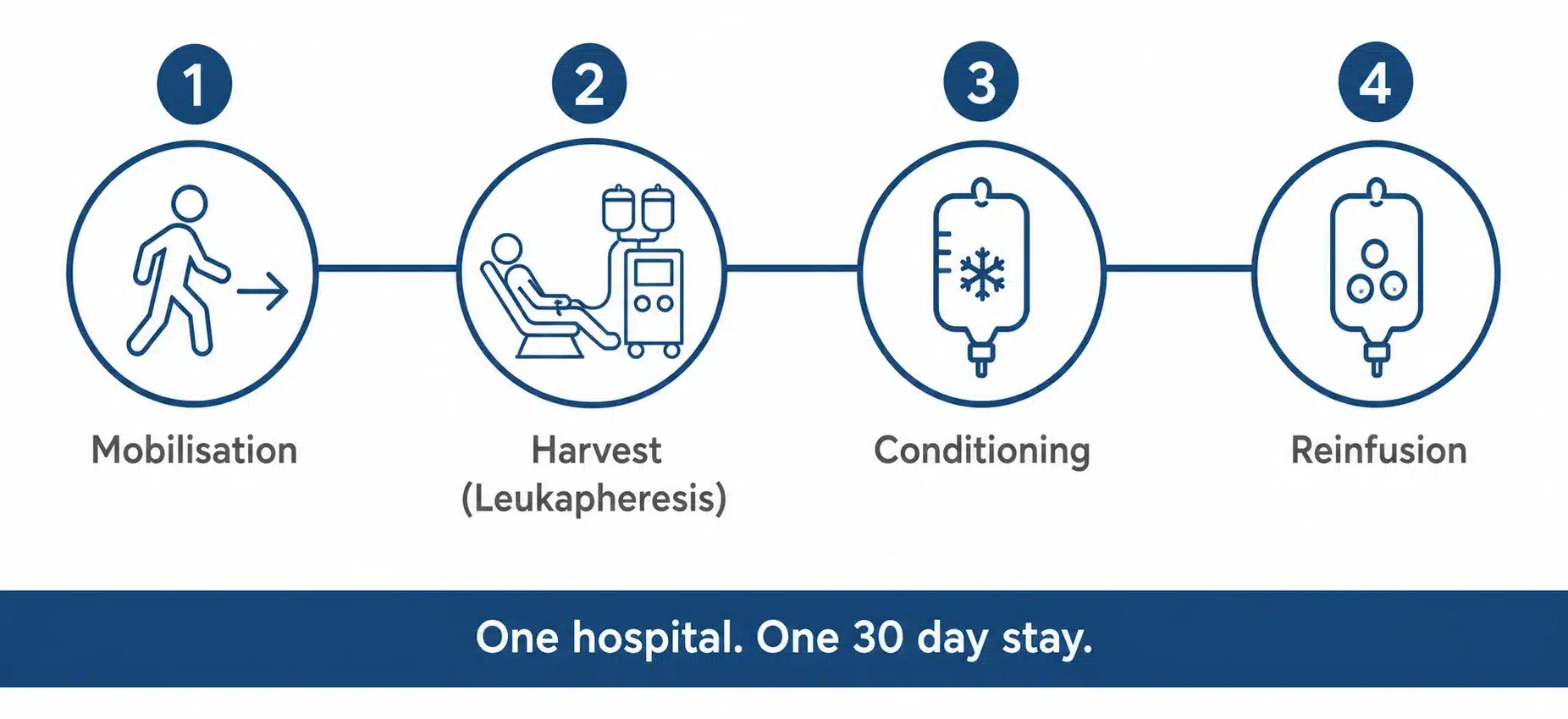
One admission holds all four stages.
Mobilisation. Injected growth factor draws CD34-positive stem cells from the marrow into circulating blood, ready for collection. CD34-positive names the surface marker used to identify and count them. Some soreness across the pelvis during these days is normal and passes.
Harvest (Leukapheresis). A cell separator draws the blood, retains the stem cell fraction and returns the remainder to the patient. Nothing is cut and nothing is implanted, and the collected cells go into frozen storage.
Conditioning. Four days of chemotherapy clear the misdirected immune cells, given at the non-myeloablative dose level. Non-myeloablative means the dose is set to reset the immune system rather than to empty the bone marrow.
Reinfusion. The stored cells are thawed and returned through a line, and across the fortnight that follows the marrow assembles a fresh immune system.
Accommodation is a deluxe private room held for the whole month, plus a second bed so the accompanying relative sleeps in the same room. Filtration runs at three HEPA stages before any air enters, and intensive care occupies the floor below. Residency rather than visiting is a clinical choice: it removes the through traffic of a shared ward during the weeks of lowest immune defence. Ward rounds happen in English. The how it works page walks through the same sequence day by day, and the hospital page shows the unit itself.
The German handover is prepared before anyone flies. Each patient departs holding a full clinical record in English for their neurologist and haematologist at home: conditioning agents and doses, cell counts harvested and returned, the daily charts through the admission, any complication and its management, discharge medication, the immunisation schedule and the review dates. The specialists who carried out the transplant stay reachable by the doctors in Germany, and one named HSCT case manager remains the family’s point of contact.
The first year has a set rhythm. Blood tests at fixed intervals, a scan somewhere between six and twelve months, a complete course of childhood immunisations repeated because conditioning erases the earlier protection, and physiotherapy to improve strength and walking. Bringing that plan and the discharge record to a German neurologist before departure is what makes the handover run smoothly, and where a neurologist would rather not supervise treatment given abroad, a haematologist can hold the schedule instead, most of the first year being blood work.
Jayne, in her own words
Jayne travelled from England for multiple sclerosis after being told the procedure was unavailable at home. She recorded this five weeks after arriving, with her mother in law beside her as her attendant.
“I’ve blossomed. I’ve changed. I’ve had such amazing results in this.”
“I’ve got my voice back, which is my speech… My legs are working better. Everything’s stronger. I feel stronger, and this is only just the start of it.”
“I’ve achieved so much in the last five days. Every day has got better and better.”
“I urge you to do it, anybody with MS. It was worth it. It changes your life totally.”
Jayne, United Kingdom, multiple sclerosis. Recorded with her consent. Read her full account, or browse other recovery stories.
Want the whole picture in writing? The information pack sets out the protocol, the daily schedule across the 30 days, what the price covers and how the German aftercare handover is arranged. Have the full treatment details sent over.
What the published evidence shows
Evidence for autologous transplantation in relapsing remitting MS is now substantial, randomised in part, and consistent from country to country. Germany has added its own dataset to it.
MIST supplies the randomised evidence. It took 110 patients with relapsing remitting MS at four centres and allocated 55 to non-myeloablative transplantation with cyclophosphamide and antithymocyte globulin, 55 to continuing drug therapy. Disease progression appeared in 3 patients on the transplant side against 34 on the drug side, a hazard ratio of 0.07 (Burt and colleagues, JAMA, 2019).
Pooled figures come from a meta-analysis of 15 studies and 764 transplanted patients. Freedom from measurable disease activity, reported as NEDA, stood at 83 per cent at 2 years and 67 per cent at 5 years (Sormani and colleagues, Neurology, 2017). Benefit was greatest among relapsing remitting patients treated before disability had built up.
German results sit at the upper end of that. Across 109 people treated at Hamburg and Heidelberg between 2007 and 2025, at a median follow up of 20.1 months, 82.8 per cent held NEDA. The relapsing remitting estimate was 91 per cent, and for patients matching the core consensus criteria it reached 94.4 per cent, compared with 73.7 per cent for those treated outside them (Fischbach and colleagues, Journal of Neurology, Neurosurgery and Psychiatry, 2026).
National series bring scale. The United Kingdom reported 364 patients treated between 2002 and 2023, with progression free survival of 83.5 per cent at 2 years and 62.4 per cent at 5 years, at a median EDSS of 6.0 (Kazmi and colleagues, British Journal of Haematology, 2025).
Follow up now stretches well past a decade. A cohort of 281 patients transplanted between 1995 and 2006 was tracked for a median of 6.6 years at 25 centres in 13 countries (Muraro and colleagues, JAMA Neurology, 2017), and a European registry survey followed 579 patients transplanted for autoimmune disease over a median of 89 months (Kirgizov and colleagues, Bone Marrow Transplantation, 2026). Measured against the drugs German patients are prescribed, transplantation produced lower relapse rates than alemtuzumab or ocrelizumab across 621 patients (Muraro and colleagues, Annals of Neurology, 2025).
Progressive disease has its own dataset. Among people with active secondary progressive MS, 79 transplanted patients were set against 1,975 on other drugs, and confirmed disability progression took significantly longer to arrive after transplantation, with 61.7 per cent free of it at 5 years (Boffa and colleagues, Neurology, 2023).
The safety picture, and what controls it
Most of the risk falls in the days when blood counts are at their lowest, and the ward routine is built around that period. From the end of conditioning until the returned cells have rebuilt working immunity, about a fortnight, immune defence is low, so filtered air, a room of one’s own, daily blood counts and critical care within reach carry the patient across those days. The period passes without incident for the large majority.
Treatment related mortality in modern series reads as follows. The pooled estimate across 764 patients was 2.1 per cent (Sormani and colleagues, Neurology, 2017). Across 364 United Kingdom patients it was 1.4 per cent, confined to patients who came to transplant with advanced disability (Kazmi and colleagues, British Journal of Haematology, 2025). The German series of 109 patients recorded 0.9 per cent, a single death (Fischbach and colleagues, Journal of Neurology, Neurosurgery and Psychiatry, 2026).
Those figures have fallen over time, and the meta-analysis names the reasons: a later era, a higher share of relapsing remitting patients, and less disability at the point of treatment (Sormani and colleagues, Neurology, 2017). Choosing patients earlier, while organ function is stronger, lowers the number, and an eligibility assessment looks for exactly that before a date is offered.
Chemotherapy intensity has been tested head to head. Across 1,114 MS patients on the European registry the two commonly used regimens produced no significant difference in outcome, with mortality inside 100 days at 2.0 per cent for the higher intensity regimen against 1.0 per cent for cyclophosphamide and antithymocyte globulin (Greco and colleagues, Bone Marrow Transplantation, 2025). HSCT Hospital India uses the non-myeloablative protocol pioneered by Professor Richard K. Burt at Northwestern University, which is the lower intensity option and the dose level behind the MIST results.
Longer term effects are discussed before travelling rather than afterwards. Hair goes and grows back. Fatigue is heavy for the first weeks and lifts over the months that follow. Fertility can be affected, so preservation is organised ahead of a fixed admission date, which is why the German recommendation now addresses it directly (KKNMS recommendation, version 1.1, February 2025). Endocrine complications reached a cumulative 16.2 per cent at 10 years in a European registry survey of 579 patients transplanted for autoimmune disease, which is why hormone and thyroid function stay on the review list for years (Kirgizov and colleagues, Bone Marrow Transplantation, 2026).
Where the professional bodies stand
European transplant medicine treats this as an established indication. The EBMT Autoimmune Diseases Working Party guidelines report growing evidence for use in highly active relapsing remitting MS that has failed drug therapy, delivered at accredited transplant centres (EBMT Autoimmune Diseases Working Party guidelines, 2020). The joint ECTRIMS and EBMT consensus records transplantation after a high efficacy drug has failed in aggressive relapsing remitting MS as a generally accepted indication (Muraro and colleagues, Nature Reviews Neurology, 2025). A later EBMT review calls it a standard of care in relapsing remitting MS that is refractory to disease modifying treatment, refractory meaning the disease keeps breaking through despite the drug (Boffa and colleagues, Multiple Sclerosis Journal, 2025).
Common questions about HSCT for MS in Germany
Is HSCT for MS in Germany available?
Yes. A handful of university centres perform it outside clinical trials, with Universitätsklinikum Hamburg-Eppendorf and Universitätsklinikum Heidelberg running the two largest programmes (Fischbach and colleagues, 2026). Volume remains low: 57 of the 1,721 MS transplants on the European registry to 2021 were German (Heesen and colleagues, 2022).
Does statutory health insurance pay for it?
Yes, through an individual application. German statutory insurance does reimburse autologous transplantation for MS, on an application made for the particular patient (Heesen and colleagues, 2022). Preparing it alongside the stem cell board assessment is the standard route, and involving a neurologist early makes it run more smoothly.
What do the German criteria require?
Core criteria are age 18 to 45, EDSS 3.0 to 6.0, disease duration of 10 years or less, relapsing remitting or recently progressing secondary progressive disease, relapse and MRI activity inside 12 months, and an earlier failure of a high efficacy drug. Extended criteria stretch to age 55, EDSS 6.5 and 15 years. The recommendation describes these as a corridor to be checked individually rather than a list that must all be met (KKNMS recommendation, version 1.1, February 2025).
Is there a German trial to join?
Not at present. COAST, run in Hamburg and Mannheim, closed in February 2022 with one participant enrolled after patients declined the drug control arm (COAST trial record, NCT04971005, ClinicalTrials.gov). Germany is not among the sites of RAM-MS, BEAT-MS or StarMS, so treatment today runs through the individual application at home or an assessment abroad.
What happens to a German patient over 45?
Ages 46 to 55 fall inside the German extended criteria (KKNMS recommendation, version 1.1, February 2025). At HSCT Hospital India age is assessed up to about 60, with the decision resting on current inflammatory activity and organ function.
Can a patient with progressive MS be assessed?
Yes. HSCT Hospital India assesses relapsing remitting, secondary progressive and primary progressive disease alike, with the decision resting on whether inflammatory activity is still visible on a recent MRI rather than on the diagnostic label. The German recommendation covers secondary progressive disease with recent progression, and its February 2025 version brought primary progressive MS into the extended criteria where a licensed high efficacy drug has failed (KKNMS recommendation, version 1.1, February 2025).
What does HSCT for MS cost in Germany?
German health economic analysis puts the one off cost at about 50,000 euros, and judges it cost effective set against years of continuing drug therapy and later care costs (Heesen and colleagues, 2022). Because German hospitals are funded through case based payments, a figure for a particular centre comes from a written cost estimate.
What does treatment at HSCT Hospital India cost?
One all inclusive price of 30,000 US dollars covers the 30 day admission for both the patient and a companion, housed together in a private deluxe room served by three stages of HEPA filtered air, and nothing is invoiced afterwards. The six high efficacy drugs listed above run from 14,745.92 to 25,493.07 euros per patient annually in Germany, repeated every year (G-BA resolution, 1 August 2024).
How safe is HSCT in modern series?
Treatment related mortality was 2.1 per cent pooled across 764 patients, 1.4 per cent across 364 United Kingdom patients and 0.9 per cent across 109 German patients (Sormani and colleagues, 2017; Kazmi and colleagues, 2025; Fischbach and colleagues, 2026). The figure drops when patients come to treatment earlier, with less disability and stronger organ function, which is what the eligibility assessment checks first.
How quickly can a German patient be assessed?
An eligibility opinion comes back within days of the scan, the disease summary and the drug history arriving. Where the answer is yes, a date usually follows in weeks, and there is no long waiting list.
What decides it for families travelling from Germany
Most enquiries from Germany ask the same four questions.
The price comes first. One all inclusive figure of 30,000 US dollars covers the patient and a companion for the full month, agreed before any booking, with nothing invoiced afterwards.
Age is assessed on the disease, not the birthday. Assessment continues to about 60 and rests on a recent scan and organ function tests, so a decade of working through drugs does not close the door.
Timing is the third. Dates are usually available within weeks, and that counts while the disease keeps moving.
Last, a decision arrives with its reasoning attached. Two specialists read the file together and reply either way, free of charge, so a family knows the position before spending anything.
Flights from Frankfurt, Munich, Berlin and Düsseldorf reach New Delhi overnight. Medical travel to India requires an e-visa, applied for online, and the hospital issues the supporting invitation letter. Arrivals are met at the airport. German travel insurance policies exclude planned treatment abroad, so cover for the admission itself is arranged separately.
For comparison with neighbouring countries, there are companion pages on HSCT for MS in the Netherlands and HSCT for MS in the UK, and the EDSS calculator gives a disability score to include with an enquiry.
Want to know if you are eligible? A recent scan, the disease history and the drugs tried so far are all that is needed, and the reply explains the reasoning either way, at no cost. Put the case in front of the haematologists.
Sources
- DMSG. Was ist Multiple Sklerose? dmsg.de
- Deutsches MS-Register. Berichtsband 2024. msregister.de
- Heesen C, and colleagues. Stammzelltransplantation bei Multipler Sklerose, wo stehen wir? 2022. europepmc.org
- KKNMS. Empfehlungen zur autologen Stammzelltransplantation bei Multipler Sklerose, version 1.1, Stand 28 February 2025. kompetenznetz-multiplesklerose.de
- Deutsches Ärzteblatt. Kompetenznetz stellt Empfehlungen für autologe Stammzelltransplantation vor, 2022. aerzteblatt.de
- G-BA. Beschluss Ublituximab, Jahrestherapiekosten, 1 August 2024. g-ba.de
- G-BA. Erprobungs-Richtlinie Stammzelltransplantation bei Multiplem Myelom. g-ba.de
- COAST, NCT04971005, ClinicalTrials.gov. clinicaltrials.gov
- RAM-MS, NCT03477500, ClinicalTrials.gov. clinicaltrials.gov
- BEAT-MS, NCT04047628, ClinicalTrials.gov. clinicaltrials.gov
- Fischbach F, and colleagues. AHSCT in multiple sclerosis, German real world outcomes and predictors, JNNP, 2026, PMID 42091228. europepmc.org
- Burt RK, and colleagues. Nonmyeloablative HSCT versus continued disease modifying therapy (MIST), JAMA, 2019, PMID 30644983. europepmc.org
- Sormani MP, and colleagues. AHSCT in multiple sclerosis, a meta-analysis, Neurology, 2017, PMID 28455383. europepmc.org
- Muraro PA, and colleagues. Long term outcomes after AHSCT for multiple sclerosis, JAMA Neurology, 2017, PMID 28241268. europepmc.org
- Kazmi M, and colleagues. AHSCT for multiple sclerosis in the UK, a 20 year analysis, British Journal of Haematology, 2025, PMID 40500866. europepmc.org
- Boffa G, and colleagues. HSCT in active secondary progressive multiple sclerosis, Neurology, 2023, PMID 36543569. europepmc.org
- Muraro PA, and colleagues. AHSCT versus alemtuzumab and ocrelizumab in relapsing multiple sclerosis, Annals of Neurology, 2025, PMID 40251896. europepmc.org
- Greco R, and colleagues. BEAM/ATG or cyclophosphamide/ATG conditioning in AHSCT for multiple sclerosis, Bone Marrow Transplantation, 2025, PMID 41023426. europepmc.org
- Sharrack B, and colleagues. Updated EBMT Autoimmune Diseases Working Party guidelines, Bone Marrow Transplantation, 2020, PMID 31558790. europepmc.org
- Muraro PA, and colleagues. AHSCT for multiple sclerosis and NMOSD, recommendations from ECTRIMS and the EBMT, Nature Reviews Neurology, 2025, PMID 39814869. europepmc.org
- Boffa G, and colleagues. Aggressive MS and autologous HSCT, EBMT review, Multiple Sclerosis Journal, 2025, PMID 40620225. europepmc.org
- Kirgizov K, and colleagues. Late complications after autologous HSCT for autoimmune diseases, Bone Marrow Transplantation, 2026, PMID 42509429. europepmc.org
- Brittain G, and colleagues. StarMS trial protocol, BMJ Open, 2024, PMID 38316583. europepmc.org