HSCT for MS Reviews: What Patients Say About HSCT in India
Medically reviewed by the board of haematologists at HSCT Hospital India, whose transplant physicians hold DM Clinical Haematology qualifications and fellowship training in stem cell transplantation. The programme runs at a JCI-USA, NABH and NABL accredited hospital that has treated more than 1500 patients.
Last reviewed: 2 November 2026.
HSCT Hospital India has treated more than 1,500 patients with multiple sclerosis from over 30 countries. Many of them recorded a video review before flying home, and a few wrote to the hospital instead. In those reviews you hear patients and their families describe the results, the care and the price in their own words. Each patient has a full story page with the video or the written review.
HSCT, short for autologous haematopoietic stem cell transplantation, rebuilds your immune system. It uses chemotherapy and your own stem cells. At HSCT Hospital India your whole treatment is completed in one stay of up to 30 days, and what HSCT involves is set out stage by stage.
What results have other patients had after HSCT at HSCT Hospital India?
Patients describe the changes they noticed in practical terms. Some changes started within days of reinfusion, the day your own stem cells are returned to you. Other changes built up over the following weeks and months, as the new immune system recovered.
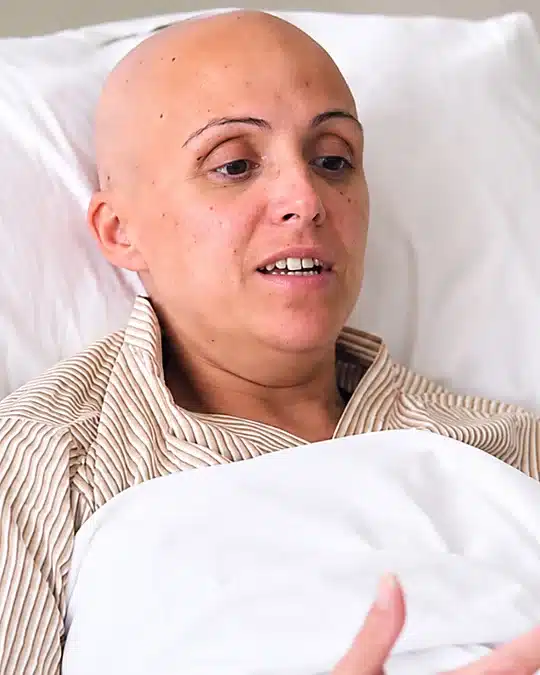
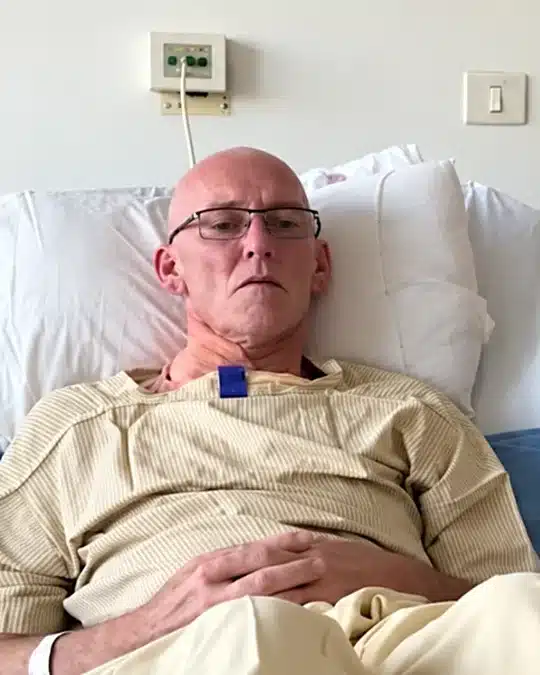
Margaret from Scotland had not moved her legs for years before treatment. By the end of her stay, Margaret was writing her name and some sentences, her companion says. Gary from the United Kingdom came with primary progressive MS at an EDSS of 6.5. That score comes from the Expanded Disability Status Scale, which rates MS from 0 to 10. A score of 6.5 means needing a stick or crutch on each side to walk about 20 metres. After three weeks of treatment, Gary had feeling back in his foot.

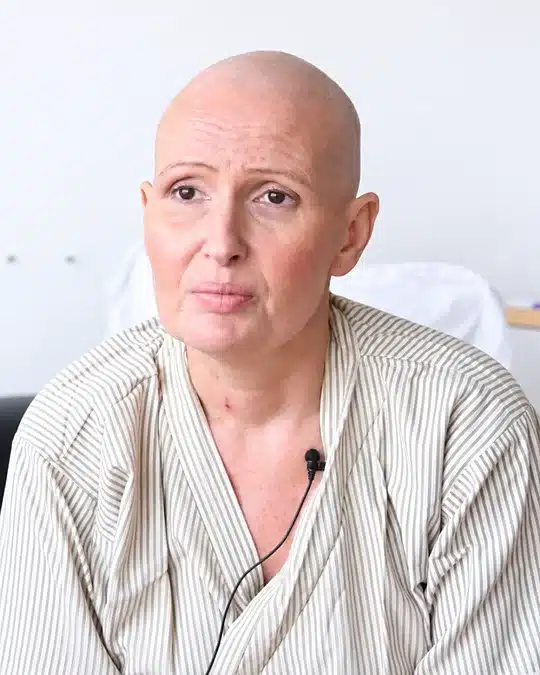
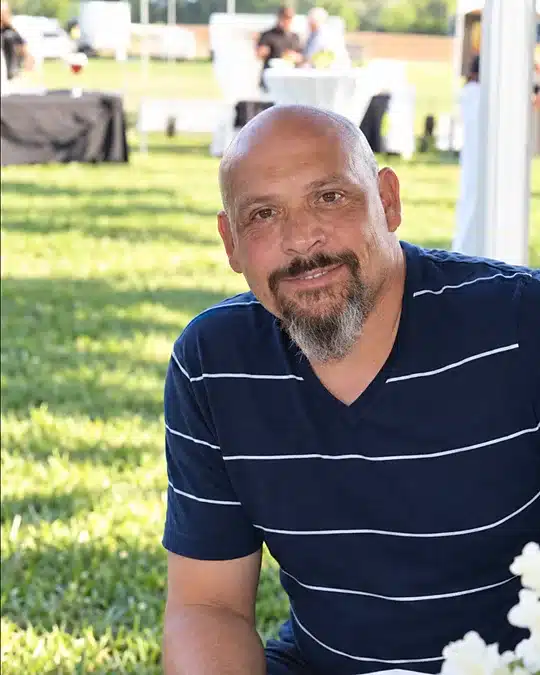
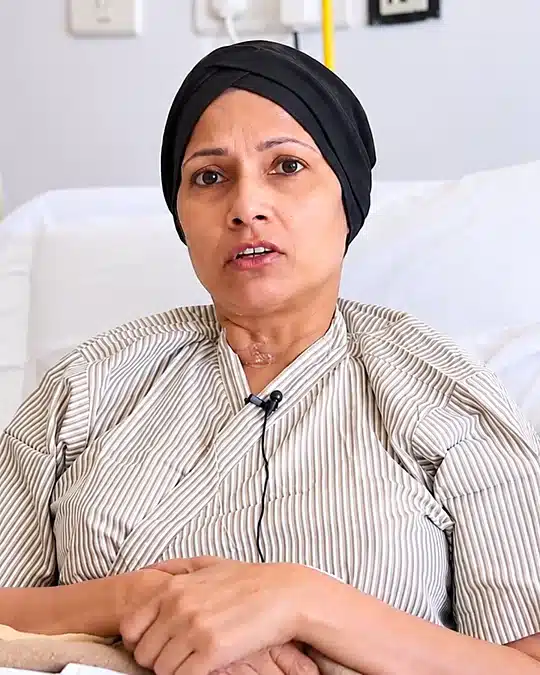
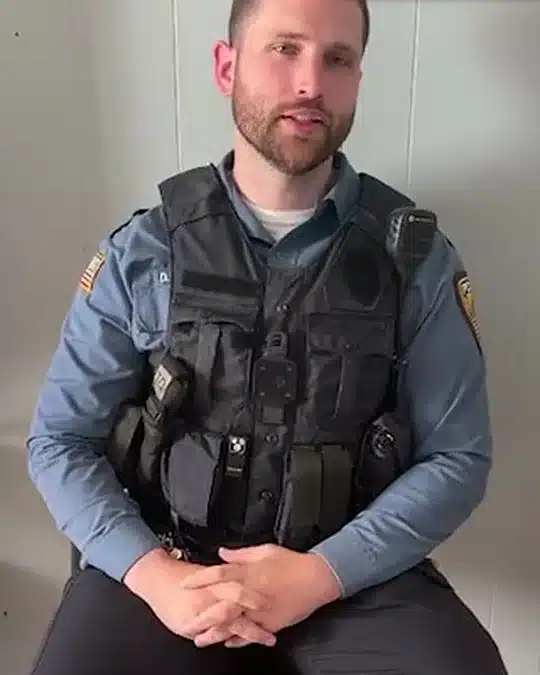
Patients treated for other autoimmune conditions describe changes in the same concrete terms. Dylan is a police officer from New Jersey with small fibre neuropathy. He was back at work five months after his transplant, with 95 per cent of his symptoms gone. Evert from Canada came with myasthenia gravis, a disease that weakens the muscles, and he now breathes normally without oxygen. Dean from the United Kingdom was treated for stiff person syndrome. He arrived in a wheelchair and now walks without support.
Results differ from one patient to the next. They depend on the type of disease, how active it still is and how much damage has built up. Because of this, your HSCT specialists at HSCT Hospital India review your records first. They check your MRI scans and current level of function against the HSCT eligibility criteria before HSCT is offered to you.
Your free expert opinion starts with your diagnosis, a recent MRI report and the list of medicines you have already tried. These records go through the enquiry form to the HSCT specialists in New Delhi. They review your case with no cost and no obligation, and an HSCT case manager writes back to you personally.
What do patients say about the doctors, nurses and care I would have at HSCT Hospital India?
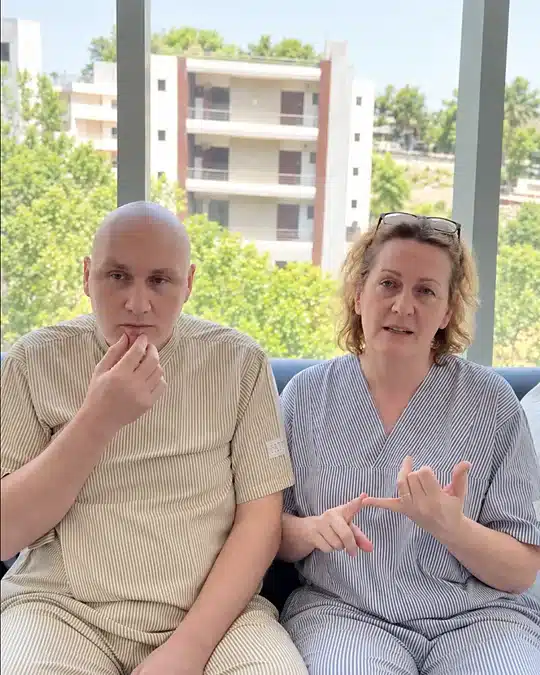
Several patients and families say that nothing was left unexplained. You stay in hospital for the whole programme, in a deluxe private room fitted with triple level HEPA air filtration. During that stay, your HSCT specialists see you on the ward every day, and nurses are there around the clock. Mandy, who travelled from the United Kingdom with her husband Dean, described how the doctors explained the treatment.
“They explain every tablet, every part of the procedure. If you’ve got a side effect they’re on it.”
Mandy, wife and attendant of Dean. Watch Dean’s story
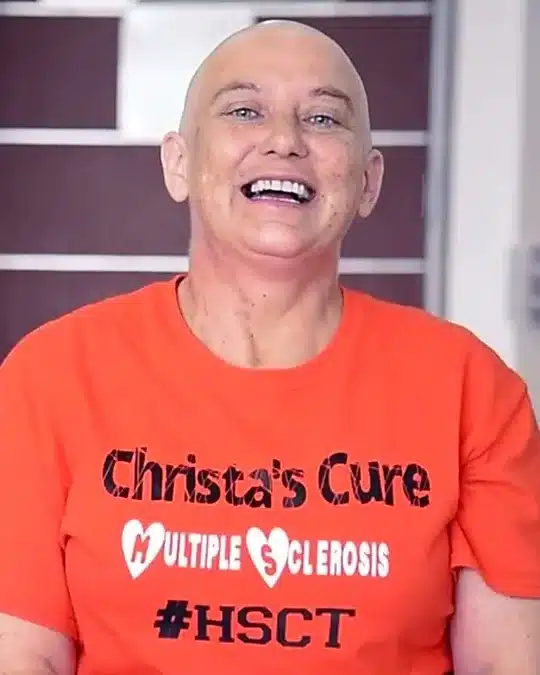
That attention is most visible in the second week after conditioning, the chemotherapy that clears your old immune cells. During this stretch, called the aplastic phase, your blood counts are at their lowest. This is when an infection is most likely, and a fever, one of the side effects of HSCT, is treated at once. Christa from Ohio had fevers during her treatment, and she says the nurses knew exactly what to do. You also have neuro physiotherapy every day, exercise guided by a physiotherapist to rebuild your strength. Kathryn from the United States had it every day of her stay, and it is part of the package price.
Why would I travel to India for HSCT instead of a hospital closer to home?
Some of these patients first looked for HSCT closer to home before choosing HSCT for MS in India. They give two reasons for travelling in their reviews. One reason is the price, set out side by side with other countries in HSCT cost by country. The other reason is entry criteria at home that ruled them out. HSCT Hospital India has no long waiting list, and your treatment begins once pre-testing confirms you are suitable.
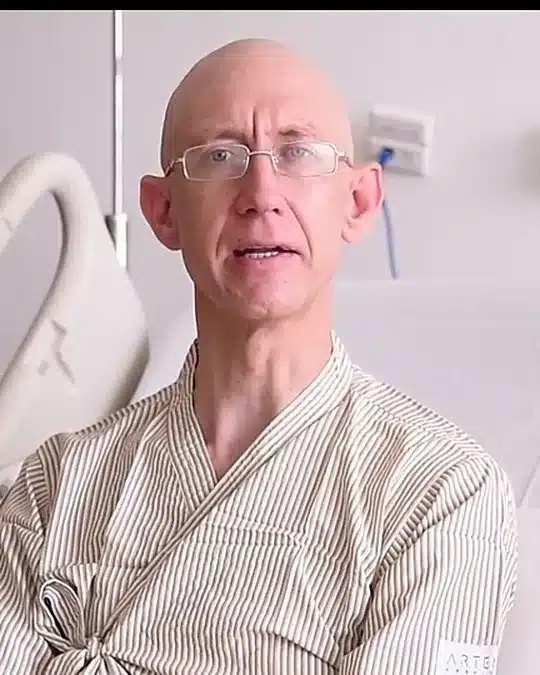
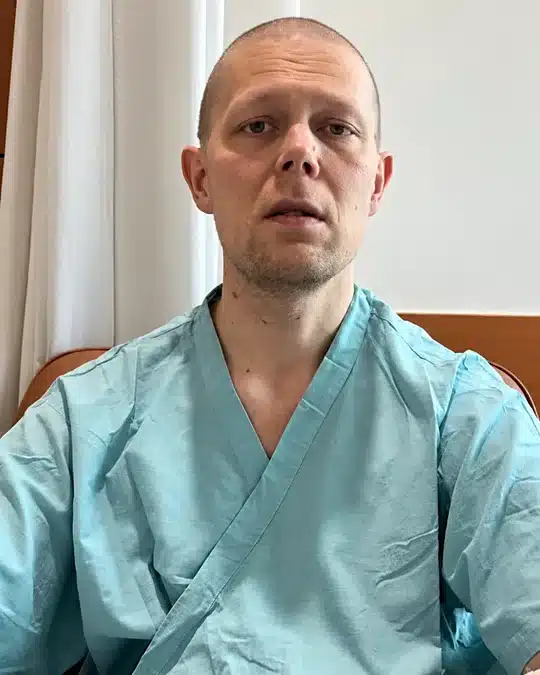
David Ellis from California looked at programmes closer to home. He chose New Delhi because he judged it better and cheaper. Su from the United Kingdom did not meet the criteria for comparable treatment in England, and private treatment there cost too much. Before travelling, Su had every question to HSCT Hospital India answered within 24 hours. Jukka from Finland had heard that India was not a good place for treatment. His wife found the hospital, and during his stay he called it one of the best places to be.
What does HSCT at HSCT Hospital India cost, and what do I get for the price?
HSCT at HSCT Hospital India costs one all inclusive price of US $30,000 for up to 30 days in hospital. The price covers all your tests including MRI, consultations and the complete treatment. It covers doctors’ fees, medicines, consumables and neuro physiotherapy. It also covers your deluxe private room, food and laundry for you and your attendant, and airport pick-up and drop-back.
Victor and Kathryn both mention parts of the package in their reviews. Victor from the United Kingdom praised the nursing staff. He noted that the ward was cleaned two to three times a day. Kathryn credited the daily physiotherapy with the progress she made. Your flights to New Delhi and the visa fee are planned separately. Every item the price covers is listed under the HSCT treatment package.
HSCT Hospital India emails you its information brochure free of charge. The brochure sets out your treatment plan, the 30 day schedule and everything the one price includes.
Can a family member come with me to India, and what do patients say about it?
Yes. One family member or friend travels with you as your attendant and stays in your private room for the whole programme. Your attendant’s food and laundry are included in the same price. These attendants were a mother, a wife, a partner, a mother in law, a cousin and a close friend. Several of these attendants speak on the videos. David Ellis travelled from California with his mother Nancy.
“I think the program is great and the results have been really positive.”
David Ellis, California, United States, who travelled with his mother Nancy. Watch David’s story
Questions about your medical visa, timing and what your attendant should pack are often answered fastest by phone. An HSCT case manager calls you back at a time that suits you, free of charge.
Where have other HSCT patients travelled from, and is there a guide for my country?
The patients in these reviews travelled from the United States, Canada, the United Kingdom, Norway, Finland and Suriname. In all, HSCT Hospital India has treated patients from more than 30 countries. Travel and cost details are set out for you if you live in the United States, the United Kingdom, Canada, Australia, Ireland or the Netherlands.
Which HSCT patient reviews can I read and watch in full?
The result in each row is what that patient, or the person with them, said on the video or wrote to the hospital.
| Patient | Condition | What the review reports |
|---|---|---|
| Margaret, Scotland | Multiple sclerosis | She moved her legs seven hours after reinfusion. |
| Gary, United Kingdom | Primary progressive MS, EDSS 6.5 on arrival | He had feeling back in his foot after three weeks. |
| Hege, Norway | Multiple sclerosis since 2007 | She arrived in a wheelchair and was walking with a stick or crutch as treatment ended. |
| Jayne, England | Relapsing remitting MS | Her voice came back and her legs grew stronger. |
| David Karczewski, United States | Multiple sclerosis | Eleven months after HSCT he had stopped using a walker. |
| Rohini, Suriname | Relapsing remitting MS | She says she had her life back within two weeks of treatment. |
| David Ellis, United States | Primary progressive MS since 2011 | By the end of his stay he could lift his left leg without helping it. |
| Justin, United States | Multiple sclerosis | He says the physical therapist helped him quite a bit and expects to be stronger at home than when he arrived. |
| Jukka, Finland | Primary progressive MS | He completed the full 30 day programme and called the hospital one of the best places to be. |
| Christa, United States | Relapsing remitting MS | She says the nurses acted at once when she had fevers. |
| Kathryn, United States | Multiple sclerosis for 30 years | Her friend says she can feel things she could not feel before. |
| Victor, United Kingdom | Multiple sclerosis | He left New Delhi expecting to get his life back. |
| Dean, United Kingdom | Stiff person syndrome | He arrived in a wheelchair and now walks without support and climbs stairs. |
| Dylan, United States | Small fibre neuropathy | About 95 per cent of his symptoms had gone five months after his transplant, and he is back at work. |
| Evert, Canada | Myasthenia gravis | His breathing returned to normal and he no longer needs oxygen. |
More patients, including Gudrun and Linda, share their experience among the HSCT India patient testimonials.
Questions patients ask about HSCT for MS reviews
Are the HSCT reviews on HSCT Hospital India’s website from real patients?
Yes. Every review comes from a patient treated at HSCT Hospital India, and most were recorded on video at the hospital in the patient’s own words. Each patient’s story page carries the full review.
How long would I stay in hospital for HSCT in India?
You stay up to 30 days at HSCT Hospital India, as an in-patient for the whole programme. The stay covers pre-testing and the four stages of treatment. That stay starts and ends at the airport, because you are admitted straight from it and discharged straight back to it. After discharge, your recovery continues at home over the following months, as set out in HSCT recovery time.
How do I find out whether HSCT is suitable for me?
Your diagnosis, a recent MRI report and a list of the medicines you have used go to HSCT Hospital India through the enquiry form. The HSCT specialists in New Delhi review these records free of charge, with no obligation. An HSCT case manager then answers you by email or on WhatsApp.
Each of these patients started with a review of their records by the HSCT specialists. The same review is open to you, free of charge.
Why Choose HSCT Hospital India for Life Changing Multiple Sclerosis Treatment

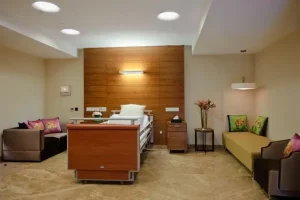 Complete 30 day HSCT done in hospital. Private deluxe rooms are very well served for patient and attendant comfort and equipped with HEPA Filter with Triple Level Air Filtration. No outside hospital stay avoids risk of infection during the aplastic phase, 24 x 7 nursing care and best medical attention. Advanced HSCT protocol used does not require any further chemo or treatment after leaving the hospital. Click here to get complete details
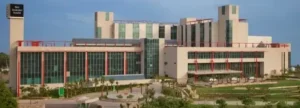 International and Globally Renowned Accreditations. HSCT Hospital India is accredited by the Joint Commission International, USA, the National Accreditation Board for Hospitals and Healthcare Providers (NABH), and the National Accreditation Board for Laboratories (NABL) for processes and high quality patient care. Click here to know more

Real Patients, Real Stories
A Finland Patient’s Inspiring Recovery from Multiple Sclerosis after HSCT Treatment at JCI-USA Accredited World Class Hospital in India
Jukka from Finland, who has primary progressive MS, completed the full 30 day HSCT programme at HSCT Hospital India.

American Cop Flies to India for HSCT: 95% Symptom free, 5 Months after HSCT Treatment at JCI-USA Accredited World Class Hospital in India
Dylan, a US police officer with small fibre neuropathy, had about 95 per cent of his symptoms gone five months after HSCT.
HSCT for MS Review: Sergel from the Netherlands on HSCT in India
Sergel* is a 38 year old man from the Netherlands who was diagnosed with relapsing remitting multiple sclerosis in Holland. He flew to New Delhi for HSCT at HSCT Hospital India and recorded this video near the end of his stay. In it he says the treatment went well, and he thanks the doctor who