HSCT in Russia for MS: Moscow Cost, Protocol and How HSCT Hospital India Compares
Medically reviewed and approved by the board of haematologists at HSCT Hospital India, whose transplant physicians hold DM Clinical Haematology qualifications and fellowship training in stem cell transplantation. The programme runs at a JCI-USA, NABH and NABL accredited hospital that has treated more than 1500 patients.
HSCT in Russia for multiple sclerosis is offered at the Pirogov National Medical and Surgical Center in Moscow, a federal hospital complex. Its HSCT programme has treated MS patients since 2006 and accepts patients from abroad. HSCT Hospital India in New Delhi treats MS with HSCT for US $30,000 all-inclusive, in one in-patient stay of up to 30 days for you and one attendant.
HSCT stands for haematopoietic stem cell transplantation. Your own blood forming stem cells are collected first. Chemotherapy then removes the immune cells that damage the myelin around your nerves, and the stored stem cells are returned to you. From these cells your body makes new blood and immune cells.
Moscow and New Delhi both offer this treatment to patients from abroad. The chemotherapy drugs are not the same in the two cities. Nor are the length of the stay, the price, the visa or where your family member sleeps, and each point is answered below for both.
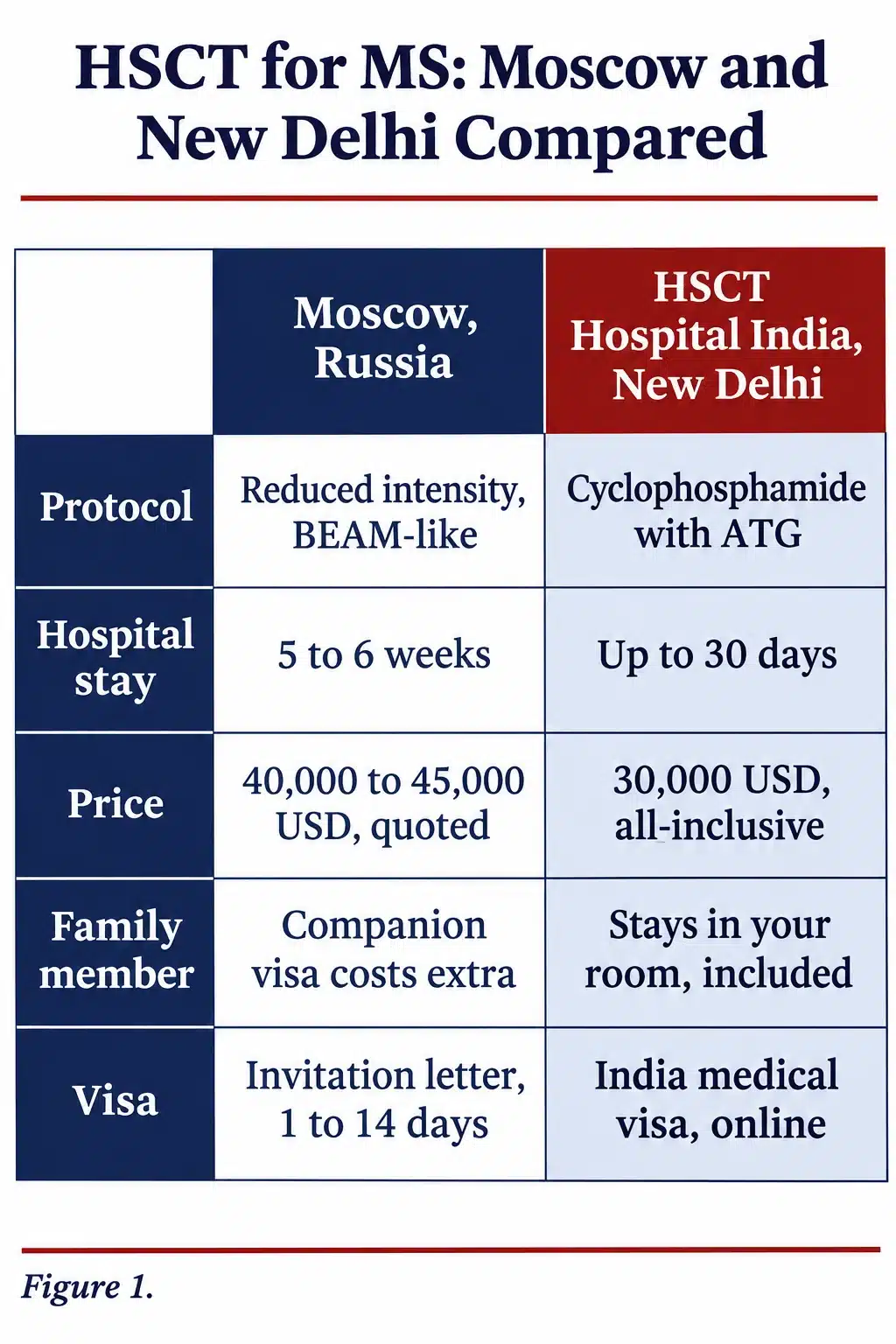
How does HSCT in Moscow compare with HSCT Hospital India at a glance?
The main differences between the two programmes are in the protocol, the price and what the price covers. Each answer uses what the programme states about itself.
| Question | Moscow, Pirogov Center | HSCT Hospital India, New Delhi |
|---|---|---|
| Which chemotherapy is used? | Moscow uses a reduced intensity regimen, which its doctors compare to BEAM. | Every MS patient receives cyclophosphamide with ATG. |
| Has the protocol been tested in a randomised trial? | The programme publishes results from its own patients treated since 2006. | Yes, it is the protocol tested in the MIST trial of 110 patients, published in JAMA in 2019. |
| How long is the stay? | Moscow is typically quoted at five to six weeks in hospital. | HSCT Hospital India plans one admission of up to 30 days. |
| What does it cost? | The programme is typically quoted at 40,000 to 45,000 US dollars. | HSCT Hospital India charges US $30,000 all-inclusive. |
| Is the person travelling with me included? | The visa invitation for a companion is added to the contract total. | Your attendant stays in your room, and food and laundry for both of you are included. |
| Which visa do I need? | A Russian visa is issued against an invitation letter that takes 1 to 14 days. | An India medical visa is applied for online, with help from your HSCT Case Manager. |
| Is the hospital accredited? | The programme is part of a federal hospital complex in Moscow. | HSCT Hospital India holds JCI-USA, NABH and NABL accreditation. |
Why do MS patients look at Moscow when they research HSCT abroad?
MS patients look at Moscow because the Pirogov Center has treated MS with HSCT for close to twenty years and accepts patients from abroad. Many patients research HSCT after their own health service has said no, or after a long wait for a trial place. In that search Moscow appears next to Mexico and India as the three destinations patients compare most often.
Patients usually compare four things when they choose between them. They want to know which protocol is used, what the full price is, how long they will be away from home and who can come with them.
Patients who are also comparing Mexico can read the comparison of HSCT for MS in Mexico and India, which follows the same questions.
What results has the Moscow HSCT programme published?
The Moscow programme has published results for 418 MS patients treated between October 2006 and October 2018. Of these, 258 had relapsing remitting MS, the form in which symptoms flare in relapses and then ease. The other 160 had secondary progressive MS, the form in which disability builds up steadily after an earlier relapsing phase.
In that report, 83 in every 100 relapsing remitting patients had no relapse seven years after HSCT. Among the secondary progressive patients, 77 in every 100 had no further worsening of disability at seven years. These figures are the programme’s own, published on its website.
Which chemotherapy protocol is used in Moscow, and which one does HSCT Hospital India use?
The two programmes use different chemotherapy before your stem cells are returned. This step is called conditioning, and it removes the immune cells that damage myelin. Conditioning is the part of HSCT that varies most from one hospital to another.
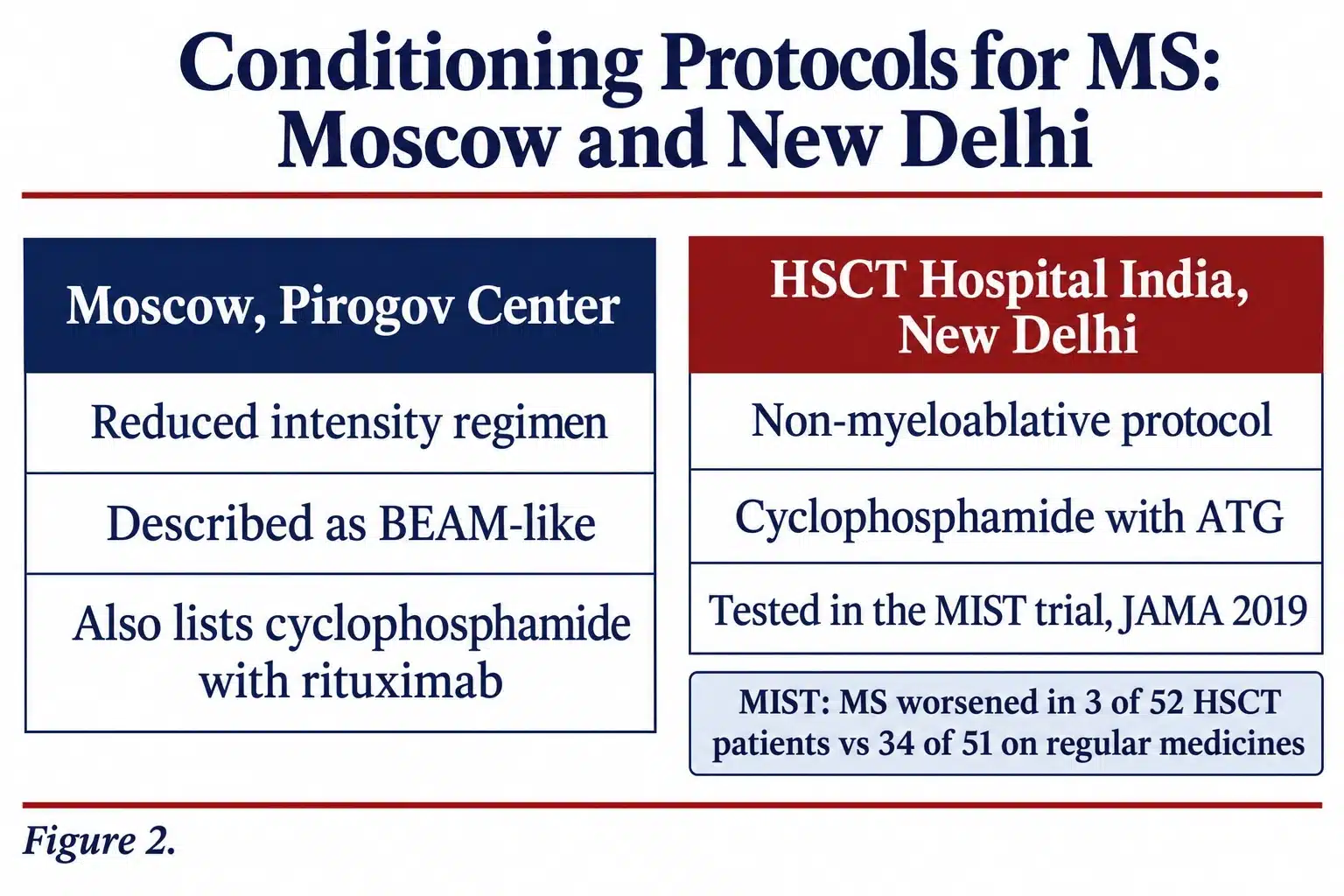
The Moscow centre describes its protocol as reduced intensity, and its 2015 paper describes it as similar to BEAM. BEAM is a mix of four chemotherapy drugs first developed for lymphoma, a cancer of the lymph glands. The Moscow report also lists cyclophosphamide followed by rituximab. Rituximab is an antibody that removes B cells, one of the immune cell types involved in MS.
HSCT Hospital India gives every MS patient the non-myeloablative protocol developed by Dr Richard Burt. That means cyclophosphamide with ATG, short for anti-thymocyte globulin, an antibody aimed at the immune cells behind MS. Non-myeloablative chemotherapy clears those cells without setting out to destroy the bone marrow. As a result, most patients’ blood counts recover quickly after reinfusion.
The differences between the protocols used in India, Mexico and Russia are set out in full in the comparison of HSCT protocols for MS.
What has the protocol used at HSCT Hospital India shown in a randomised trial?
The protocol used at HSCT Hospital India is the one tested in the MIST trial, published in JAMA in 2019. A randomised trial is a study in which patients are divided by chance into two groups, so the two treatments can be compared fairly. MIST compared HSCT with the regular MS medicines in 110 people with relapsing remitting MS.
In MIST, the MS got worse in 3 of 52 patients who had HSCT. In the group who stayed on regular medicines, it got worse in 34 of 51 patients. That gap, 3 against 34, is why HSCT Hospital India uses this protocol for every MS patient.
At HSCT Hospital India, HSCT is a routine treatment, not a trial. You have it once, with no course of infusions to come back for. The longer term published data are set out in the article on 10 year outcomes of HSCT for MS.
 Get HSCT India Brochure Emailed to you
How much does HSCT for MS cost in Russia?
HSCT for MS at the Pirogov Center in Moscow is typically quoted at 40,000 to 45,000 US dollars, for a stay of five to six weeks as an in-patient. The programme’s website states that the contract price is fixed and sends the figure after you register. It does not publish a price on its pages.
The admission page lists what the Moscow contract covers. It includes the examinations before treatment, the hospital stay with 24 hour observation, meals, help with the visa and hotel booking, and airport transfers. Your return flights are not included, and a companion’s visa invitation is billed on top.
How much does HSCT for MS cost at HSCT Hospital India, and what does the price include?
HSCT for MS at HSCT Hospital India costs US $30,000 for the whole admission. You receive no separate bills for tests, drugs or nursing during it. A charge is added only if your stay has to run past 30 days, which is rare.
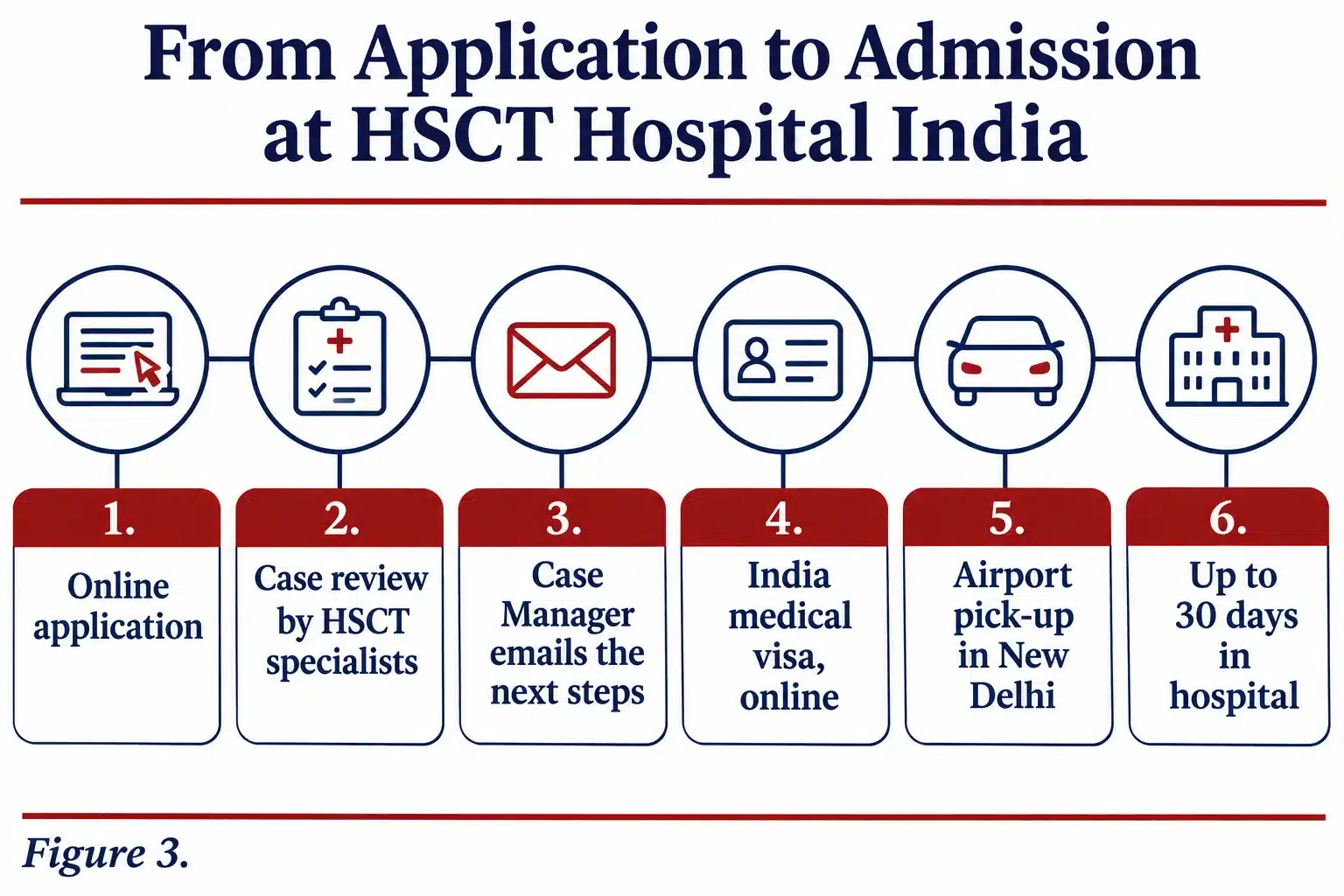
Inside the US $30,000 sit the tests and consultations before treatment, MRI among them, and the HSCT itself. The deluxe private room, doctors’ fees, medicines, consumables and neuro-physiotherapy are covered too. So are meals and laundry for you and your attendant, and the drive from and back to the airport.
You add two things to the US $30,000, which are your international flights and the medical visa fee. Patients travelling alone can have a full time private nurse as their attendant. This costs an extra US $1,500 for the 30 days. The costs in other countries are compared in the guide to HSCT cost by country.
How long would I stay in Moscow, and how long would I stay in New Delhi?
A Moscow stay usually runs to five or six weeks, while New Delhi plans for a single 30 day admission. The Moscow website lists its phases one by one. Tests before treatment take about 2 to 3 days, and stem cell collection takes about 5 to 6 days.
Chemotherapy in Moscow then takes 6 days with one rest day. The isolation period while the immune system recovers takes 5 to 8 days. The programme recommends a visa valid for three months with two entries, so that your travel dates can move if the treatment dates move.
In New Delhi the whole treatment fits inside that one admission. A member of the HSCT Hospital India staff collects you and your attendant at the airport and drives you to your room. On the last day the hospital drives you back, so you never need a hotel.
What happens during my 30 days at HSCT Hospital India?
Treatment in New Delhi runs in a set sequence, and every day of it is spent on the ward. Days one to four are for tests and specialist consultations. A multidisciplinary team then looks at the results and confirms that HSCT suits you.
Once you are confirmed, treatment moves through four stages. The first is mobilisation, in which medicine moves stem cells out of your bone marrow and into your bloodstream. The second is the harvest, known as leukapheresis. A machine collects the stem cells from your blood, a little like giving blood, and the cells are frozen until reinfusion.
Conditioning is the third stage, with cyclophosphamide and ATG. A steroid called methylprednisolone is given alongside to ease side effects, and nausea is treated as soon as you feel it. Reinfusion comes fourth, when your frozen stem cells go back in through a drip, much like a transfusion.
After conditioning, the white blood cells that fight infection drop to their lowest point. Doctors call these days the aplastic phase, and they carry the highest chance of infection in the whole treatment. That is why nobody at HSCT Hospital India spends them outside the hospital: you stay on the ward, in a private room with triple level HEPA air filtration.
Nurses and HSCT specialists are with you around the clock on the ward. A fever is treated as soon as it appears, and a blood test every day shows how your counts are coming back. Each stage is explained in more detail in the guide to how HSCT works at HSCT Hospital India.
What do I need to travel to Russia or to India for HSCT?
Both countries require a visa, and the route to each visa is different. For Russia the programme arranges an invitation letter after you register, which its website states takes 1 to 14 days depending on your country and the visa type. You then apply at the Russian consulate nearest to you, and every detail on the application must match the invitation.
For India you need a medical visa, and your HSCT Case Manager helps you apply for it online. Applying to HSCT Hospital India does not depend on gathering old files or scans first. Every test and evaluation the specialists need is carried out on arrival in New Delhi.
Who can stay with me during HSCT in Moscow and in New Delhi?
Your attendant at HSCT Hospital India shares your private room from the first day to the last. Their bed, meals and laundry are inside the US $30,000. In Moscow, a companion registers with the programme separately, and their visa invitation is charged in addition to the contract.
The attendant is usually a family member or friend strong enough to help you through airports and on and off transport. On the ward, the nurses take care of most physical needs. What your attendant gives you is company through long days in one room, far from home.
Am I a candidate for HSCT at HSCT Hospital India?
HSCT Hospital India treats every form of MS, relapsing remitting and progressive alike. Patients with secondary progressive, primary progressive or progressive relapsing MS are assessed in the same way. The upper limit is an EDSS score of 6.5.
EDSS, the Expanded Disability Status Scale, is the 0 to 10 score your neurologist uses for walking and daily function. Prior use of disease modifying drugs, the long term MS medicines such as Ocrevus or Tysabri, is not required. Suitability is confirmed by the specialists once your tests in New Delhi are complete. The full checks are listed in the guide to HSCT eligibility criteria.
 Request a Call Back
What happens after I go home from HSCT Hospital India?
You fly home with a Discharge Summary and an Aftercare Manual from HSCT Hospital India. Your GP or neurologist reads the first, and you follow the second through the weeks of recovery. A mask and hand sanitiser go with you in public for the first month, starting on the flight.
A blood test every two weeks for two months, then monthly, tracks your recovery at home. Most patients are back to normal activities within two to four months. No further chemotherapy is needed after discharge, and your updates to HSCT Hospital India let the team follow your progress.
What do MS patients who looked abroad say about HSCT Hospital India?
Patients from 30 countries have described their treatment at HSCT Hospital India in their own words. Marjorie looked at Moscow and Mexico before she applied. Paul and James compared hospitals in several countries, and Hege and Gary filmed their accounts while still in New Delhi.
Marjorie, secondary progressive MS, Australia
Marjorie from Sydney had secondary progressive MS, with disability scored at 6.5 on the EDSS, when she came to New Delhi in 2017. Her eldest son travelled with her as her carer. One year after HSCT, she wrote that she could walk with only her stick, which she could not do before.
My research looked at Mexico and Russia but I was put off applying to these hospitals as there was up to a year waiting list. I couldn’t wait that long as I seemed to be deteriorating fast and, since I managed to get a confirmation with the HSCT Hospital India.
Marjorie, Australia
Read her full account: Marjorie from Australia.
Paul, secondary progressive MS, Ireland
Paul had secondary progressive MS and had used a wheelchair for five years before HSCT. Nine months after he went home, his neurologist confirmed that his MRI showed no active lesions in his brain or spinal column.
I researched HSCT treatments available worldwide and was accepted by HSCT Hospital India to be taken up for HSCT after rigorous tests to ascertain my strength and suitability for the treatment. This was very reassuring for me and proved to me that HSCT Hospital India were not just after money.
Paul, Ireland
Read his full account: Paul from Ireland.
James, multiple sclerosis, Ireland
James had lived with MS for about 20 years when he was treated in New Delhi at the age of 48. HSCT is not a routine treatment in Ireland, so he compared the countries that offered it. A friend came with him as his attendant.
Ultimately this centre was selected due to the combination of the excellence of the medical staff training and their ability to carry out this treatment successfully.
James, Ireland
Read his full account: James from Ireland.
Hege, multiple sclerosis, Norway
Hege has lived with MS since 2007 and arrived at HSCT Hospital India in a wheelchair. As her treatment ended, her friend and attendant Venke says she was walking through the room with a stick or crutch. By her own account, the toes on her left foot now move.
She is the reason why I chose this hospital.
Hege, Norway, on the hospital’s first patient from Norway
Read her full account: Hege from Norway.
Gary, primary progressive MS, United Kingdom
Gary came to New Delhi with primary progressive MS at EDSS 6.5. His partner Linda was his attendant. About three weeks into the stay, he says he has feeling back in his foot.
I came here at a scale of 6.5, and hopefully that will reduce, because I now have feeling back in my foot after only three weeks. Hopefully onwards and upwards now.
Gary, United Kingdom
Read his full account: Gary from the UK.
More stories, many with video, are on the HSCT Hospital India patient stories page.
Can HSCT Hospital India review my case if I have already applied to Moscow?
Yes, we do. Many patients apply to more than one hospital, and the HSCT specialist doctors at HSCT Hospital India review every case without charge. There is no long waiting list, so a case accepted in New Delhi can usually be given an admission date soon after the review.
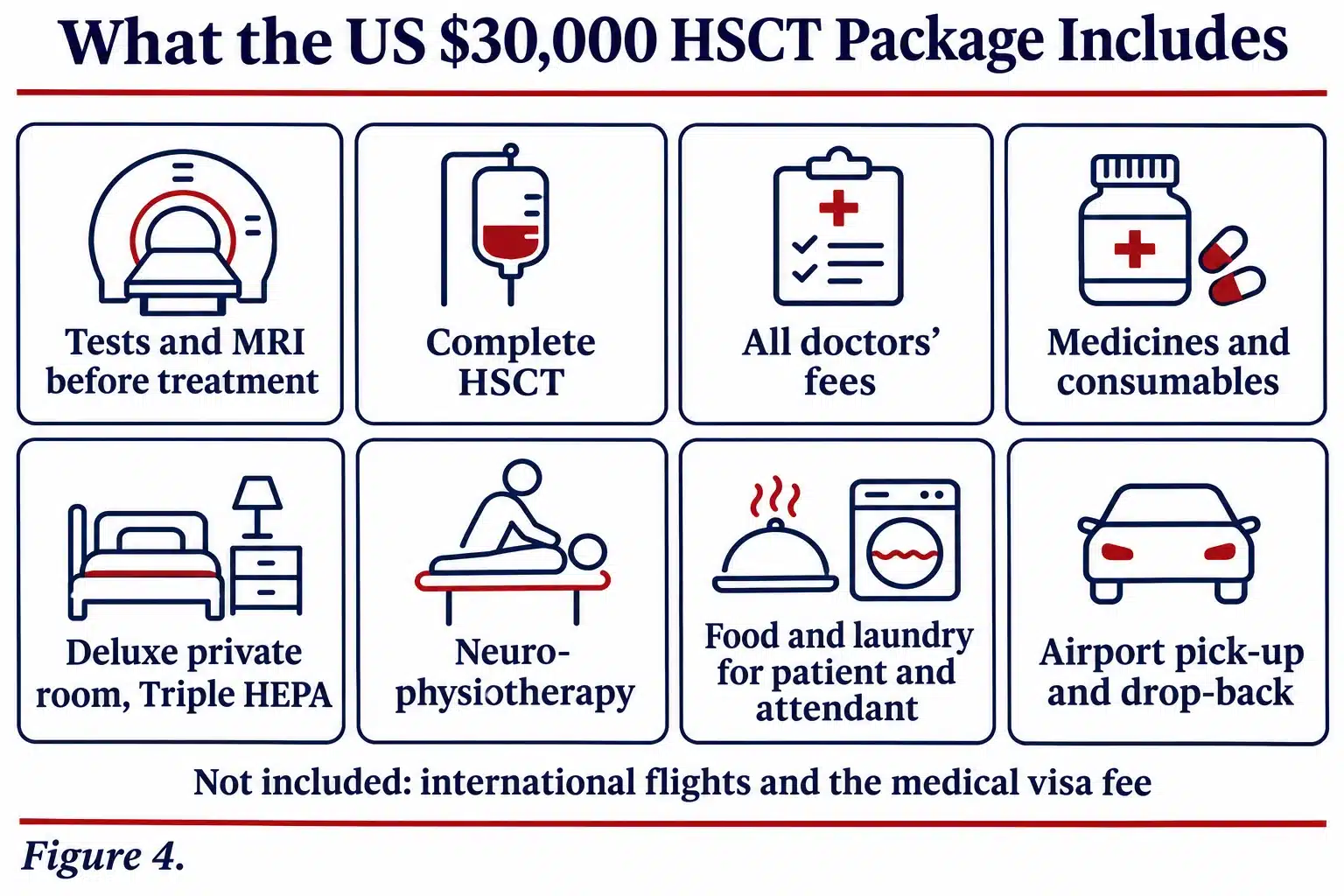
Starting takes three steps. First you complete the online application, giving as much detail about your MS as you can. The HSCT specialist doctors then study it. An HSCT Case Manager then emails you their opinion and the next steps. The same Case Manager answers your questions personally, from dates to the visa.
The programme you would join is set out in full in the guide to HSCT for MS in India at HSCT Hospital India.
Frequently asked questions about HSCT for MS in Russia and India
Where is HSCT for MS done in Russia?
HSCT for MS in Russia is offered at the Pirogov National Medical and Surgical Center in Moscow, a federal hospital complex. Its programme has treated MS patients since 2006 and has published results for 418 of them. Patients comparing destinations usually look at Moscow, Mexico and New Delhi. HSCT Hospital India in New Delhi treats MS for US $30,000 all-inclusive at a JCI-USA accredited hospital.
How much does HSCT in Moscow cost compared with HSCT Hospital India?
Moscow quotes for HSCT are typically 40,000 to 45,000 US dollars, covering five to six weeks in hospital. Flights are extra, and so is the visa invitation for a companion. HSCT Hospital India charges US $30,000 all-inclusive for up to 30 days. Meals and laundry for you and your attendant, and both airport transfers, are part of that price.
Is the Moscow protocol the same as the protocol at HSCT Hospital India?
No, the two programmes use different chemotherapy. Moscow uses a reduced intensity regimen that its doctors compare to BEAM, a four drug combination. HSCT Hospital India uses cyclophosphamide with ATG, the protocol developed by Dr Richard Burt. That protocol was tested in the MIST trial of 110 patients, published in JAMA in 2019, in which MS got worse in 3 of 52 patients who had HSCT.
How long does HSCT take in Moscow and in New Delhi?
Patients going to Moscow plan for five or six weeks on the ward, and the programme suggests a three month visa with two entries. At HSCT Hospital India the treatment is finished within 30 days. Hospital staff meet you at New Delhi airport and return you there on the last day. No hotel nights are needed.
Can my partner or a family member stay with me?
Yes, at HSCT Hospital India your attendant sleeps in your private room every night of the admission. The room has triple level HEPA air filtration, and the attendant’s bed, meals and laundry are paid for within the US $30,000. If nobody can travel with you, the hospital can arrange a full time private nurse as your attendant for US $1,500. For Moscow, a companion’s visa invitation costs extra.
Can I be treated at HSCT Hospital India if I have progressive MS?
Yes, progressive MS is treated at HSCT Hospital India, whether secondary progressive, primary progressive or progressive relapsing. The EDSS limit is 6.5. Earlier use of drugs such as Ocrevus or Tysabri is not a requirement. The specialists confirm suitability after your tests in New Delhi.
How soon can I start treatment at HSCT Hospital India?
There is no long waiting list at HSCT Hospital India. The HSCT specialist doctors review your application without charge, and an HSCT Case Manager replies by email with their opinion and the next steps. Once your case is accepted, your HSCT Case Manager agrees an admission date with you and helps you apply for the India medical visa online.
Why Choose HSCT Hospital India for Life Changing Multiple Sclerosis Treatment

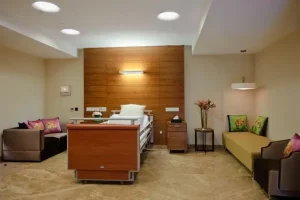 Complete 30 day HSCT done in hospital. Private deluxe rooms are very well served for patient and attendant comfort and equipped with HEPA Filter with Triple Level Air Filtration. No outside hospital stay avoids risk of infection during the aplastic phase, 24 x 7 nursing care and best medical attention. Advanced HSCT protocol used does not require any further chemo or treatment after leaving the hospital. Click here to get complete details
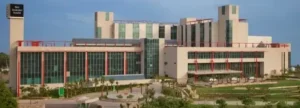 International and Globally Renowned Accreditations. HSCT Hospital India is accredited by the Joint Commission International, USA, the National Accreditation Board for Hospitals and Healthcare Providers (NABH), and the National Accreditation Board for Laboratories (NABL) for processes and high quality patient care. Click here to know more

Real Patients, Real Stories
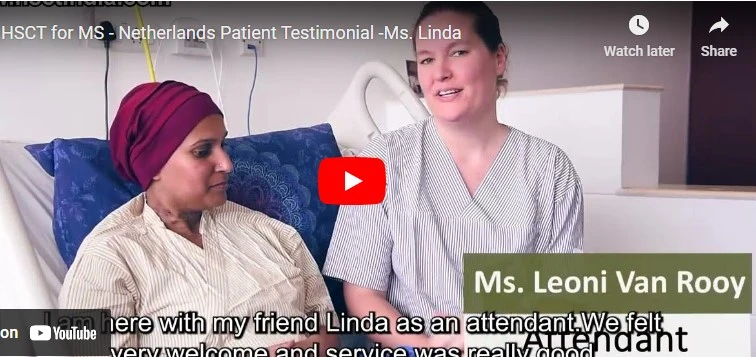
Linda’s Story: MS patient from Netherlands talks about her HSCT Treatment at HSCT Hospital India
Linda from the Netherlands, diagnosed with MS in 2007, describes her HSCT for multiple sclerosis at HSCT Hospital India on video.

Primary Progressive MS: David Ellis on His HSCT Treatment in India
David Ellis from California, with primary progressive MS since 2011, arrived using a cane. After HSCT he could lift his left leg again.
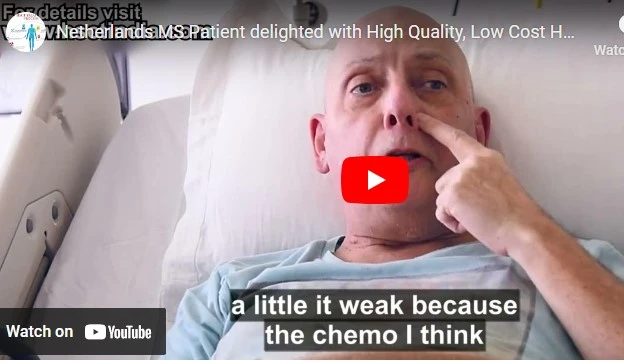
Netherlands MS Patient delighted with High Quality, Low Cost HSCT for MS Treatment
Watch this video where Mr. Jacobus from the Netherlands shares his happy experience about travelling to India with his girlfriend as a Caregiver for HSCT
References
- Pirogov National Medical and Surgical Center, Moscow. Clinical outcomes of HSCT in 418 patients with relapsing remitting and secondary progressive MS treated from 2006 to 2018, and admission information for international patients. hsct-russia.com, read 10 November 2026.
- Burt RK, Balabanov R, Burman J, et al. Effect of Nonmyeloablative Hematopoietic Stem Cell Transplantation vs Continued Disease-Modifying Therapy on Disease Progression in Patients With Relapsing-Remitting Multiple Sclerosis: A Randomized Clinical Trial. JAMA. 2019;321(2):165 to 174.