HSCT for MS Review: David from the USA, 11 Months After HSCT
by admin
Patient account published with the patient's consent. Clinical details checked and approved by the board of haematologists at HSCT Hospital India, whose transplant physicians hold DM Clinical Haematology qualifications and fellowship training in stem cell transplantation. The programme runs at a JCI-USA, NABH and NABL accredited hospital that has treated more than 1500 patients. Page last updated: 15 October 2026.
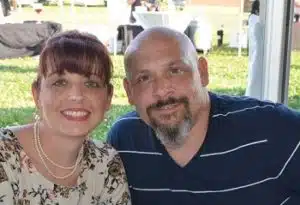
David Karczewski from the United States came to HSCT Hospital India in New Delhi for HSCT to treat his multiple sclerosis. Before treatment he used a walker, his legs and feet were numb, and he had trouble with speech and finding words. Eleven months after HSCT, he wrote that he no longer used a walker and that the feeling had come back in his feet and legs.
In MS, white blood cells damage myelin, the fatty sheath that insulates nerve fibres in the brain and spinal cord. Where myelin is damaged, signals to the legs, the hands and the muscles of speech slow down or fail, which matches what David describes. HSCT, short for haematopoietic stem cell transplantation, clears those white blood cells with chemotherapy. The patient’s own stem cells, collected and frozen beforehand, are then given back, and they produce new blood and immune cells.
David from the USA: HSCT for MS at a Glance
Patient
David Karczewski is from the United States.
Condition
He was living with multiple sclerosis and had daily symptoms in his legs, his speech and his energy.
Before HSCT
His legs and feet were numb, he used a walker, he stuttered and found it hard to find words, and he was always tired.
Treatment
He had HSCT at HSCT Hospital India in New Delhi and then followed the hospital’s plan for recovery at home.
After HSCT
Eleven months after treatment, he wrote that the feeling had come back in his feet and legs and that he no longer used a walker.
Price of the programme today
HSCT Hospital India charges 30,000 US dollars, all inclusive, for up to 30 days in hospital.
How MS affected David’s life before HSCT
David lists his daily symptoms himself. His legs and feet were numb, his balance and the use of his hands were poor, and he was tired all the time. He also had trouble with speech, which for him meant stuttering and losing words in the middle of a sentence.
"My MS journey started like most people. My daily symptoms included numbness in my legs and feet, speech issues chronic fatigue, balance and dexterity just to name a few. I was constantly thinking of my future with MS and the prognosis did not look good."
David Karczewski, MS patient from the USA, eleven months after HSCT
These symptoms come from damage in different parts of the nervous system. Numbness and poor balance follow damage in the spinal cord and the pathways to the legs. Stuttering and word finding problems follow damage in the brain areas that control speech and language.
A patient in the United States can ask for the HSCT Hospital India brochure by email. It explains each stage of treatment, the 30 day stay and what the single price includes.
David writes that HSCT was a family decision as well as a personal one. He did not want to wait and see how his MS would progress, so he chose HSCT, which clears the immune cells that cause the damage.
"I wasn’t going to leave it up to the Gods to determine my fate, I still had some fighting to do. HSCT was a family decision as well as a deep personal one."
David Karczewski, MS patient from the USA, eleven months after HSCT
For patients in the United States, HSCT for MS is offered mainly inside clinical trials or at a few centres, and insurance cover is approved case by case. The price difference between the United States and India is set out in HSCT cost by country. Insurance, tax relief and fundraising are covered in how to pay for HSCT abroad.
To ask about HSCT for your own MS, send your diagnosis, your most recent MRI report and the medicines you have used through the enquiry form. The specialist doctors at HSCT Hospital India assess every case for free, and you receive their reply by email from an HSCT Case Manager.
HSCT at HSCT Hospital India is one in-patient stay of up to 30 days. It starts with a full medical evaluation and follows four stages in a fixed order: mobilisation, collection of the stem cells, conditioning and reinfusion.
In mobilisation, a growth factor and a short course of chemotherapy move stem cells from the bone marrow into the blood. A machine then collects them over several hours, and they are frozen. Conditioning uses cyclophosphamide and anti-thymocyte globulin, or ATG, to clear the immune cells behind the MS. The frozen stem cells are then thawed and given back through a drip.
In the days after reinfusion, the blood counts are at their lowest, a stretch doctors call the aplastic phase. Every patient at HSCT Hospital India stays in hospital through these days, in a deluxe private room with Triple HEPA air filtration. Nurses are present day and night, so a fever is treated as soon as it starts. Each stage is explained in the MS treatment guide.
David eleven months after HSCT, in his own words
After the hospital stay, David returned home and followed the plan HSCT Hospital India gave him for recovery. Eleven months after treatment, he wrote about what had changed. He describes his recovery as slow and lists each change himself.
"I am now eleven months post HSCT. Recovery is slow but for me its truly a blessing. I am excited about the little things. I have feeling back in my feet and legs. I am not using a walker any more. My balance is almost normal. I have mostly clear thoughts and my stuttering and word find is significantly reduced. I am sleeping less than I used to and my energy levels have increased."
David Karczewski, MS patient from the USA, eleven months after HSCT
David’s HSCT in his own words: before and after
Before: legs and feet
His legs and feet were numb.
After: legs and feet
He wrote that the feeling had come back in his feet and legs.
Before: walking
He used a walker.
After: walking
He wrote that he no longer used a walker and that his balance was almost normal.
Before: speech
He stuttered and had trouble finding words.
After: speech
He wrote that his stuttering and word finding problems were much reduced.
After: energy
He wrote that he was sleeping less and had more energy.
Recovery after HSCT continues at home for months after the 30 day stay, and most patients return to their usual activities within 2 to 4 months. What to expect month by month is explained in how long it takes to recover after HSCT for MS.
"I am not going to tell you that this will surely work for you, but I will say this: At HSCT Hospital there is a better than average chance that if you are committed to getting back to normal, this is your best choice. I wish you well in your journey and I hope this helps in your decision process."
David Karczewski, MS patient from the USA, eleven months after HSCT
Travelling from the United States to New Delhi raises questions about flights, the Indian medical visa and bringing a family member. An HSCT Case Manager can phone you to go through them, free of charge.
For a patient in the United States, the first step is the enquiry form with recent MRI reports and a list of past MS medicines. The HSCT specialist doctors at HSCT Hospital India read these and send a free opinion on whether HSCT is likely to help. If it is, an HSCT Case Manager plans the visa and travel. Treatment starts only after a full medical evaluation in New Delhi.
HSCT Hospital India has treated more than 1,500 people with MS, from over 30 countries, using the non-myeloablative protocol. The hospital holds JCI-USA accreditation from the Joint Commission International, as well as NABH and NABL, India’s national boards for hospitals and laboratories. The price of 30,000 US dollars is all inclusive for up to 30 days. It covers treatment, the private room and the attendant’s stay, with food and laundry for both, and airport pick-up and drop-back. There is no long waiting list.
Before booking anything, a patient in the United States can find out whether HSCT is likely to help. The review by the HSCT specialist doctors at HSCT Hospital India costs nothing and carries no obligation.
Why Choose HSCT Hospital India for Life Changing Multiple Sclerosis Treatment
HSCT Hospital India is one of the finest private hospitals in India and Accredited by JCI-USA. Most Affordable, 30,000 US $ HSCT package includes complete treatment cost for 30 days in hospital stay in a deluxe private room, Doctors Fee, Tests and Consultations, Medicines, Consumables, Physiotherapy and also Food and Laundry for both the patient and the attendant, Airport Transfers etc. Large number of patients from Europe, America and Australia already treated successfully. Click here to know more
Complete 30 day HSCT done in hospital. Private deluxe rooms are very well served for patient and attendant comfort and equipped with HEPA Filter with Triple Level Air Filtration. No outside hospital stay avoids risk of infection during the aplastic phase, 24 x 7 nursing care and best medical attention. Advanced HSCT protocol used does not require any further chemo or treatment after leaving the hospital. Click here to get complete details
International and Globally Renowned Accreditations. HSCT Hospital India is accredited by the Joint Commission International, USA, the National Accreditation Board for Hospitals and Healthcare Providers (NABH), and the National Accreditation Board for Laboratories (NABL) for processes and high quality patient care. Click here to know more
More than 1,500 patients from Europe, America and Australia have already been treated successfully at HSCT Hospital India. Our multi-disciplinary team reviews every multiple sclerosis referral, including the EDSS recorded by the treating neurologist, the MRI sequence over time and the relapse history, before any decision is taken. Click here to watch patient testimonial videos
 Get HSCT India Brochure Emailed to you
 Request a Call Back
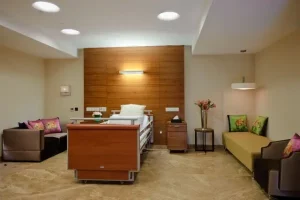 Complete 30 day HSCT done in hospital. Private deluxe rooms are very well served for patient and attendant comfort and equipped with HEPA Filter with Triple Level Air Filtration. No outside hospital stay avoids risk of infection during the aplastic phase, 24 x 7 nursing care and best medical attention. Advanced HSCT protocol used does not require any further chemo or treatment after leaving the hospital.
 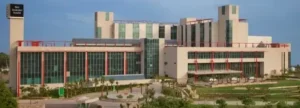 International and Globally Renowned Accreditations. HSCT Hospital India is accredited by the Joint Commission International, USA, the National Accreditation Board for Hospitals and Healthcare Providers (NABH), and the National Accreditation Board for Laboratories (NABL) for processes and high quality patient care.