Myasthenia Gravis Prognosis: Life Expectancy, Stages and Treatment
Medically reviewed by the board of haematologists at HSCT Hospital India, whose transplant physicians hold DM Clinical Haematology qualifications and fellowship training in stem cell transplantation. The programme runs at a JCI-USA, NABH and NABL accredited hospital that has treated more than 1500 patients.
Last reviewed: 21 October 2026.
Myasthenia gravis, usually shortened to MG, is a long term autoimmune condition in which the immune system makes antibodies against the junction where a nerve meets a muscle. These antibodies block the signal that tells the muscle to contract, so the muscle tires quickly and grows weaker with use. The eyelids and eye muscles are affected most often, followed by the face and throat, and then the arms. In severe cases, the breathing muscles are affected too.
The outlook for MG has improved a great deal with modern treatment, and many patients reach a point where symptoms are mild or absent. The risk is highest in the first year or two after diagnosis. That is when the weakness is usually at its worst and a breathing crisis is most likely. A smaller group keeps relapsing despite standard treatment, and stem cell transplant, known as HSCT, has been studied in that group.
How do doctors judge the outlook for someone with MG?
Doctors judge the outlook in two ways: how long people live, and how much the weakness limits daily life. Most patients today are treated with tablets and immune treatment, and some also have surgery to remove the thymus gland, which is explained further on. A large Danish study found that, after the first year and once other illnesses were accounted for, survival over five years matched the general population (Nielsen and colleagues, Neurology, 2025).
For each person, doctors look first at how widespread the weakness is. They also ask whether breathing or swallowing has been affected, and how well the symptoms respond to treatment. Your antibody type matters as well, because it shapes which treatments are likely to work for you.
The best results are described with set terms from the Myasthenia Gravis Foundation of America. Complete stable remission means no symptoms and no treatment for at least a year. Minimal manifestations means you have no limits on daily life, although an examination can still find slight weakness in some muscles. The HSCT studies further on use both terms, so their results can be read in the same words.
Does MG get worse over time?
MG usually gets worse early and then improves, rather than declining steadily over a lifetime. A long running study at one United States centre followed 1,976 patients seen between 1940 and 2000 (Grob and colleagues, Muscle and Nerve, 2008). In that study, weakness was most severe and deaths were most frequent in the first one to two years after onset. Many patients improved after that period.
This pattern means the first years after diagnosis need the closest care. Your doctors usually adjust treatment most often during this time, and this is also when a myasthenic crisis is most likely. After the first few years, many patients reach a steady level, and the main question then becomes how much medicine is needed to hold it there.
Symptoms also change within a single day. Rest helps. Weakness is usually least in the morning and builds with use, so you can feel strong after rest and weak by the evening. Heat, infection, stress, poor sleep and some medicines can make weakness worse for a time, and this is called a flare.
What are the stages of myasthenia gravis, and is there an end stage?
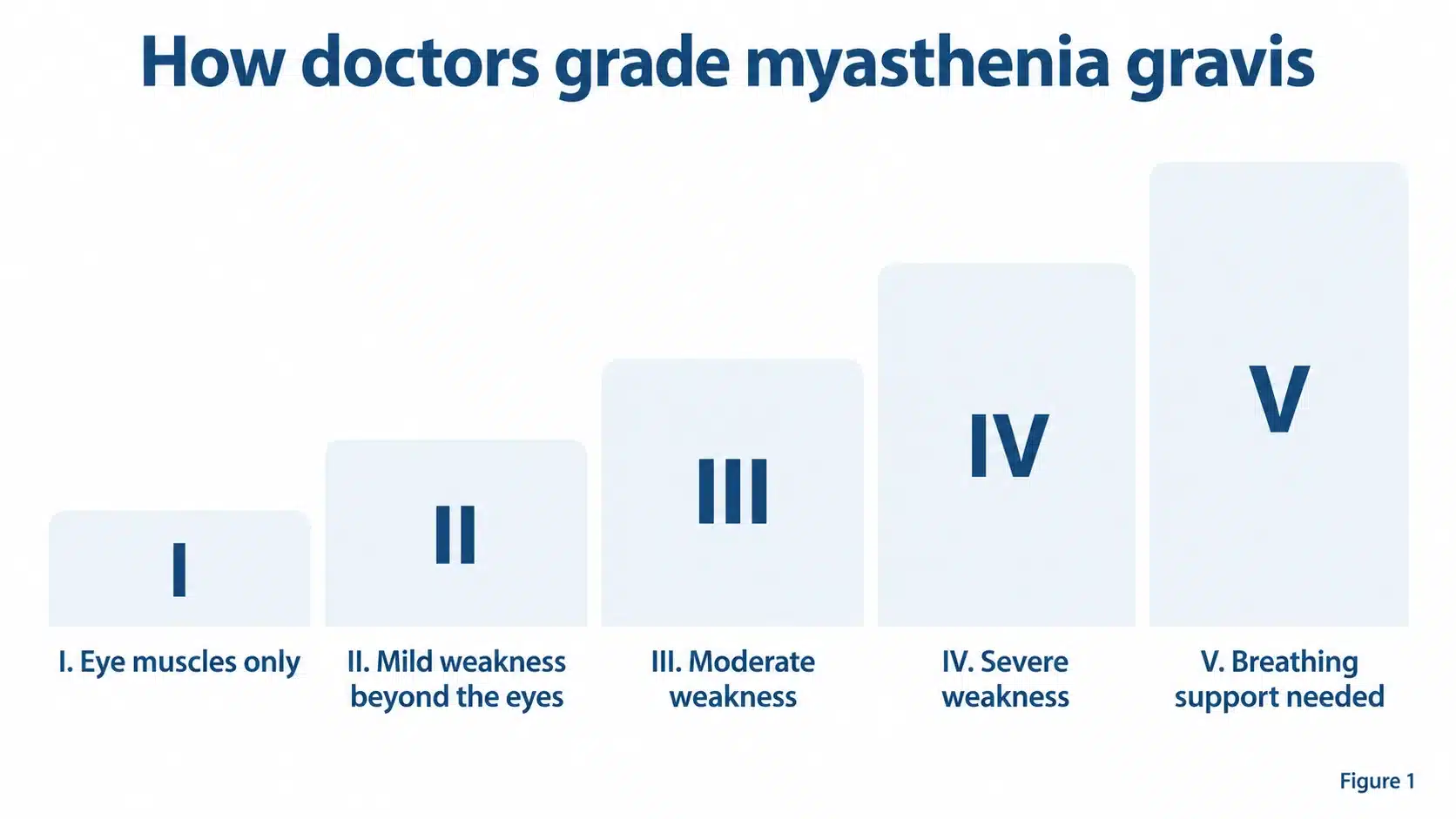
Doctors grade MG into five classes. These were set out by the Myasthenia Gravis Foundation of America in 2000 (Jaretzki and colleagues, Neurology, 2000), and clinics and trials still use them. The classes run from Class I to Class V, and each one describes how far the weakness has spread and how severe it is.
Class I means only the eye muscles are weak, so you have a drooping eyelid or double vision and nothing else. Class II means mild weakness has spread beyond the eyes, and Class III means that weakness is moderate. Class IV means severe weakness. Class V means you need a breathing tube, with or without a ventilator, to support your breathing.
Classes II to IV are each split into two letters. The letter a means the weakness is mainly in the limbs and the trunk. The letter b means it is mainly in the muscles of the mouth and throat and the breathing muscles, which doctors call bulbar muscles.
These classes describe how severe the weakness is at one point in time. A person can move up and down the scale, so a patient in Class IV during a flare can return to Class II once treatment takes effect. For this reason, there is no fixed end stage in the way the term is used for kidney or liver failure. When people search for end stage myasthenia gravis, they are usually asking about Class V and the breathing crisis that defines it.
What is a myasthenic crisis, and how often does it happen?
A myasthenic crisis is the most serious event in MG, and it happens when the breathing muscles or swallowing muscles become too weak to work safely. During a crisis, you usually need support from a breathing machine in an intensive care unit until treatment brings the strength back.
Older estimates put the share of patients who have at least one crisis at 15 to 20 per cent (quoted by Ozyurt Kose and colleagues, Frontiers in Neurology, 2023). The same study also followed its own group of patients over several years. In that group, 12 patients, or 13 per cent, had a crisis, and none of them died during it (Ozyurt Kose and colleagues, Frontiers in Neurology, 2023).
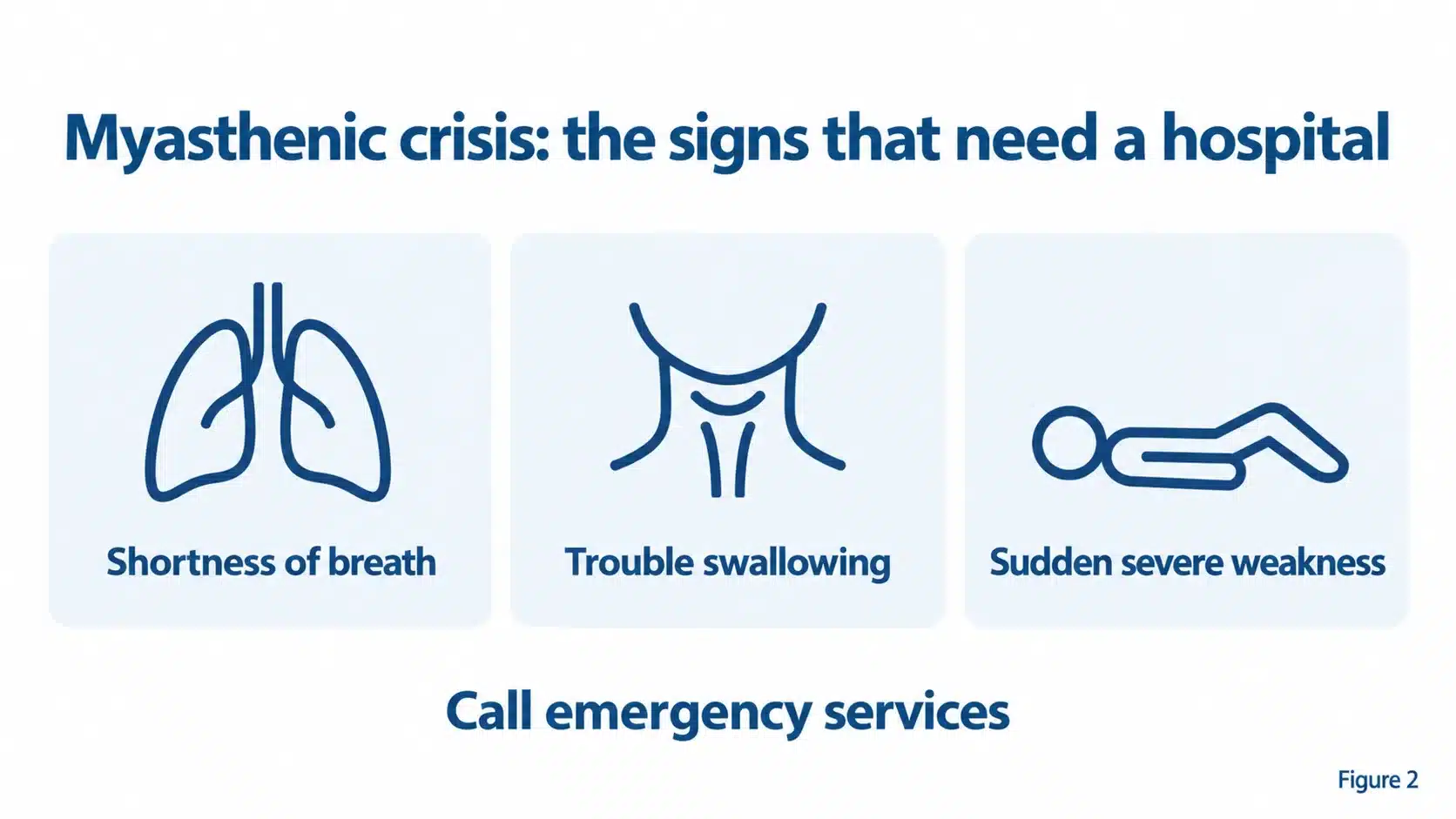
The warning signs are shortness of breath, trouble swallowing and sudden severe weakness. Infection is the most common trigger, so a chest infection in someone with MG is treated quickly. If you have these signs, call emergency services rather than waiting for a clinic appointment.
Treatment in a crisis usually means plasma exchange or intravenous immunoglobulin, known as IVIG. Plasma exchange filters the harmful antibodies out of your blood. IVIG is a drip of antibodies from donated blood, and it dampens the immune response while the strength returns.
What is the life expectancy with myasthenia gravis?
The extra risk of death in MG is concentrated in the first year after diagnosis. The clearest recent evidence comes from a Danish national study that followed patients for up to five years after diagnosis (Nielsen and colleagues, Neurology, 2025). It did not measure lifetime survival directly.
That study followed 2,110 people diagnosed between 1985 and 2020. Each one was compared with ten people of the same age and sex from the general population. In the first year after diagnosis, 4.8 per cent of the patients died, compared with 2.6 per cent of the comparison group. Between the first and fifth year, the risk of death was still about 30 per cent higher than in the general population (Nielsen and colleagues, Neurology, 2025).
Much of that later difference was explained by other illnesses the patients already had. Once the researchers allowed for those illnesses, survival from the first to the fifth year matched the general population. Deaths in the first year rose between 2015 and 2020, especially in patients aged 75 or older. The authors concluded that death rates in MG remain raised.
Chinese national death records give a second view. One study counted 4,224 deaths linked to MG between 2013 and 2020 (Zhang and colleagues, Annals of Clinical and Translational Neurology, 2023). The middle age of those who died was 59 years, compared with 75 years for all deaths in the population. This compares the age of the people who died, not life expectancy. The same study found death rates rising by about 3.5 per cent a year, with the highest rates in people over 80 and a smaller peak in teenage boys (Zhang and colleagues, 2023).
For you, these figures mean that the first year and any breathing crisis carry the highest risk. Older age and other illnesses also raise the risk, which is why doctors watch older patients most closely.
Can MG go into remission?
Yes, MG can go into remission, although lasting remission without any treatment is reached by a minority of patients. Most patients reach a state of mild or no symptoms while they keep taking some medicine. Few stop all treatment. The aim of standard treatment is usually minimal manifestations on the lowest dose that holds it.
Removing the thymus gland, an operation called thymectomy, improves the result for many patients with generalised MG. The thymus is a small gland behind the breastbone that helps train the immune system, and it is often abnormal in MG. A trial of 126 patients compared thymectomy with steroid tablets against steroid tablets alone (Wolfe and colleagues, New England Journal of Medicine, 2016).
Over three years, the patients who had thymectomy had less weakness and needed less steroid medicine. Their average steroid dose was 44 mg every other day, compared with 60 mg in the group without surgery. Only 9 per cent of them needed a hospital stay for a flare, compared with 37 per cent of the group without surgery (Wolfe and colleagues, New England Journal of Medicine, 2016). The patients in that trial were aged 18 to 65 and had antibodies against the acetylcholine receptor. They had generalised disease diagnosed within the previous five years, and no thymus tumour.
What is the usual order of treatment?
Treatment usually builds up in steps, and each step is added when the one before it does not control the weakness. Your neurologist decides the order for you, and thymectomy in particular is often planned early rather than late. The order differs between patients.
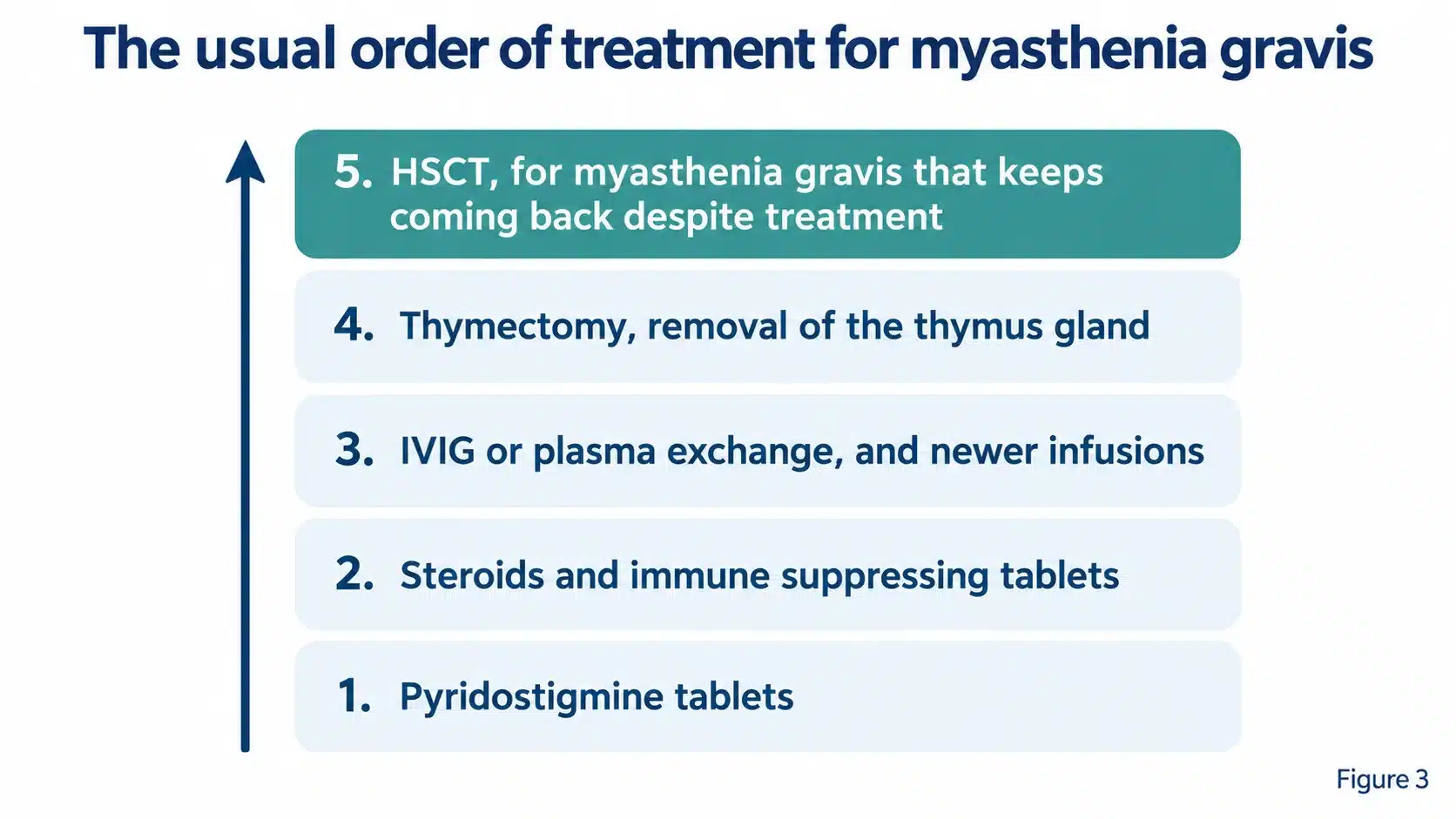
The first step is usually pyridostigmine, a tablet that helps the nerve signal reach the muscle. It eases symptoms within about an hour, but it does not change the immune problem underneath. The second step is steroid tablets, often with an immune suppressing tablet such as azathioprine or mycophenolate. These lower the amount of harmful antibody your body makes.
The third step covers treatments given by drip or injection. IVIG and plasma exchange act fast. They work within days and are used for flares and crises. Newer targeted drugs, such as eculizumab and efgartigimod, are used mainly for people with acetylcholine receptor antibodies whose disease stays active on tablets.
Thymectomy sits alongside these steps for patients who are suited to it. HSCT is studied for the small group whose MG keeps coming back despite these treatments, which doctors call refractory MG. These patients often live with repeated hospital stays, steady doses of steroids and the side effects that come with them.
What do the HSCT studies show for MG that keeps coming back?
HSCT removes most of the immune cells that make the harmful antibodies, then rebuilds the immune system from your own stem cells. The aim is that the rebuilt immune system no longer makes those antibodies. This is the reason HSCT is studied in patients for whom standard treatment has not been enough.
The first detailed report came from The Ottawa Hospital in Canada (Bryant and colleagues, JAMA Neurology, 2016). Seven patients with severe, treatment resistant MG had HSCT. Six were treated for MG itself, and one for a lymphoma while the MG was active. All seven reached complete stable remission, with no symptoms and no MG treatment, over a middle follow up of 40 months.
In 2025, the Ottawa and Calgary teams published a larger series of 21 patients (Beland and colleagues, Annals of Clinical and Translational Neurology, 2025). The 21 very likely include the earlier seven. Of the 18 patients who could be assessed, 16 reached stable remission or minimal manifestations without any MG treatment (Beland and colleagues, 2025). Half of them got there within 1.7 years, and the group was followed for a middle time of 6.7 years.
Both Canadian series used a more intensive form of chemotherapy than the protocol used at HSCT Hospital India. Their results show what is possible in carefully chosen patients, rather than what every patient can expect. The HSCT for myasthenia gravis guide explains how the treatment acts on the antibody making cells in more detail.
What are the risks of HSCT for MG?
HSCT carries real risks. The Canadian studies report them in full. In the 2016 Ottawa group, three of the seven patients had a virus that reactivated for a short time, and one developed a second autoimmune condition. No patient died from the treatment or from MG (Bryant and colleagues, JAMA Neurology, 2016).
In the 2025 series, two of the 21 patients, or 9.5 per cent, died from the transplant within 100 days. Two more died years later, and the authors could not say whether those deaths were linked to the transplant (Beland and colleagues, 2025). The team warned that the risk of death from HSCT can be high in patients who have several other medical problems. This is the reason every patient is assessed carefully before HSCT is offered. Some are advised against it.
Most of the early risk comes from infection while the new immune system is rebuilding, so patients usually stay in hospital until their blood counts recover. The side effects of HSCT are explained step by step on a separate page.
How is HSCT given at HSCT Hospital India?
HSCT Hospital India in New Delhi uses a non-myeloablative protocol based on the work of Dr Richard Burt. Non-myeloablative means the chemotherapy is dosed to reset the immune system rather than to destroy the bone marrow completely.
Evert from Canada had HSCT for MG at HSCT Hospital India, and he arrived with a drooping eyelid, weak hands, a weak calf and difficulty breathing. He recorded his account in hospital at the end of his month long stay. It is one patient’s experience, not a study result, and he describes both the hard days and the change:
Evert: After going through even the beginning stages of chemo my eyes responded very quickly, even though I was feeling very horrible at the time. My eyes started to respond. Since that time I’ve improved dramatically. My eyes have had a bit of a setback, but my hand strength is very good now, my calf strength is very good.
One thing I didn’t mention, I was having difficulty breathing. My breathing has responded very well. I have no problem breathing anymore. I need no oxygen.
His eyes had a setback after the first response, and he says so himself. You can watch him and his cousin describe the whole month in Evert’s myasthenia gravis story.
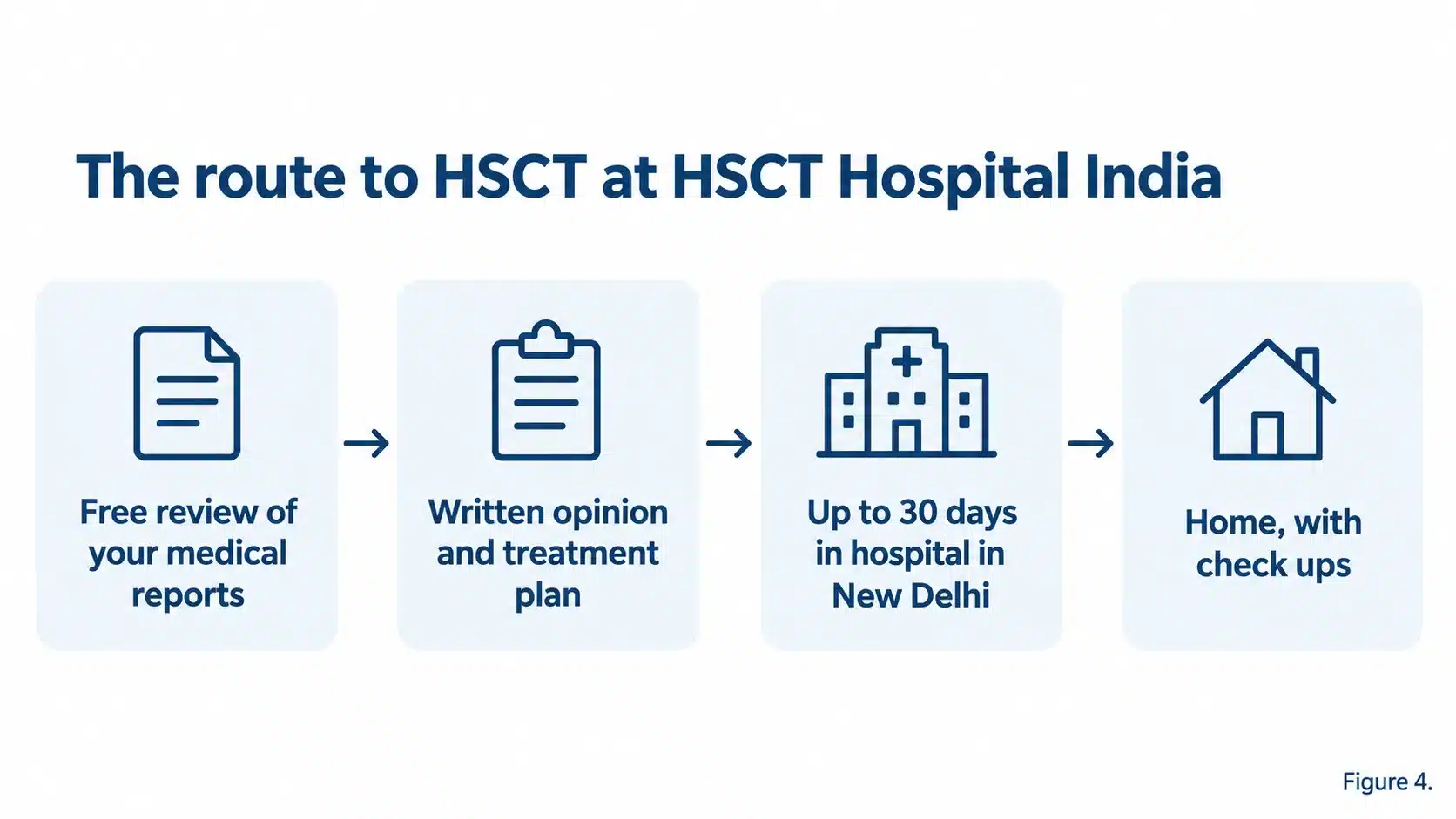
Send your diagnosis, your antibody results and the treatments you have tried through the enquiry form. The HSCT specialists in New Delhi review every case without charge, and an HSCT Case Manager replies to you by email.
Frequently asked questions
Has anyone recovered from myasthenia gravis?
Yes, some patients reach complete stable remission, which means no symptoms and no treatment for at least a year. This happens after thymectomy and other standard treatment in a minority of patients. After HSCT, the Canadian series reported it in patients whose disease had resisted every other treatment.
Is it too late for HSCT if I have had MG for many years?
Length of illness on its own does not rule HSCT out. The HSCT specialists look at how active your MG is now and how you have responded to treatment. They also look at your other medical conditions and your general health, because the Canadian team warned that the risk is higher in patients with several other medical problems. An HSCT Case Manager then tells you whether HSCT is suitable in your case.
References
- Nielsen JJJ, Levison L, Andersen H. Mortality in myasthenia gravis in Denmark from 1985 to 2020: a population based cohort study. Neurology. 2025;104(12):e213745. doi:10.1212/WNL.0000000000213745
- Zhang C, Wang F, Long Z, et al. Mortality of myasthenia gravis: a national population based study in China. Annals of Clinical and Translational Neurology. 2023;10(7):1095 to 1105. doi:10.1002/acn3.51792
- Grob D, Brunner N, Namba T, Pagala M. Lifetime course of myasthenia gravis. Muscle and Nerve. 2008;37(2):141 to 149. doi:10.1002/mus.20950
- Jaretzki A, Barohn RJ, Ernstoff RM, et al. Myasthenia gravis: recommendations for clinical research standards. Neurology. 2000;55(1):16 to 23. doi:10.1212/WNL.55.1.16
- Ozyurt Kose S, Nazli E, Tutkavul K, Gilhus NE. Occurrence and severity of myasthenic crisis in an unselected Turkish cohort of patients with myasthenia gravis. Frontiers in Neurology. 2023;14:1201451. doi:10.3389/fneur.2023.1201451
- Wolfe GI, Kaminski HJ, Aban IB, et al. Randomized trial of thymectomy in myasthenia gravis. New England Journal of Medicine. 2016;375(6):511 to 522. doi:10.1056/NEJMoa1602489
- Bryant A, Atkins H, Pringle CE, et al. Myasthenia gravis treated with autologous hematopoietic stem cell transplantation. JAMA Neurology. 2016;73(6):652 to 658. doi:10.1001/jamaneurol.2016.0113
- Beland B, Storek J, Quartermain L, et al. Refractory myasthenia gravis treated with autologous hematopoietic stem cell transplantation. Annals of Clinical and Translational Neurology. 2025;12. doi:10.1002/acn3.52246
Popular Posts