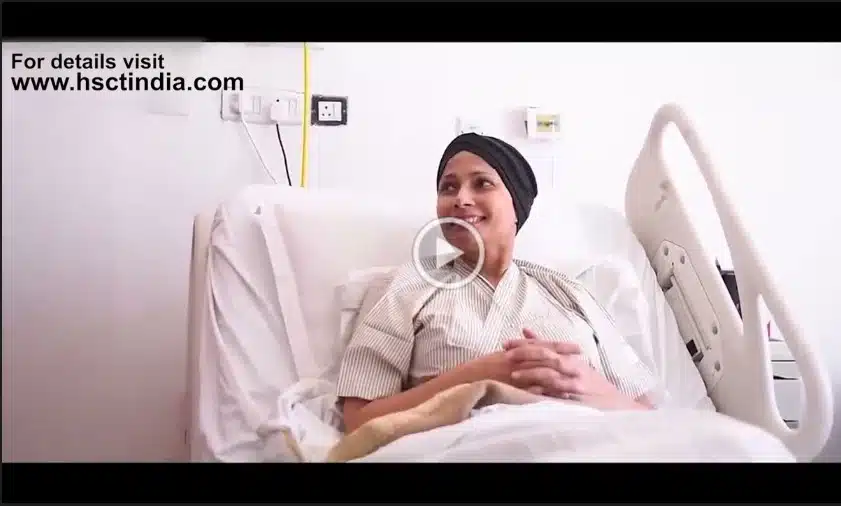
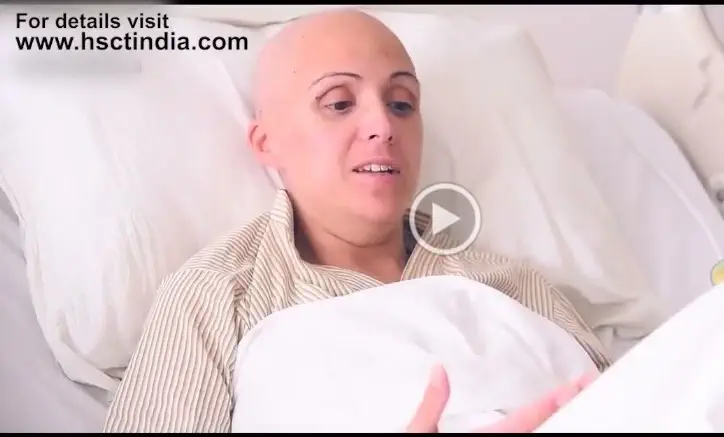
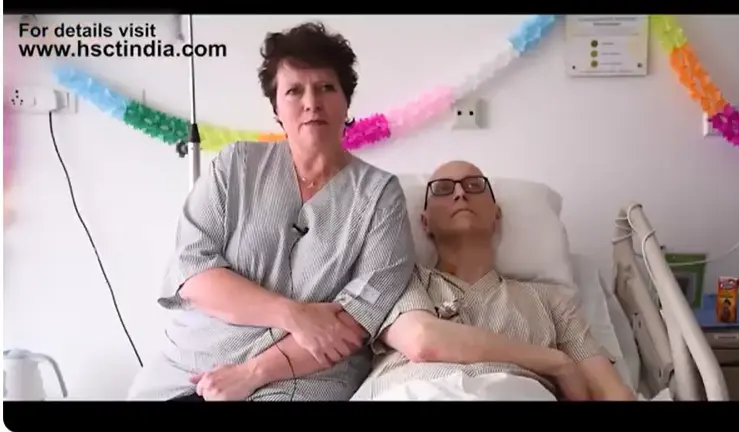
Margaret travelled from Scotland to HSCT Hospital India after eleven years with multiple sclerosis, a disease that damages the nerves. She had been given no drug treatment for it in all that time. She introduces herself in the video as Maggie. Seven hours after her own stem cells were returned to her, she says she moved legs she had not been able to move for years. By the end of her stay she says she could hold a pen and write legibly again, and her companion says she was writing her name and whole sentences. Margaret is clear that her legs still need more work, and just as clear that she believes she will walk again.
Multiple sclerosis, usually shortened to MS, is a disease in which the immune system attacks myelin. Myelin is the protective coating around the nerve fibres of the brain and spinal cord. Autologous haematopoietic stem cell transplantation, known as HSCT, rebuilds that immune system. Autologous means the cells used are the patient’s own, so there is no donor, and the cells in question are the blood forming stem cells. Before those cells are returned, chemotherapy clears out the faulty immune cells. Margaret had this treatment at HSCT Hospital India and recorded this video there at the end of her stay.
| Margaret from the UK: HSCT for MS Results at a Glance |
| Patient | Margaret, aged 36, from Scotland in the United Kingdom. She introduces herself in the video as Maggie. |
| Condition | Multiple sclerosis, diagnosed in 2013. Margaret says her neurologist first called it relapsing remitting, meaning symptoms get worse for a time and then improve again. She says the neurologist agreed in 2015 that it was secondary progressive, meaning the disease had moved into a steady decline. |
| Treatment before India | Margaret says she had no treatment at all in the eleven years after her diagnosis, and that she had to research disease modifying drugs, the medicines that slow MS itself rather than treat a symptom, and ask for them herself. |
| Treatment | Autologous HSCT at HSCT Hospital India, New Delhi |
| Legs on arrival | Margaret says her legs had been locked in spasm for years and that she had not been able to move them. |
| Legs seven hours after reinfusion | She says she moved her legs for the first time in years, seven hours after the stem cells went back in. |
| Writing on arrival | Her companion says Margaret could barely sign her name. |
| Writing at the end of treatment | Margaret says she can hold a pen and write legibly. Her companion says she now writes her name and some sentences. |
| Other changes Margaret names | She says her vision is better, and that she had not realised MS had affected it. |
| What Margaret says still needs work | She says her legs need more help because they were locked in spasm for so long. With the spasms under control, she says there is definite hope that she will walk again. |
| Time in hospital | Thirty days, in a deluxe private room with triple level HEPA air filtration, which uses fine filters to take dust and germs out of the air |
| Recorded | At the end of her treatment, while Margaret was still in India |
| Package price today | 30,000 US dollars, all inclusive, for up to thirty days in hospital |
Living with MS in Scotland since 2013
Margaret was diagnosed with MS in 2013, when she was in her twenties. Her neurologist called it relapsing remitting, the form in which symptoms come and go. Margaret says she disagreed from the start and believed it was already secondary progressive, the form in which the disease moves into a steady decline. She says her neurologist agreed with her in 2015.
What followed those two years was eleven years without treatment. Margaret says she was given no disease modifying drug, and that she had to investigate the drugs herself and ask for them. Her decline was fastest in the last two of those years, and she had two children in that period. She says she went downhill during her second pregnancy and never came back from it.
Why Margaret chose HSCT Hospital India
By the end of 2023 Margaret had decided she would not wait any longer. She had already been reading about HSCT for several years by then.
"It was the end of last year things started to get really bad, and I was like, enough is enough. I had already investigated HSCT for quite a few years and thought this is the only thing that is going to be able to help me."
Margaret, recorded at HSCT Hospital India
She had in fact booked treatment somewhere else first. India had been on her list, but she had ruled it out because the programme was newer there at the time she was looking. Someone reminded her of India, and when she looked again she found the hospital was in New Delhi.
"So I looked again and thought, oh my goodness, it is New Delhi. That is not a remote little place somewhere."
Margaret, recorded at HSCT Hospital India
HSCT Hospital India pioneered this treatment for MS in India in 2016, and patients now come to it from more than 30 countries across Europe, North America and Australia. More than 1,500 people with MS have been treated in its world class facilities. Those facilities are accredited by the Joint Commission International of the USA, known as JCI-USA, and by NABH and NABL, India’s national accreditation boards for hospitals and for laboratories.
The treatment itself follows the Dr Richard Burt non-myeloablative protocol, the same protocol behind the landmark results published in JAMA. One all inclusive price of 30,000 US dollars covers a stay of up to thirty days, with no hidden charges and no long waiting list.
Margaret spent years reading about HSCT before she came. If that is where you are now, the hospital will email you the full details. It covers the treatment, what the thirty days involve and exactly what the price pays for, so you can read it in your own time.
 Get HSCT India Brochure Emailed to you
What changed by the end of treatment
The change Margaret names first happened on the day her stem cells were returned to her. Her legs had been locked in spasm for years before that.
"Seven hours after I had the stem cells reinfused, I could move my legs, the legs I have not been able to move for years. I actually managed to move them."
Margaret, recorded at HSCT Hospital India
Two more changes came after that one, and Margaret had not expected either of them. The first was her eyesight, which she had not known MS was affecting. The second was her handwriting.
"My vision is better as well. I did not even realise that was affected by it. I can hold a pen now and actually write, it is legible. It is not like a child scrawling. It is crazy, all the little things that are now getting better."
Margaret, recorded at HSCT Hospital India
Her companion saw the same change in her handwriting from the outside and described where it had started from.
"She could barely sign before. Now she is able to write her name and some sentences."
Margaret’s companion, recorded at HSCT Hospital India
If you are living with MS and wondering whether HSCT could do for you what it did for Margaret, you are welcome to ask. Send your scans and your treatment history. The HSCT specialist doctors read them themselves and reply with their opinion on your own case. An HSCT case manager writes back to you personally. There is no charge for this and no obligation of any kind.
Get Free Expert Opinion Now
What Margaret says her legs still need
Margaret is clear that her legs were not fixed by the end of the thirty days. She says years of spasm had shortened them, and that undoing it takes longer than the weeks she had been in hospital. She sets out what she had been told by the physiotherapist working with her.
"Unfortunately my legs are going to need a little bit more help, since they were locked in spasm for so long. But that is fine, because being with the physiotherapist here we know that my legs can stretch and they will stretch. So as long as I get the spasms under control, then there is definite hope that I will be back on my feet and I can walk again."
Margaret, recorded at HSCT Hospital India
Neuro physiotherapy is exercise guided by a physiotherapist to rebuild strength and movement. It runs alongside the medical treatment at HSCT Hospital India rather than afterwards, and it is included in the package price. Margaret credits it with the work on her legs.
"That is the thing here, everything, they really take care of everything. They look at the whole picture. It is not just about the HSCT. They got me into the physio and everything to sort my dodgy legs."
Margaret, recorded at HSCT Hospital India
Every case is different, and disability that has been there a long time raises questions a form cannot answer. An HSCT case manager will call you and talk it through, at a time that suits you, at no cost.
 Request a Call Back
What the treatment asks of a patient
HSCT is demanding because the chemotherapy that clears the faulty immune cells also lowers the body’s defences against infection. For this reason every patient at HSCT Hospital India stays in hospital for the whole treatment. The patient stays in the deluxe private room with triple level HEPA air filtration while the immune system is at its weakest. Nursing care and monitoring continue around the clock.
An attendant shares that room for the whole stay. The attendant’s stay, food and laundry are all inside the one all inclusive price, along with airport pick-up and drop-back. Margaret speaks about the room and the staff as well as the treatment.
"The room and everything has been fantastic. Staff have been wonderful. They have been phenomenal."
Margaret, recorded at HSCT Hospital India
Margaret is direct about what she would say to someone still deciding.
"I would highly recommend this place. I really, really, really would."
Margaret, recorded at HSCT Hospital India
She closes the video on the timing rather than the treatment. It is the line she says every patient ends up saying.
"I would just wish I had done it sooner. It is what everybody says."
Margaret, recorded at HSCT Hospital India
HSCT for MS patients from the United Kingdom
Patients from the United Kingdom start with the same free case review as every other patient at HSCT Hospital India. They fill in the online application form, and HSCT specialist doctors review it and give an initial opinion. An HSCT case manager then guides the trip. On arrival in New Delhi, a full medical evaluation confirms suitability for HSCT.
Each of these steps is set out in detail on the How It Works page. The checks behind that initial opinion are explained on the HSCT eligibility criteria page. The treatment itself, in four stages, and its published results are covered in the HSCT for multiple sclerosis guide. What the treatment costs for a patient travelling from Britain is set out on the HSCT for MS in the UK page.
Three other patients from the United Kingdom tell their own stories in their own words. Gudrun describes her results on the Gudrun from the UK page, and Jayne describes hers on the Jayne from the UK page. A 36 year old man from the UK describes his on the 36 year old MS patient from the UK page.
What HSCT Hospital India gives every patient who comes
Every patient is admitted for the whole treatment, for up to thirty days, in a deluxe private room with triple level HEPA air filtration. There are no stays outside the hospital at any point. Nursing care and monitoring run around the clock, and the hospital follows European infection control guidelines as an NMDP accredited centre.
The person who travels with you shares that room for the whole stay. Their bed, their food and the laundry for both of you are inside the same 30,000 US dollars. So are the airport pick-up and the drop-back. Neuro physiotherapy is included and runs alongside the treatment rather than after it, which is the part Margaret credits for the work on her legs.
You do not leave empty handed either. Before you fly home you are given a discharge summary and an aftercare manual to hand to your own GP or neurologist. The hospital then keeps monitoring you at home, through regular blood count checks and periodic updates.
The HSCT specialist doctors at HSCT Hospital India assess every case themselves and tell you whether HSCT is right for you. That assessment costs you nothing.
Consult Top HSCT Doctors
Transcript of the video
Maggie Connor, 36, from Scotland in Britain. I was diagnosed with MS in 2013. I was told by the neurologist it was relapsing remitting, but even at that point I thought, no, this is secondary progressive. Eventually in 2015 she agreed with me, but being the NHS in Britain I did not get any help. I got no treatment. If I wanted to try one of those DMDs I had to investigate it myself and ask. So I have had no treatment.
I rapidly declined this last couple of years. Also in that time I have managed to have two kids. So when I was having my second child, I went downhill when I was pregnant with her. I have just never come back.
But it was the end of last year things started to get really bad, and I was like, enough is enough. I had already investigated HSCT for quite a few years and thought this is the only thing that is going to be able to help me. I was actually booked to go elsewhere, because I had seen India did it too, and I was like, that would be good. But at that point it was very new to India, so I was booked to go elsewhere. But then I was reminded about India. So I looked again and thought, oh my goodness, it is New Delhi. That is not a remote little place somewhere.
So here I am. I came, I have had the treatment, it was absolutely amazing, honestly. The room and everything has been fantastic. Staff have been wonderful. They are absolutely lovely. They have been phenomenal. That is the thing here, everything, they really take care of everything. They look at the whole picture. It is not just about the HSCT. They got me into the physio and everything to sort my dodgy legs.
But seven hours after I had the stem cells reinfused, I could move my legs, the legs I have not been able to move for years. I actually managed to move them. My vision is better as well. I did not even realise that was affected by it. I can hold a pen now and actually write, it is legible. It is not like a child scrawling. It is crazy, all the little things that are now getting better.
She could barely sign before. Now she is able to write her name and some sentences.
Also, unfortunately my legs are going to need a little bit more help, since they were locked in spasm for so long. But that is fine, because being with the physiotherapist here we know that my legs can stretch and they will stretch. So as long as I get the spasms under control, then there is definite hope that I will be back on my feet and I can walk again.
That is the thing. Anyone who has got MS that is declining and they are going downhill, I would highly recommend this place. I really, really, really would. The staff have been amazing. There are guys who come in like four times a day to clean, and honestly I just cannot fault it at all. It has been great. I would just wish I had done it sooner. It is what everybody says. So yeah, to the future.
Margaret spent eleven years being told there was nothing for her. If that is where you are now, the first step is a short form and it costs you nothing. The HSCT specialist doctors at HSCT Hospital India read every case themselves and tell you where you stand. From there an HSCT case manager stays with you, by email, through the medical visa, the travel and the whole thirty days.
You will not be on your own when you get here either. You and the person who travels with you share the same room for the whole stay, and their bed, food and laundry are inside the one price, along with your airport pick-up and drop-back. More than 1,500 people with MS have made this trip from over 30 countries.
Get Free Expert Opinion Now