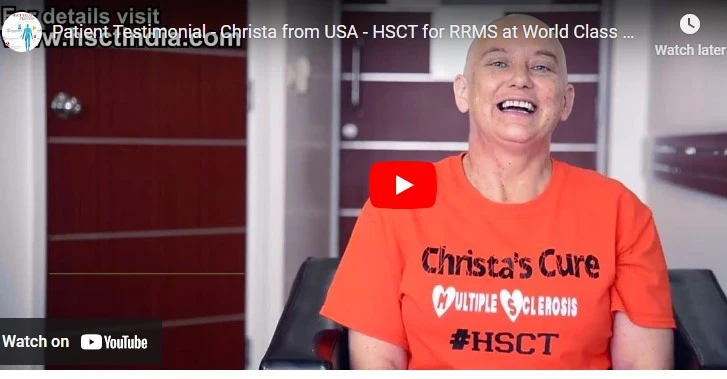
Christa Blanco from Ohio was 45 when she travelled to New Delhi for HSCT. She had lived with relapsing remitting multiple sclerosis for fifteen years, and three years earlier it had forced her to stop working. In this video she explains why she could not have the treatment in the United States. Her mother Kay then describes the care Christa received during thirty days at HSCT Hospital India.
Relapsing remitting MS, shortened to RRMS, is the most common form of the disease. This form brings relapses, when symptoms flare up, and then periods when they ease, partly or fully. It is treated in some patients with HSCT, short for autologous haematopoietic stem cell transplantation. The treatment collects a patient’s own stem cells, uses chemotherapy to remove the immune cells behind the relapses, and then returns the stored cells. Christa had this treatment at HSCT Hospital India in the summer she recorded this video.
Christa from the USA: HSCT for RRMS at a Glance
Patient
Christa Blanco, aged 45, comes from the state of Ohio.
Condition
She was diagnosed with relapsing remitting MS fifteen years before treatment.
Effect on work
MS had kept her out of work for about three years.
Route in the USA
HSCT for MS is not FDA approved, and an earlier melanoma excluded her from the trials she applied to.
Timeline
She decided in January, applied in April and arrived in India on 30 June.
Attendant
Her mother Kay stayed with her in New Delhi.
Package price today
HSCT Hospital India charges one all inclusive fee of 30,000 US dollars for up to thirty days in hospital.
Why Christa looked outside the United States for HSCT
Christa started by looking at hospitals in her own country. HSCT for MS is not approved by the FDA, the US Food and Drug Administration. Because of that, in the United States it is offered mainly inside clinical trials. Those trials have strict entry rules. Christa had been treated for malignant melanoma, a skin cancer, in the past, and that history ruled her out.
She then compared clinics in other countries. They had websites that gave her useful detail, though she found some of them misleading. After that, in February, she visited one of those facilities and did not feel fully comfortable there. A friend then suggested India, and she began researching hospitals in New Delhi. The options open to American patients, including insurance and trial routes, are set out on the HSCT for MS in the USA page.
At HSCT Hospital India, the full medical history of every applicant, including any past illness, is reviewed as part of that person’s own case. HSCT specialist doctors read the medical history and recent scans first, and a full evaluation in New Delhi confirms suitability before treatment starts. The general rules are listed on the HSCT eligibility criteria page.
Christa spent months comparing clinics before she chose. That comparison is easier with the HSCT India brochure, which arrives by email. It lays out the four treatment stages, the stay in New Delhi and everything the price includes. That gives you the same facts to compare.
Christa arrived with a good deal of reading behind her and some questions still open. She says the doctor treating her answered each of those questions fully.
"There were things that I had researched that I still had a little bit of questions about or didn’t fully understand, which he explained completely, down to a level that I could explain it to my grandkids."
Christa Blanco, recorded at HSCT Hospital India
Treatment at HSCT Hospital India runs in four stages. It starts with mobilisation, which moves stem cells from the bone marrow into the blood. Once they are in the blood, the harvest, also called leukapheresis, collects and freezes them. Conditioning is the chemotherapy that removes the faulty immune cells, using the non-myeloablative regimen, meaning a dose that suppresses the bone marrow without destroying it. Reinfusion returns the stored cells, and the new immune system develops from them. Each stage is explained in the HSCT for multiple sclerosis guide.
Patients in the United States who were turned down for a trial can still ask about their own case. HSCT specialist doctors at HSCT Hospital India review your history and MRI scans. An HSCT case manager then sends their opinion free of charge, with no commitment.
Fevers after chemotherapy and the nursing response
Christa had fevers during her treatment. Such a fever is common in the days after conditioning, when the immune system is at its lowest. It is watched closely because it can signal an infection. She says the nurses acted on it straight away.
"I had issues with fevers, and sometimes that could be an issue, but they were right on top of it. Knew what to do, how to do it, how to take care of me. Really no worries."
Christa Blanco, recorded at HSCT Hospital India
That quick response depends on round the clock monitoring. Every patient stays in a deluxe private room with triple level HEPA air filtration. This filtration keeps dust and germs out of the air during the weeks of low immunity. Nurses, called sisters and brothers on the ward, monitor each patient throughout the stay. The common effects of treatment, and how each is managed, are described on the HSCT side effects page.
A past illness or a worry about side effects is easier to talk through by phone. An HSCT case manager will ring you at a time that suits you, at no charge.
Christa’s mother Kay travelled with her as her attendant. She admits she was worried when they first arrived. That view changed once she saw how the staff looked after her daughter.
"When we first got here I was worried, but after watching them work with Christa and take care of her, I knew there wasn’t going to be any need to worry."
Kay, Christa’s mother and attendant
The attendant lives in the same private room for the whole stay. Kay’s meals and laundry, Christa’s tests, medicines and neuro physiotherapy, and the airport transfers in New Delhi all sit inside the single price. The costs American patients usually compare against are broken down on the HSCT cost by country page.
Thirty days in New Delhi, in Christa’s words
Christa closes by describing what the month meant to her. She talks about the doctors and staff as family, and she compares the hospital with the facilities she had looked at before.
"In a 30-day period this hospital has become a part of my life. The doctors and the staff have become a part of my family, and they’re really my heroes. I could not have asked for a better facility, a cleaner facility, a more professional, thorough facility."
Christa Blanco, recorded at HSCT Hospital India
American patients reach HSCT Hospital India through the same online application Christa used. More than 1,500 people with MS have been treated at the hospital, from over 30 countries. The hospital’s facilities carry JCI-USA accreditation from the Joint Commission International. They also hold NABH and NABL, India’s national standards for hospitals and laboratories, and there is no long waiting list. Three other patients from the United States, Kathryn, Justin and David Ellis, tell their own stories.
Transcript of the video
Christa: Hi, my name is Christa Blanco. I’m 45 years old. I’m from the United States of America, the state of Ohio. I was diagnosed with relapsing remitting multiple sclerosis 15 years ago, and about 3 years ago it took me out of work, and since then it’s just kind of gone downhill and pretty much felt like it had taken my life.
Christa: I started doing a lot of research and of course came across HSCT. I looked at several different facilities, of course within the United States at first. It’s not FDA approved, so I didn’t qualify just to go have it done, and when I applied for the trials, I had previously had malignant melanoma, so I didn’t qualify for that reason. So I started looking into other countries, other facilities that offered it, and actually made my mind up in January of this year that I was going to do this. I was going to get my life back.
Christa: I had visited several websites, which I felt gave a lot of good information but were very misleading in other areas. In February I had visited another facility and just didn’t feel 100% comfortable with having the procedure there, and a friend of mine had suggested India and that they had facilities here that offered HSCT. So of course I immediately started researching and looking into that. In April of this year I applied, and on June 30th we arrived in India to start my HSCT transplant.
Christa: Upon arrival, everything has been great. [The] doctor has been absolutely amazing. I couldn’t have asked for a better doctor. There were things that I had researched that I still had a little bit of questions about or didn’t fully understand, which he explained completely, down to a level that I could explain it to my grandkids at that point.
Kay: Hello, my name is Kay and I’m Christa Blanco’s mother. Just a few things about this hospital and the staff here. They are amazing. When we first got here I was worried, but after watching them work with Christa and take care of her, I knew there wasn’t going to be any need to worry. I can’t say enough about them. I would recommend anybody to come here for this stem cell transplant for MS.
Christa: The staff here, the nurses… I had issues with fevers, and sometimes that could be an issue, but they were right on top of it. Knew what to do, how to do it, how to take care of me. Really no worries. They call them sisters, the nurses, sisters and brothers or head nurses. And in a 30-day period this hospital has become a part of my life. The doctors and the staff have become a part of my family, and they’re really my heroes. I could not have asked for a better facility, a cleaner facility, a more professional, thorough facility than here at [hospital name unclear].
People with relapsing remitting MS anywhere in the United States can have their case looked at before making any plans. HSCT specialist doctors at HSCT Hospital India give the opinion, and an HSCT case manager replies to you personally, free of charge.
Jose from the Netherlands came to HSCT Hospital India in New Delhi for HSCT to treat relapsing remitting multiple sclerosis. She had lived with MS relapses for about 30 years, and her EDSS score was 2.5. Six months after HSCT, she wrote that the muscle tension in her arms had stopped, her reflexes were normal again and she could feel her foot normally.
Relapsing remitting MS is the form in which attacks of new or worse symptoms, called relapses, come and then ease off. Neurologists score disability in MS from 0 to 10 on a scale called EDSS, the Expanded Disability Status Scale. A score of 2.5 means mild disability: a person walks without help, while MS affects one or two areas of the nervous system, such as movement or feeling.
Jose from the Netherlands: HSCT for MS at a Glance
Patient
Jose lives in the Netherlands with her husband Tim, and she has two daughters.
Condition
Her first relapse came around 1987, and she was diagnosed with relapsing remitting MS in 2009.
Before HSCT
Her EDSS score was 2.5, she had a relapse about every 10 months, and she was no longer able to work.
Treatment
She had HSCT at HSCT Hospital India in December 2017, with Tim as her carer, and her stem cells were given back on Christmas Day.
After HSCT
Six months after treatment, she wrote that her reflexes were normal again, her vision had improved a little and warm weather no longer troubled her.
Price of the programme today
HSCT Hospital India charges 30,000 US dollars, all inclusive, for up to 30 days in hospital.
How relapsing remitting MS affected Jose before HSCT
Jose had her first relapse around 1987. For about 20 years her family doctor believed her symptoms were psychological. As a result, she went through a relapse roughly every 10 months with no MS medicine at all. MS was diagnosed in 2009, and by then she could no longer work.
"The first MS shup [relapse] was probably in 1987. Until 2008 my family doctor unfortunately was convinced that it was psychological. For years I had a new shup for every 10 months and I had to manage by myself without any medication."
Jose, MS patient from the Netherlands, six months after HSCT
In 2010 she had a CCSVI procedure in Belgium, an operation on the veins of the neck that some MS patients tried in those years. It gave her relief for a short time, and then the decline continued. She kept up her strength with exercise while the MS went on.
A patient in the Netherlands can ask for the HSCT Hospital India brochure by email. It explains each stage of treatment, the stay in hospital and what the single price includes.
In January 2017, Jose’s family in Australia suggested HSCT. Her doctors in the Netherlands did not offer it. Tim read the published HSCT studies from other countries and judged the results reliable, and Jose decided that HSCT was the treatment she wanted.
"The Dutch doctors did not consider it an option because of the risk and the possible poor results. However, the various foreign scientific HSCT studies showed good results."
Jose, MS patient from the Netherlands, six months after HSCT
If you have relapsing remitting MS, use the enquiry form to send your diagnosis, a recent MRI report and the MS medicines you have taken. HSCT specialists at HSCT Hospital India review it free of charge, and a case manager emails you their opinion.
What HSCT at HSCT Hospital India involved for Jose
Jose arrived in New Delhi in December 2017, and treatment began soon after her tests. Her stem cells were given back to her on Christmas Day. Her doctor sat beside her bed while it was done, with a Christmas programme playing on the television.
"The treatment was immediately put in motion and it happened so that I got the replacement of my stem cells on the first Christmas Day. And Doctor was really sitting beside of my bed on the first Christmas Day for the replacement of the stem cells, with us all listening to a Christmas show on TV."
Jose, MS patient from the Netherlands, six months after HSCT
Giving the stem cells back is the last of the four stages of HSCT at HSCT Hospital India. First, in mobilisation, a growth factor and a short course of chemotherapy move stem cells out of the bone marrow and into the blood. These cells are collected by a machine and frozen. Next comes conditioning, in which cyclophosphamide and anti-thymocyte globulin, called ATG, clear out the immune cells that attack the nerves in MS. The frozen stem cells are then returned through a drip, and they rebuild the immune system.
Jose found the treatment easier than she had expected. She felt weaker during it, and her days were spent eating, drinking and resting in her bed. From the start, the nurses taught her and Tim the daily routine for washing, eating and drinking during the stay.
"The procedure was not as unpleasant for me to undergo as I thought it would be. I had a lovely hospital bed and I could stay there endlessly without any problem. I felt weaker, but I also had nothing else to do than eating, drinking and taking care of myself, and going to the toilet."
Jose, MS patient from the Netherlands, six months after HSCT
After the stem cells are returned, the blood counts stay at their lowest for some days, and doctors call this the aplastic phase. The whole stay at HSCT Hospital India is spent in a private room with Triple HEPA air filtration. Nurses are present day and night, so any sign of infection is treated at once. Each stage is explained in the MS treatment guide.
Jose three and six months after HSCT, in her own words
Jose spent the first winter at home keeping contact with other people to a minimum, because her resistance to infection was still low after the chemotherapy. Three months after HSCT, she noticed that the tension in her arms had stopped. Muscle tension in MS, which doctors call spasticity, follows damage to the nerves that control movement.
"After three months I realized that during that time the high MS tension in my arms stopped and the reflexes in my arms, legs and pelvic-bottom were normal again. And my hanging slack toe was in a normal position again. These are big improvements."
Jose, MS patient from the Netherlands, six months after HSCT
At six months she described further changes. Her eyesight improved enough for weaker glasses, and the abnormal feeling in her feet went away. Many people with MS find their symptoms get worse in warm weather, and Jose wrote that the summer heat no longer troubled her.
"After six months post the treatment I suddenly got new improvements: My vision improved a little so I could buy weaker glasses; the dystrophic symptoms (feet) just disappeared and I can sense normal feelings in my foot. And I also got heat-resistant and I am able to enjoy the summer weather."
Jose, MS patient from the Netherlands, six months after HSCT
Jose’s HSCT in her own words: before and after
Before: relapses
She had a new relapse about every 10 months.
Before: work
She was no longer able to work by the time MS was diagnosed in 2009.
After: arms and legs
She wrote that the tension in her arms stopped and her reflexes were normal again.
After: foot
She wrote that her dropped toe was back in a normal position and she could feel her foot normally.
After: eyesight and heat
She wrote that her vision improved a little and she could enjoy summer weather.
Still present at six months
She wrote that she had a sore neck and back, and that the back pain was less sharp than before.
Jose did a half hour exercise session outdoors every morning and worked with a physiotherapist to build up her activity. Back in the Netherlands she had monthly blood tests, and the results went to her doctor at HSCT Hospital India. What to expect in the months after the stay is explained in how long it takes to recover after HSCT for MS.
"In the Netherlands I should have monthly blood tests and then send the results to doctor. He advised us to send everything to him in case of possible problems, because he is the specialist with the most knowledge."
Jose, MS patient from the Netherlands, six months after HSCT
Travelling from the Netherlands to New Delhi raises questions about flights, the Indian medical visa and bringing a partner as a carer. An HSCT Case Manager can phone you to go through them, free of charge.
For a patient in the Netherlands, the first step is the enquiry form with recent MRI reports and a list of past MS medicines. The HSCT specialist doctors at HSCT Hospital India read these and send a free opinion on whether HSCT is likely to help. If it is, an HSCT Case Manager plans the visa and travel. Treatment starts only after a full medical evaluation in New Delhi.
HSCT Hospital India has treated more than 1,500 people with MS, from over 30 countries, using the non-myeloablative protocol. Non-myeloablative means the chemotherapy is strong enough to clear the immune cells behind MS without destroying the bone marrow. The hospital holds JCI-USA accreditation from the Joint Commission International, as well as NABH and NABL, India’s national boards for hospitals and laboratories.
The price of 30,000 US dollars is all inclusive for up to 30 days in hospital. It covers treatment, the private room with Triple HEPA air filtration and the attendant’s stay, with food and laundry for both, and airport pick-up and drop-back. Who can be treated is explained in who is eligible for HSCT, and the options for paying are set out in how to pay for HSCT abroad.
Before booking anything, a patient in the Netherlands can find out whether HSCT is likely to help. The review by the HSCT specialist doctors at HSCT Hospital India costs nothing and carries no obligation.
Why Choose HSCT Hospital India for Life Changing Multiple Sclerosis Treatment
HSCT Hospital India is one of the finest private hospitals in India and Accredited by JCI-USA. Most Affordable, 30,000 US $ HSCT package includes complete treatment cost for 30 days in hospital stay in a deluxe private room, Doctors Fee, Tests and Consultations, Medicines, Consumables, Physiotherapy and also Food and Laundry for both the patient and the attendant, Airport Transfers etc. Large number of patients from Europe, America and Australia already treated successfully. Click here to know more
Complete 30 day HSCT done in hospital. Private deluxe rooms are very well served for patient and attendant comfort and equipped with HEPA Filter with Triple Level Air Filtration. No outside hospital stay avoids risk of infection during the aplastic phase, 24 x 7 nursing care and best medical attention. Advanced HSCT protocol used does not require any further chemo or treatment after leaving the hospital. Click here to get complete details
International and Globally Renowned Accreditations. HSCT Hospital India is accredited by the Joint Commission International, USA, the National Accreditation Board for Hospitals and Healthcare Providers (NABH), and the National Accreditation Board for Laboratories (NABL) for processes and high quality patient care. Click here to know more
More than 1,500 patients from Europe, America and Australia have already been treated successfully at HSCT Hospital India. Our multi-disciplinary team reviews every multiple sclerosis referral, including the EDSS recorded by the treating neurologist, the MRI sequence over time and the relapse history, before any decision is taken. Click here to watch patient testimonial videos
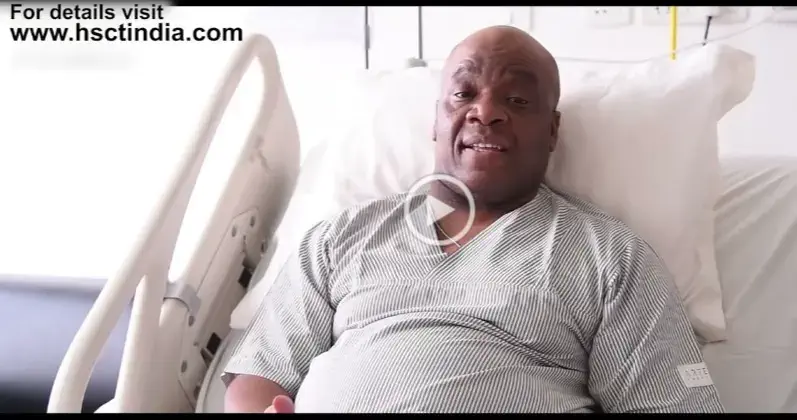
Justin, a man with multiple sclerosis from North Carolina in the United States, was treated with HSCT for his MS at HSCT Hospital India, New Delhi. He chose the hospital after his own research. During the stay his body caught an infection, and he says the team knew exactly what to do and treated it with the right medicines. By the end of his stay, he says he expects to go home stronger than when he arrived.
In MS, white blood cells damage myelin, the fatty sheath that insulates nerve fibres in the brain and spinal cord. Where myelin is damaged, messages to the muscles, eyes and skin slow down or fail. HSCT, short for haematopoietic stem cell transplantation, clears those white blood cells with chemotherapy. The patient’s own stem cells, collected and frozen beforehand, are then given back, and they produce new blood and immune cells. Because the cells are the patient’s own, doctors call it autologous HSCT.
Justin from the USA: HSCT for MS at a Glance
Patient
Justin is from North Carolina, on the east coast of the United States.
Condition
He has multiple sclerosis, and he came to India for HSCT.
Why India
He says HSCT Hospital India seemed like the best place after his research.
Treatment
His HSCT at HSCT Hospital India in New Delhi covered mobilisation, stem cell harvest, chemotherapy and supportive care.
During the stay
His body caught an infection, and he says he received the correct medicines in the correct way and caught no other infection.
Rehabilitation
He says the physical therapist helped him quite a bit.
After HSCT
He says he believes he will be stronger when he gets home than when he arrived.
Price of the programme today
HSCT Hospital India charges 30,000 US dollars, all inclusive, for up to 30 days in hospital.
Why Justin from North Carolina chose HSCT at HSCT Hospital India
Justin speaks of the trip as “we” throughout the video. He says he learned about HSCT through research, and that HSCT Hospital India stood out once he had compared the options.
"We heard about it after research, and this seemed like the best place, and it turns out we’ve had a great experience here."
Justin, MS patient from North Carolina, USA
Every patient starts with a free case review before any travel is planned. HSCT specialist doctors at HSCT Hospital India read the medical records and give an initial opinion. An HSCT case manager then helps with the medical visa and the travel plans, and stays in contact until the flight home.
A patient in the United States can ask for the HSCT Hospital India brochure by email. It explains each stage of treatment, the 30 day stay and what the single price includes.
Which stages of HSCT Justin went through in New Delhi
Justin names the stages of his treatment himself: mobilisation, the harvest of his stem cells, chemotherapy and supportive care. He says all of it went well.
"They did their protocol with chemotherapy, harvest, mobilization, supportive care. All of it has been great."
Justin, MS patient from North Carolina, USA
In mobilisation, a growth factor and a short chemotherapy course release stem cells from the bone marrow into the bloodstream. For the harvest, known as leukapheresis, a cell separator collects those stem cells over several hours, and they are frozen. Conditioning comes next, with cyclophosphamide and anti-thymocyte globulin, or ATG, clearing the immune cells behind the MS. Last, the frozen stem cells are thawed and given back through a drip.
Cyclophosphamide with ATG is a non-myeloablative regimen. It weakens the bone marrow but leaves it able to work, and for that reason the blood counts come back within days. How this regimen differs from the ones used in Mexico and Russia is covered in which HSCT protocol is best for MS, and the MS treatment guide walks through each stage in more detail.
How HSCT Hospital India handled an infection during his stay
Justin also describes a setback during his stay. He says he had a couple of hiccups, and that his body caught an infection. He adds that the team reassured him, followed their protocol and gave him the correct medicines in the correct way.
"My body caught an infection, and they reassured me they knew exactly what to do. They did their protocol. I received all the correct medications in the correct way. I didn’t get any other infections."
Justin, MS patient from North Carolina, USA
Infection is the main risk of HSCT because, in the days after conditioning, the blood counts are at their lowest. Doctors call this the aplastic phase. For this reason every patient at HSCT Hospital India stays in hospital through these days, in a deluxe private room with Triple HEPA air filtration. Nurses are present day and night, so a fever is treated as soon as it starts.
What the chemotherapy does to the immune system, and why the body is open to infection for a short time, is explained in the article on chemotherapy for MS.
Fill in the enquiry form with your diagnosis, your latest MRI report and the MS medicines you have been on. The specialist doctors of HSCT Hospital India look at it without charge, and an HSCT Case Manager sends their view by email.
What Justin says about the staff at HSCT Hospital India
Justin says everyone who came into his room wore a mask and a hairnet, which protects a patient from infection while the blood counts are low. He says that even though he could only see their eyes, the staff reassured him and made him feel better on the days he felt bad.
"You only see their eyes, because everybody who comes in has a mask and wears a hairnet, and everybody’s kind eyes, you know, is reassuring. And they’ve always made me feel better when I did feel bad."
Justin, MS patient from North Carolina, USA
He thanks the whole hospital, not only the doctors. He names the nurses, the cleaning staff, the laundry staff, the food staff and his physical therapist.
What changed for Justin after HSCT, in his own words
Neuro-physiotherapy, meaning exercise sessions a physiotherapist plans for strength and balance, runs through the stay at HSCT Hospital India. Justin says his physical therapist helped him quite a bit. At the end of the video, he says he believes he will be stronger going home than when he arrived.
"The physical therapist has helped me out quite a bit, and I believe that I’ll be stronger when I get home than when I got here, which I call that a win."
Justin, MS patient from North Carolina, USA
Justin’s HSCT in his own words: before, during and after
Before
He came to India with multiple sclerosis, after researching HSCT.
During
His body caught an infection, and he says the team treated it with the correct medicines.
After: rehabilitation
He says the physical therapist helped him quite a bit.
After: how he feels
He says he believes he will be stronger when he gets home than when he arrived.
After the 30 day stay, recovery continues at home, and most patients return to their usual activities within 2 to 4 months. What to expect month by month is explained in how long it takes to recover after HSCT for MS.
Travelling from the United States to New Delhi raises questions about flights, the Indian medical visa and bringing a companion. An HSCT Case Manager can phone you to go through them, free of charge.
For an American patient, the first step is the enquiry form with recent MRI reports and a list of past MS medicines. The HSCT specialist doctors at HSCT Hospital India read these and send a free opinion on whether HSCT is likely to help. If it is, an HSCT Case Manager plans the visa and travel. Treatment starts only after a full medical evaluation in New Delhi.
HSCT Hospital India has treated more than 1,500 people with MS, from over 30 countries, since 2016, using the non-myeloablative protocol developed by Dr Richard Burt. The hospital holds JCI-USA accreditation from the Joint Commission International, as well as NABH and NABL, India’s national boards for hospitals and laboratories. The price of 30,000 US dollars is all inclusive for up to 30 days. It covers treatment, the private room and the attendant’s stay, with food and laundry for both, and airport pick-up and drop-back. There is no long waiting list.
Justin: [My name is] Justin. I’m from [the] east coast [of the] US, in North Carolina. We came for HSCT stem cell treatment. We heard about it after research, and this seemed like the best place, and it turns out we’ve had a great experience here. They did their protocol with chemotherapy, harvest, mobilization, supportive care. All of it has been great.
Justin: We had a couple [of] hiccups. My body caught an infection, and they reassured me they knew exactly what to do. They did their protocol. I received all the correct medications in the correct way. I didn’t get any other infections.
Justin: The staff, you only see their eyes, because everybody who comes in has a mask and wears a hairnet, and everybody’s kind eyes, you know, is reassuring. And they’ve always made me feel better when I did feel bad. The overall experience here has been a great one: the doctors, the cleaning people, the laundry people, the food people, the nurses. The physical therapist has helped me out quite a bit, and I believe that I’ll be stronger when I get home than when I got here, which I call that a win.
Justin: I want to thank everybody. It’s been a crazy month and a half. Thank you.
Before booking anything, an American patient can find out whether HSCT is likely to help. The review by the HSCT specialist doctors at HSCT Hospital India costs nothing and carries no obligation.
Why Choose HSCT Hospital India for Life Changing Multiple Sclerosis Treatment
HSCT Hospital India is one of the finest private hospitals in India and Accredited by JCI-USA. Most Affordable, 30,000 US $ HSCT package includes complete treatment cost for 30 days in hospital stay in a deluxe private room, Doctors Fee, Tests and Consultations, Medicines, Consumables, Physiotherapy and also Food and Laundry for both the patient and the attendant, Airport Transfers etc. Large number of patients from Europe, America and Australia already treated successfully. Click here to know more
Complete 30 day HSCT done in hospital. Private deluxe rooms are very well served for patient and attendant comfort and equipped with HEPA Filter with Triple Level Air Filtration. No outside hospital stay avoids risk of infection during the aplastic phase, 24 x 7 nursing care and best medical attention. Advanced HSCT protocol used does not require any further chemo or treatment after leaving the hospital. Click here to get complete details
International and Globally Renowned Accreditations. HSCT Hospital India is accredited by the Joint Commission International, USA, the National Accreditation Board for Hospitals and Healthcare Providers (NABH), and the National Accreditation Board for Laboratories (NABL) for processes and high quality patient care. Click here to know more
More than 1,500 patients from Europe, America and Australia have already been treated successfully at HSCT Hospital India. Our multi-disciplinary team reviews every multiple sclerosis referral, including the EDSS recorded by the treating neurologist, the MRI sequence over time and the relapse history, before any decision is taken. Click here to watch patient testimonial videos
Marjorie from Sydney, Australia came to HSCT Hospital India in New Delhi for HSCT to treat secondary progressive multiple sclerosis. Before treatment her EDSS score was 6.5, she had started to limp and she tired easily. One year after HSCT, she wrote that she could walk with only her stick, which she had not been able to do before.
EDSS, the Expanded Disability Status Scale, is the score neurologists use to measure disability in MS, from 0 to 10. A score of 6.5 means a person needs support on both sides, such as two sticks or a frame, to walk about 20 metres. Secondary progressive MS is the stage that follows relapsing MS, when disability builds up steadily with or without relapses. Marjorie’s MS had reached that stage about seven years before her treatment.
Marjorie from Australia: HSCT for MS at a Glance
Patient
Marjorie lives in Sydney, Australia, and grew up in Newcastle upon Tyne in the United Kingdom.
Condition
She was diagnosed with MS in the early 1990s, and it became secondary progressive MS in 2010.
Before HSCT
Her EDSS score was 6.5, she had a limp, she tired easily, and she had retired early from work in the city.
Treatment
She had HSCT at HSCT Hospital India in New Delhi in July and August 2017, with her eldest son as her carer.
After HSCT
One year after treatment, she wrote that she walked with only her stick, which she could not do before HSCT.
Price of the programme today
HSCT Hospital India charges 30,000 US dollars, all inclusive, for up to 30 days in hospital.
How secondary progressive MS affected Marjorie before HSCT
Marjorie was diagnosed with MS in 1992 or 1993. In 2010 her MS turned secondary progressive, and she began to limp. She also tired often, so she gave up her job in the city and retired early.
"I turned SPMS about 8 years ago in 2010 and found that I was starting to limp, not ferociously but subtly. I would get tired often and decided to give up working in the fast paced city and retire early. Wasn’t easy but I found it necessary as my symptoms became more noticeable as time went by."
Marjorie, MS patient from Australia, one year after HSCT
A limp and tiredness of this kind follow damage to the nerve pathways in the spinal cord that carry signals to the legs. In secondary progressive MS this damage builds up over time. That is why patients at this stage look for a treatment that acts on the immune cells behind it.
A patient in Australia can ask for the HSCT Hospital India brochure by email. It explains each stage of treatment, the 30 day stay and what the single price includes.
Why Marjorie chose HSCT in India over Mexico and Russia
Marjorie looked at HSCT centres in Mexico and Russia first. Both had waiting lists of up to a year, and she felt her MS was getting worse too quickly to wait. HSCT Hospital India confirmed her place without that delay.
"My research looked at Mexico and Russia but I was put off applying to these hospitals as there was up to a year waiting list. I couldn’t wait that long as I seemed to be deteriorating fast."
Marjorie, MS patient from Australia, one year after HSCT
HSCT Hospital India still has no long waiting list. Patients from Australia compare the full cost of each country in HSCT cost by country, and the options for paying are set out in how to pay for HSCT abroad.
People with secondary progressive MS can send their diagnosis, latest MRI report and medicine history through the enquiry form. The review by the HSCT specialist doctors costs nothing, and an HSCT Case Manager writes back by email.
What HSCT at HSCT Hospital India involved for Marjorie
Marjorie travelled to New Delhi in July 2017 with her eldest son as her carer. On arrival she had a full set of tests, and treatment began once the medical team was satisfied with her strength. Her stem cells were given back on 1 August 2017.
"Immediately on arriving in India, many tests were done on my whole body and, once the medical team were wholly satisfied with my strength and physicals, on 1 August 2017, I went through the actual HSCT procedure. The medical team visited me daily and insisted that they were there to help me and I wasn’t to unduly worry about this treatment."
Marjorie, MS patient from Australia, one year after HSCT
HSCT at HSCT Hospital India follows four stages in a fixed order: mobilisation, collection of the stem cells, conditioning and reinfusion. In mobilisation, a growth factor and a short course of chemotherapy move stem cells from the bone marrow into the blood. A machine then collects them, and they are frozen. Conditioning uses cyclophosphamide and anti-thymocyte globulin, or ATG, to clear the immune cells behind the MS, and the stem cells are then given back through a drip.
After reinfusion, the blood counts are at their lowest for some days, a stretch doctors call the aplastic phase. Marjorie stayed in hospital through these days, on a special diet to keep up her strength. Her son wore a hospital uniform to lower the risk of infection, and her health was checked several times a day. Each stage is explained in the MS treatment guide.
"My son was given a uniform to wear to avoid any infections and I was monitored several times a day to check on my health."
Marjorie, MS patient from Australia, one year after HSCT
Marjorie one year after HSCT, in her own words
One year after treatment, Marjorie wrote about what had changed. She describes the change in her EDSS score as slight. She also writes that she could now walk with only her stick, which she could not do before HSCT, and that she exercises every day.
"I have no regrets, my EDSS was 6.5 before transplant and although it has only improved slightly, I am able to walk without any aid other than my stick, which I was not able to do before HSCT. I make sure I do exercise each and every day and I am overall happy with my recovery thus far."
Marjorie, MS patient from Australia, one year after HSCT
Marjorie’s HSCT in her own words: before and after
Before: EDSS
Her EDSS score was 6.5.
After: EDSS
She wrote that her score had improved slightly.
Before: walking
She had a limp and could not walk with her stick alone.
After: walking
She wrote that she walked without any aid other than her stick.
After: daily life
She wrote that she exercised every day and was happy with her recovery.
Travelling from Australia to New Delhi raises questions about flights, the Indian medical visa and bringing a family member as a carer. An HSCT Case Manager can phone you to go through them, free of charge.
For a patient in Australia, the first step is the enquiry form with recent MRI reports and a list of past MS medicines. The HSCT specialist doctors at HSCT Hospital India read these and send a free opinion on whether HSCT is likely to help. If it is, an HSCT Case Manager plans the visa and travel. Treatment starts only after a full medical evaluation in New Delhi.
HSCT Hospital India has treated more than 1,500 people with MS, from over 30 countries, using the non-myeloablative protocol. The hospital holds JCI-USA accreditation from the Joint Commission International, as well as NABH and NABL, India’s national boards for hospitals and laboratories. The price of 30,000 US dollars is all inclusive for up to 30 days. It covers treatment, the private room with Triple HEPA air filtration and the attendant’s stay, with food and laundry for both, and airport pick-up and drop-back.
Before booking anything, a patient in Australia can find out whether HSCT is likely to help. The review by the HSCT specialist doctors at HSCT Hospital India costs nothing and carries no obligation.
Why Choose HSCT Hospital India for Life Changing Multiple Sclerosis Treatment
HSCT Hospital India is one of the finest private hospitals in India and Accredited by JCI-USA. Most Affordable, 30,000 US $ HSCT package includes complete treatment cost for 30 days in hospital stay in a deluxe private room, Doctors Fee, Tests and Consultations, Medicines, Consumables, Physiotherapy and also Food and Laundry for both the patient and the attendant, Airport Transfers etc. Large number of patients from Europe, America and Australia already treated successfully. Click here to know more
Complete 30 day HSCT done in hospital. Private deluxe rooms are very well served for patient and attendant comfort and equipped with HEPA Filter with Triple Level Air Filtration. No outside hospital stay avoids risk of infection during the aplastic phase, 24 x 7 nursing care and best medical attention. Advanced HSCT protocol used does not require any further chemo or treatment after leaving the hospital. Click here to get complete details
International and Globally Renowned Accreditations. HSCT Hospital India is accredited by the Joint Commission International, USA, the National Accreditation Board for Hospitals and Healthcare Providers (NABH), and the National Accreditation Board for Laboratories (NABL) for processes and high quality patient care. Click here to know more
More than 1,500 patients from Europe, America and Australia have already been treated successfully at HSCT Hospital India. Our multi-disciplinary team reviews every multiple sclerosis referral, including the EDSS recorded by the treating neurologist, the MRI sequence over time and the relapse history, before any decision is taken. Click here to watch patient testimonial videos
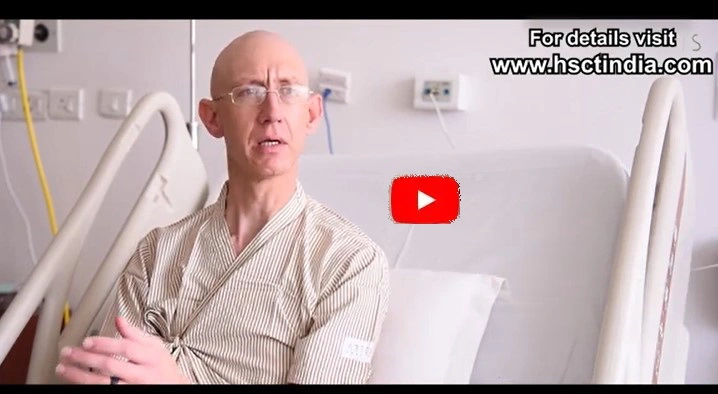
Victor Halls from the United Kingdom was diagnosed with multiple sclerosis in 2000. He spent years looking for a treatment before he applied to HSCT Hospital India through its website. He recorded this video as his stay in New Delhi came to an end, and he says he would not feel as good as he does without the hospital.
Multiple sclerosis, or MS, is a condition in which the immune system damages myelin, the insulating layer around nerves in the brain and spinal cord. HSCT stands for autologous haematopoietic stem cell transplantation. In this treatment, chemotherapy removes the immune cells that drive MS, and the patient’s own stored stem cells then produce new immune cells. Victor had this treatment at HSCT Hospital India before flying home to England.
Victor from the UK: HSCT for MS at a Glance
Patient
Victor Halls lives in England, in the United Kingdom.
Condition
Victor received his multiple sclerosis diagnosis in 2000.
How he applied
His application went in through the online form on the hospital website.
Treatment
Victor was treated with autologous HSCT in New Delhi at HSCT Hospital India.
What he praises
Victor names the doctors, the nursing staff, the cleanliness of the ward and the food.
Recorded
The video was recorded at the hospital shortly before he left for home.
Package price today
The treatment is priced at 30,000 US dollars, all inclusive, for a hospital stay of up to thirty days.
Living with MS since 2000 and searching for HSCT
Victor had lived with MS for many years by the time he reached India. Over those years he kept looking for a treatment that could help him. He read about HSCT, looked into it, and then found a hospital website that offers it.
His next step was the online application form. Every patient at HSCT Hospital India starts the same way. HSCT specialist doctors read the form and the medical records sent with it, and an HSCT case manager replies with their initial opinion. A full medical evaluation in New Delhi then confirms whether HSCT is suitable before any treatment begins. The criteria the doctors use are listed on the HSCT eligibility criteria page.
Victor began by reading about HSCT in his own time. The hospital brochure gives you that same starting point by email. It sets out the treatment stages, the thirty day stay in New Delhi and what the single price covers.
Care on the ward at HSCT Hospital India, in Victor’s words
Victor talks first about the people. He describes his welcome on arrival and the help he had from doctors and nurses throughout his stay.
"When I got here, the people were lovely. They greeted me very nice. All the doctors are fantastic. The nursing staff is fantastic. Anything that you need, they’re there to help you."
Victor Halls, recorded at HSCT Hospital India
He also notices how often the ward is cleaned, two to three times a day. Hygiene protects patients during HSCT. After the conditioning chemotherapy, the immune system is at its lowest for several days. For that reason each patient stays in a deluxe private room with triple level HEPA air filtration, which takes dust and germs out of the air. Nurses monitor every patient around the clock until the new immune cells begin to recover.
"The place is clean and tidy. It gets cleaned two to three times a day. If you’ve got any questions about anything, they know about everything. The food is fantastic."
Victor Halls, recorded at HSCT Hospital India
The food Victor praises is part of the package. Meals and laundry are included for the patient and for one attendant, along with the hospital stay, doctors’ fees, tests, medicines and airport transfers. The full list of inclusions sits on the HSCT cost by country page.
Victor applied with the online form, and so can you. HSCT specialist doctors at HSCT Hospital India look at your medical history and recent MRI scans. An HSCT case manager then writes back with their opinion, free of charge and without obligation.
Before he left, Victor wrote a message of thanks to the hospital, signed by Victor and Allison. In it he expects his recovery to take effort, and he says he is ready for it.
"Thanks to this fantastic HSCT team of doctors and nurses at HSCT Hospital India who has treated me for my MS and put a stop to it. I am going to be able to get my life back. I know that it’s going to be a hard work but I am ready for the fight. I’m back baby, watch me."
Victor Halls, written message to HSCT Hospital India
Recovery after HSCT continues for months once a patient is home. The new immune system matures over that time. Strength and stamina tend to return gradually across that time, with regular neuro physiotherapy, meaning exercise guided by a physiotherapist to rebuild movement. Those months are described step by step in the guide to HSCT recovery time.
Questions about travel, recovery at home and follow up in the UK are answered faster by phone. An HSCT case manager will call you at a time you choose, with no charge for the call.
Friends in England waiting to hear how Victor gets on
Victor had already told friends about HSCT Hospital India before his own treatment. One of them came for treatment the year before. Other friends in England want to come too, and Victor says they are waiting to see how he does once he is back.
Patients from the UK follow the same route Victor took. The online application comes first, then a free review by HSCT specialist doctors, then an HSCT case manager who plans the trip with the patient. HSCT Hospital India has treated more than 1,500 people with MS from more than 30 countries. Its facilities hold JCI-USA accreditation from the Joint Commission International, along with NABH and NABL, the Indian national boards for hospitals and laboratories. There is no long waiting list.
The choices open to UK patients, including the NHS route, are compared on the HSCT for MS in the UK page. Two other patients from the UK, Margaret and Gary, describe their own treatment on their pages.
Transcript of the video
Victor: Hello, my name is Victor Halls. I’ve had MS for… I got diagnosed in 2000, and over the years I’ve been looking for a treatment to help me. I’ve heard of HSCT and been looking into it. Then I found [the] website that does HSCT. I filled out the form and applied to come to here.
Victor: When I got here, the people were lovely. They greeted me very nice. All the doctors, all the rest of the doctors are fantastic. The nursing staff is fantastic. Anything that you need, they’re there to help you. The place is clean and tidy. It gets cleaned two to three times a day. Everyone is there to help you, all the nurses. If you’ve got any questions about anything, their knowledge… they know about everything.
Victor: The food is fantastic. The food is like, it’s just wow, you know, it’s so much. I’ve told friends of mine, and one of them came last year, Jack Sullivan. When I go back to England, I’ve got friends that wish to come to [unclear] to do HSCT, but they’re just waiting for me to come back to see how I get on.
Victor: And all I’ve got to say is this place is fantastic. I will not feel as good as I do today if it hadn’t been for [the] hospital. Thank you.
People with MS in England, Scotland, Wales and Northern Ireland can ask for their own case to be reviewed before they decide anything. HSCT specialist doctors at HSCT Hospital India give the opinion, and an HSCT case manager replies personally at no cost.
 Get HSCT India Brochure Emailed to you
 Request a Call Back



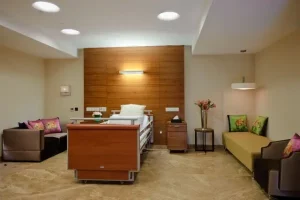 Complete 30 day HSCT done in hospital. Private deluxe rooms are very well served for patient and attendant comfort and equipped with HEPA Filter with Triple Level Air Filtration. No outside hospital stay avoids risk of infection during the aplastic phase, 24 x 7 nursing care and best medical attention. Advanced HSCT protocol used does not require any further chemo or treatment after leaving the hospital.
 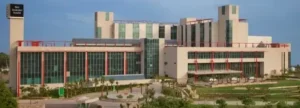 International and Globally Renowned Accreditations. HSCT Hospital India is accredited by the Joint Commission International, USA, the National Accreditation Board for Hospitals and Healthcare Providers (NABH), and the National Accreditation Board for Laboratories (NABL) for processes and high quality patient care.